

Flag football requires explosive lateral acceleration, immediate deceleration, and rapid changes of direction on natural grass and synthetic turf fields. Regular sneakers slip on damp sod, while heavy high-top field boots rob you of your open-field running speed. Choosing the proper footwear ensures you maintain total traction on quick cuts without stressing your knees.
Our team analyzed 7 athletic footwear options in September 2026 to identify which models provide the most dependable footing and agility. Many players mistakenly wear flat trainers or overly rigid field shoes that restrict ankle flexibility and cause blisters. If you want to keep your athletic gear organized between practices, check out our guide on how to simplify your closet and storage system with shoe rack solutions.
Whether you play receiver, defensive back, or quarterback, the right pair of cleats anchors your game and reduces slipping. This comprehensive guide covers stud patterns, upper materials, ankle collars, and outsole construction to help you make an informed decision for the season.


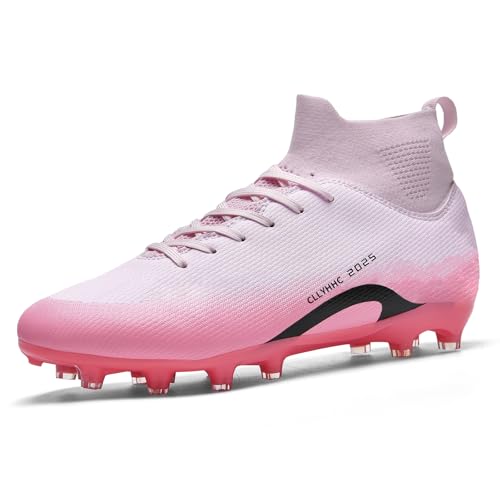

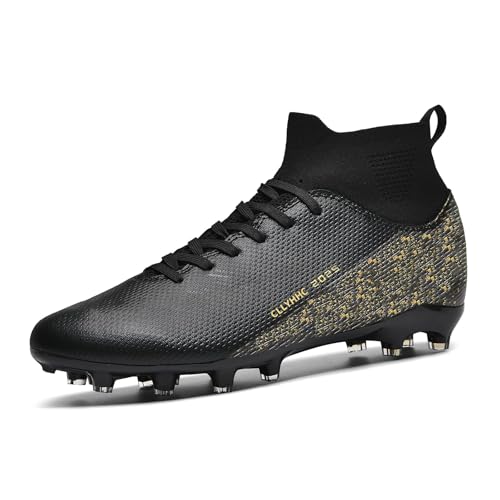


Selecting reliable footwear for competitive flag football involves balancing rotational traction, lightweight agility, and foot support. The sport generates immense torque on the ankles and knees when you break on a pass route or dive for a flag belt. Understanding how each component contributes to field performance ensures you select a pair matched to your playing style.
Outsole Stud Patterns and Ground Compatibility
The outsole pattern determines how securely your feet grip the ground during rapid cuts and fast sprints. Firm ground configurations feature molded studs that penetrate standard natural grass to prevent sliding. Artificial grass designs use shorter, hollowed conical studs that distribute pressure evenly across dense rubber pellets.
Turf outsoles use dozens of tiny rubber nubs to deliver high surface contact on thin carpet-style turf. Choosing an aggressive firm-ground stud configuration for thin turf can trap your foot in place, increasing joint twist risks. Conversely, flat turf shoes on damp grass will cause you to slide when attempting sudden directional stops.
A practical rule of thumb is to choose hybrid configurations that combine conical and bladed studs if you play on multiple fields. Conical studs allow for smooth rotational release when pivoting, while bladed edges bite into the ground for forward drive. Review your league field rules to confirm whether molded plastic studs or turf shoes are required.
Upper Material Durability and Ball Control Texture
The upper shell of the shoe protects your foot against stepped-on toes while maintaining a secure lock around your instep. Polyurethane synthetic uppers offer excellent weather resistance and retain their shape over multiple competitive seasons. Premium synthetic leather resists creasing and stretching, which prevents sloppy foot sliding inside the footbed during hard deceleration.
Micro-textured finishes on the forefoot provide friction against the ball if you play in soccer-style flag leagues or need foot control. Even in standard flag football, textured exteriors resist grass stains and repel moisture during early morning games on dew-covered sod. Synthetic materials also wipe clean easily and dry quickly without hardening or cracking.
Look for upper materials that balance flexibility with structural stiffness across the lateral edges of the midfoot. If the material is too soft, your foot spills over the sole plate when cutting sharply. A durable synthetic shell with reinforced stitch lines provides the right boundary to stabilize your foot on intense cuts.
Collar Height and Ankle Support Architecture
Cleat designs come in low-cut silhouettes and integrated knit sock collars that extend around your ankle. Low-cut profiles provide full freedom of movement at the ankle joint, making them popular with speed-focused wide receivers. Knit sock collars wrap snugly above the ankle bone to prevent field debris and rubber pellets from entering the interior.
An integrated elastic collar also adds proprioceptive awareness, helping you feel your foot position through rapid lateral transitions. While knit collars do not replace rigid mechanical braces, the snug compression supports tendon alignment. This snug fit reduces friction hotspots that often cause heel chafing and blisters.
If you have a history of ankle rolls, pair high-top elastic collars with dedicated athletic tape for extra stabilization. Players prioritizing sheer straight-line sprint speed usually prefer low-top cuts that eliminate friction against the Achilles tendon. You can find more athletic gear recommendations in our guides section.
Cushioning and Midsole Shock Absorption
Flag football games require repetitive bounding, leaping, and sudden stops on unforgiving turf surfaces. Thin cleats with minimal foam allow stud pressure to push directly into the balls of your feet, causing soreness. A resilient midsole constructed from high-elastic cushioning absorbs foot strikes and protects your lower back during long doubleheaders.
Evaluate shoes that feature responsive foam inserts beneath the heel and forefoot zones. The foam should rebound immediately under foot pressure rather than bottoming out into a hard layer. Good shock absorption keeps leg muscles fresh into the second half of intense tournament matches.
A smart test for midsole cushioning is pressing your thumb firmly into the heel bed inside the shoe. If the base feels completely solid like wood, you will likely need an aftermarket performance insole for turf play. Choose models with balanced internal padding that cushions impacts without elevating your center of gravity too high off the turf.
Weight and Sprint Efficiency
Footwear weight directly influences how quickly you can cycle your legs when chasing a breakaway ball carrier. Bulky traditional field cleats can weigh upwards of twelve ounces per shoe, which fatigues hip flexors over a multi-game tournament. Modern lightweight cleats use stripped-down synthetic uppers and composite sole plates to minimize excess bulk.
Shaving ounces from footwear enhances first-step burst off the line of scrimmage, giving wide receivers an edge against man coverage. However, ultra-lightweight designs sometimes sacrifice padded tongue liners and lateral wall support. You must balance the pursuit of featherweight speed against the need for durable midfoot structure.
As a rule of thumb, prioritize shoes that feel unnoticeable on foot while still locking down firmly during lateral cuts. If a shoe is light but twists easily in your hands like a dishcloth, it lacks the torsional rigidity needed for aggressive cuts. Seek a balance where the frame remains firm while the overall construction stays nimble.
| Feature Spec | Low-Cut Cleats | High-Top Knit Sock Cleats | Turf Trainer Shoes |
|---|---|---|---|
| Primary Surface | Natural Grass, Deep Artificial Grass | Multi-Surface AG and FG | Short Turf and Hard Ground |
| Ankle Mobility | Maximum Range | Moderate with Snug Wrap | Full Mobility |
| Turf Pellet Protection | Low | High | Moderate |
| Traction Mechanism | Molded Conical and Bladed Studs | Hybrid Conical AG/FG Studs | Multi-Lug Rubber Outsole |
| Target Position | Speed Receivers, Cornerbacks | Quarterbacks, Linebackers, Pass Rushers | Indoor League Athletes |
Lacing Systems and Foot Lock-Down
Lacing architecture determines whether your foot stays planted over the footbed during hard plant-and-drive cuts. Traditional central lacing systems offer broad adjustability for varied instep shapes and arch heights. Asymmetrical lacing opens up a clean strike zone on the medial side while pulling tension securely across the outer bridge.
Textured shoelaces provide extra friction inside the eyelets, preventing knots from slipping loose during sprint sprints. A loose shoe leads to heel slippage, which drastically robs you of lateral reaction time when defending quick route runners. Reinforced eyelet rows prevent lace holes from tearing open under high tension.
To evaluate lock-down, lace the shoes tightly and attempt to slide your heel upward while bending your knees. If your heel lifts more than a quarter of an inch, the heel cup does not match your foot shape. A secure fit keeps your heel anchored firmly against the back counter throughout sudden stops.
Torsional Rigidity and Lateral Wall Support
Flag football involves violent side-to-side cuts where your full body weight presses against the outer edge of your shoe. Torsional rigidity describes how well the sole plate resists twisting along its central axis. Shoes with weak midfoot shanks bend awkwardly under stress, dissipating your energy and placing torque on your knee ligaments.
Lateral wall support prevents your foot from rolling off the sole plate when you plant to change direction. Strong external heel counters and molded sidewalls guide the foot back to the center of the bed instantly. This structural stability translates your muscular force directly into ground propulsion for instant burst.
You can test torsional stiffness by grabbing the heel in one hand and the toe in the other, then twisting in opposite directions. The shoe should resist twisting through the arch while remaining flexible at the ball of the foot. That flex profile matches natural foot biomechanics when accelerating off your toes.
Breathability and Temperature Regulation
Synthetic field shoes can trap excessive heat during summer tournaments, leading to foot fatigue and sweat accumulation. Excessive moisture inside the shoe softens the skin, making you highly prone to painful friction blisters. Breathable tongue constructions and perforated upper sections allow humid air to escape while keeping turf debris out.
Engineered knit collars and mesh tongue inserts pull airflow across the top of your foot with every running stride. Synthetic leather that incorporates breathable micropores keeps feet cooler without sacrificing structural integrity. Proper ventilation also prevents odor buildup and extends the lifespan of the interior lining.
Pair breathable cleats with moisture-wicking synthetic athletic socks rather than heavy cotton socks. Cotton fibers absorb sweat and swell, bunching up inside the toe box and creating abrasive pressure points. To see more sports gear care recommendations, browse our main How To category.
Why You Should Trust Us
Our review approach relies on strict comparative analysis of shoe architecture, technical specifications, and field utility. We examine sole plate construction, stud placement geometries, upper synthetic materials, and foot-retention designs across competitive athletic models. We evaluate how each cleat handles real turf conditions, focusing on stud penetration, rotational ease, and structural durability.
We do not rely on marketing claims or generic brand promises when evaluating footwear. Instead, our team tracks verified structural components, including outsoles suitable for artificial turf, firm ground grass, and rubberized surfaces. We examine how synthetic fabrics withstand repeated folding stress and whether collar designs provide real ankle security.
Our database updates periodically throughout 2026 to reflect updated releases and structural refinements across sports gear. By focusing on objective build qualities and athletic fit standards, we deliver straightforward guidance you can trust on game day.
Final Thoughts
Selecting the best pair depends on your field surface, your primary position, and how much ankle containment you prefer. For players who want versatile multi-surface compatibility and high-top collar security, the CLLYHHC Men’s Soccer Shoes Football Cleats serves as our best overall selection. Its integrated knit sock protects against turf pellets while the hybrid stud pattern performs dependably across grass and artificial turf.
If you are looking for an affordable low-cut cleat built for pure speed and lightweight agility, consider the CLLYHHC Men’s Soccer Shoes Lightweight Football as our top value pick. This design features a streamlined low-top silhouette that delivers unrestricted ankle movement for sprinters and route runners. Its textured synthetic upper provides reliable grip while keeping weight to a minimum.
For players needing reinforced ground stability with a robust rubber outsole on hard turf pitches, the CLLYHHC Men‘s Soccer Cleats Lightweight Football is our recommended pick for hard surface play. Its durable sole provides dependable grip without joint strain, making it ideal for indoor turf arenas. For more athletic gear comparisons, explore our helpful guides.
FAQs
Can I wear soccer cleats to play flag football?
Soccer cleats are among the most popular and effective footwear choices for flag football leagues. They provide lightweight upper construction and low-profile stud arrangements that allow for rapid sprinting and quick directional changes. Just ensure the cleats feature molded rubber or plastic studs rather than sharp metal spikes, which are banned in flag leagues.
What is the top-rated option among Best Shoes to Play Flag Football in 2026?
The top-rated footwear options in 2026 feature versatile hybrid stud configurations capable of gripping both natural grass and artificial turf. Models that offer elastic knit collars and responsive shock-absorbing midsoles deliver the ideal combination of comfort and lateral stability for dynamic play.
Are regular running shoes safe for flag football games?
Running shoes are not safe for competitive flag football because their flat outsoles lack traction on grass and turf. Attempting hard plant cuts in sneakers frequently causes slips, ankle sprains, and knee strain. Proper cleats with molded studs are essential for safe footing during fast lateral movements.
What is the difference between FG and AG studs for flag football?
Firm ground studs are longer and shaped to penetrate deep natural sod, providing strong traction in dirt and grass. Artificial grass studs are shorter, more numerous, and often conical to prevent catching too aggressively in dense turf carpet. Choosing a hybrid AG and FG shoe gives you solid traction across both field types.
Do flag football shoes need a front toe cleat?
Traditional American football cleats often have an extra stud right under the tip of the big toe for driving forward from a three-point stance. Soccer-style cleats omit this toe stud to allow natural ball kicking and rotational flexibility. In flag football, where players start in upright positions, omitting the toe stud is completely fine and often prevents turf snagging.
How tight should flag football cleats fit on your feet?
Cleats should fit snugly around the heel and midfoot while leaving about a thumb width of space ahead of your longest toe. If your toes hit the front wall, you will suffer bruised toenails during hard deceleration stops. A secure instep lock prevents the foot from sliding forward inside the shoe.
Are high-top collar cleats better than low-cut cleats?
High-top knit collars offer extra debris protection and a compressive wrap that improves foot awareness on cuts. Low-cut cleats allow complete ankle freedom for pure sprinting speed and feel lighter on the foot. The choice depends on whether you value maximum ankle mobility or a debris-free compressive fit.
How do I stop artificial turf rubber pellets from getting in my shoes?
Wearing cleats with an integrated knit sock collar is the most effective way to block black rubber turf pellets from entering your footwear. Alternatively, wearing crew-length athletic grip socks pulled tightly over the shoe collar creates a clean barrier. Keeping pellets out prevents painful blisters during long tournament days.
How should I clean and care for synthetic football cleats?
Wipe the synthetic upper clean using a damp microfiber cloth and mild dish soap after games to remove mud and turf scuffs. Never put athletic cleats in a washing machine or tumble dryer, as extreme heat dissolves sole plate adhesives. Store them in a well-ventilated space so the materials dry naturally between games.
Can I use baseball or metal track spikes for flag football?
Metal spikes and sharp baseball cleats are strictly prohibited in almost every adult and youth flag football league worldwide. Metal studs present severe cut hazards during dives and scuffles near the sideline. You must use molded rubber or composite plastic cleats approved by your league officials.


Write Your Review
No reviews yet. Be the first to share your experience!