

Working away from a dedicated multi-monitor desk used to mean sacrificing speed and screen real estate. Modern mobile workers, students, and traveling professionals now rely on sleek external displays to restore full desktop productivity wherever they sit down.
Investing in Best Portable Touchscreen Monitors allows you to tap, pinch, zoom, and sign documents directly on a secondary display without packing bulky accessories. Upgraded connectivity standards mean a single USB cable can handle display signals, input detection, and power distribution seamlessly.
Our review compares 7 standout models for September 2026, helping you navigate critical differences in operating system gesture support, panel brightness, and mounting designs. Whether you are outfitting a mobile office or setting up an organized desktop workspace, consulting our helpful expert productivity guides will keep your setup streamlined.

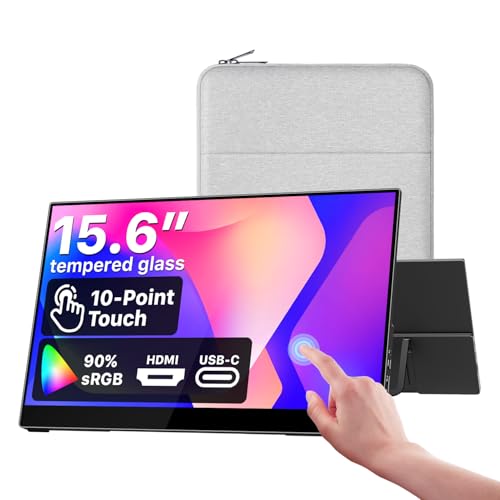


Operating System Compatibility and Gesture Support
Touchscreen responsiveness depends heavily on how well the monitor communicates with your specific host operating system. Windows 10 and 11 offer native 10-point capacitive touch integration right out of the box, translating multi-finger taps and gestures immediately into standard desktop commands without supplemental utility software.
Operating within macOS presents unique engineering hurdles because Apple does not natively map external capacitive touch matrices to its operating environment. Premium displays include dedicated driver protocols or universal firmware solutions like UPDD to enable two-finger scrolling, pinch-to-zoom, and precise tapping across Mac interfaces.
Before finalizing a purchase, verify if your mobile devices or tablets mirror touch inputs properly. While Android smartphones often support direct touch feedback via USB-C desktop modes, game consoles like the Nintendo Switch or PlayStation will only project visual video without responding to touch input on external panels.
Display Panel Technology and Viewing Angles
The underlying screen architecture determines how crisp text looks and whether colors remain consistent when viewed from off-center angles. In-Plane Switching (IPS) panels represent the industry standard for portable monitors because they maintain stable visual fidelity across wide 178-degree viewing angles.
Because portable screens rarely sit completely perpendicular to your eyes, budget panels with inferior viewing angles suffer from severe color shifting and contrast inversion. A reliable IPS panel ensures spreadsheets, design proofs, and video timelines stay legible whether the panel stands upright or rests flat.
Pay close attention to pixel density and resolution standards across standard 15.6-inch screen diagonals. Full HD 1080p resolution provides sharp visual clarity without overburdening your laptop GPU or requiring aggressive display scaling settings inside your operating system.
Color Accuracy and Gamut Coverage
Color gamut specs tell you the total spectrum of shades an external display can reproduce accurately during everyday tasks. While standard productivity screens target 72% NTSC or 90% sRGB coverage, specialized panels reach 100% to 125% sRGB coverage for vibrant multimedia reproduction.
Creative professionals editing images or grading travel footage require high gamut coverage alongside strong static contrast ratios. Displays with 1200:1 to 2000:1 contrast ratios deliver deeper shadow tones and cleaner highlights, preventing images from appearing washed out during color-sensitive evaluation work.
If your daily workflow involves word processing and general web browsing, standard color coverage is sufficient and conserves laptop battery life. However, if you regularly consume high dynamic range media or produce digital art, prioritizing wider gamut panels delivers a noticeably punchier viewing experience.
Port Selection and Single-Cable Connectivity
Modern external monitors rely heavily on full-featured USB-C ports that support DisplayPort Alternate Mode alongside Power Delivery protocols. This interface allows a single USB-C cable to transmit high-definition video, capacitive touch signals, and operational electrical power simultaneously from your host machine.
Legacy laptops and desktop machines without video-enabled USB-C ports require multi-cable connections utilizing standard or mini HDMI ports. In these secondary setups, you must connect an HDMI cable for video, a separate power brick, and a USB-A to USB-C cable to enable touch input.
Check the physical port selection to ensure the monitor fits your specific travel cable kit without requiring extra dongles. Having dual USB-C ports alongside an HDMI port offers maximum flexibility, letting you pass power through the display directly into your laptop battery while working.
Screen Surface Material and Glass Durability
Touchscreen devices endure constant physical contact, making the exterior surface material vital for longevity and daily comfort. High-hardness tempered glass surfaces resist scratches from fingernails, stylus tips, and dust particles, ensuring the active touch matrix stays smooth and responsive over years of use.
Cheaper alternatives often use thin plastic laminations that can feel tacky under your fingers and scratch easily during transit. Tempered glass also provides optical clarity that enhances panel brightness, although it can produce reflections under direct sunlight or intense office lighting.
Some portable monitors incorporate matte anti-glare coatings directly onto the glass to minimize room reflections while maintaining smooth tactile responsiveness. Choosing a durable glass panel ensures your fingers glide effortlessly across drag-and-drop actions without leaving stubborn smudges that cloud your view.
Active Stylus Support and Input Precision
While capacitive multi-touch handles basic navigation like swiping and tapping, precise input requires active stylus compatibility. Certain portable touchscreens integrate Microsoft Pen Protocol (MPP) digitizers that recognize dedicated active styluses with varying levels of pressure sensitivity.
An active stylus transforms a standard secondary screen into an interactive digital sketchpad or document markup station. This feature is particularly valuable for remote professionals who need to sign contracts, sketch interface mockups, or annotate PDF documents inside applications like Microsoft OneNote.
Ensure you differentiate between simple passive rubber-nib pens and true active styluses that offer low-latency palm rejection. If digital handwriting is essential to your workflow, prioritize displays that bundle certified stylus hardware with native Windows Ink integration.
Form Factor, Stand Design, and Mounting Options
Portability depends on how easily a secondary display integrates into temporary workspaces like coffee shops, hotel desks, or shared boardroom tables. Built-in kickstands integrated directly into the chassis provide the quickest setup and offer stepless angle adjustments from upright typing to low sketching positions.
Alternative models utilize folding magnetic smart cases that double as protective screen covers and tiered kickstands during operation. While folding sleeves protect the display inside your backpack, integrated metal kickstands generally deliver superior stability during heavy multi-finger tapping sessions.
For permanent home setups, check whether the chassis includes standard VESA mounting holes. VESA compatibility allows you to mount the lightweight screen to an adjustable desktop monitor arm, which pairs well with our practical advice on how to simplify your workspace system and eliminate cable clutter.
Brightness Levels and Eye Care Technology
Panel luminance determines whether your portable monitor remains legible in bright coffee shops, airport terminals, or sunlit home offices. Entry-level displays typically produce between 250 and 280 nits of brightness, which is adequate for indoor environments with controlled ambient light.
If you frequently work near large windows or under intense fluorescent lights, aim for displays rated between 300 and 350 nits. Higher peak brightness preserves contrast and prevents eye strain when reading dense spreadsheets or working through complex coding interfaces for hours.
Look for integrated eye care features such as low blue light hardware modes and flicker-free DC dimming backlights. These subtle technologies reduce eye fatigue during extended remote work sessions, keeping your vision comfortable across long travel days.
| Feature Category | Entry-Level Standard | Mid-Range Standard | Premium Performance |
|---|---|---|---|
| Panel Resolution | 1080p FHD (1920×1080) | 1080p FHD (1920×1080) | 1080p / 2K High Density |
| Color Gamut | 72% NTSC / 90% sRGB | 100% sRGB | 125% sRGB Wide Color |
| Touch Technology | 10-Point Capacitive | 10-Point Capacitive | 10-Point + MPP Active Stylus |
| Peak Brightness | 250 – 280 Nits | 300 Nits | 350+ Nits |
| Stand Configuration | Magnetic Folding Case | Integrated Kickstand | 180° Metal Kickstand + VESA |
Why You Should Trust Us
Our hardware evaluations rely on rigorous comparative analysis of technical specifications, real-world connection protocols, and user-reported long-term reliability. We systematically evaluate input latency, operating system driver stability, panel color reproduction, and build quality across current market offerings.
We analyze verified performance data and user feedback across multiple device ecosystems, ensuring our guidance accounts for differences between Windows laptops, MacBooks, and mobile devices. Our goal is to provide honest, data-driven recommendations that save you time, eliminate technical friction, and protect your investment.
By tracking firmware updates and hardware revisions continuously, we keep our recommendations accurate across changing technology cycles. You can explore our extensive collection of tech breakdowns and how-to guides in our dedicated How To resource center.
Final Thoughts
Selecting the right portable touchscreen comes down to balancing input versatility, color performance, and physical build quality. For users who need a complete creative and professional setup, we recommend the DAMRAPT Portable Monitor Touchscreen 15.6″ because it pairs full 10-point multi-touch with an active MPP stylus and 100% sRGB color accuracy for effortless note-taking and sketching.
Shoppers searching for outstanding visual vibrance on a budget will appreciate the EVICIV Portable Monitor Touchscreen 15.6”, which delivers a high 350-nit brightness rating, a 2000:1 contrast ratio, and wide 125% sRGB coverage at an accessible price point. Its lightweight profile makes it an easy addition to any travel bag.
For maximum overall flexibility and seamless operating system support, the cocopar Portable Monitor Touchscreen 15.6 Inch stands out with its sturdy metal chassis, integrated kickstand, and smooth tempered glass panel that supports native macOS and Windows gestures. If you are refining your mobile gear or home setup, check our tips on how to compare storage solutions before you buy to keep your workspace organized.
FAQs
How do Best Portable Touchscreen Monitors connect to a laptop using a single cable?
A single USB-C cable can transfer display video, capacitive touch signals, and operational power if your laptop port supports Thunderbolt 3, 4, 5 or USB-C DisplayPort Alternate Mode. If your laptop port only supports standard data transfer, you must connect a separate HDMI cable for video and a USB cable for touch data.
Do portable touchscreens work natively with Apple MacBooks?
While Windows supports multi-touch natively, macOS requires specific monitor firmware or a free driver like UPDD to translate multi-finger gestures accurately. Without driver support, touch input on a Mac may be limited to simple single-point clicking rather than smooth scrolling and pinching.
Can I use Best Portable Touchscreen Monitors with gaming consoles?
You can connect gaming consoles like the Nintendo Switch, PlayStation, and Xbox via HDMI or USB-C to display Full HD video. However, game consoles do not output touch control signals, so the screen will function purely as a standard non-touch monitor during gameplay.
Do portable touchscreen monitors require external power adapters?
Most models can draw sufficient operating power directly from your laptop battery when connected via a full-featured USB-C cable. However, connecting an external 15W or higher power brick allows the monitor to reach its maximum brightness and volume without draining your computer.
What is the benefit of a tempered glass screen over plastic lamination?
Tempered glass provides superior scratch resistance against fingernails, styluses, and travel debris while delivering a silky, low-friction glide for touch gestures. Plastic screen films feel tacky over time, scratch more easily, and are harder to clean effectively.
What is the difference between an active stylus and a capacitive stylus?
An active stylus communicates electronically with the screen digitizer to provide pressure sensitivity, palm rejection, and fine-point accuracy for writing and drawing. A standard capacitive stylus merely mimics the blunt touch of a human fingertip without specialized pressure tracking.
Can portable monitors be mounted on desktop monitor arms?
Many portable monitors feature integrated 75x75mm VESA mounting holes on their rear chassis, allowing you to attach them to standard desktop arms or wall brackets. For more ways to streamline your productive space, explore our guide on how to shop for storage systems on a budget.
Do Best Portable Touchscreen Monitors work in portrait orientation?
Yes, you can rotate the monitor vertically to read long code repositories, documents, or social feeds by adjusting your host computer display settings. Many included smart cases and 180-degree kickstands support stable vertical orientation alongside standard horizontal landscape modes.
How does high sRGB color gamut coverage affect display quality?
A wider color gamut like 100% or 125% sRGB allows the screen to display richer, more accurate color tones across images and video content. This extra color depth prevents banding and ensures multimedia projects look true to life compared to entry-level screens with narrower color ranges.
Can I connect my smartphone to a portable touchscreen?
Smartphones that support desktop output modes, such as Samsung DeX or standard USB-C video projection, can display full interfaces on the external monitor with direct touch interaction. Standard iPhones and devices without desktop video support may only mirror video without enabling touch response.





Write Your Review
No reviews yet. Be the first to share your experience!