

If your closet floor is a maze of tangled shoes and your dresser top is buried under loose earrings and necklace chains, you don’t need a full closet remodel to fix it. Two focused pieces – a dedicated shoe rack and a jewelry armoire – can do most of the heavy lifting. This guide walks you through a simple, repeatable process for simplifying your closet and storage system using just these two pieces, plus a few organizing habits that keep the results from unraveling in a month.
Why Shoes and Jewelry Are the First Things to Tackle
Closets rarely feel chaotic because of clothing alone. It’s usually the small, loose items – shoes kicked off in a pile, jewelry tangled in a drawer, scarves stuffed on a shelf – that make a space feel out of control. Shoes and jewelry are also the two categories most people underestimate: a household of two or three people can easily own a few or more pairs of shoes and a jewelry collection that has quietly grown for years without a home.
By giving these two categories their own dedicated furniture, you free up floor space, protect your shoes and jewelry from damage, and make your entire closet system visually calmer. It’s a smaller project than a full closet renovation, but it delivers a disproportionate amount of the payoff.
Step 1: Audit What You Actually Own
Before buying anything, pull every pair of shoes and every piece of jewelry out into the open. This is the least glamorous step, but skipping it means you’ll size your new storage around clutter instead of your real collection.
- Group shoes by category: everyday, athletic, dress, seasonal (boots, sandals).
- Set aside any pair you haven’t worn in over a year, or that no longer fits or fits your lifestyle.
- Spread jewelry out on a towel or tray so nothing is hidden inside pouches or boxes.
- Untangle chains as you go – it’s far easier now than after they’ve sat in a drawer for another year.
- Separate jewelry into “wear often,” “special occasion,” and “rarely worn or sentimental” piles.
Anything you’re not keeping should go into a donate box immediately, not back into the closet “to decide later.” That single rule prevents most closet reorganizations from sliding backward within weeks.
Step 2: Choose the Right Shoe Rack for Your Space
Shoe racks come in several formats, and the right one depends on your closet’s footprint and your shoe count more than personal taste alone.
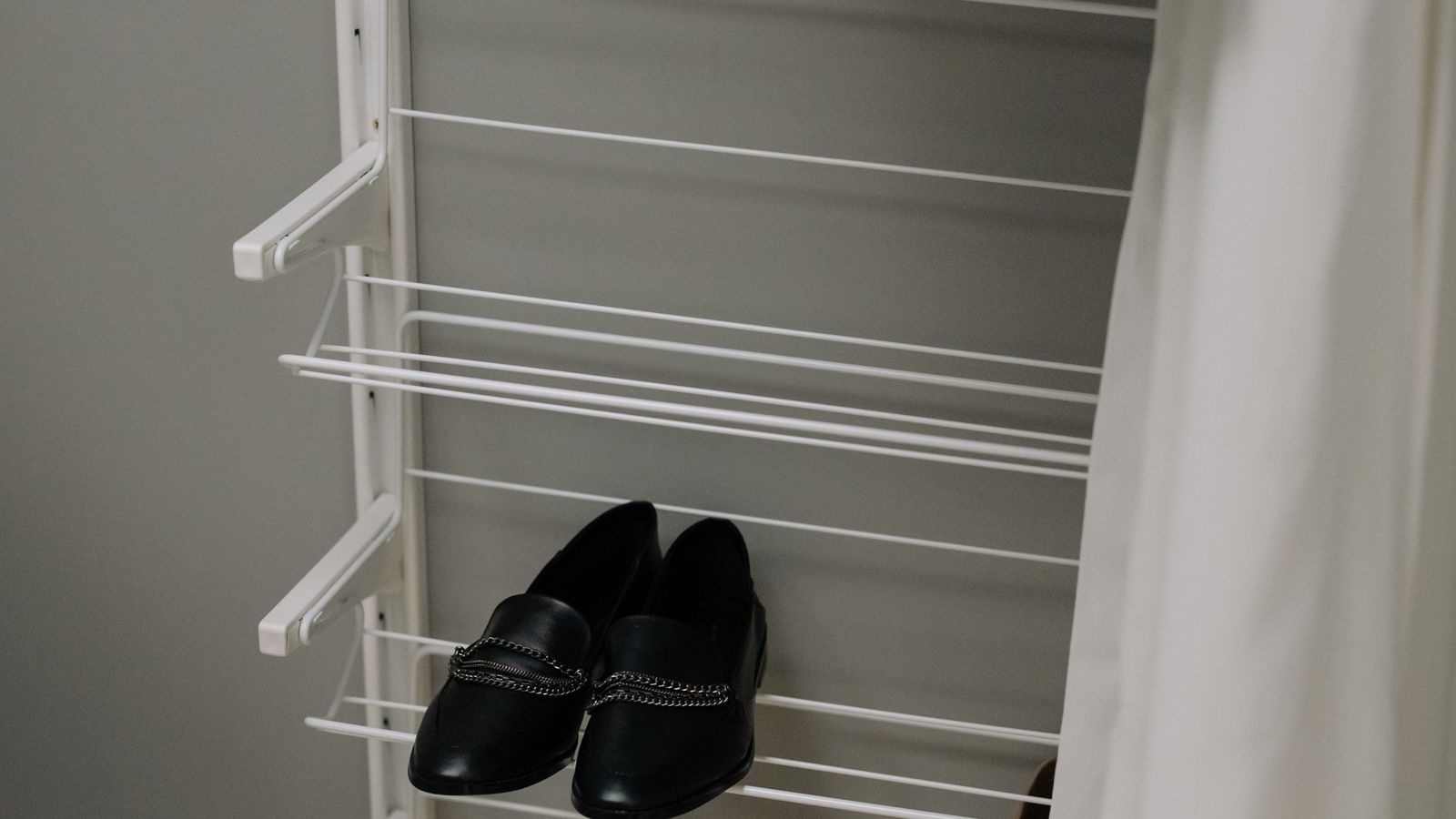
- Tiered floor racks – angled shelves that fit against a closet wall or under hanging clothes; good for households with a moderate, mixed collection.
- Stackable cube or shelf units – modular pieces you can add to as your collection grows, useful in closets with awkward corners.
- Over-the-door racks – a good supplemental option for smaller closets where floor space is tight.
- Slim rolling racks – narrow enough to tuck beside hanging clothes, and easy to pull out for cleaning.
Measure your closet’s available floor width and height under the lowest hanging rod before you shop. A rack that’s an inch too tall will force you to either remove a shelf or leave it outside the closet, which defeats the purpose. For a side-by-side look at formats and price points, our guide to the Shoe Racks roundup breaks down options by capacity and footprint.
Step 3: Decide How to Sort Shoes on the Rack
Once the rack is in place, resist the urge to just pile shoes on however they land. A simple sort keeps the rack functional long-term:
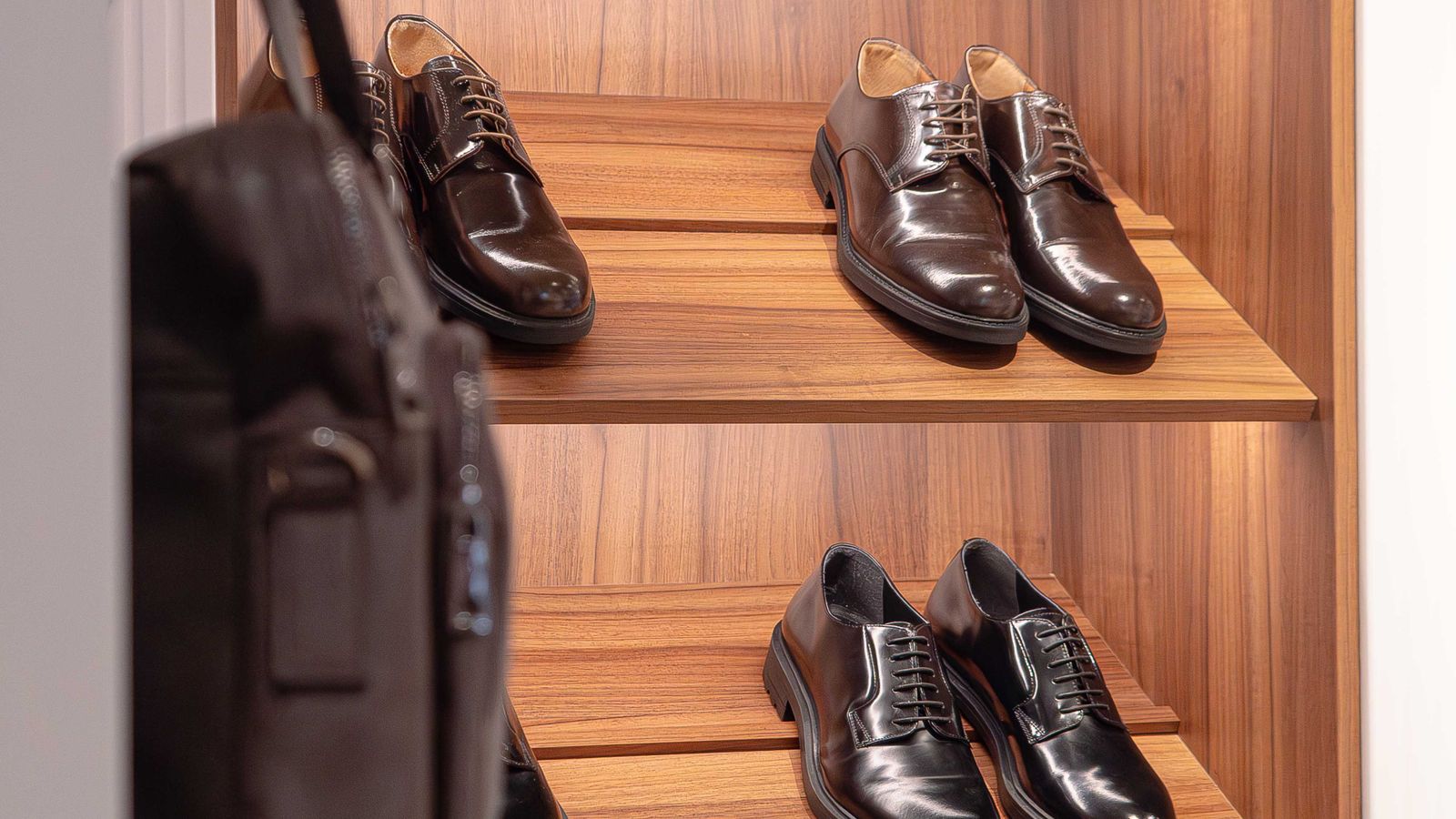
- Put daily-wear shoes at the most accessible eye or hand level.
- Store occasional or dress shoes on higher or lower tiers.
- Group by pair and by type (all sneakers together, all boots together) rather than by color, which is harder to scan quickly.
- Rotate seasonal shoes – move off-season boots or sandals to a bin on the closet’s top shelf, freeing rack space for what you’re actually wearing.
Step 4: Choose the Right Jewelry Armoire
A jewelry armoire is essentially a small dedicated cabinet – some are freestanding floor pieces, others are compact tabletop or wall-mounted boxes. The right choice depends on both your collection size and where you want it to live.
- Freestanding floor armoires – best for larger collections and households where jewelry storage needs to live outside the closet, such as a bedroom corner.
- Tabletop or dresser-top armoires – compact units that sit on a dresser or closet shelf, ideal for small to mid-size collections.
- Wall-mounted mirrored cabinets – double as a mirror and save floor and surface space entirely.
Look for models with a mix of compartment types: hooks or bars for necklaces (this is what actually prevents tangling), small lined drawers for rings and earrings, and a soft-lined tray for watches or bracelets. Our jewelry armoires comparison covers formats and compartment layouts if you’re deciding between styles.
Step 5: Organize Inside the Armoire So Nothing Tangles Again
An armoire only solves clutter if the inside is organized as deliberately as the shoe rack.
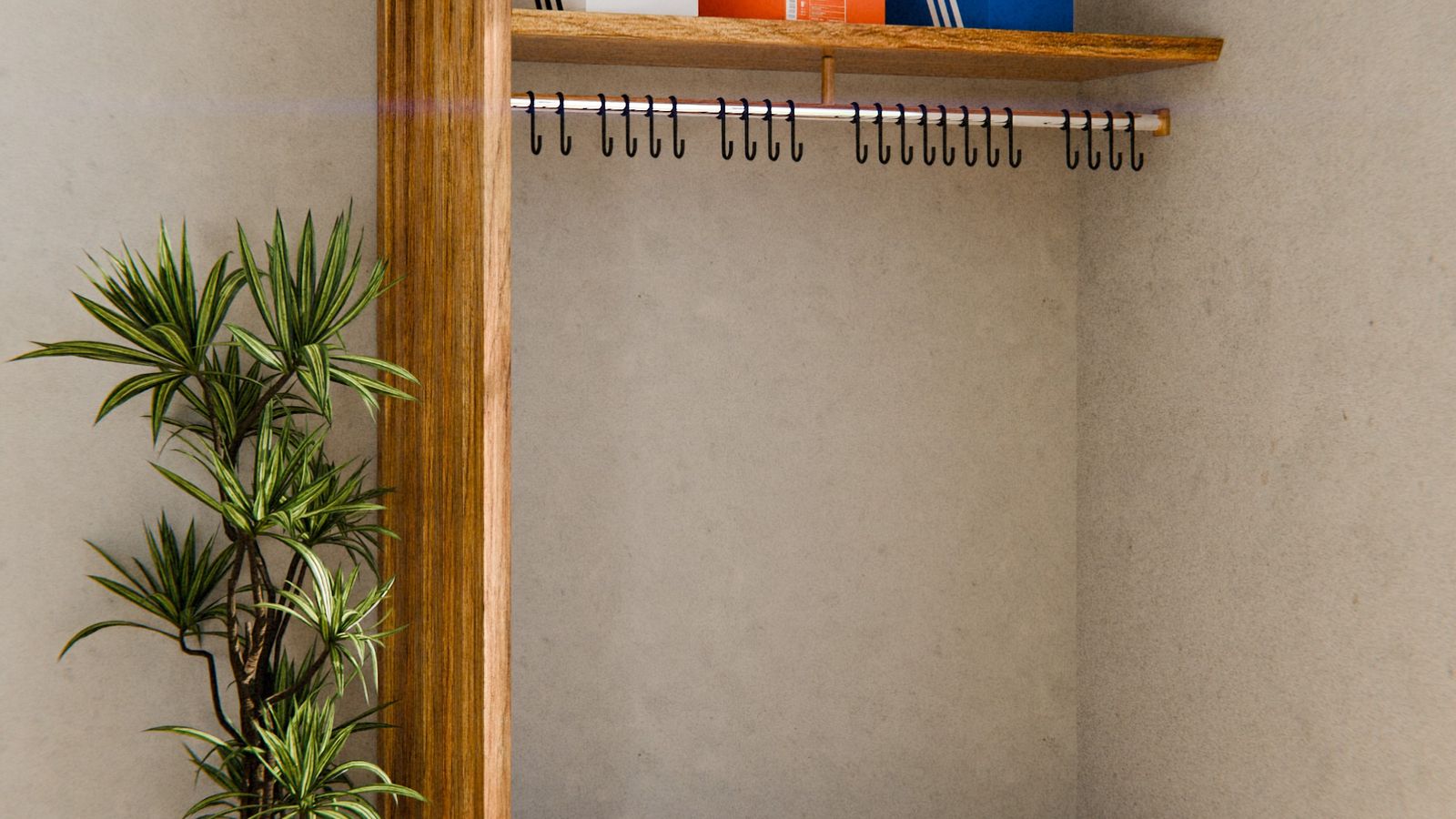
- Hang necklaces individually on hooks rather than looping several onto one hook – this is the single biggest tangle-prevention step.
- Sort earrings into small drawer dividers or a lined tray, pairing studs and hoops separately from dangly styles.
- Store rings in a padded ring roll or slotted tray so they don’t roll loose when the drawer opens.
- Keep fine or delicate pieces (thin chains, pearls) in a separate soft pouch inside the armoire to prevent scratching against heavier metal pieces.
- Reserve one drawer or shelf for “rarely worn” and sentimental jewelry so daily pieces stay easy to grab.
Step 6: Position Both Pieces for a Workable Closet Flow
Placement matters as much as the furniture itself. Put the shoe rack near the closet entrance or floor space you naturally step into first, so putting shoes away becomes the path of least resistance. Position the jewelry armoire near where you actually get dressed – inside the closet if there’s a flat wall or corner, or just outside it near a mirror. If jewelry storage is too far from where you dress, pieces tend to migrate back onto the dresser top within weeks.
If your closet also has built-in shelving or drawers, coordinate the new pieces with what’s already there rather than duplicating storage. Our best closet organizers guide is a useful next stop if you want to extend this same approach to shelving, drawer systems, or hanging organizers.
Common Mistakes to Avoid
- Buying storage before decluttering. A bigger shoe rack or armoire just gives clutter more room to spread out.
- Ignoring vertical space. Many closets waste the top few feet above the hanging rod – a stackable shoe cube or a wall-mounted armoire can use that space instead of the floor.
- Overcrowding compartments. Jammed drawers make jewelry harder to find and more likely to tangle again; leave a little breathing room in each compartment.
- Skipping the seasonal rotation habit. Without periodically swapping off-season shoes and rarely-worn jewelry out of primary storage, both pieces fill up again within a year.
- Placing the rack or armoire somewhere inconvenient. If putting things away takes extra steps, they won’t get put away.
Maintaining the System Long-Term
A closet stays organized because of small habits, not because the furniture is perfect. Do a quick five-minute reset weekly – return any shoes or jewelry that landed elsewhere back to their spot. Every few months, revisit the audit from Step 1: pull out anything you haven’t touched, and reassess whether your current shoe rack or armoire still fits your collection size. As your wardrobe and jewelry collection evolve, your storage should evolve with them rather than being treated as a one-time fix.
FAQ
Do I need both a shoe rack and a jewelry armoire, or just one?
It depends on where your clutter actually lives. If shoes are the bigger problem, start there; if jewelry is scattered across surfaces, prioritize the armoire. Most closets benefit from both eventually, but you don’t have to buy them at the same time.
How many pairs of shoes should a shoe rack hold?
Size the rack to your real collection plus a little growth room, not to an aspirational number. Counting your current pairs during the audit step gives you an accurate target instead of guessing.
Where’s the best place to put a jewelry armoire if my closet has no extra floor space?
A wall-mounted or tabletop armoire is usually the better fit for a tight closet, since it uses vertical or existing surface space instead of the floor.
How often should I redo the shoe and jewelry audit?
Twice a year is a reasonable rhythm for most households, timed around seasonal wardrobe swaps when you’re already handling shoes and accessories.
Final Thoughts
Simplifying a closet doesn’t require gutting the whole space – it requires giving your two most chaotic categories, shoes and jewelry, a proper home and a system for keeping them there. A well-chosen shoe rack and jewelry armoire, combined with an honest declutter and a few maintenance habits, can turn a cluttered closet into one that actually works for how you get dressed every day.