Bedroom seating decisions get confusing fast because “reading chair,” “bedside caddy,” and “nursery rocking chair” all sound like they solve the same basic problem: somewhere comfortable near the bed to sit, store things, or soothe a baby at 2 a.m. In reality, these three products serve very different purposes, and buying the wrong one means you end up with a chair that’s too bulky for a small bedroom, or a caddy that can’t actually support a full night of feeding, or a rocker that just doesn’t fit anywhere once the nursery phase ends. This guide breaks down exactly what each option is built for, how much space and budget each one demands, and how to figure out which one (or combination) actually matches your household’s routine.

What Each Option Is Actually Designed For
Before comparing features, it helps to understand the core job each piece of furniture is meant to do. They’re not interchangeable, even though all three can technically hold a person and a book.
Reading Chair
A reading chair is a standalone accent seat meant for long, relaxed sitting sessions – usually 30 minutes to a couple of hours at a stretch. It’s built with a supportive backrest, often a slight recline, and enough width to tuck your legs up or lean sideways. Reading chairs are typically placed in a bedroom corner, by a window, or in a small reading nook, and they function as a secondary seat separate from the bed itself.
Bedside Caddy
A bedside caddy isn’t a chair at all – it’s an organizational accessory, usually a fabric pocket organizer, hanging caddy, or small storage unit that attaches to the side of a bed or mattress, or sits on a nightstand. Its job is to keep books, phones, glasses, remotes, and water bottles within arm’s reach while you’re already in bed. If your actual problem is clutter on the nightstand rather than a lack of seating, a caddy solves that far more directly than a chair ever could.
Nursery Rocking Chair
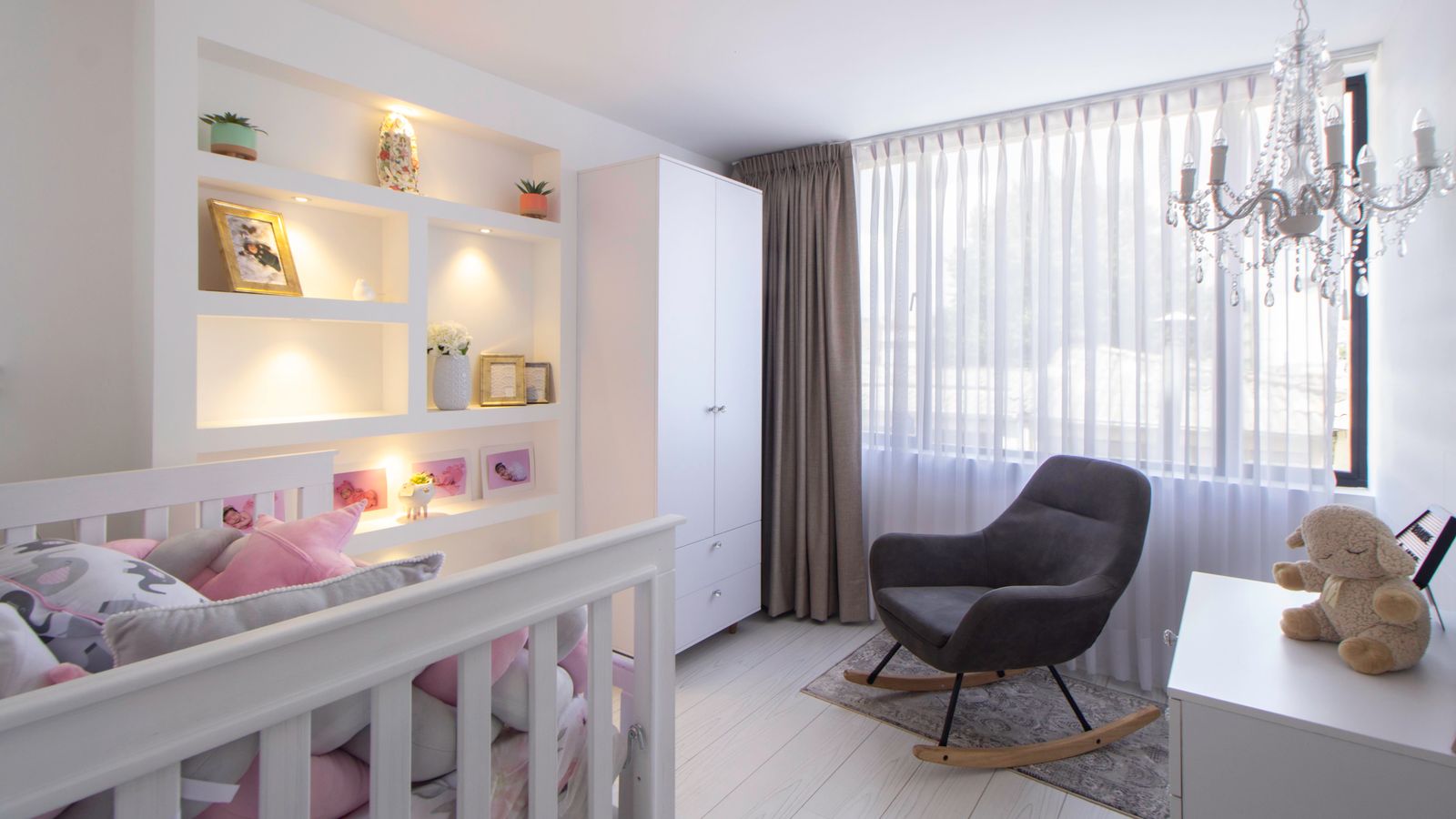
A nursery rocking chair is purpose-built for repetitive motion comfort during feeding, soothing, and putting a baby to sleep. It typically has a gliding or rocking mechanism, a deep and often reclined seat, padded armrests at the right height for nursing or bottle-feeding, and sometimes a matching ottoman. Unlike a general reading chair, it’s engineered specifically for the physical demands of holding a baby for extended, often middle-of-the-night sessions.
Space Requirements: What Fits Your Room
Floor space is usually the first practical filter, especially in smaller bedrooms or nurseries where every square foot matters.
- Reading chair: Needs a dedicated footprint, typically 28-36 inches wide plus clearance to sit down and get up comfortably. Works best in bedrooms with an underused corner or an empty wall segment.
- Bedside caddy: Takes up almost no floor space at all – it mounts to the bed frame, hangs over a rail, or sits flat on an existing nightstand. This is the obvious pick for tight bedrooms, dorm rooms, or RVs where a chair simply won’t fit.
- Nursery rocking chair: Needs the most planning of the three, since gliders and rockers require clearance both in front and behind for the rocking motion. Measure at least 40-50 inches of total depth before committing to a spot in the nursery layout.
Comfort and Ergonomics Compared
Comfort priorities differ sharply between these three categories, and matching the ergonomics to the actual activity matters more than picking whatever looks nicest in photos.
A good reading chair prioritizes upper-back and neck support for an upright or slightly reclined posture held over long stretches – think firm cushioning, a supportive frame, and often a matching ottoman for your feet. If you’re shopping specifically for this category, our roundup of Reading Chairs compares padding density, back height, and swivel options across different room sizes.
A bedside caddy has no ergonomic component in the traditional sense – it’s about accessibility and organization, not seated comfort. The best ones use sturdy pockets that hold weight without sagging and mount securely enough that they don’t shift when you reach for something in the dark. Our guide to bedside caddies breaks down pocket layout, mounting styles, and capacity for different bed types.
A nursery rocking chair needs to support a very specific posture: reclined enough to relax during long feeds, with armrests positioned to support your forearms while holding a baby, and a rocking or gliding motion smooth enough to soothe without jerking. Seat depth and armrest height matter more here than in almost any other chair category, since you’ll often be sitting for 20-40 minutes multiple times a night. If this is your primary need, our comparison of the best nursery rocking chairs covers glide mechanisms, recline range, and washable upholstery options.
Budget Ranges to Expect
Pricing varies widely within each category depending on materials and mechanism complexity, but general ranges hold fairly consistent across brands.
- Bedside caddy: The most budget-friendly by far – simple fabric organizers start under $20, with premium leather or heavy-duty mounted versions reaching $50-$80.
- Reading chair: A mid-range accent chair typically runs $150-$450, with designer or oversized swivel models going higher. Fabric quality and frame construction are the biggest price drivers.
- Nursery rocking chair: Usually the most expensive of the three because of the glide or rocking mechanism, often $250-$700+, especially for models with power recline or premium performance fabric that resists spills.
If budget is the deciding factor, a caddy is the cheapest way to solve a bedside clutter problem, while a rocking chair is worth the investment only if you genuinely need it for infant care – it’s not a general-purpose seat once that phase passes for most families.
Who Should Choose Which Option
Choose a Reading Chair If…
- You want a dedicated spot to unwind away from the bed itself, ideally with natural light nearby.
- You read, work on a laptop, or relax in your bedroom for extended periods most evenings.
- You have at least a few square feet of open floor space to spare.
Choose a Bedside Caddy If…
- Your real issue is nightstand clutter – phone chargers, glasses, remotes, and books piling up.
- You have limited floor space and can’t justify a standalone chair.
- You mostly read or scroll while already lying in bed, not sitting separately.
Choose a Nursery Rocking Chair If…
- You’re setting up a nursery and expect regular overnight feeding or soothing sessions.
- You need a chair engineered for a specific reclined, arms-supported posture, not general lounging.
- You have room for the extra clearance a glider or rocker mechanism requires.
Can You Combine These Options?
In many households, the right answer isn’t picking just one. A reading chair paired with a small bedside caddy solves both the seating and clutter problem in a primary bedroom without doubling up on furniture. In a nursery, a rocking chair is almost always the primary seat, but pairing it with a compact caddy attached to the crib rail or a nearby side table keeps diapers, burp cloths, and a water bottle within reach during late-night sessions – no separate reading chair needed in that room. If your bedroom setup also includes other flexible seating, it’s worth checking whether a bedroom armchair might double as your reading spot before buying a second dedicated chair, or whether a low-profile option like a bed bench ottoman could handle occasional seating without taking up as much visual space as a full chair.

A Quick Decision Checklist
- Measure your available floor space – under 3 square feet realistically rules out a chair or glider.
- Identify the actual activity: extended reading/relaxing (chair), reaching for items while already in bed (caddy), or repetitive infant soothing (rocker).
- Set a budget range and decide whether a mechanism (glide/rock) is worth the added cost for your use case.
- Consider whether the need is temporary (a rocking chair for infancy) or long-term (a reading chair for years of use).
- Check if an existing piece – like a bedroom armchair or a bed tray – already partially covers the need before buying something new.
For readers who also use their bed itself as a workspace or reading surface, a portable option like our picks for Bed Trays can complement whichever seating choice you land on, giving you a stable surface for a laptop, book, or breakfast without needing extra furniture.
Frequently Asked Questions
Do I need both a reading chair and a bedside caddy?
Not necessarily. If your reading and relaxing happens mostly in the chair, a caddy is less essential. But many people find the two work well together – the caddy keeps nightstand items organized for use in bed, while the chair provides a separate spot for longer sessions away from the mattress.
Is a nursery rocking chair worth buying if I already have a reading chair?
Usually yes, if you’re expecting regular nighttime feeding or soothing. A standard reading chair rarely has the recline angle, armrest height, or glide motion that makes repeated infant care sessions comfortable over months of use.
What happens to a nursery rocking chair once the baby grows out of that stage?
Many parents keep it as a general accent or reading chair in the nursery-turned-bedroom, since well-made gliders are comfortable for regular seating too. Others repurpose it elsewhere in the home or pass it along, since the investment is usually significant enough to be worth reusing.
Can a bedside caddy replace a nightstand entirely?
For minimal setups, yes – a caddy with enough pockets can hold the essentials. But most people still want a flat surface for a lamp or drink, so a caddy typically supplements a nightstand rather than fully replacing one.
Which option is best for a small apartment bedroom?
A bedside caddy is the safest space-saving choice, and if you have even modest room left over, a compact reading chair without a bulky ottoman is usually the next best addition before considering anything with a rocking or gliding mechanism.
Final Thoughts
The right choice comes down to matching the product to the actual activity happening near your bed. A reading chair is about dedicated, comfortable seating away from the mattress. A bedside caddy solves clutter and reach, not seating, and costs the least. A nursery rocking chair is a specialized tool for infant care that most other seating simply can’t replicate. Rather than guessing, walk through the checklist above, measure your space, and be honest about how you’ll actually use the piece day to day – that’s what determines whether you’ll still be happy with the purchase a year from now.