

Modern vehicles frequently serve as mobile offices, entertainment hubs for kids, and primary navigation stations during daily commutes. When multiple passengers bring power-hungry smartphones, tablets, and gaming consoles on the road, standard vehicle ports quickly fail to keep up. Choosing the right multi-device charging hub ensures that every passenger reaches their destination with a fully charged battery.
Finding the right balance between high wattage output, cord management, and socket stability can be challenging for drivers. Many generic adapters overheat rapidly, drop charging speeds when extra cords are plugged in, or constantly slip out of cigarette lighter sockets. You can explore our helpful expert shopping guides to discover more ways to optimize your travel accessories and mobile setup.
Our comprehensive breakdown evaluates 7 top options across leading manufacturers like BESTEK, AINOPE, Rocoren and more to help you make an informed decision for September 2026. We focus on real power delivery, backseat extension reach, cable organization, and overall passenger safety. This guide provides the practical details you need to keep your entire vehicle powered efficiently on every journey.


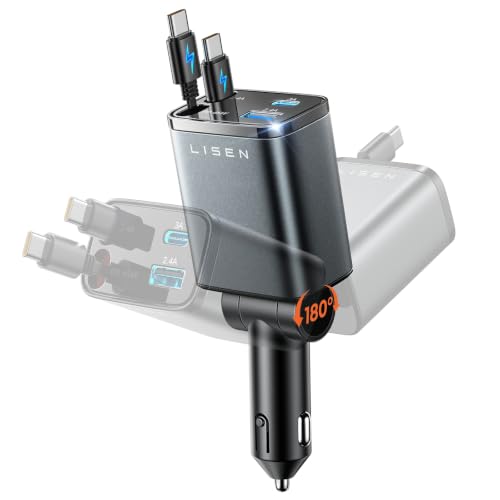


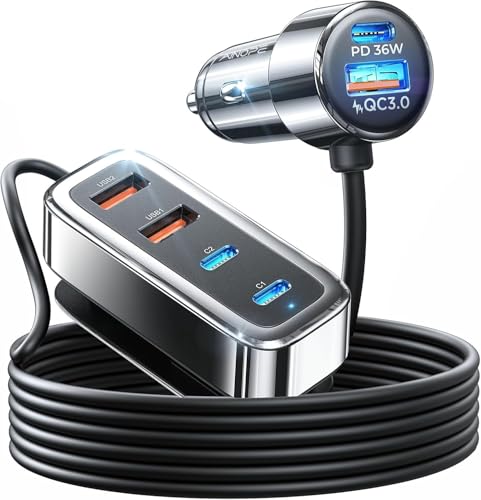

Total Wattage Output and Intelligent Power Distribution
Total wattage determines the maximum combined electrical energy an adapter can supply across all connected gadgets simultaneously. Inexpensive car chargers often advertise high peak numbers but split that power evenly, causing charging speeds to plummet when several phones plug in. High-performance units utilize dedicated internal circuitry to maintain high wattage on priority ports while secondary devices draw standard power.
When examining manufacturer specifications, look closely at how wattage divides across individual USB ports during shared operation. A dedicated Power Delivery port outputting 30W or 45W ensures rapid charging for tablets or demanding smartphones even under full load. Cheaper models frequently drop down to standard 5W speeds across all connections as soon as a third device connects.
A reliable rule of thumb is to allocate at least 20W of dedicated capacity for every primary smartphone in your car. If your family regularly charges tablets or handheld gaming devices on long trips, look for total ratings between 75W and 125W. This overhead prevents the adapter from running at maximum capacity constantly, which reduces excess heat and extends hardware longevity.
Port Configuration and USB-C Allocation
The transition toward universal USB-C connectivity makes port selection a critical factor when choosing an automotive charging hub. Legacy USB-A ports remain useful for older dash cams, headphones, and e-readers, but modern smartphones demand modern USB-C interfaces. Selecting an adapter with a healthy balance of both port styles ensures full compatibility with all passenger gear.
Adapters offering at least two or three USB-C ports provide superior future-proofing for newly released consumer electronics. USB-A ports capped at traditional 12W output cannot take advantage of modern fast-charging protocols on newer phones. Balancing legacy ports with high-speed USB-C outputs allows older accessories to run alongside cutting-edge mobile hardware without requiring separate adapters.
Examine your vehicle’s regular passenger tech habits before settling on a specific port arrangement. If you routinely transport passengers with different phone ecosystems, choosing a hub with equal USB-C and USB-A slots prevents connector frustration. Drivers organizing their vehicle interior can also check our practical how-to guides for efficient space management ideas.
Retractable Built-In Cables versus Modular Ports
Loose charging cords frequently create unsightly clutter around gear shifters, cup holders, and center consoles. Retractable car chargers integrate extendable charging leads directly into the housing, allowing users to pull out only the necessary length. Once a trip concludes, a gentle tug reels the cord back inside, eliminating dashboard tangles completely.
While retractable models offer exceptional neatness, modular multi-port adapters provide greater versatility for custom cable lengths. If a built-in retractable cord suffers wear or internal damage over years of heavy use, that specific connection cannot be swapped. Modular sockets allow drivers to plug in ultra-long cords, specialized heavy-duty braided lines, or replacement cables whenever necessary.
For daily solo commuting and minimal cabin clutter, built-in retractable mechanisms provide unmatched convenience and speed. For larger groups requiring varying cable lengths from front to back, modular socket hubs remain the more adaptable choice. Consider whether console neatness or cord customization matters more for your regular driving routine.
Backseat Extension Hubs and Cable Reach
Charging devices from a front cigarette lighter socket becomes difficult when backseat passengers need continuous power. Standard charging cords rarely reach second or third-row seating comfortably without stretching dangerously across the center console. Dedicated multi-port extension hubs resolve this issue by routing an extended cable directly to a secondary rear clip.
These specialized systems typically feature a compact front adapter connected to a rear multi-port block via a five-foot cord. Rear passengers can clip the secondary hub to seatback pockets, providing easy access to multiple charging slots. This setup ensures children or ride-share clients can power tablets and phones without leaning forward or yanking front cords.
When selecting an extended backseat hub, verify that the rear module includes secure mounting clips and independent fast-charging ports. Ensure the connecting cord is thick enough to withstand accidental footsteps and seat adjustment tracks. This configuration transforms any family SUV or minivan into an organized mobile charging station for long vacations.
Fast Charging Protocols and Standards Support
Fast charging relies on precise communication between the car adapter and the connected device’s battery management hardware. Power Delivery and Quick Charge represent the two most common fast-charging communication standards in automotive accessories today. Programmable Power Supply protocol is also essential for delivering maximum charging speeds to modern flagship Android devices.
An adapter lacking compatible fast-charging protocols will default to standard slow charging rates regardless of its advertised wattage. Checking for broad protocol support guarantees that iPhones, iPads, Android handsets, and wireless charging mounts receive their optimal charge rates. Universal protocol matching protects delicate battery health while drastically reducing time spent connected to vehicle power.
Always verify that your chosen adapter explicitly lists support for PD 3.0, QC 3.0, and PPS standards. A properly matched charger can refill a modern smartphone battery from zero to over fifty percent in roughly thirty minutes. This rapid replenishment is vital for drivers who rely on brief commute windows to recharge drained electronics.
| Feature Category | Retractable Cable Models | Standard Multi-Port Adapters | Backseat Extension Hubs |
|---|---|---|---|
| Primary Benefit | Zero console clutter | Compact modular design | Extended reach for passengers |
| Port Count | 2 to 4 devices | 3 to 4 devices | 5 to 6 devices |
| Best Vehicle Type | Coupes and sedans | Commuter vehicles and trucks | SUVs, minivans, and ride-shares |
| Cable Flexibility | Fixed built-in cords | Fully customizable cords | Front ports plus rear cord |
Socket Fit, Form Factor, and Angle Adjustment
Vehicle 12V cigarette lighter sockets vary widely in depth, orientation, and proximity to surrounding interior trim. Chargers with bulky or awkwardly shaped bodies can block adjacent cup holders, climate dials, or storage compartments. Selecting a model with an adjustable swivel or compact profile ensures a flush, unobstructed fit in tight dashboards.
Adapters featuring 180-degree rotating plugs allow drivers to angle the charging head away from manual gear shifters. Strong tension spring contacts on the sides of the plug prevent the unit from slipping out on bumpy roads. Loose socket connections interrupt the charging cycle and can cause frustrating power drops during navigation.
Measure the clearance around your vehicle socket before selecting a wide multi-port charging unit. If your power port sits inside a deep covered cubby, an extended slim body or rotatable plug is essential. For more tips on organizing compact spaces, read our guide on evaluating versatile storage setups.
Heat Dissipation and Housing Materials
Converting a vehicle’s direct current power into regulated charging output generates significant internal thermal energy. Compact adapters running multiple high-wattage devices simultaneously can become hot to the touch during prolonged operation. Premium chargers use high-density aluminum alloy or fire-retardant polycarbonate enclosures to dissipate internal heat efficiently.
Metal housings act as passive heat sinks, drawing thermal energy away from delicate internal circuit components. Plastic shells must carry recognized fire-retardant safety ratings to ensure resilience against extreme vehicle cabin temperatures during hot summer days. Inferior casing materials can warp, crack, or degrade when subjected to continuous high thermal loads.
Prioritize chargers built with certified flame-resistant ABS, polycarbonate, or robust metal alloys. Proper heat management prevents the charger from throttling power output to protect itself during demanding road trips. Durable materials also resist physical damage from accidental drops, knocks, and frequent socket insertions.
Safety Certifications and Multi-Protection Circuits
Automotive electrical systems experience frequent voltage spikes, alternator fluctuations, and sudden current surges during vehicle startup. Uncertified car chargers lack the sophisticated filtration components required to shield connected electronics from dirty power. Premium multi-device chargers feature integrated safety chips that continuously monitor electrical flow across all output channels.
Essential safety protections include over-voltage suppression, over-current limits, short-circuit cutoffs, and automated thermal throttling. Independent testing certifications like UL, ETL, FCC, and RoHS confirm that hardware meets rigorous electrical safety benchmarks. These internal safeguards protect valuable smartphones and tablets from permanent battery damage or electrical shorts.
Never compromise on electrical safety when plugging high-end mobile devices into your car’s power grid. Look for clear certification marks on the product casing or technical packaging before installation. Reliable surge protection ensures stable charging performance across diverse driving conditions and engine speeds.
Vehicle Voltage Compatibility: 12V versus 24V Systems
Standard passenger cars and light crossover vehicles operate on 12-volt direct current electrical architectures. Heavy commercial trucks, recreational vehicles, and construction equipment frequently utilize higher-capacity 24-volt electrical systems. Choosing a charger engineered to handle wide-range 12V to 24V input prevents electrical overloads across different vehicle types.
Connecting a strict 12V-only accessory into a heavy-duty 24V truck socket can instantly destroy internal circuitry. Wide-voltage adapters automatically step down the incoming current to safe levels regardless of the vehicle type. This universal compatibility makes wide-range chargers especially valuable for commercial drivers and multi-vehicle households.
Verify your vehicle’s exact electrical output in the owner manual before purchasing a high-wattage multi-device adapter. Investing in a dual-voltage model gives you the freedom to move your charger between daily commuters, work trucks, and motorhomes. Broad compatibility ensures consistent performance across any vehicle you choose to drive.
Why You Should Trust Us
Our accessory review team evaluates mobile charging hardware by analyzing core electrical engineering specifications, material durability, and real-world utility. We cross-reference verified technical output metrics, thermal dissipation data, and international safety certifications across major manufacturing brands. This rigorous technical screening separates dependable road-trip essentials from poorly regulated generic electronics.
We closely monitor user feedback patterns, safety recalls, and long-term durability reports across diverse driving conditions. Our team updates these recommendations continuously as device charging standards evolve and vehicle electrical demands shift. You can discover more helpful vehicle maintenance and lifestyle advice in our home and living category.
Our editorial process remains completely objective, focusing strictly on verifiable performance criteria and consumer value. We evaluate port configurations, housing materials, and voltage stability without commercial bias to ensure authentic recommendations. Our primary mission is providing reliable guidance that keeps your family connected safely on every drive.
Final Thoughts
Selecting the ideal multi-port car charger depends on your regular passenger volume, dashboard layout, and cable preference. For large families and road trips requiring power across every row, the AINOPE PD&QC 108W Multiple Ports Car Charger stands out as our top overall choice. Its six dedicated ports and backseat extension cord keep both front and rear passengers powered effortlessly.
Drivers who prioritize a tidy center console with zero tangled cords will love the LISEN Retractable Car Charger 4 in 1 for Cars. Its built-in extendable cables, rotating 180-degree plug, and high-speed USB-C output make it an exceptional solution for clean daily commuting. It provides instant power access while maintaining a clean, uncluttered cabin aesthetic.
If you want high-output multi-port charging in an ultra-compact metal shell, the USB C Car Charger, 4-Port 90W Super Fast Charging delivers incredible performance and value. Its quad-port layout and dedicated 90W fast charging capability handle multiple devices easily without cluttering tight sockets. Matching your specific charging needs to the right adapter ensures a stress-free journey every time you start the engine.
Frequently Asked Questions
What are the key advantages of Best USB Car Chargers for Multiple Devices in 2026?
Modern multi-device car chargers provide high-wattage output across multiple ports simultaneously, allowing entire families to power phones and tablets together. They incorporate advanced power management chips to prevent device slowdowns and feature robust protections against overheating and electrical surges.
Will charging multiple devices simultaneously drain my car battery?
While your engine is running, the vehicle alternator supplies power to the 12V socket without draining the starter battery. If you leave devices charging while the engine is turned off, the charger will draw power directly from the car battery and could deplete it over extended periods.
Can Best USB Car Chargers for Multiple Devices power laptops on the road?
Certain high-output chargers offering dedicated 35W to 45W USB-C Power Delivery ports can power lightweight laptops like compact ultrabooks and tablets. Demanding gaming or workstation laptops require specialized adapters with 65W to 100W single-port ratings to charge efficiently while in use.
Do multi-port car chargers support Apple CarPlay or Android Auto data transfer?
Car cigarette lighter adapters operate solely as direct current power supplies and do not transmit data signals to vehicle infotainment systems. To utilize wired CarPlay or Android Auto, you must connect your device directly to your vehicle’s integrated multimedia USB port.
How do retractable car chargers prevent internal cable tangles?
Retractable chargers use internal spring-loaded spools with ratchet mechanisms that lock the ribbon cord at your desired length. Pulling the cable slightly further releases the ratchet lock, allowing the internal spring to reel the cord smoothly back into the main housing.
What is the difference between shared wattage and dedicated port wattage?
Total shared wattage represents the maximum combined power distributed across all ports when multiple gadgets plug in at once. Dedicated port wattage guarantees a specific minimum output to a single high-priority slot, ensuring fast charging speeds remain constant despite additional connections.
Why does my car charger feel warm during extended road trips?
Stepping down 12V vehicle power to lower device voltages naturally generates heat within internal converter components. Quality adapters use metal bodies or heat-resistant polycarbonate shells to safely dissipate this thermal energy into the surrounding cabin air.
Are multi-port USB chargers compatible with heavy commercial trucks?
Most modern multi-port adapters support wide 12V to 24V input ranges, making them fully compatible with commercial trucks, RVs, and vans. Always check the product specifications to confirm 24V support before plugging into heavy equipment power sockets.
Can I leave my car charger plugged into the 12V socket permanently?
Many modern vehicles automatically cut power to accessory sockets when the ignition turns off, making continuous connection completely safe. If your vehicle maintains continuous 12V socket power with the engine off, unplug the adapter during long parking periods to avoid parasitic battery draw.
How can I keep passenger cords organized during family road trips?
Using backseat extension hubs with integrated clips keeps charging cables anchored neatly to seatback storage pockets. You can also explore our helpful ideas on simplifying organizational systems to discover smart cable management methods.






Write Your Review
No reviews yet. Be the first to share your experience!