

Transporting a reliable cutting station between job sites or rolling it out of a crowded garage requires equipment that balances structural rigidity with swift portability. The market for Best Table Saws with Folding Stand has shifted significantly in 2026, giving woodworkers and general contractors access to shop grade fence accuracy on rugged wheeled platforms. When you need to build cabinets, construct decks, or tackle home renovation projects outlined in our expert carpentry guides, having an integrated collapsible base saves immense setup time.
Many woodworkers make the mistake of prioritizing raw motor amperage while overlooking how the stand handles rough ground or uneven garage floors. A table saw can boast impressive horsepower, but flimsy scissor legs or sloppy locking pins will compromise your cut accuracy and create serious safety hazards. In this guide updated for September 2026, we analyze 5 standout models across top manufacturers including DEWALT, Skil, Bosch and more to help you make an informed decision.
Investing in a mobile cutting system is about finding a machine that holds its calibration during transit and unfolds in seconds. We break down the technical specifications, rip capacities, motor management systems, and safety features that differentiate an average contractor tool from a precision workstation.

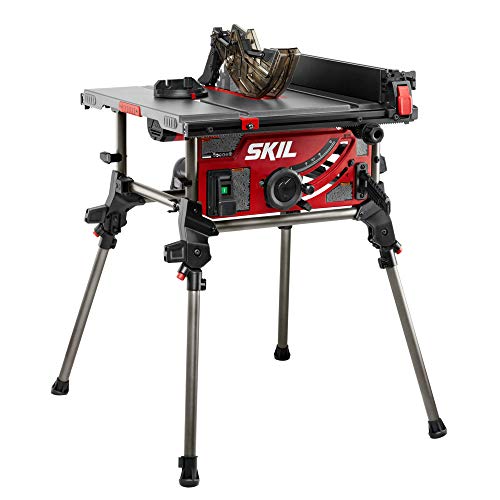
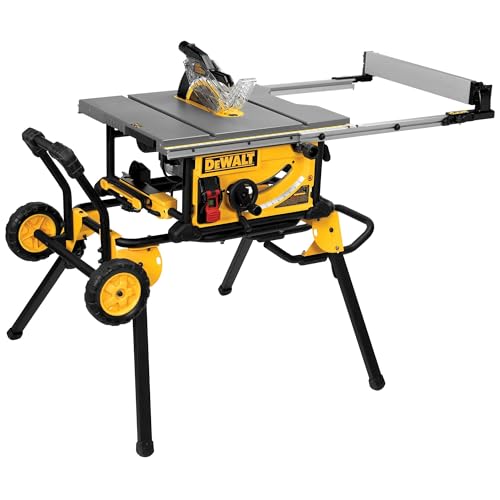

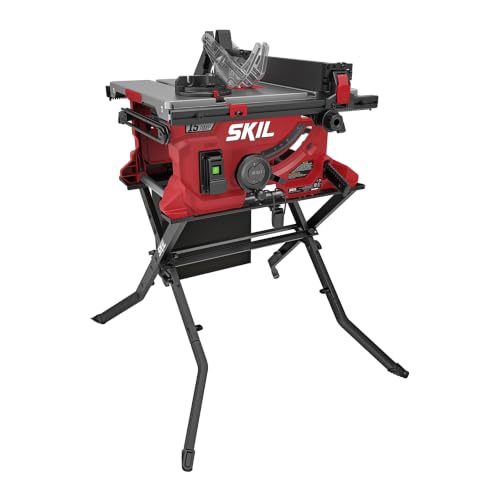
Stand Stability and Folding Mechanism
The primary advantage of choosing a table saw with an integrated mobile base is the ability to deploy a stable cutting surface anywhere. A premium folding stand uses heavy tubular steel framing paired with wide stance outriggers to resist tipping during heavy sheet breakdown. Gravity rise or scissor style mechanisms allow a single operator to lift or collapse the entire unit without straining their back.
When inspecting stand designs, look at how the locking latches engage when the legs are fully deployed. High quality systems employ spring loaded locking pins and robust foot release pedals that confirm positive engagement before you place heavy lumber onto the table. Flimsy stamped sheet metal legs with simple friction knobs often loosen over time, introducing vibration that degrades cutting accuracy.
A helpful rule of thumb is to check the footprint ratio relative to the table surface width. Stands that extend their base footprint beyond the perimeter of the tabletop offer vastly superior resistance against lateral forces when feeding wide plywood sheets. If your work involves crafting custom furniture or storage units like those in our home storage project tutorials, an unwavering stand is essential for seamless glue lines.
Fence Accuracy and Rack and Pinion Adjustment
A table saw is only as accurate as its rip fence, making the fence rail mechanism one of the most critical components to examine. Rack and pinion fence systems have become the benchmark standard for precision because they use geared tracks on both ends of the table. Turning a micro adjustment dial moves both sides of the fence simultaneously, keeping it strictly parallel to the blade at all times.
Traditional friction lock fences rely on manual alignment and front locking clamps that can skew out of parallel when tightened under pressure. In contrast, rack and pinion rails eliminate the need to measure between the fence and blade with a tape rule for every single cut. Clear, color coded scale magnifying glasses allow you to dial in exact fractions of an inch with repeatable confidence.
Always inspect whether the fence includes an auxiliary drop down support ledge for narrow rips. When the fence extends past the edge of the aluminum table surface, a secondary fold down lip prevents thin stock from dropping below the table plane. This feature guarantees flat support right through the cut, preventing dangerous binding and kickback.
Rip Capacity and Telescoping Rail Reach
Rip capacity determines the maximum width of material you can cut between the blade and the fence. Standard full size jobsite saws offer between 24.5 inches and 32.5 inches of right side rip capacity via telescoping rail extensions. A minimum 24.5 inch capacity is necessary if you regularly break down standard 4×8 foot sheets of plywood down the center.
Telescoping rails slide outward smoothly on precision bearings and lock rigidly into position when extended. When evaluating rip specs, consider how far the rails extend to the left of the blade as well as the right. Left side rip capacity is vital for bevel cutting operations where the motor housing tilts to the left, requiring fence placement on the opposite side for safety.
If you primarily cut framing lumber and small trim, a compact unit with a 24.5 inch rip limit is easier to pack into a standard vehicle trunk. However, if your carpentry work includes building built-in wardrobes or shelving as covered in our furniture construction guides, opting for a 32.5 inch telescoping capacity ensures you never run out of rail travel.
Motor Power and Soft Start Circuitry
Most portable jobsite saws operate on standard 15 amp, 120 volt electrical circuits, drawing the maximum safe power available from residential outlets. High torque motors spinning between 3,800 and 4,800 RPM ensure clean shearing action through dense hardwoods like oak, maple, and pressure treated framing timber. Sustained blade speed under load prevents burning on the cut face and reduces motor strain.
Soft start electronic circuitry is a vital motor feature that manages startup electrical draw by ramping up motor speed smoothly over one to two seconds. Saws lacking soft start produce a violent torque twist upon actuation that can trip sensitive 15 amp breakers or blow jobsite generator circuits. Smooth startup also reduces long term mechanical wear on the arbor bearings and drive gears.
Electronic overload protection and electronic blade brakes represent additional layers of motor intelligence. Modern blade brakes stop the arbor spinning in approximately three seconds after releasing the paddle switch, dramatically shortening wait times between consecutive cuts and minimizing accidental contact risks.
Blade Size, Cut Depth, and Dado Capability
Table saws in this category generally utilize either 10 inch or compact 8-1/4 inch diameter blades. A standard 10 inch blade provides a maximum vertical cutting depth of 3-1/8 to 3-3/8 inches at 90 degrees, allowing you to slice through nominal 4×4 posts in a single pass. Compact 8-1/4 inch blades deliver roughly 2-1/2 inches of cutting depth, which easily handles 2×4 framing stock but requires double passes for thicker timber.
Woodworkers who build cabinetry or joinery need to confirm whether the arbor shaft is long enough to accept a stacked dado blade set. Many entry level jobsite saws feature short arbors that only support standard single kerf blades. Models that include a dedicated dado throat plate and extended arbor allow you to cut grooves and rabbets up to 13/16 inch wide for interlocking wood joints.
Pay close attention to the bevel adjustment mechanism as well, ensuring it provides positive stops at 0 and 45 degrees. Saws with micro adjustment gearing allow you to dial in odd bevel angles quickly, which is crucial when fitting compound angles or baseboard moldings for room upgrades.
| Feature Spec | Compact 8-1/4 Inch Saws | Full-Size 10 Inch Saws | Heavy-Duty Multi-Material Saws |
|---|---|---|---|
| Maximum 90° Cut Depth | 2-1/2 Inches | 3-1/8 to 3-3/8 Inches | 3-3/8 Inches |
| Average Rip Capacity | 24.5 Inches | 25 to 32.5 Inches | 26 Inches |
| Dado Compatibility | Rare / Limited | Model Dependent | Included / Dedicated Plate |
| Stand Configuration | Folding Scissor Legs | Integrated Rolling Wheeled Base | Heavy-Duty Wheeled Tubular Frame |
| Ideal Use Case | Trim, Molding, Small Decks | Framing, Cabinetry, Plywood Sheets | Framing, Non-Ferrous Metals, Composites |
Dust Extraction Efficiency and Port Placement
Cutting dry lumber indoors or on enclosed job sites generates massive volumes of airborne fine dust that coats surroundings and threatens respiratory health. Quality portable table saws incorporate dedicated dust shrouds enclosing the bottom portion of the blade beneath the table. A standard 2-1/2 inch dust port on the rear allows direct hookup to shop vacuums and mobile extractors.
Some premium designs offer directional dust port elbows that direct waste directly downward into a disposal bucket if vacuum extraction is unavailable on site. Saws with over the blade guard dust collection capture top side ejecta before it scatters across your cutting line, maintaining clear visibility of pencil marks on dark hardwoods.
A good rule of thumb is to ensure the dust extraction port fits standard industrial hose diameters without loose adapters. Efficient sawdust evacuation prevents internal debris buildup around the bevel elevation gears, keeping height adjustment wheels turning smoothly for years of trouble free service.
Safety Systems: Modular Guards, Riving Knives, and Pawls
Modern jobsite safety systems utilize tool free modular components that can be installed or removed in seconds depending on the cut type. The riving knife sits directly behind the blade and rises or falls synchronously with arbor height adjustments. Its primary function is keeping the wood kerf from pinching together on the back of the spinning blade, which is the leading cause of violent kickback.
Anti kickback pawls feature spring loaded teeth that rest against the workpiece surface, allowing forward motion while preventing the stock from being thrown backward toward the operator. Independent split guard barriers provide a physical shield over the teeth while maintaining an unobstructed view of the cutting path from both sides.
Check the accessibility and ergonomics of the emergency stop paddle switch on the front control panel. The switch should feature a large red strike plate that allows immediate power cut off with a quick bump of your knee, keeping your hands securely on the workpiece during unexpected binding.
Portability, Wheel Design, and Frame Durability
A mobile table saw is only practical if you can comfortably roll it across gravel, wet grass, extension cords, and uneven stairs. Stands equipped with large diameter heavy duty rubber wheels or all-terrain pneumatic style tires roll smoothly over jobsite obstacles without jarring the internal alignment. Small plastic caster wheels frequently get stuck in surface ruts and can crack under heavy loads.
Examine the overall roll cage design surrounding the saw body. An open tubular steel roll cage protects vital motor parts, switches, and fence rails from impact damage when riding in the bed of a truck. Saws with built in carry handles make two person lifting straightforward when hoisting the unit into elevated vehicles.
Onboard storage retention is another crucial factor for transport convenience. The frame should feature designated friction brackets and clips to securely store the rip fence, miter gauge, push stick, blade wrenches, and guard assembly directly on the chassis so components never get misplaced between jobs.
Why You Should Trust Us
Our review process relies on rigorous technical analysis, engineering schematics, and comparative specification mapping across the power tool industry. We examine structural tolerances, motor heat dissipation rates, fence deflection data, and stand stability metrics to evaluate how portable cutting systems perform over extended duty cycles. We analyze real world feedback from professional tradespeople who rely on these tools daily.
We do not accept paid manufacturer placements or sponsored rankings, ensuring every recommendation remains objective and focused strictly on performance value. Our team evaluates cutting capacity, safety equipment integration, and long term mechanical reliability across various price points to help both DIY renovators and professional builders find the exact tool for their workload.
Our database updates continuously as new motor technologies, fence innovations, and mobile stand configurations enter the market. By monitoring consumer safety reports and manufacturer revisions, we provide an honest, data driven evaluation of the top cutting equipment available in 2026.
Final Thoughts
For professional contractors and woodworkers who require the best combination of wide rip capacity, rock solid fence stability, and an effortless rolling base, the DEWALT Table Saw 10 Inch with Foldable Rolling stands as our top overall recommendation. Its 32-1/2 inch telescoping rack and pinion fence system sets the benchmark for repeatable accuracy, while the durable rolling stand handles rough terrain with ease.
If you are looking for exceptional capability on a budget or working in tight spaces where every pound counts, the SKIL 15 Amp 8-1/4-Inch Compact Portable Jobsite delivers incredible value. It retains essential rack and pinion fence rails and a reliable folding stand while maintaining a lightweight footprint that stores easily in compact workshops. For those needing a full 10 inch blade on an economical budget, the SKIL 15 Amp 10-Inch Jobsite Table Saw with Folding provides 4×4 cutting capacity with integrated folding legs.
Carpenters demanding advanced shop features in the field will appreciate the Evolution R10TBLX 10″ Jobsite Table Saw with its multi-material cutting versatility and included dado throat plate, or the premium BOSCH GTS15-10 10 Inch Portable Jobsite Table Saw with its rapid electronic blade brake and gravity rise stand. For more residential renovation advice, browse our home improvement and living resources to plan your upcoming woodworking projects.
FAQs
What makes Best Table Saws with Folding Stand better than benchtop models without stands?
Table saws equipped with dedicated folding or rolling stands provide an engineered, balanced foundation specifically weighted for the tool. Benchtop models without stands require you to find a sturdy table or build makeshift sawhorses on site, which can introduce instability and uneven feeding surfaces during heavy ripping operations.
Can Best Table Saws with Folding Stand cut through a 4×4 post in a single pass in 2026?
A table saw equipped with a standard 10 inch blade typically achieves a 3-1/8 to 3-3/8 inch cutting depth at 90 degrees, allowing it to cut through a nominal 4×4 post with clean precision. Compact 8-1/4 inch models have a maximum depth of 2-1/2 inches, requiring you to make two separate passes by flipping the timber over between cuts.
Why is a rack and pinion fence system recommended for portable table saws?
Rack and pinion fence systems mechanically link the front and rear fence rails using geared tracks. This guarantees that turning the adjustment knob moves both ends simultaneously, keeping the fence perfectly parallel to the blade and eliminating alignment errors common with manual clamping fences.
What is the benefit of soft start circuitry on jobsite saws?
Soft start circuitry gradually ramps up the motor speed over one to two seconds when the power switch is flipped. This prevents high inrush current spikes that can trip 15 amp residential breakers, while also eliminating the violent rotational jerk that stresses arbor gears and stand linkages.
Can I run a portable table saw using a standard heavy duty extension cord?
You can safely run a 15 amp table saw on an extension cord provided you use a 12 gauge or 10 gauge heavy duty cord rated for 15 amps or higher. Using thin 14 or 16 gauge cords causes significant voltage drops that overheat the motor, reduce cutting torque, and risk damaging electronic control boards.
What is the purpose of a riving knife and should it ever be removed?
A riving knife is a curved metal plate positioned directly behind the blade to keep the cut kerf from pinching against the rising teeth, preventing kickback. It should remain installed for all standard through-cuts and only lowered or swapped for non-through operations like cutting dados or rabbets.
Do all portable table saws support stacked dado blade sets?
Not all jobsite table saws support dado sets because some compact models feature shorter arbor shafts that cannot safely thread a nut over multiple blades. Always check manufacturer specifications and confirm whether an optional or included dado throat plate is supported before attempting wide groove joinery.
How do I maintain accurate blade alignment on a mobile table saw?
Regularly inspect the parallel alignment between the blade, the miter gauge slots, and the rip fence using a dial indicator or precision combination square. Most quality saws include micro adjustment bolts underneath the table that allow you to adjust the trunnion assembly if transportation bumps shift the arbor out of true.
What safety gear is essential when operating Best Table Saws with Folding Stand?
Always wear ANSI certified safety glasses and hearing protection when operating high RPM electric table saws. In addition, always utilize a rigid push stick or push block when ripping stock narrower than six inches to keep your hands safely away from the exposed spinning blade.
How do I protect the aluminum table top from corrosion and pitch buildup?
Clean the machined aluminum table surface periodically using mineral spirits or specialized pitch remover to dissolve wood resins. Applying a light coat of paste wax or dry silicone lubricant protects the metal from moisture and significantly reduces sliding friction when pushing wide sheets across the table.






Write Your Review
No reviews yet. Be the first to share your experience!