

Clean paint atomization transforms scale models, custom cake decorating, and fine studio art into professional creations. Choosing the wrong compressor or needle diameter leads to spattering, frustrating clogs, and uneven coats on delicate surfaces.
Our team evaluated 7 top options across Master Airbrush, TIMBERTECH, crpen during September 2026 to find systems that balance reliable pressure with fluid control. Whether you want a compact cordless rig or a continuous dual fan studio compressor, our updated breakdown highlights practical performance. If you enjoy hands-on home crafts, browse our How To guides for more creative project inspiration.
Modern airbrush kits bundle needles, hose lines, and compressors in versatile configurations designed for rapid setup. Understanding the differences between tankless pumps, receiver tanks, and wireless handheld tools ensures you invest in hardware matched to your workspace.

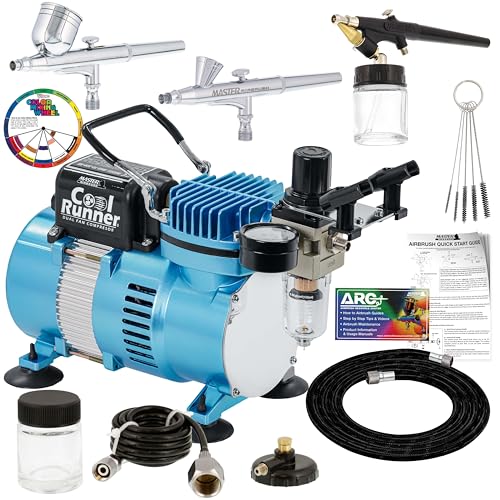
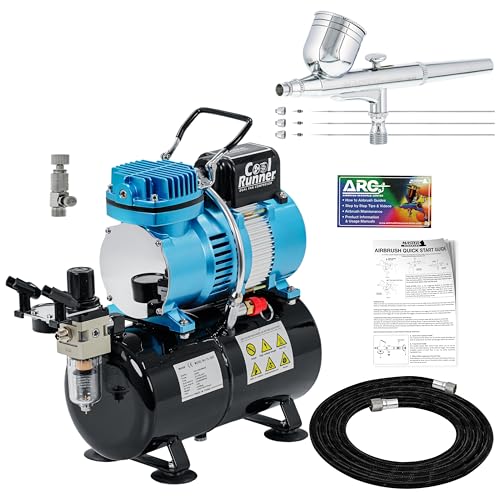


Selecting the right equipment requires balancing air pressure stability, trigger response, nozzle size, and overall maintenance demands. The following criteria will guide you through every technical choice before purchasing your next creative setup.
Compressor Type and Air Tank Presence
The compressor forms the operational heart of any reliable airbrush system. Piston-driven diaphragm pumps supply continuous airflow, but direct pumps without an air storage tank produce micro pulsations in line pressure. These tiny pressure spikes can cause subtle fluctuations in spray volume during ultra-fine line work.
Models equipped with a integrated air storage tank, such as three-liter tanks, collect compressed air before feeding your airbrush hose. The compressor motor runs only until the tank reaches maximum cutoff pressure, then automatically shuts off while you spray. This reserve eliminates pulsation completely and extends motor longevity by preventing continuous thermal buildup.
When comparing specs, look for auto-start and auto-stop pressure thresholds, commonly rated around 43 PSI start and 57 PSI stop. If you paint detailed miniatures for hours, prioritize a compressor featuring an integrated tank or dual cooling fans to maintain steady pressure without heat throttling.
Needle and Nozzle Sizing
Nozzle diameter directly dictates the level of spray detail, spray width, and fluid viscosity compatibility. Standard airbrush needles range from ultra-fine 0.2mm tips up to wider 0.8mm nozzles designed for background coating. Selecting a nozzle size that mismatches your paint thickness guarantees immediate tip dry and nozzle blockages.
A 0.2mm or 0.25mm tip excels at hairline strokes, fine illustrative artwork, and detailed nail applications with thin inks. A 0.3mm to 0.35mm nozzle represents the universal standard, handling properly reduced acrylics, enamels, and primer coats effortlessly. Meanwhile, larger 0.5mm to 0.8mm nozzles allow thicker mediums, metal flakes, and broader base coats across large surfaces.
As a practical rule of thumb, beginners should start with a 0.3mm setup because it balances clog resistance with fine line precision. Many comprehensive kits include multiple interchangeable needle sets, giving you modular freedom as your technique expands.
Trigger Action: Dual-Action vs Single-Action
Trigger mechanics determine how much physical control you have over paint flow and air pressure during every pass. Dual-action airbrushes require pushing the top trigger down for air and pulling back for paint volume. This dual movement allows the artist to blend gradients, feather edges, and vary line width mid-stroke.
Single-action airbrushes release both air and paint simultaneously whenever you depress the trigger button. Paint volume is preset via a mechanical needle stop screw on the back of the handle rather than finger position. This design provides steady consistency, making it well-suited for ceramic glazing, stencil base coats, and casual hobby work.
For serious scale modeling, portraiture, or nail artistry, dual-action mechanisms remain the professional standard. While mastering trigger coordination takes practice, the artistic versatility far outweighs the brief initial learning curve.
Paint Feed Mechanism
The feed system governs how liquid pigment enters the airflow chamber inside the airbrush body. Gravity-feed designs place a cup directly on top of the airbrush body, allowing gravity to pull paint into the needle channel. Siphon-feed units attach a bottle underneath the brush, relying on suction generated by high airflow velocity.
Gravity-feed models operate efficiently at lower pressures, often performing down to 10 or 15 PSI. This low-pressure capability minimizes overspray and lets you paint minute details with microscopic drops of fluid. Siphon-feed designs require higher operating pressures, typically 25 to 35 PSI, but allow quick swapping of large paint reservoirs.
Choose gravity feed if you work with expensive paints, fine lines, or small batches where zero waste is desired. Opt for siphon feed when coating large vehicle models, textiles, or backdrops that require uninterrupted fluid capacity.
Operating Pressure and Airflow Output
Air pressure, measured in pounds per square inch, and volume flow, measured in liters per minute, govern paint atomization quality. Benchtop hobby compressors usually provide between 1/5 and 1/6 horsepower, generating 20 to 23 liters per minute of continuous airflow. Handheld wireless battery airbrushes typically peak around 30 to 35 PSI with much lower total airflow volume.
Viscous paints require higher operating pressure to shear droplets into an ultra-fine mist without surface stippling. Fine inks and watercolors atomize cleanly at soft pressures between 12 and 18 PSI, preventing delicate paper distortion. When assessing hardware, ensure your compressor includes an adjustable diaphragm regulator paired with an analog pressure gauge.
Always adjust working pressure while holding down the airbrush trigger to check active dynamic pressure rather than resting static pressure. For broader workspace planning, check our Home & Living resources for efficient studio layout concepts.
Thermal Management and Duty Cycle
Miniature piston compressors generate substantial friction heat inside the cylinder head during extended spraying sessions. Without adequate heat dissipation, the motor case becomes hot, causing moisture condensation in airlines and premature thermal shutdown. Compact units with dual cooling fans pull cool ambient air over internal components to keep operating temperatures manageable.
Duty cycle defines how long a motor can run before requiring dedicated cool-down periods. Budget tankless compressors usually operate on a 50 percent duty cycle, needing 15 minutes of rest after 20 minutes of continuous operation. Compressors outfitted with twin cooling fans or receiver tanks can sustain extended spray runs without overheating.
If you plan to paint multi-stage automotive graphics or batch-finish custom resin figures, thermal management should be a top buying criterion. Built-in thermal overload protectors will shut down the motor safely before electrical windings warp or burn out.
Moisture Filtration and Air Quality
Compressed atmospheric air naturally sheds moisture as heated air cools inside lines and fittings. Unfiltered condensation gathers in the hose and travels directly into the nozzle, causing sudden liquid spitting over fresh paintwork. A dedicated water trap filter with an integrated release valve prevents these catastrophic paint blemishes.
High-performance setups place a transparent moisture collector at the compressor regulator outlet and an auxiliary mini pistol-grip filter directly under the airbrush handle. Clear polycarbonate bowls let you inspect water buildup visually and drain collected fluid with a simple spring valve tap. Clean, dehydrated air ensures pristine clear coats and smooth solid pigment layers.
Make certain any compressor you choose includes a modular water trap filter as standard equipment. Empty the trap before each session to maintain optimal filtration efficiency and protect sensitive needle seals from standing water corrosion.
Portability and Sound Levels
Studio workspace constraints often dictate whether a stationary bench compressor or an ultra-portable battery model fits best. Standard oil-less desktop compressors run at modest acoustic levels around 47 to 54 decibels, comparable to a quiet conversation. Wireless battery-powered pens eliminate hoses entirely, making them quiet, highly portable, and ideal for on-location makeup or nail appointments.
However, portable cordless units trade airflow volume and run time for mobility, usually running 30 to 50 minutes per full USB charge. Bench units remain tethered to electrical outlets but deliver dependable, continuous power for demanding full-day creative schedules. Weigh your mobility needs against the airflow requirements of your preferred painting medium.
If you share living quarters with family or housemates, keeping compressor volume below 50 decibels allows late-night painting sessions without disruption. Review the comparison table below to evaluate common system configurations across primary performance indicators.
| System Configuration | Typical Pressure Range | Nozzle Versatility | Noise Rating | Best Practical Use |
|---|---|---|---|---|
| Tank Compressor Kit | 0 to 60 PSI | 0.2mm to 0.5mm | Under 48 dB | Studio models, fine illustration, auto detail |
| Dual Fan Tankless Rig | 0 to 45 PSI | 0.2mm to 0.8mm | Under 50 dB | Multi-brush hobby tables, cake craft |
| Compact Basic Desktop | 0 to 40 PSI | 0.3mm Standard | 47 to 52 dB | Beginner crafts, mini painting, cosmetics |
| Cordless Battery Pen | 25 to 35 PSI Fixed | 0.25mm Detail | Under 42 dB | Barber styling, mobile makeup, nail art |
Why You Should Trust Us
Our product evaluations rely on strict spec comparisons, technical analysis, and real mechanical configurations across market-leading spray equipment. We cross-examine cylinder ratings, duty cycles, nozzle engineering, and included accessory assortments against real artisan workflows. Our goal is delivering objective, practical data so you can invest with absolute confidence.
We examine manufacturing tolerances, pressure consistency figures, and filtration efficiency without corporate sponsorship or manufacturer bias. Every kit in this roundup is assessed against practical usability standards for beginner and advanced users alike. If you want more detailed buying methodologies, check out our comprehensive curated buying guides.
By comparing verified manufacturer specifications and user pain points, our reviews highlight real-world durability and ergonomic comfort. We regularly update our content using our dynamic system to reflect current market models, pricing adjustments, and component evolutions.
Final Thoughts
Selecting the best airbrush machines requires matching your intended paint media, workspace restrictions, and detail precision needs. For dedicated hobbyists seeking unyielding pressure stability, the Master Airbrush Cool Runner II Tank Compressor is our top overall recommendation. Its three-liter air receiver tank prevents pulsation, while dual cooling fans support marathon modeling sessions without overheating.
Artists looking for a comprehensive beginner bundle that includes ready-to-spray pigments will appreciate the Master Airbrush Cool Runner II Airbrush Kit with 3. This setup packages multiple airbrush bodies, three nozzle sizes, and a primary acrylic paint set to get you painting immediately. For budget-conscious crafters who need a dependable desktop compressor at a modest investment, the Timbertech Airbrush Kit With Compressor AS18-2K delivers quiet 47-decibel operation and balanced airflow.
If mobile beauty work, nail decoration, or barber hair enhancements define your workflow, the cordless Airbrush Kit Air Brush Kit With Air Compressor offers supreme portability with quick USB charging. Choosing hardware with reliable water traps, adaptable nozzles, and comfortable weight distribution ensures every creative session remains enjoyable. Take time to clean your nozzle thoroughly after each project to preserve atomization precision for years to come.
FAQs
What makes an air compressor with a tank better than a tankless model?
An air tank acts as a pressure buffer that completely eliminates air pulses caused by the piston stroke cycle. It allows the motor to shut off intermittently, reducing operational noise and minimizing mechanical heat buildup. This constant, non-pulsing airflow ensures perfectly smooth paint atomization during delicate detail passes.
Which nozzle size is best for scale model painting?
A 0.3mm nozzle represents the most adaptable size for scale modeling, handling primer, base colors, and camouflage patterns reliably. It provides tight line control when spray pressure is dialed back while resisting clogs from standard hobby acrylics. Smaller 0.2mm needles are reserved for extreme freehand weathering and pinpoint panel shading.
How do I prevent my airbrush from clogging during use?
Clogging usually happens when paint viscosity is too thick or when dry paint builds up on the exposed needle tip. Thin your acrylic paints with dedicated airbrush reducer until they match the consistency of skim milk before pouring. Regularly wiping the needle tip with an airbrush cleaner-dampened cloth prevents tip-dry accumulation.
Can I use regular craft acrylic paints in an airbrush machine?
Standard heavy-body craft acrylics have large pigment particles that will instantly obstruct fine airbrush nozzles. If you must use craft paints, you must strain them and thin thoroughly using proper airbrush medium rather than plain water. Using dedicated pre-thinned airbrush acrylics produces superior flow and protects your needle channel.
What is the top-rated option among Best Airbrush Machines in 2026 for cake decorating?
For food artistry, dual fan systems like the Master Airbrush Cool Runner II Airbrush Kit with 3 provide reliable control across liquid food colors. Ensure you dedicate a specific airbrush gun solely to culinary work to eliminate any risk of chemical contamination. Siphon bottles and larger gravity cups make quick work of coating full fondant tiers.
Why is moisture coming out of my airbrush spray nozzle?
Compressing atmospheric air naturally draws out humidity, which condenses into liquid water inside your delivery hose. If your moisture trap is full or absent, this water sprays directly onto your artwork with unpredictable bursts. Installing a transparent moisture filter near the airbrush handle prevents condensation from ruining your finish.
How loud is a standard hobby airbrush compressor?
Hobby piston compressors are surprisingly quiet, operating between 47 and 54 decibels during active pumping cycles. This sound level is softer than a household dishwasher and allows normal room conversation without shouting. Tank models are quieter overall because their motors cycle off while you draw from reserve air.
What air pressure should I use for fine line detailing?
Fine detail work typically requires lower dynamic operating pressures between 10 and 15 PSI using well-thinned paint. Lower pressure reduces overspray bounce-back and lets you bring the needle tip within millimeters of your working surface. Broad priming and base coating generally require higher pressures between 20 and 30 PSI.
What is the difference between single-action and dual-action triggers?
Single-action triggers control air and paint simultaneously with a single downward push, requiring manual screw adjustments for fluid volume. Dual-action triggers offer continuous real-time control, letting you press down for air and draw back for paint flow. Dual-action designs allow artists to feather edges and craft intricate gradients on the fly.
How should I properly clean my airbrush machine after spraying?
Flush the fluid cup with cleaner immediately after painting, spraying fluid through into a cleaning station until the exhaust runs clear. Backflush by blocking the needle cap with a soft cloth to bubble cleaning solution back through the fluid passage. Learn how proper equipment care parallels home maintenance in our guide on organizing hobby workspaces.




Write Your Review
No reviews yet. Be the first to share your experience!