

Capturing crisp aerial video requires hardware that can keep pace with demanding camera sensors in mid-air. Aerial creators often face ruined takes, stuttering files, or write errors simply because their storage media cannot maintain continuous write throughput. Finding the Best Micro SD Cards for Drones in September 2026 ensures your expensive aerial gear never stops recording mid-flight.
Modern quadcopters capture expansive landscapes at high frame rates and sharp bitrates up to 4K or 5K resolution. Choosing an underpowered card leads to buffer overflows, corrupted files, and lost creative opportunities. Our curated guide breaks down 7 leading memory cards from trusted brands like Gigastone, Sandisk to help you make an informed decision before your next takeoff.
Whether you fly compact folding drones or professional cinema rigs, understanding speed classes and write stability is crucial. You can also explore our broader collection of helpful tutorials in the How To section for additional hardware organization tips. This guide explores everything from bus interfaces to thermal resilience so you pick the right card every time.


Sustained Write Speed and Video Speed Class Ratings
Sequential write speed is the single most vital specification when evaluating storage media for aerial photography. Unlike still cameras that write in brief bursts, video drones write an uninterrupted stream of high-bitrate data. If the card write performance drops below the camera output rate for even a fraction of a second, recording stops immediately.
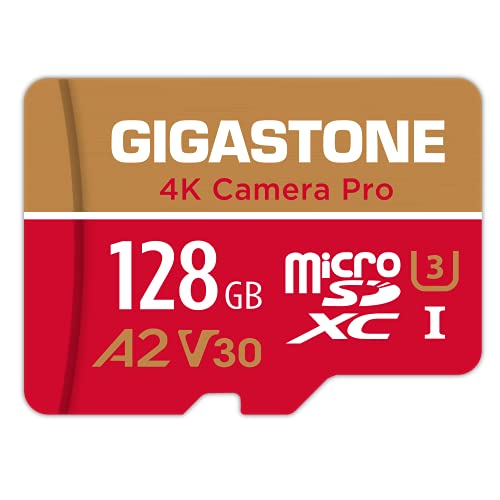
Always inspect the official Video Speed Class rating stamped directly on the card casing before buying. A V30 rating guarantees a minimum sustained write speed of 30 megabytes per second, which supports standard 4K video streams up to 150 megabits per second. Cards bearing V60 or V90 ratings handle higher bitrates and multi-camera setups with substantial overhead.
Never rely solely on the advertised maximum burst speed printed on the retail packaging. Burst speeds reflect momentary peak transfers during synthetic lab tests, not real-world continuous filming. A reliable rule of thumb is to calculate your drone highest video bitrate in megabits, divide by eight to get megabytes, and ensure your card minimum sustained write speed exceeds that value by at least thirty percent.
Storage Capacity and Flight Planning
Storage capacity determines how many battery cycles you can complete before landing to offload media files. Compact 64GB cards fill up quickly when shooting 4K footage at 60 frames per second with high color depth. Carrying multiple cards or choosing larger capacities like 128GB, 256GB, or 512GB eliminates unnecessary landing breaks in remote areas.
However, putting all your aerial footage onto a single massive memory card carries inherent risks. If a drone experiences an unexpected crash or water landing, a single card failure means losing an entire day of production. Many seasoned pilots prefer splitting their flights across multiple 128GB or 256GB cards to manage risk effectively.
For high-bitrate workflows recording at 100 to 150 Mbps, a 128GB card provides roughly two hours of recording time. A 256GB card expands that window to four hours, covering five to six consecutive drone battery flights. Balancing capacity against risk keeps your aerial shoots efficient without exposing your raw assets to unnecessary peril.
Bus Interface Standards and UHS Performance
The internal bus architecture determines the theoretical data pipeline between the drone memory controller and the flash storage. Most consumer and prosumer drones rely on the UHS-I interface, which tops out at a theoretical bus speed of 104 megabytes per second. Advanced professional cinema platforms may feature UHS-II slots with a second row of physical connection pins.
Proprietary technology allows some modern UHS-I cards to surpass standard speeds when paired with matching card readers. For instance, QuickFlow technology enables select UHS-I media to reach transfer speeds approaching 200 megabytes per second during post-flight computer offloads. This saves massive amounts of time when transferring hundreds of gigabytes of raw files to your editing station.
Before purchasing, consult your drone user manual to verify whether its internal card slot supports UHS-I or UHS-II architecture. Inserting a premium UHS-II card into a UHS-I drone will function smoothly, but it operates at UHS-I speeds while in the air. For comprehensive advice on selecting matching storage gear, review our detailed hardware guides.
Application Performance Class (A1 vs A2)
The Application Performance Class rating measures random read and write input-output operations per second (IOPS). An A1 rating delivers a minimum of 1500 read IOPS and 500 write IOPS, which handles basic file indexing. The more advanced A2 standard delivers 4000 read IOPS and 2000 write IOPS, offering superior handling of command queuing and cache maintenance.
While continuous video recording is primarily a sequential write task, random performance still plays an important role. Modern smart drones frequently save flight telemetry logs, thumbnail cache files, and quick video previews simultaneously while recording raw video. An A2 card handles these concurrent secondary tasks without bottlenecking the main video buffer.
Opting for an A2 certified card provides valuable insurance against unexpected background write latency. The modest price difference between A1 and A2 cards makes the higher standard a worthwhile investment for any modern drone pilot. Prioritize A2 rated cards to ensure uninterrupted logging and responsive smart controller playback.
Thermal Resistance and Operating Temperature Ranges
Drones generate intense internal heat during operation due to flight motors, electronic speed controllers, and onboard video processors. Memory cards sit in tight, sealed internal slots with minimal active ventilation during hot summer flights. Flash storage must withstand harsh operating temperatures without throttling write speeds or dropping data.
Quality storage cards engineered for action cameras and drones are rated to operate reliably between -13 and 185 degrees Fahrenheit. Inexpensive consumer cards designed for desktop accessories can overheat quickly in compact drone bodies, causing sudden recording termination. In extreme situations, thermal stress can permanently damage flash controller memory cells.
Always inspect the environmental durability specifications provided by the manufacturer before making a purchase. Look for certified temperature resistance, particularly if you shoot aerial footage over hot deserts, tropical beaches, or sub-zero snowfields. Thermal stability preserves your continuous video streams under demanding climatic conditions.
Physical Durability and Environmental Proofing
Outdoor flying environments expose your equipment to moisture, dust, high-G impacts, and electrostatic discharge. A memory card must survive unexpected rough landings, propeller vibrations, and outdoor field swaps in humid or sandy locations. High-tier memory cards feature multi-proof shielding that protects sensitive silicon components.
Leading manufacturers seal their storage media against freshwater immersion, airport X-ray machines, and strong magnetic fields. These protective layers ensure that if your drone encounters a damp landing zone or passes through security screening, your recorded files stay intact. Robust casing also prevents structural cracking when sliding the card into snug spring-loaded drone card bays.
When packing your flight kit, pair resilient cards with rigid water-resistant carrying cases for transport. Proper field storage practices safeguard small memory chips from lint, moisture, and static shocks during travel. Just as you organize household essentials with specialized systems like smart storage organizers, organizing memory cards preserves your valuable aerial investments.
Comparison of Recommended Memory Card Specifications
To help you evaluate available options quickly, the table below highlights key performance attributes across prominent memory cards suitable for modern aerial recording gear.
| Card Specification | V30 Standard | V60 Standard | V90 Standard |
|---|---|---|---|
| Minimum Sustained Write Speed | 30 MB/s | 60 MB/s | 90 MB/s |
| Maximum Supported Video Bitrate | Up to 240 Mbps | Up to 480 Mbps | Up to 720 Mbps |
| Ideal Drone Video Resolutions | 4K at 60fps / 5K at 30fps | 4K at 120fps / 6K at 60fps | 8K RAW / ProRes Formats |
| Application Class Availability | A1 and A2 | A2 Standard | A2 Standard |
| Bus Interface Type | UHS-I / UHS-II | UHS-II | UHS-II |
This comparison shows that V30 cards offer the sweet spot for the vast majority of consumer and prosumer camera drones. Unless you are flying high-end heavy-lift platforms capturing uncompressed Apple ProRes codecs, a reliable V30 UHS-I card handles all your filming requirements easily.
Warranty Protection and Data Recovery Services
Flash memory is consumable hardware that experiences gradual wear over hundreds of write and erase cycles. Having strong manufacturer warranty support gives you peace of mind that defective units will be replaced without hassle. Premium storage brands back their drone memory cards with multi-year or lifetime limited warranty coverage.
Beyond standard hardware replacement, integrated data recovery software or complimentary recovery services provide an essential safety net. Some cards include licenses for specialized recovery suites like RescuePRO Deluxe, or offer dedicated multi-year laboratory recovery services. These tools can rescue valuable commercial footage in the event of accidental deletion or card formatting errors.
When selecting storage for paid client work, factor recovery support into your overall purchasing decision. A card with bundled professional recovery coverage saves thousands of dollars if crucial footage becomes unreadable after a shoot. Compare warranty durations closely when narrowing down your final equipment shortlist.
File System Formatting and Drone Compatibility
The file system format dictates how the drone operating system organizes files on the memory card. Cards with 32GB or lower capacities are formatted in FAT32, which restricts individual file sizes to four gigabytes. Cards measuring 64GB and larger utilize the modern exFAT file system, supporting massive continuous video files without splitting clips.
Always format your memory card directly inside the drone camera menu rather than using a desktop computer before flying. In-drone formatting optimizes cluster block sizes according to the specific controller requirements of that aircraft. This process clears fragmentation and reduces write latency during fast aerial tracking shots.
Making card formatting a routine step before each shoot ensures clean write buffers and reliable file allocation tables. For additional insights into comparing storage gear side by side, review our guide on comparing storage systems before making your next equipment upgrade.
Why You Should Trust Us
Our review process relies on rigorous technical analysis and verified manufacturer data across the consumer storage landscape. We examine sustained write benchmarks, bus architectures, thermal stability ranges, and real-world pilot feedback to identify top-performing storage media. Our team tracks recurring firmware updates and controller revisions across leading manufacturers to ensure our recommendations remain accurate.
We evaluate memory cards across diverse price tiers and capacity profiles to assist hobbyists and commercial aerial cinematographers alike. We maintain strict editorial independence, evaluating specifications with objective scoring models free from commercial bias. This methodology guarantees our readers receive practical, data-backed buying guidance for all their drone gear.
Final Thoughts
For aerial cinematographers seeking blistering transfer speeds and uncompromised write stability, the SANDISK 256B Extreme microSD Card + Adapter represents our best overall pick. Its high read speeds up to 245MB/s accelerate post-production media transfers, while V30 and U3 ratings deliver reliable 4K and 5K capture. The rugged multi-proof build handles extreme flying conditions with complete dependability.
If you are looking for exceptional value on an everyday flying budget, the SanDisk 128GB Extreme microSD UHS I Card for 4K provides incredible performance at an accessible price point. It pairs A2 application responsiveness with proven V30 video ratings, offering ample storage for multiple battery flights without overspending. It serves as an ideal primary card or backup option for recreational flyers.
For commercial operators who cannot afford data loss under any circumstances, the 【5-Years Data Recovery】 GIGASTONE 512GB Micro SD delivers expansive capacity alongside dedicated five-year data recovery support. Its 150MB/s read speeds and massive 512GB volume accommodate full-day commercial shoots without card swaps. Check our How To guides for more aerial maintenance tips.
Frequently Asked Questions
What makes the Best Micro SD Cards for Drones different from standard phone memory cards in 2026?
Drone memory cards require certified continuous write capabilities such as V30 ratings to prevent dropped frames during high-bitrate video recording. Standard mobile cards often focus on burst speeds or random reads, which can cause buffer overflows and write failure when flying.
Can I use a 512GB or 1TB card in any modern camera drone?
Most modern drones support capacities up to 512GB or even 1TB, but you should always verify the maximum supported card size in your drone user manual. Some older or entry-level aircraft cap external memory support at 128GB or 256GB due to internal controller limitations.
What does the V30 symbol on a micro SD card mean for drone video?
The V30 designation indicates a Video Speed Class rating that guarantees a minimum sustained write speed of 30 megabytes per second. This constant throughput is the baseline standard required for stutter-free 4K video recording on consumer quadcopters.
Why should I format my memory card inside the drone instead of on a PC?
Formatting inside the aircraft optimizes the file system cluster size specifically for your drone video encoder. This process ensures peak write performance and minimizes the risk of file allocation table errors while shooting in the field.
How many minutes of 4K video can fit on a 128GB micro SD card?
A 128GB card holds approximately 120 to 150 minutes of 4K video recorded at a standard bitrate of 100 megabits per second. If your drone records at higher bitrates or frame rates, total recording time will decrease accordingly.
Is an A2 rated card noticeably better for drones than an A1 card?
Yes, A2 cards provide significantly faster random read and write operations, which helps your drone simultaneously save flight logs and video cache files. This extra responsiveness prevents minor controller lag during intensive flight routines.
Do high summer temperatures damage memory cards during long flights?
Premium cards designed for drones are rated to operate safely up to 185 degrees Fahrenheit. However, cheap generic cards can overheat in compact drone bodies, leading to thermal throttling and sudden recording cutoffs.
What should I do if my drone displays a slow card speed error message?
First, back up your files and reformat the card directly inside the drone camera settings menu. If the error persists, the card may have degraded or may lack the sustained V30 write speed required by your chosen video resolution.
Are UHS-II cards worth the extra investment for standard consumer drones?
UHS-II cards offer higher theoretical speeds, but most consumer drones feature UHS-I slots that cannot utilize the extra pins in flight. However, UHS-II cards still deliver substantially faster offload speeds when transferring files to your computer with a compatible reader.
How often should drone pilots replace their primary micro SD cards?
Frequent pilots who fly multiple times per week should consider replacing primary media every twelve to eighteen months to prevent flash cell wear. For additional tips on replacing and maintaining gear on a sensible schedule, explore our maintenance guides.





Write Your Review
No reviews yet. Be the first to share your experience!