

Venturing onto remote trails requires adequate preparation for challenging terrain and unexpected vehicle stalls. Finding the Best Recovery Straps for UTVs ensures you can safely extract stuck rigs from deep mud, loose sand, or rocky inclines without risking equipment damage. In September 2026, we evaluated 7 top-tier straps and ropes designed specifically for side-by-side utility vehicles and rugged trail conditions.
Standard truck straps are often too rigid or bulky for compact off-road platforms, leading many riders to buy the wrong gear. This updated guide cuts through marketing jargon to highlight proper stretch ratings, breaking strengths, and hardware choices that match your rig weight. You can also explore our essential off-road recovery guides to learn about broader trail preparedness and vehicle safety.
Off-road enthusiasts frequently confuse static towing equipment with elastic kinetic snatch gear, creating hazardous recovery scenarios on technical trails. We break down the mechanical differences so you can outfit your side-by-side with confidence and stay protected in remote environments.


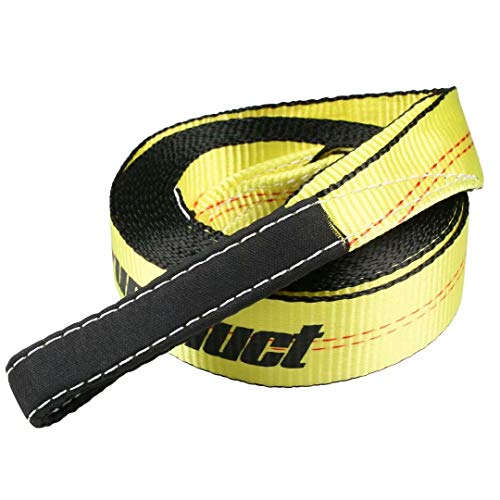

Kinetic Snatch Ropes vs Static Tow Straps
Understanding the mechanical distinction between kinetic snatch gear and static tow lines is essential for safe trail recoveries. Kinetic ropes utilize dynamic elasticity to stretch under load, storing energy that smoothly pulls a mired machine from deep mud or loose sand. Static straps do not stretch, making them suitable only for flat towing or steady, low-speed pulling without momentum.
Using a rigid static strap for a dynamic snatch pull places extreme shock loads on vehicle chassis points and mounting hardware. This sudden impact can rip off hitch receivers, snap synthetic fibers, or cause catastrophic frame distortion on lighter utility vehicles. Conversely, kinetic ropes elongate up to thirty percent, cushioning the pulling force and transferring momentum gradually.
Off-road enthusiasts should choose kinetic nylon ropes when extracting vehicles bogged down to their skid plates. Reserve polyester static straps for moving disabled machines along flat access roads or clearing fallen timber from obstructed trailways.
Minimum Breaking Strength and Working Load Limit
Minimum Breaking Strength indicates the ultimate point of structural failure when a strap undergoes extreme laboratory tension testing. Working Load Limit represents the maximum safe capacity recommended for routine recovery operations under controlled conditions. Never confuse these two specifications, as operating near the maximum breaking rating drastically increases the risk of dangerous fiber failure.
A safe baseline calculation requires your recovery strap to have an MBS equal to three times your vehicle gross weight. A fully loaded utility rig weighing two thousand pounds needs a strap rated for at least six thousand pounds of pulling force. However, deep mud suction can double the effective resistance, making a twenty-thousand to thirty-thousand-pound rating far safer.
Check manufacturer test certifications rather than relying purely on packaging claims when selecting your trail gear. Quality brands clearly stamp both ratings directly onto attached tag labels, ensuring transparent safety data during field inspections.
Webbing Material Composition and Elasticity
The core fiber composition determines how a recovery strap behaves under intense mechanical tension. Pure nylon 66 fibers provide natural elasticity, stretching anywhere from twenty to thirty percent before returning to their original length. This high elasticity makes nylon the preferred foundation for snatch straps and dynamic kinetic ropes during rapid extractions.
Polyester fibers feature minimal stretch capabilities, typically yielding less than ten percent elongation under standard trail loads. This characteristic prevents excessive bouncing during flat vehicle towing, giving the recovery operator steady, predictable control over the towed machine. Polyester also demonstrates superior resistance to moisture absorption, preventing waterlogging when operating in torrential rainfall or swampy bogs.
Examine product specifications closely to ensure you are not buying mixed polymer blends with inconsistent stretch characteristics. If your primary objective is dynamic recovery, verify that the strap explicitly specifies one hundred percent heavy-duty nylon construction.
Strap Width and Length Considerations
Selecting appropriate strap dimensions balances overall tensile strength against packability in limited utility vehicle storage compartments. Straps measuring two to three inches wide generally provide the best balance of flexibility and resistance for modern side-by-side platforms. Excessively wide straps can be difficult to loop through tight recovery shackles, while narrow straps wear out rapidly under heavy friction.
Strap length directly affects safety margins and operational maneuverability across technical off-road environments. A twenty-foot to thirty-foot strap provides ample distance between the recovery vehicle and the stuck machine, preventing dangerous collisions during dynamic pulls. Shorter straps risk bumper contact, while excessively long straps may drag through abrasive dirt and sharp trail debris.
Carrying a twenty-foot main strap alongside a compact ten-foot tree saver strap provides the ultimate field versatility. This combination lets you handle direct vehicle-to-vehicle recoveries while keeping options open for complex winch rigging configurations.
Reinforced End Loops and Abrasion Protection
The connection eyes at both ends of a recovery strap endure the highest mechanical stress and frictional heat during pulls. High-grade straps incorporate double or triple-layer reinforced webbing around the loops to prevent premature seam unraveling. Look for closed loop ends rather than metal hooks, as open hooks can detach and turn into lethal projectiles under sudden tension.
Protective neoprene or cordura abrasion sleeves shield critical load-bearing fibers from rock edges and vehicle chassis components. Sliding sleeves allow you to position heavy fabric shields over specific friction points along the strap length. Without adequate abrasion protection, a single sharp rock can slice structural threads and degrade total tensile capacity instantly.
Regularly inspect stitching patterns around each loop eye before heading out on technical multi-day overland excursions. Frayed thread clusters or loose seam borders indicate internal structural fatigue and necessitate immediate strap retirement.
Recovery Hardware and Shackle Compatibility
Connecting your strap requires heavy-duty hardware that matches or exceeds the load ratings of your vehicle attachment points. Forged three-quarter-inch carbon steel D-rings provide exceptional strength for connecting straps to aftermarket steel bumpers and receiver hitches. Ensure your metal shackles feature protective powder coatings or zinc plating to resist rust and aggressive trail mud corrosion.
Synthetic soft shackles have emerged as a lightweight, ultra-safe alternative to traditional cast-metal bow shackles. Made from high-molecular-weight polyethylene, soft shackles eliminate flying metal hazards if an anchor point or connection fails under load. They also flex easily around irregular mounting locations without scratching vehicle powder coating or damaging lightweight aluminum trail accessories.
Never attach recovery straps to stock suspension arms, steering tie rods, or decorative brush guards. Always verify that your chosen shackle fits securely through certified vehicle recovery points rated for heavy shock loading.
Environmental Resistance and UV Degradation
Extended exposure to sunlight, trail moisture, and road salts will gradually degrade synthetic polymer fibers over time. Quality recovery straps undergo polymeric treatments or UV-resistant coatings that protect inner yarn filaments from solar radiation. Unprotected straps left exposed in open cargo beds will weaken significantly after only one riding season.
Water absorption increases overall strap weight and can cause synthetic fibers to freeze stiff during cold winter snow runs. Polymeric coatings repel moisture, allowing straps to remain pliable and easy to handle in sub-zero alpine conditions. Mud and grit particles that penetrate unprotected webbing can act like microscopic knives, cutting load fibers from within.
Always rinse muddy recovery gear thoroughly with clean tap water and allow it to air dry completely before long-term storage. Following these simple maintenance routines, as highlighted in our practical vehicle setup guides, significantly extends equipment lifespan.
Storage Bags and Trail Organization
Storing dirty, damp recovery gear loose inside a vehicle cab creates unnecessary clutter and promotes mold growth on synthetic fibers. Dedicated heavy-duty canvas or PVC storage bags protect your recovery investment from sharp cargo edges and chemical spills. Compact storage bags also keep all necessary shackles, gloves, and strap wraps organized in one accessible location.
Rapid access to your extraction equipment is crucial when your vehicle is stuck in rising water or unstable mud bogs. A well-organized recovery bag allows you to deploy required gear immediately without untangling messy bundles of webbed lines. Quality bags feature heavy-duty zippers and breathable mesh panels that allow residual moisture to evaporate after wet trail runs.
For riders managing packed cargo beds, our review of equipment organization strategies offers practical advice for keeping utility gear secure. Proper compartmentalization ensures your recovery kit stays clean, organized, and ready for immediate deployment on every backcountry trip.
Safety Factors and Dynamic Recovery Protocols
Dynamic recoveries require strict adherence to safety protocols to prevent catastrophic vehicle damage or serious personal injury. Spectators and trail spotters must always maintain a safe perimeter distance equal to twice the extended strap length. This safety zone ensures that nobody stands in the path of a potential strap snapback or hardware failure.
Placing a recovery damper or heavy jacket over the midpoint of your strap acts as an effective kinetic energy absorber. If a line or connection point breaks, the heavy dampening weight drives the snapped fibers directly into the ground. This simple off-road practice dampens violent recoil forces and protects vehicle occupants from dangerous projectile impacts.
Never accelerate aggressively with slack in a static tow line, as sudden impact loading will break towing components. Reserve gentle crawling maneuvers for static towing, and coordinate clear hand signals or two-way radio communication between both vehicle operators.
| Recovery Type | Primary Webbing Material | Typical Elongation Rate | Best Trail Application | Shock Absorption Rating |
|---|---|---|---|---|
| Kinetic Recovery Rope | 100% High-Grade Nylon | 20% to 30% Elastic Stretch | Deep mud, soft sand, and snow extraction | Excellent (Smooth kinetic pull) |
| Static Tow Strap | High-Tensile Polyester | 5% to 8% Minimal Stretch | Flat ground towing, tree clearing, winch extension | Low (Rigid mechanical pull) |
| Hybrid Snatch Strap | Reinforced Nylon Webbing | 15% to 22% Moderate Stretch | General off-road recovery and trail pulls | Very Good (Balanced energy dampening) |
| Heavy Utility Tow Line | Coated Polymeric Polyester | Under 5% Minimal Stretch | Heavy vehicle recovery and flatbed securing | Minimal (Direct high-tension pull) |
Why You Should Trust Us
Our off-road editorial team analyzes mechanical recovery gear by examining verified material certifications, structural ratings, and real-world trail performance data. We focus purely on engineering specifications, including tensile breaking strengths, polymer elasticity, and connection safety factors. This objective approach ensures you receive practical recommendations based on verifiable technical capabilities rather than marketing hype.
We continuously track technical updates across the off-road industry to identify which straps deliver consistent reliability under extreme conditions. Our research evaluates laboratory test reports, hardware corrosion resistance, and seam construction methods across multiple budget categories. By focusing on data-driven parameters, we help trail riders choose equipment that protects both their vehicles and their passengers.
We do not accept sponsored product placements or free promotional merchandise from manufacturers when compiling our buyer guides. Every product in this guide is assessed against uniform safety standards and real trail requirements. For more information on our independent editorial processes, browse our durable gear storage guides.
Final Thoughts
Equipping your machine with proper extraction gear makes the difference between an enjoyable trail ride and a frustrating backcountry breakdown. The Rhino USA Kinetic Recovery Rope, 1in x 30ft earns our top overall recommendation for riders tackling deep mud, sand, and snow. Its thirty-foot kinetic synthetic fiber construction delivers exceptional thirty-three-thousand-pound breaking strength and smooth energy absorption during difficult extractions.
For trail riders seeking reliable towing capability without spending top dollar, the Recovery Tow Strap 2in×20ft Heavy Duty 20,000 LBS represents outstanding value. Its weather-resistant polyester webbing and reinforced eye loops handle flat towing and light utility work with ease. This affordable strap provides dependable twenty-thousand-pound capacity that packs easily into compact side-by-side storage compartments.
If you need a comprehensive all-in-one extraction kit with high elasticity, consider the ALL-TOP Heavy Duty Tow Strap Recovery Kit. Featuring one hundred percent nylon construction with twenty-two percent elongation and heavy-duty D-rings, it handles aggressive dynamic snatch recoveries safely. You can also explore our tips on streamlined vehicle cargo setups to keep your gear accessible on the trail.
Frequently Asked Questions
What is the difference between a tow strap and a recovery strap?
A tow strap is made from low-stretch polyester designed strictly for towing a rolling vehicle on flat surfaces. A recovery strap uses elastic nylon webbing or braided kinetic rope that stretches under load to safely snatch stuck vehicles from mud, sand, or snow.
What size recovery strap is ideal for Best Recovery Straps for UTVs in 2026?
A strap measuring two to three inches wide and twenty to thirty feet long is ideal for most side-by-side platforms. This size provides enough working distance to keep vehicles safe while maintaining a manageable pack size in tight utility cargo boxes.
Can I use a recovery strap with metal hooks for snatch pulls?
No, you should never use straps with attached metal hooks for dynamic snatch recoveries. If the strap or attachment point fails under extreme tension, the heavy metal hook becomes a dangerous projectile that can cause severe injury or property damage.
How much breaking strength do I need for my side-by-side vehicle?
Your strap should have a minimum breaking strength of at least three times the fully loaded weight of your vehicle. For most modern utility machines, a strap rated between twenty thousand and thirty thousand pounds provides a sufficient safety margin against deep mud suction.
What is the top-rated option among Best Recovery Straps for UTVs in 2026?
Kinetic nylon ropes with thirty-foot lengths and breaking ratings above thirty thousand pounds represent the top-performing category. They provide superior kinetic energy transfer, reducing mechanical strain on both the stuck vehicle and the recovery rig during aggressive trail pulls.
How do I clean and maintain my off-road recovery straps after a muddy ride?
Rinse the strap thoroughly with clean water from a garden hose to remove abrasive dirt and sand particles trapped between fibers. Allow the webbing to air dry completely in a shaded area before packing it away, avoiding direct heat sources and harsh chemical detergents.
What causes a recovery strap to snap during trail extraction?
Straps typically fail due to severe shock loading on static webbing, hidden abrasion damage from sharp rock edges, or exceeding the rated breaking strength. UV degradation and improper attachment to sharp vehicle chassis points also weaken synthetic fibers prematurely.
Are soft shackles safer than steel D-ring shackles for UTV recoveries?
Soft shackles made from synthetic fibers are significantly safer because they store much less mass if a line snaps during recovery. They also will not scratch your vehicle finish and fit easily through tight or awkwardly shaped anchor points.
How long do synthetic recovery straps last under normal off-road use?
A well-maintained recovery strap kept clean and stored out of direct sunlight typically lasts two to five years. However, you should immediately retire any strap that displays cuts, melted fibers, broken stitching, or severe chemical contamination.
Can I connect two recovery straps together to reach a stuck vehicle?
You can connect two straps by looping their reinforced eye ends together with a rolled magazine or soft dowel placed between them to prevent binding. Never join two recovery straps using a heavy metal shackle, as it creates a lethal projectile if the strap breaks.




Write Your Review
No reviews yet. Be the first to share your experience!