

Transitioning from standard Western kitchen knives to Japanese cutlery transforms how you prepare daily meals. Thin Japanese blades glide through root vegetables and delicate meats with minimal resistance, making meal preparation faster and far more enjoyable. Explore our home and living resources to learn how high-grade culinary gear elevates home cooking routines.
Many first-time buyers feel intimidated by unfamiliar metallurgical terms, specialized blade profiles, and strict maintenance routines. Purchasing an overly hard, delicate blade can result in chipped edges if you lack experience with proper cutting techniques. Our guide eliminates the guesswork by breaking down the most durable, user-friendly options available today.
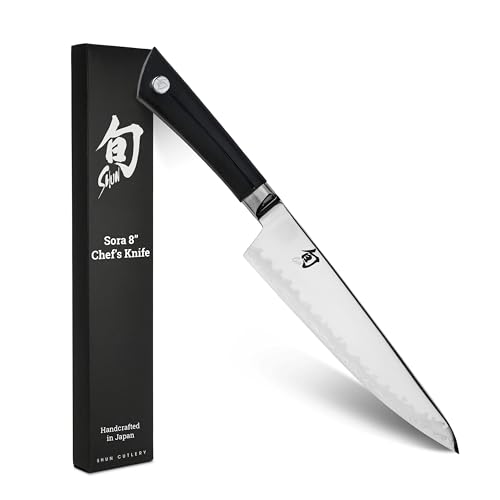
We evaluated 7 top models across trusted makers like Tojiro, Shun, imarku and more for September 2026 to find the ideal starter knives. Whether you need an all-around Gyuto or an agile Santoku, our analysis highlights balanced blades that deliver professional sharpness without demanding professional maintenance.




Blade Steel Types and Hardness Ratings
The steel formulation dictates how sharp a blade can get, how long it retains its edge, and how easily it resists chipping. Japanese knives typically measure between 56 and 62 on the Rockwell Hardness Scale (HRC). Harder steels like VG-10 and 10Cr15CoMoV hold razor-sharp edges for months of regular slicing.
Extreme hardness comes with a practical trade-off in brittleness. Softer stainless steels around 56 to 58 HRC resist accidental impacts against hard cutting boards, bones, or frozen foods far better than ultra-hard steels. For beginners, high-carbon stainless blends offer the ideal middle ground between lasting sharpness and forgiving durability.
When reviewing specifications, check whether the core uses pure carbon steel or a stainless composite. Carbon steels require immediate drying to prevent rust, whereas stainless alloys provide worry-free cleanup after slicing acidic ingredients like tomatoes or lemons. Novices should almost always start with stainless-clad or high-carbon stainless blades.
Blade Profile: Gyuto vs. Santoku
Choosing between a Gyuto and a Santoku is the first major decision for any newcomer to Japanese cutlery. The Gyuto is the Japanese equivalent of the Western chef knife, featuring an 8-inch blade with a pointed tip and a gentle belly curve. This profile excels at slicing proteins, disjointing poultry, and performing smooth rocking cuts on herbs.
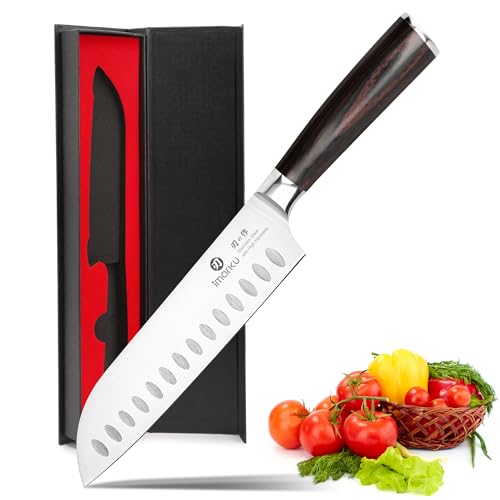
The Santoku measures around 6.5 to 7 inches and features a flatter cutting edge with a rounded sheep’s foot tip. Its name translates to three virtues, referring to its prowess with meat, fish, and vegetables. The flatter profile encourages an up-and-down push-cutting motion that produces uniform vegetable dices with minimal wrist strain.
If you regularly prep large squashes, roasts, or watermelons, the extra length of an 8-inch Gyuto provides necessary reach. If your counter space is limited or you primarily chop vegetables and boneless meats, a 7-inch Santoku offers superior agility. Consider your daily cooking habits before committing to a specific blade geometry.
Edge Bevel Angle and Cutting Geometry
Western kitchen knives are sharpened to an inclusive angle of 40 degrees, meaning 20 degrees per side. In contrast, Japanese blades feature an acute 15 to 16-degree angle per side. This narrower bevel profile creates a keen edge that parts food fibers effortlessly instead of wedging them apart.
A thinner edge produces cleaner cuts, keeping cellular walls intact so herbs stay green and onions release fewer tear-inducing compounds. However, that thinness requires disciplined cutting mechanics. Novices must avoid twisting the blade, scraping boards with the sharp edge, or cutting through dense bone.
Look for double-bevel blades that are sharpened evenly on both sides for universal ease of use. Single-bevel knives, called traditional yanagiba or deba, steer into cuts and require specialized training. Double-bevel designs allow both left- and right-handed cooks to cut straight without adjusting hand mechanics.
Steel Comparison for Starter Knives
Understanding steel performance metrics helps you balance cutting longevity against sharpening difficulty. The table below compares common beginner-friendly Japanese knife steels based on hardness, corrosion resistance, and practical toughness.
| Steel Grade | Hardness (HRC) | Edge Retention | Corrosion Resistance | Maintenance Effort |
|---|---|---|---|---|
| VG-10 Stainless | 60 – 62 | Excellent | Very High | Low to Moderate |
| 10Cr15CoMoV | 60 – 62 | Excellent | High | Low |
| 9Cr18MoV | 58 – 60 | Very Good | High | Low |
| High-Carbon Stainless (5Cr/7Cr) | 56 – 58 | Moderate | Excellent | Very Low |
| Pure Carbon (White/Blue Paper) | 62 – 65 | Superior | Low (Patina Prone) | High |
As shown in the comparison, stainless composite steels offer the best starting package for modern home kitchens. They eliminate the constant oiling demands of traditional carbon steel while providing edge life far superior to generic box-store cutlery. Browse our kitchenware guides to explore additional culinary equipment comparisons.
Handle Design: Traditional Wa vs. Modern Western
The handle fundamentally alters how a knife feels during extended cutting sessions. Traditional Japanese handles, known as Wa-handles, use lightweight wood shaped into octagonal, oval, or D-shaped profiles. They shift the overall balance point forward toward the blade, promoting an effortless pinch grip.
Modern Western-style handles feature contoured resin composites, Pakkawood, or G10 fiberglass secured with heavy rivets. These handles weigh more, shifting the balance point back toward the bolster for a familiar, secure feel. Cooks accustomed to European cutlery often feel more confident with an ergonomic Western handle during their initial transition.
Material selection also affects sanitary upkeep. Natural unsealed woods can absorb moisture and develop cracks if left in humid sink basins. Dense resin-infused Pakkawood and non-porous G10 handles provide exceptional moisture resistance and maintain structural integrity across years of intensive kitchen prep.
Weight, Balance, and Pinch Grip Dynamics
Japanese knives are noticeably lighter than German counterparts, typically weighing between 180 and 270 grams. This weight reduction minimizes wrist fatigue during marathon chopping sessions. A lighter tool also provides immediate sensory feedback, letting you feel the exact texture of whatever ingredient you slice.
A well-balanced knife should pivot naturally right where the blade joins the handle. When using a standard pinch grip with your thumb and index finger grasping the blade spine, the knife should feel weightless in your palm. Proper balance prevents your forearm muscles from overcompensating during repetitive downward cuts.
To test balance at home, rest the knife bolster across your index finger on a level cutting board. A blade-heavy balance helps push through dense root vegetables with gravity, while a neutral center balance favors precise slicing tasks. Beginners generally prefer neutral balance for maximum control.
Cladding Construction and Damascus Aesthetics
Many Japanese knives utilize San Mai construction, sandwiching a hard core steel between protective outer layers of softer stainless steel. This layered engineering shields the brittle cutting core from structural shocks and prevents blade snapping. It gives home cooks the cutting edge of premium steel with the durability of everyday tools.
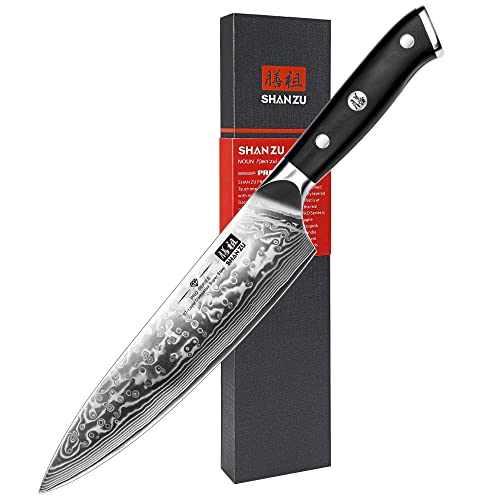
Damascus cladding features multiple folded layers of contrasting alloys etched to reveal flowing water patterns across the blade face. While visually striking, Damascus patterning is primarily aesthetic rather than a guarantee of cutting performance. Always verify the core steel alloy rather than judging a knife solely by its exterior folded pattern.
Some blades feature hammered finishes, known as Tsuchime, or hollow-ground scallops along the lower bevel. These indentations create small air pockets between the food and the steel, preventing starchy potatoes and moist cucumbers from suctioning to the blade. This feature speeds up prep work significantly.
Spine Thickness and Distal Taper
Spine thickness plays a direct role in how easily a knife moves through dense produce. Japanese chef knives feature slim spines measuring between 2.0 and 2.5 millimeters thick at the heel. Thin geometry reduces the wedging force that frequently causes firm carrots and sweet potatoes to crack open.
A quality blade exhibits a distal taper, meaning the steel gradually thins from the handle toward the pointed tip. A wafer-thin tip allows you to execute delicate tasks like mincing shallots, scoring garlic, and trimming silver skin off tenderloins. Thick, untapered budget knives lack this refined precision.
When shopping, inspect the spine profile from above to confirm a smooth, continuous narrowing toward the point. Rounded spine edges and polished choils also prevent blisters during prolonged pinch grips. Premium finishing in these contact zones indicates superior craftsmanship.
Cutting Board Selection and Edge Protection
A sharp Japanese edge is only as durable as the surface underneath it. Hard surfaces like glass, ceramic, marble, and bamboo will quickly dull or chip acute 15-degree edges. Novice cooks must pair their new cutlery with forgiving end-grain hardwood or high-density rubber boards.
Proper cutting board care is just as essential as maintaining your knife collection. Check our tutorial on home care guides for practical organizational advice across your living spaces. Giving your kitchen workstation proper care protects your culinary investments for years to come.
Never store unprotected Japanese blades loose in utensil drawers where edges strike other metal utensils. Use wooden saya sheaths, magnetic wall strips, or dedicated in-drawer slotted blocks. Safe storage prevents accidental edge micro-chipping and keeps your prep station organized and hazard-free.
Why You Should Trust Us
Our review team approaches kitchen equipment analysis with rigorous metallurgical research and practical culinary testing benchmarks. We cross-reference manufacturer metallurgy sheets, hardness ratings, and real-world edge retention metrics to filter marketing hype from genuine performance. We focus exclusively on practical specifications that directly impact daily cooking comfort.
We evaluate cutlery using structured criteria including balance distribution, factory bevel consistency, handle ergonomics, and structural finish. Our selections reflect options suited for home cooks who want professional slicing performance without unrealistic maintenance hurdles. We maintain editorial independence to provide objective, data-driven buying guidance.
Our product datasets are continuously monitored and updated to reflect manufacturing upgrades, steel composition changes, and model availability. We compare entry-level knives against high-tier standards to ensure our recommendations offer outstanding build quality for your budget. You can trust our rankings to deliver reliable, long-lasting performance.
Final Thoughts
For cooks seeking an authentic handcrafted Japanese blade with professional heritage, the TOJIRO JAPAN Professional Chef Knife – 8.2″ (21cm) remains our top overall recommendation. Its proven VG-10 core wrapped in durable stainless steel delivers elite edge retention and balanced handling. It represents the quintessential gold standard for home cooks taking their first step into serious Japanese cutlery.
If you want a comfortable entry point that offers unbeatable everyday value, the PAUDIN Chef Knife, 8 Inch High Carbon Stainless is a remarkable performer. Its forgiving 5Cr15MoV alloy resists chipping and corrosion while the ergonomic wood-grain handle provides immediate comfort. It allows beginners to master slicing techniques without fear of damaging an ultra-delicate edge.
Home cooks who want modern construction paired with true Damascus layering should consider the SHAN ZU Chef Knife 8 Inch Japanese Steel Damascus. Its 67-layer composite build, ultra-hard 10Cr15CoMoV core, and non-porous G10 handle combine exceptional aesthetics with rugged utility. Meanwhile, cooks focused on rapid vegetable dicing in tighter spaces will appreciate the scalloped blade on the imarku Santoku Knife 7 Inch with Sharp Japanese.
Investing in quality culinary tools transforms everyday meal preparation from a chore into a rewarding creative craft. Explore our related articles on how to organize your home and kitchen storage strategies to keep your cooking space functioning smoothly. Pick the blade profile that matches your meal prep routine, keep your cutting board soft, and enjoy razor-sharp slicing precision.
Frequently Asked Questions
What makes Japanese chef knives different from German chef knives?
Japanese knives use harder steel ground to an acute 15-degree edge, making them lighter, sharper, and more precise. German knives use softer steel ground to 20 degrees with a heavier bolster, prioritizing durability and resistance to heavy abuse over laser-thin slicing ability.
Can I put my Japanese chef knife in the dishwasher?
Never place a Japanese kitchen knife inside a dishwasher under any circumstance. High heat, harsh abrasive detergents, and violent water jets cause edge chipping, blade warping, and handle degradation. Always wash the blade by hand with warm soapy water and dry it immediately with a soft towel.
How often should a beginner sharpen their Japanese chef knife?
Under regular home use, a quality Japanese knife only requires full whetstone sharpening every three to six months. Regular stropping on leather or light alignment on a smooth ceramic rod every couple of weeks will maintain its keen edge between sharpening sessions.
Which blade length is ideal for someone buying Best Japanese Chef Knives for Beginners in 2026?
An 8-inch Gyuto or a 7-inch Santoku is the sweet spot for nearly all beginners. These lengths offer enough blade edge to tackle large heads of cabbage and roasts while remaining nimble enough for delicate herb chopping on standard residential cutting boards.
Do I need a sharpening stone right away?
You do not need a whetstone immediately, as quality knives arrive razor sharp out of the box. However, investing in a combination 1000/6000 grit water stone within your first few months allows you to maintain factory geometry without stripping away excessive metal.
What is the difference between Damascus steel and stamped steel?
Damascus steel features folded structural layers wrapped around a high-grade cutting core, providing visual beauty and structural strength. Stamped steel blades are cut from large sheets of uniform alloy, offering cost savings and lightweight utility but generally holding an edge for shorter periods.
Can I use a Japanese chef knife to cut through bones and frozen food?
No, cutting bones, frozen items, hard cheese rinds, or hard nutshells will cause the thin, hard edge to chip or crack. Always use a heavy cleaver or dedicated butcher knife for heavy-duty butchery tasks and reserve your Japanese blade for boneless meats, fish, and produce.
What is the benefit of a Santoku scalloped edge?
The small oval hollows along the blade reduce surface friction and prevent vacuum suction between the steel and sliced food. This allows sticky slices of potatoes, cucumbers, and apples to drop away cleanly onto the board rather than sticking to the blade face.
Are traditional wooden Wa-handles difficult to care for?
Natural Wa-handles are simple to maintain as long as you avoid submerging them in sink water. Wiping the handle dry after washing and applying food-safe mineral oil or beeswax once every few months keeps the wood sealed against moisture and prevents drying or cracking.
Why are Japanese knives honed on ceramic rods instead of steel rods?
Traditional grooved steel honing rods are designed for softer Western alloys and can chip the brittle 60+ HRC edge of a Japanese knife. Ultra-smooth ceramic rods gently realign and lightly polish the microscopic teeth of hard steel edges without causing impact damage.





Write Your Review
No reviews yet. Be the first to share your experience!