

Clean drinking water is fundamental to personal health and everyday culinary comfort. Upgrading your kitchen with modern purification appliances removes unwanted impurities while providing refreshing hydration on demand. Exploring our How To home improvement guides will help you plan your next kitchen renovation with confidence.
Many households struggle with bulky plastic jugs, poor municipal tap taste, and cluttered countertops. Choosing the right appliance requires balancing filtration efficacy, daily dispensing capacity, and cabinet footprint. In September 2026, manufacturers have introduced smarter systems with certified pollutant reduction and energy-saving designs.
We evaluated 5 Best Home Water Machines from leading brands including Avalon, Bluevua, Elkay to determine the strongest choices for every lifestyle. Whether you prefer a built-in recessed unit, a countertop reverse osmosis carafe, or a versatile bottom-loading dispenser, this guide delivers actionable insights to help you make an informed decision.



Filtration Technology and Multi-Stage Systems
The core mechanism of any drinking water system is its internal filtration method. Different technologies target distinct classes of impurities, ranging from large sediment particles to microscopic chemical compounds. Understanding what your local tap supply contains will dictate the precise filtration stages required.
Multi-stage reverse osmosis units force pressurized water through a semi-permeable membrane to strip away dissolved solids, heavy metals, and microplastics. Activated carbon block filters excel at absorbing chlorine, volatile organic compounds, and unpleasant chemical odors. Advanced models often integrate post-filtration remineralization to restore essential calcium and magnesium for balanced alkalinity.
When comparing specifications, check the pore micron rating and the specific stages included in the filter housing. A five-stage reverse osmosis system typically provides the deepest purification for compromised well water or heavily treated municipal lines. Simpler carbon block units offer higher flow rates and preserve natural mineral balance while targeting standard taste concerns.
As a practical rule, test your household tap water with an inexpensive total dissolved solids meter before purchasing. If your baseline reading exceeds two hundred parts per million, prioritize multi-stage reverse osmosis filtration. For supplies with low dissolved solids but persistent chlorine odor, a certified solid carbon block setup delivers optimal results.
Installation Type and Space Requirements
Home water units come in three primary form factors: countertop units, standalone floor dispensers, and built-in recessed wall systems. Your available kitchen layout and willingness to perform plumbing modifications will narrow down the appropriate category quickly. Assessing clear counter space and cabinet clearances prevents costly return shipments.
Countertop appliances require zero plumbing and plug directly into standard wall outlets, making them ideal for renters or smaller apartments. Freestanding dispensers occupy dedicated floor space but accept standard multi-gallon bottles without tapping into your municipal plumbing. Built-in recessed dispensers mount between wall studs to save floor space while offering a seamless luxury aesthetic.
Evaluate the depth and clearance requirements for your chosen mounting location before making a commitment. Recessed installations require access to a cold water line and adequate wall cavity clearance between standard sixteen-inch framing. Countertop systems require vertical clearance under overhead cabinetry so you can easily refill internal supply tanks.
Always measure the distance between your countertop surface and upper cabinets, allowing at least four inches of extra clearance for convenient refilling. For built-in models, verify whether battery power or dedicated electrical rough-in wiring is needed. Planning installation pathways early avoids unexpected drywall repairs or complicated plumbing rerouting.
Temperature Versatility and Dispensing Speed
Modern purification appliances frequently provide temperature regulation alongside baseline filtration. Having instant access to piping hot water, chilled refreshment, and room temperature hydration streamlines everyday kitchen workflows. Consider how your household prepares morning tea, post-workout bottles, and daily cooking recipes.
Heating elements typically utilize four hundred to five hundred watts to deliver water near boiling temperatures on demand. Compressor-driven chilling systems cool water down to crisp forty-degree levels far faster than passive thermoelectric coolers. Built-in filtration units focus strictly on ambient filtered supply, requiring separate inline chillers if icy temperatures are desired.
Examine the flow rate specification, which is normally measured in gallons per minute or seconds per glass. A slow drip rate becomes frustrating when filling large sports bottles or Dutch ovens during dinner preparation. Dispensers operating near half a gallon per minute provide smooth, rapid fills without aggressive splashing.
If hot water functionality is present, verify that the dispensing mechanism includes a child-safety lock to protect family members from accidental scalding. Dedicated switches that disable heating during warmer months can also conserve substantial electrical energy over time.
Contaminant Reduction and Safety Certifications
Purification claims must be backed by rigorous independent testing and recognized laboratory certifications. Relying on unverified marketing claims can expose your family to lingering lead, forever chemicals, or industrial runoff. Trusted international standards provide verifiable proof of contaminant extraction rates.
Look for systems certified under NSF/ANSI standards 42, 53, 58, and 401. Standard 42 covers aesthetic improvements like chlorine taste, while Standard 53 validates the removal of health hazards like lead and volatile organic compounds. Standard 58 applies specifically to reverse osmosis performance, and Standard 401 certifies protection against emerging pharmaceuticals and microplastics.
Premium manufacturers publish detailed performance data sheets listing the exact extraction percentage for each individual chemical compound. These documents detail independent laboratory testing for compounds like perfluorooctanoic acid and microscopic synthetic fibers. Reviewing these verification sheets provides absolute clarity regarding what your filtration machine actually stops.
To cross-check certification claims, you can consult online public listings maintained by organizations like the Water Quality Association. You can also explore our Home & Living section for more insights into maintaining a safe and clean living environment.
Water Efficiency and Pure-to-Drain Ratios
Reverse osmosis filtration processes inherently generate wastewater during the membrane crossflow cleaning cycle. Traditional under-sink systems historically discarded four gallons of wastewater for every single gallon of purified drinking water produced. Contemporary engineering has drastically improved these ratios through smart internal circulation pumps.
High-efficiency countertop systems now boast pure-to-drain ratios as favorable as two to one. This means two gallons of purified water are produced for every single gallon sent to the wastewater reservoir. Standalone dispensers and standard inline carbon filters create zero wastewater, directing one hundred percent of incoming volume straight into your glass.
When selecting a reverse osmosis machine, investigate how the system handles residual concentrate water. Countertop units store wastewater in a removable tank rather than sending it immediately down the drain pipe. This concentrate can be repurposed for watering non-edible houseplants, scrubbing kitchen surfaces, or soaking cookware.
If environmental sustainability and lower utility bills are top priorities, select a machine with a certified high recovery rate. Choosing efficient models reduces municipal water waste significantly over years of continuous daily use.
Maintenance Schedules and Filter Monitoring
A water machine is only as dependable as the freshness of its internal filtration media. Over time, sediment pre-filters clog with debris, carbon blocks become saturated, and reverse osmosis membranes experience mineral fouling. Structured maintenance ensures consistent water flow and uncompromised purity throughout the year.
Advanced units incorporate electronic monitor displays that track real-time gallon usage and days elapsed. These digital readouts remove guesswork by signaling precisely when replacement cartridges are required. Basic dispensers without electronic monitors require manual calendar tracking to avoid using expired filter cartridges.
Filter replacement lifespans vary dramatically across distinct stages of your purification setup. Standard composite sediment and carbon cartridges generally require replacement every six to twelve months depending on household consumption. High-capacity reverse osmosis membranes frequently last between twelve and twenty-four months before replacement is needed.
Factor replacement cartridge availability and ongoing consumable costs into your initial appliance purchasing budget. Systems with quick-twist cartridge connections allow you to swap filters in seconds without requiring specialized plumbing wrenches or water shut-off procedures.
Material Construction and Contact Surface Hygiene
The materials that contact your purified water after filtration determine whether clean water stays pristine. Lower-grade plastic storage tanks can leach chemical odors or foster internal bacterial biofilms over extended periods. Premium dispensers utilize high-grade borosilicate glass, food-grade silicone tubing, and passivated stainless steel waterways.
Borosilicate glass carafes provide an inert, non-porous holding vessel that prevents secondary taste contamination. For touch surfaces and dispensing spouts, antimicrobial surface coatings help inhibit bacterial colonization between regular kitchen cleanings. Exterior stainless steel cabinets offer superior scratch resistance and integrate gracefully with modern appliances.
Inspect the internal reservoir accessibility to ensure thorough descaling and sanitization remain straightforward. Removable drip trays, detachable holding carafes, and dishwasher-safe components streamline weekly upkeep. If you are comparing versatile home upgrades, see our practical home buying comparison guides for related organizational ideas.
Prioritizing durable materials like tempered glass and brushed stainless steel ensures your purification appliance withstands years of heavy daily use while remaining sanitary and visually appealing.
Bottle Loading Mechanism and Ergonomics
For standalone dispensers that rely on multi-gallon water jugs, loading ergonomics play a critical role in user comfort. Traditional top-loading coolers require lifting heavy forty-pound water bottles chest-high and flipping them onto a piercing spike. This awkward movement risks severe back strain, accidental floor spills, and bruised fingers.
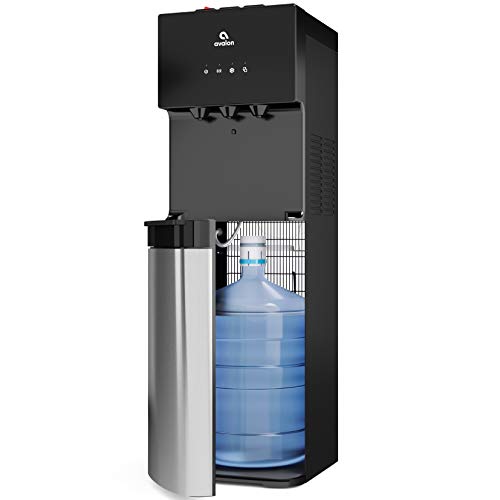
Bottom-loading water dispensers solve this ergonomic hurdle by housing the water jug within a lower cabinet base. Users simply slide the jug across the floor, insert the stainless steel intake probe, and close the cabinet door. An internal suction pump automatically draws water upward into internal heating and cooling reservoirs.
Consider whether the dispenser includes an empty-bottle warning indicator to alert you before internal reserves run completely dry. Built-in LED nightlights are another thoughtful ergonomic touch, illuminating dispensing spouts during nighttime water runs without turning on bright overhead kitchen lights.
If you prefer using pre-filled spring water bottles rather than plumbing directly into your municipal line, always choose a bottom-loading dispenser to protect your spine and maintain a tidy kitchen space.
Feature and Specification Comparison
To help you compare different categories of water appliances, the table below highlights key performance differences across form factors, filtration levels, and operational styles.
| Appliance Category | Primary Filtration Method | Plumbing Requirement | Temperature Control | Key Advantage |
|---|---|---|---|---|
| Built-in Recessed Units | NSF-Certified Carbon Block | Direct Cold Water Line | Ambient Supply | Zero Counter/Floor Footprint |
| Countertop RO Systems | 5-Stage Reverse Osmosis | None (Plug-and-Play) | Ambient with Glass Carafe | Deepest Contaminant Removal |
| Bottom-Loading Coolers | External Pre-Purified Jugs | None (3-5 Gallon Bottles) | Hot, Cold, and Room Temp | Instant Temperature Options |
Reviewing these functional differences will clarify which configuration best matches your kitchen architecture and family drinking preferences. You can also explore our Bath & Home essentials to find complementary fixtures for your living spaces.
Why You Should Trust Us
Our review process relies on comprehensive technical data analysis, independent certification registries, and detailed manufacturing specifications. We analyze structural materials, NSF/ANSI testing protocols, pure-to-drain efficiency ratings, and long-term maintenance costs across leading consumer hydration brands. This rigorous vetting eliminates marketing exaggeration and highlights genuine mechanical value.
We systematically examine user feedback and historical reliability metrics to identify common points of hardware failure. By cross-referencing filtration standards and electrical consumption rates, we evaluate how each machine performs over years of daily household operation. Our conclusions remain completely objective, transparent, and grounded in verified engineering benchmarks.
We continuously update our evaluation data to reflect updated product releases, modified filter formulations, and evolving safety guidelines. Our mission is to provide you with clear, reliable guidance so you can invest in clean drinking water systems with total peace of mind.
Final Thoughts
Selecting the right water machine transforms your daily hydration experience, delivering pure and great-tasting water directly in your home. For comprehensive purification without any plumbing complexity, our top overall recommendation is the Bluevua RO100ROPOT Countertop Reverse Osmosis. Its five-stage filtration system, high borosilicate glass carafe, and remarkable pure-to-drain ratio make it a standout countertop performer.
If you prefer an economical solution with instant temperature versatility, the Avalon A4BLWTRCLR Bottom Loading Water Cooler delivers exceptional value. It eliminates heavy lifting with its bottom-loading cabinet, dispenses crisp cold or piping hot water instantly, and features BioGuard antimicrobial protection on high-touch surfaces.
For homeowners planning a high-end kitchen renovation, the Elkay Liv EZ LBWDM0BKBC Built-in Filtered Water represents the ultimate luxury built-in option. Its certified filter removes lead and microplastics while fitting flush into your wall to preserve valuable countertop space. Matching your household needs to the right form factor ensures you will enjoy crisp, refreshing water for years to come.
FAQs
What are the primary advantages of Best Home Water Machines in 2026?
Modern home water machines provide instant access to rigorously purified drinking water while drastically reducing plastic bottle waste. They remove dangerous contaminants like lead, microplastics, and chlorine while offering customizable temperatures and convenient space-saving designs for any modern kitchen.
How often do internal water filters require replacement?
Standard sediment and carbon block filters typically require replacement every six to twelve months depending on household water consumption. Reverse osmosis membrane cartridges last longer, often delivering dependable purification performance for twelve to twenty-four months before needing renewal.
Do countertop reverse osmosis machines require permanent plumbing hookups?
Countertop reverse osmosis systems do not require any plumbing connections or under-sink drilling. They operate as plug-and-play appliances using a removable tap water reservoir and an external glass holding carafe, making them ideal for renters.
What does a pure-to-drain ratio mean for reverse osmosis systems?
The pure-to-drain ratio measures the volume of purified drinking water produced compared to the wastewater generated during membrane filtration. A two to one ratio means the machine creates two gallons of pure water for every single gallon of wastewater produced.
Why is a bottom-loading dispenser better than a top-loading model?
Bottom-loading dispensers house heavy multi-gallon water bottles inside a lower cabinet, eliminating the need to lift forty-pound jugs chest-high. This ergonomic setup prevents back strain, reduces accidental floor spills, and keeps bottles hidden behind clean cabinetry.
Can built-in water dispensers run on battery power?
Certain modern built-in dispensers are engineered to operate completely on standard AA batteries without requiring dedicated electrical wiring. These units use battery power to operate sensor-activated dispensing solenoids and digital filter tracking lights reliably.
What safety certifications should I check for before buying a water machine?
Prioritize systems certified under NSF/ANSI standards 42, 53, 58, or 401 by accredited testing organizations. These certifications provide independent proof that the machine effectively removes chlorine taste, heavy metals, volatile organic compounds, and emerging microplastics.
Does reverse osmosis water remove healthy essential minerals?
Reverse osmosis filtration strips both harmful contaminants and naturally occurring minerals from the water supply. Many premium countertop systems include dedicated remineralization stages that reintroduce beneficial calcium and magnesium ions to balance alkalinity and taste.
How much electrical power do hot and cold water dispensers consume?
Heating elements typically draw between four hundred and five hundred watts during active heating cycles, while cooling compressors consume around one hundred watts. Most appliances include energy-saving standby modes to minimize overall electricity consumption throughout the day.
How do I sanitize and clean a home water dispenser?
Clean external dispensing spouts and drip trays weekly using mild dish soap or food-safe sanitizing wipes. For internal reservoirs, run a diluted vinegar or food-grade citric acid solution through the machine every few months to remove mineral scale and prevent biofilm growth.







Write Your Review
No reviews yet. Be the first to share your experience!