

Modern desktop processors run hotter than ever as clock speeds push past previous limits. Building a reliable workstation or gaming rig requires effective thermal dissipation that does not fail unexpectedly over time. Choosing the right thermal hardware protects your investment and ensures sustained boost clocks across intensive workloads.
Selecting among the Best Dual-Tower Air CPU Coolers gives builders the cooling capability of mid-sized liquid systems without pump noise or coolant leakage risks. We evaluated 7 leading options for September 2026 to identify which models provide the strongest thermal headroom, lowest acoustic footprint, and easiest installation. Exploring our hardware guides offers broader perspectives on system assembly and component synergy.
Many builders mistakenly assume that only expensive liquid setups can tame modern multi-core processors. Modern dual-tower designs feature advanced heat pipe sintering, optimized fin stacks, and high-static-pressure fans that rival bulky radiators. This guide breaks down the essential performance metrics so you can pick the perfect thermal solution for your build.


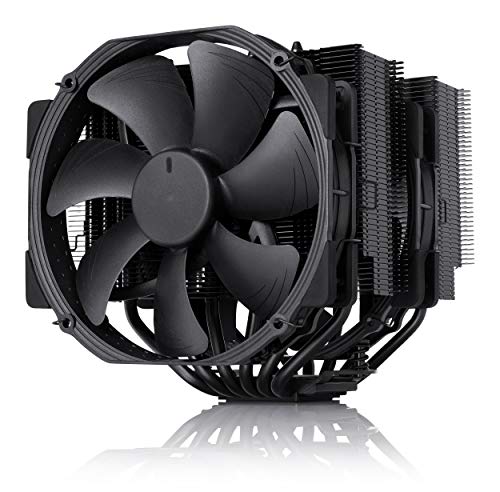
Heat Pipe Count and Sintering Technology
Heat pipes serve as the primary thermal highway moving thermal energy away from the copper base plate into the fin array. The number and diameter of these sintered copper tubes directly determine maximum heat capacity under heavy multi-threaded loads. Most standard dual-tower coolers utilize six 6mm pipes, while top-tier options integrate seven or eight pipes to support over 250W of continuous thermal output.
Modern anti-gravity heat pipe technology ensures efficient phase-change capillary action regardless of whether your case sits vertically or horizontally. Cheaper designs lose thermal transfer efficiency when mounted in standard vertical tower enclosures. Looking for AGHP or specialized sintered grooves guarantees that vapor circulation remains fast and unrestricted at all operating angles.
When comparing specifications, calculate the total contact area of the heat pipe layout across the processor heat spreader. Eight composite pipes offer superior heat spreading for large multi-die chips, whereas six thick pipes provide plenty of capacity for mainstream gaming processors. Matching pipe density to your specific processor power profile prevents thermal throttling during extended rendering sessions.
Heatsink Fin Density and Total Surface Area
The total surface area provided by aluminum cooling fins determines how effectively passing air can strip away accumulated heat. Dual-tower designs split the fin array into two distinct stacks, creating double the dissipation surface of single-tower units. Dense fin arrays maximize radiation area but require fans with higher static pressure to force air between narrow gaps.
Wider fin spacing allows lower-speed fans to push air through with minimal resistance, producing quieter overall operation under moderate loads. Manufacturers often engineer wave-shaped or stepped fin edges to break incoming air turbulence and cut high-pitch wind noise. Examining fin edge geometry helps determine if a heatsink is optimized for absolute raw dissipation or whisper-quiet airflow.
Soldered fin joints provide better long-term thermal conduction than simple press-fit assemblies because they resist thermal degradation from repeated heating cycles. For optimal results, inspect whether the fin arrays feature nickel plating to prevent surface oxidation over several years of use. Quality surface treatments preserve both thermal performance and aesthetics in humid operating environments.
RAM Clearance and Memory Height Compatibility
Dual-tower coolers naturally overhang memory slots on standard motherboards, making RAM height a critical fitment factor. Standard heatsink overhang allows roughly 32mm to 40mm of clearance under the front fan assembly. Tall RGB memory heat spreaders often collide with standard 120mm front fans, forcing builders to raise the fan higher on the fin stack.
Many modern heatsinks incorporate asymmetric cutouts along the lower fin rows to accommodate memory modules up to 60mm tall. If your case has tight side panel tolerances, shifting the front fan upward to clear tall memory might cause the fan frame to press against the glass. Checking the lower fin profile ensures you avoid unexpected physical interference during the build process.
For systems with tall memory sticks, consider pairing a heatsink that uses a recessed front fan rail or a 120mm front fan combined with a 140mm center fan. Builders planning custom configurations can read our How To tutorials for practical clearance measuring steps. Factoring in memory module dimensions before purchasing saves significant frustration during final assembly.
Overall Cooler Height and Case Clearance Limits
The total vertical height from the processor surface to the top heat pipe caps ranges from 154mm to 165mm on large dual-tower coolers. Compact mid-tower and small form factor enclosures frequently enforce strict 155mm or 160mm CPU cooler limits. Exceeding your chassis clearance prevents the side panel from closing securely and risks cracking tempered glass panels.
Verify your chassis technical specifications to confirm the maximum supported cooler height before selecting an oversized unit. Compact dual-tower units measuring under 155mm deliver surprising thermal performance while fitting into a much wider variety of mainstream cases. Always leave at least two to three millimeters of buffer space between the cooler tips and the side panel.
If you utilize vertical GPU mounting brackets or narrow motherboard layouts, also check the distance between the cooler and the first PCIe expansion slot. Massive heatsinks with wide outer frames can sit uncomfortably close to the backplate of thick graphics cards. Choosing an offset base plate design ensures ample room for GPU backplate ventilation and quick release latches.
Fan Static Pressure, Airflow, and Bearing Quality
Fans mounted on dual-tower coolers must generate sufficient static pressure to overcome the air resistance of dense aluminum fin channels. Standard case airflow fans produce high volumetric flow in open air but stall when pushing against restrictive heatsink fins. Look for specialized pressure-optimized fan blades capable of generating at least 1.5mm to 2.5mm H2O of static pressure.
Fluid Dynamic Bearings (FDB) and S-FDB mechanisms provide extended operating life and lower mechanical hum compared to sleeve bearings. High-grade bearings prevent lubricant evaporation and maintain stable rotation through years of continuous vertical and horizontal operation. PWM speed control allows fans to scale dynamically from quiet idle speeds around 400 RPM up to aggressive cooling speeds.
The acoustic signature of a dual-fan assembly depends heavily on how the center fan interacts with the surrounding metal towers. Funnel-shaped air inlets, rubber vibration-damping pads, and balanced blade designs eliminate buzzing resonances. Selecting quality fan pairings ensures that cooling stays smooth and unobtrusive during intensive computing tasks.
| Cooler Category | Heat Pipe Count | Cooler Height | TDP Capacity | Target Workload |
|---|---|---|---|---|
| Budget Dual-Tower | 6 x 6mm | 154mm – 157mm | 220W – 245W | Gaming, Mainstream Multitasking |
| Mainstream Value | 7 x 6mm | 154mm – 158mm | 240W – 265W | Content Creation, Overclocked Gaming |
| Premium Enthusiast | 6 to 8 Mixed Pipes | 162mm – 165mm | 280W – 300W+ | Heavy 3D Rendering, Flagship CPUs |
Base Plate Material, Finish, and Heat Spreader Contact
The base plate serves as the initial heat transfer junction between the processor integrated heat spreader and the internal heat pipes. Solid nickel-plated copper base plates offer uniform thermal distribution across modern multi-die architectures. In contrast, direct-touch heat pipe bases feature exposed copper pipes pressed directly against the processor lid.
Solid copper bases generally deliver more consistent contact across asymmetrical heat zones found on newer AMD and Intel chips. A finely machined, slightly convex base provides optimal mounting pressure against the center of the CPU where temperatures peak. Mirror-finish surfaces reduce micro-gaps and allow thermal compound to form an ultra-thin, highly conductive layer.
Direct-touch designs work well on smaller monolithic CPU dies but can leave tiny microscopic gaps between the flattened pipe edges. For flagship multi-chiplet processors, choose a precision-milled solid copper base plate to prevent concentrated hot spots. Proper base plate geometry guarantees reliable heat extraction under intense computing loads.
Mounting Hardware, Socket Support, and Motherboard Flex
Dual-tower coolers are substantial components that often weigh between 900 grams and nearly two kilograms when fully assembled with fans. Robust mounting hardware is essential to distribute this mechanical load evenly across the motherboard substrate. Rigid steel backplates and heavy-duty spring-loaded mounting screws prevent PCB warpage and ensure consistent contact pressure.
Socket compatibility must encompass current platforms including Intel LGA1700, LGA1851, and AMD AM5, alongside legacy configurations. Premium mounting systems include dedicated offset mounting bars that shift the cooler center directly over asymmetric chiplet hotspots. Easy-to-use bridge mounting systems allow builders to fasten the large heatsink from above using long magnetic screwdrivers.
Proper tensioning screws with fixed stopping points prevent over-tightening that could crush delicate socket pins or damage integrated memory controllers. When planning your hardware setup, consider structural integrity just as you would when reviewing slat spacing and frame support for heavy loads. Secure mounting ensures enduring stability and optimal thermal transfer across years of thermal cycling.
Acoustic Profile, Speed Controls, and Vibration Damping
Thermal capability means little if the cooling system generates harsh mechanical whines or loud airflow turbulence at modest loads. Premium dual-tower units integrate integrated speed toggle switches, low-noise inline adapters, or refined PWM curves to balance acoustics. Selecting models that operate below 28 dBA at full load keeps your workspace peaceful during marathon productivity sessions.
Integrated rubber isolation pads around fan corners isolate motor vibrations from transferring into the aluminum fin structure. Without decoupling pads, minor motor harmonics can resonate through the metal towers and create distracting chassis hums. Smooth 6-pole fan motors and aerodynamic blade trailing edges further suppress motor ticking and high-frequency noise spikes.
Configuring customized fan curves in your motherboard BIOS allows the dual fans to idle near silence during simple office tasks. Set your fan curves to ramp gradually to avoid jarring acoustic shifts whenever background processes trigger quick CPU boost spikes. Thoughtful acoustic management creates an unobtrusive, high-performance computing environment.
Why You Should Trust Us
Our hardware analysis is built on objective technical evaluation, detailed engineering comparisons, and thorough verification of thermal specifications. We analyze heat pipe composition, base plate milling quality, fan acoustic curves, and mounting pressure mechanisms across every featured cooling solution. We do not accept sponsored product placements, ensuring that our recommendations reflect genuine performance value and build quality.
We continuously track evolving socket standards, processor power consumption profiles, and chassis dimension trends to maintain up-to-date buying advice. By evaluating verified real-world user feedback and mechanical tear-downs, we verify manufacturing consistency and long-term durability. Our goal is to provide transparent, practical guidance so you can build with total confidence.
Final Thoughts
Modern air cooling has reached a point where dual-tower heatsinks reliably handle the thermal demands of top-tier desktop processors. For maximum thermal dissipation on high-wattage chips, the PCCOOLER RZ820 CPU Cooler stands out with its massive eight-pipe structure and 300W cooling capacity. It matches large liquid setups while maintaining a clean, enclosed aesthetic without external fan clips.
Builders seeking exceptional performance at an unbeatable price point should look directly at the Thermalright Phantom Spirit 120SE CPU Air Cooler and its colorful sibling, the Thermalright PS120SE ARGB CPU Air Cooler. Both models leverage seven AGHP heat pipes to deliver flagship-level thermal control at a fraction of the cost of competing units. For tight budgets, the ID-COOLING FROZN A620 PRO SE Dual-Tower CPU provides dependable cooling in a compact 157mm frame.
If near-silent acoustics and refined engineering are your primary priorities, the be quiet! Dark Rock Pro 5 CPU Cooler and the renowned Noctua NH-D15 chromax.Black deliver unmatched acoustic refinement and long-term reliability. Exploring our home and living guides offers additional insights on creating efficient, quiet workspaces. Investing in a quality dual-tower cooler guarantees stable performance and peace of mind for years to come.
Frequently Asked Questions
How do dual-tower air coolers compare to AIO liquid coolers?
Dual-tower air coolers match the thermal efficiency of standard 240mm and many 360mm AIO liquid coolers during continuous workloads. They offer superior mechanical reliability because they have no pumps to fail, no coolant to evaporate, and zero risk of fluid leaks inside your system. The only moving parts are standard case fans which can be easily replaced after years of continuous service.
Will a dual-tower air cooler block high-profile RGB RAM modules?
The front fan of a dual-tower cooler commonly extends over the primary memory slots on most standard ATX and micro-ATX motherboards. While heatsink cutouts often accommodate standard 35mm modules, tall RGB memory requires shifting the front fan upward on its mounting clips. Always confirm that your PC case has sufficient side panel clearance to accommodate the elevated fan position.
How much thermal paste should you apply with a dual-tower heatsink?
Applying a pea-sized dot in the center of the processor heat spreader or a cross-pattern on larger heat spreaders provides optimal coverage. The high mounting pressure of dual-tower spring-loaded brackets spreads the thermal compound evenly across the contact area. Avoid using excessive compound that could spill over onto the motherboard socket and electrical contacts.
What case width is required to clear large dual-tower coolers in 2026?
Most standard dual-tower coolers require between 155mm and 165mm of CPU cooler clearance inside your PC chassis. Standard mid-tower cases with a total exterior width of 210mm to 230mm typically provide ample room for these large heatsinks. Always verify your chassis specifications before purchasing to avoid side panel clearance issues.
Do dual-tower air coolers put too much physical stress on the motherboard?
Modern dual-tower coolers include heavy-duty metal backplates that distribute the weight evenly across the motherboard surface. When properly installed, the heatsink poses no threat of warping or damaging the PCB during normal desktop operation. If you ship or transport your PC frequently, removing heavy air coolers during transit helps prevent socket damage from sudden shocks.
Are dual-tower air coolers quiet during heavy gaming sessions?
Because dual-tower heatsinks have vast surface areas, their fans can spin at lower, quieter RPMs while maintaining safe temperatures. Models with fluid dynamic bearings and sound-dampening rubber pads keep noise levels below 28 dBA under typical gaming loads. Adjusting your motherboard fan curves ensures the system remains quiet without sacrificing gaming performance.
How often do you need to clean dust out of dual-tower heatsink fins?
Clearing accumulated dust out of the heatsink fin channels every six to twelve months maintains peak thermal transfer efficiency. Using a can of compressed air or an electric air duster to blow between the towers quickly removes buildup without requiring heatsink removal. Keeping your PC case intake filters clean also drastically cuts down internal dust accumulation over time.
What is the top-rated value pick among Best Dual-Tower Air CPU Coolers in 2026?
The Thermalright Peerless Assassin 120 SE ARGB CPU Air and its seven-pipe sibling represent extraordinary value in the modern cooling market. They deliver cooling performance matching coolers three times their price while offering broad socket compatibility. Builders prioritizing performance on a sensible budget find these models tough to beat.
Does cooler orientation impact cooling performance in vertical PC cases?
Advanced anti-gravity heat pipes utilize sintered copper powder and capillary micro-structures that defy gravity in any orientation. Heat pipes without AGHP technology can experience reduced thermal transfer when mounted horizontally or vertically. Choosing modern sintered designs ensures consistent performance regardless of your motherboard orientation.
Can dual-tower air coolers handle flagship high-wattage CPUs?
High-end dual-tower coolers rated for 260W to 300W TDP can easily manage flagship multi-core processors under standard power limits. While extreme liquid cooling remains preferable for aggressive manual overclocks, quality air coolers handle sustained stock workloads with ease. Exploring our workspace and setup reviews can help you design an ideal environment for high-load systems.





Write Your Review
No reviews yet. Be the first to share your experience!