

Leaving your home unoccupied during a business trip or holiday vacation can cause unnecessary worry. Traditional mechanical timers often turn lights on and off at the exact same minute every evening, which makes predictable schedules easy for observers to notice. Modern automated wall switches solve this issue by introducing randomized lighting patterns that simulate natural human activity throughout your living spaces.
Upgrading your standard wall controls to smart alternatives gives you full remote access from anywhere in the world. Modern smart hardware works across popular ecosystems like Alexa, Google Assistant, and Apple Home, letting you manage your entire property without purchasing proprietary control centers. If you are upgrading other areas of your home, check out our Home & Living section for more household planning guides.
We analyzed 5 top options in September 2026 to help you identify the Best Smart Light Switches with Away Mode for your household. Whether you need single-pole units for small bedrooms or multi-location controls for long staircases, this guide breaks down the essential technical features. You will learn how neutral wire requirements, network compatibility, and app-based randomization algorithms impact daily performance.



Vacation and Away Mode Randomization Logic
The primary reason homeowners seek out these specialized controls is the automated vacation feature. True away mode functionality does not simply run a static timer every evening. Instead, it relies on built-in software algorithms that turn connected fixtures on and off at varying intervals within defined time windows.
When reviewing switch capabilities, examine how each companion application implements its randomization engine. Some platforms allow you to set an active time window, such as sunset to midnight, and randomly trigger thirty-minute light cycles inside that frame. Other basic models only randomize activation times by ten to fifteen minutes relative to a set schedule.
A practical rule of thumb is to select switches that support distinct intervals across different rooms. Having living room, hallway, and bedroom lights turn on simultaneously looks artificial to outsiders. Staggered, irregular cycles across separate zones create a far more convincing illusion of an occupied house.
Neutral Wire Requirements and Wall Box Compatibility
Before buying any smart wall switch, you must verify the existing wiring inside your gang boxes. Most Wi-Fi enabled switches require a dedicated neutral wire to maintain constant low-voltage power for wireless communication. Homes constructed before the mid-1980s often lack neutral lines at the wall switch junction boxes.
To check your electrical setup, turn off the circuit breaker and safely remove your existing switch cover plate. Look inside the junction box for a bundle of white wires tucked toward the back, typically capped with a wire connector. If you only see two black wires and a bare copper ground wire, standard neutral-dependent switches will not operate properly.
You should also measure the depth of your existing electrical box before purchasing hardware. Smart switches house internal radios, relays, and power transformers, making them substantially deeper than conventional toggle switches. Shallow metal boxes can make tucking wires away difficult, so plan for at least two inches of usable interior depth.
Single-Pole vs. 3-Way Circuit Configurations
Identifying whether your lighting circuit is single-pole or multi-way is critical to choosing compatible hardware. A single-pole setup controls a light fixture from one physical location on the wall. In contrast, 3-way setups use two switches in different spots, such as the top and bottom of a staircase, to operate the same light source.
Standard single-pole smart switches cannot manage traveler wires found in multi-way circuits. Attempting to install a single-pole unit in a 3-way configuration will result in erratic behavior or complete failure of the secondary switch. Dedicated 3-way smart kits include master and satellite units designed specifically to communicate across traveler lines.
Always trace your circuit pathways before ordering multi-packs. For master hallways or open-concept living rooms, look specifically for 3-way designated hardware to avoid returning incompatible single-pole switches. For general electrical project planning, you can explore our How To archives for more step-by-step room improvement ideas.
Smart Home Platform Compatibility and Matter Support
Smart switches must integrate smoothly with your preferred voice assistants and central smart home hubs. Most Wi-Fi switches natively support Amazon Alexa and Google Assistant, enabling quick voice commands and routines. However, native integration with Apple Home or Samsung SmartThings often requires specific hardware certifications.
The introduction of the Matter standard has made multi-platform smart home setups significantly easier to manage. Matter-certified switches operate directly over local networks without sending commands through external vendor cloud servers. This reduces latency, improves operational reliability, and allows simultaneous control through multiple apps on iOS and Android devices.
If your household uses mixed devices from different operating systems, choosing Matter-ready hardware prevents platform lock-in. You can trigger away schedules from an iPad while other family members use Android phones to adjust local lighting. Look for certified badges in product specifications to ensure long-term ecosystem compatibility.
Local Area Network Control and Offline Reliability
Cloud-dependent smart switches can lose their advanced scheduling functions if your residential broadband connection drops. Premium smart switches store timer and vacation rules directly on their internal microcontrollers. This local memory ensures that your lights continue turning on and off even during temporary internet service outages.
Local Area Network control also delivers near-instant response times when triggering lights via in-wall toggles or local mobile apps. When switches communicate over local subnet protocols instead of pinging remote servers, command lag drops from seconds to milliseconds. This distinction is particularly noticeable when triggering whole-home lighting scenes.
When evaluating hardware, verify whether the mobile application allows direct LAN control without continuous internet access. Switches with robust local execution keep your security routines running smoothly regardless of external network disruptions. This reliability is vital when you are away from home for extended periods.
Electrical Load Ratings and Fixture Compatibility
Every smart switch features maximum voltage, current, and wattage limits that dictate what types of fixtures it can safely power. Most standard residential switches support 15-amp loads at 120 volts, providing up to 1800 watts for resistive incandescent bulbs. However, modern LED lighting behaves differently due to high inrush currents upon activation.
Electronic drivers inside LED and compact fluorescent bulbs place unique capacitive demands on internal switch relays. A smart switch rated for 1800 watts of incandescent lighting might only support 150 to 300 watts of total LED load. Exceeding these LED ratings can cause the internal relay contacts to weld shut, permanently locking the light on.
Calculate the total wattage of all light bulbs connected to a single circuit before finalizing your installation. If you are wiring a chandelier with twelve 10-watt LED bulbs, your total load is 120 watts, which falls safely within standard limits. Always cross-check the manufacturer specification sheet for dedicated LED and motor load capacities.
App Interface Usability and Grouping Functions
The companion mobile application serves as your main dashboard for setting security timers, firmware updates, and away routines. A clean, intuitive interface makes organizing switches into distinct rooms and zones straightforward. Poorly designed apps can make setting complex recurring schedules frustrating and prone to configuration errors.
Look for companion software that supports multi-device grouping and one-touch scene triggers. Grouping features allow you to link all ground-floor switches together, enabling you to activate vacation mode across eight switches with a single tap. Advanced apps also provide sunrise and sunset tracking based on your local geographic coordinates.
Firmware update support is another critical aspect of software quality. Reputable manufacturers frequently deploy security patches and stability updates to keep your smart home devices protected from digital vulnerabilities. Check that the companion application offers automated firmware notifications and simple update procedures.
Safety Certifications and Build Quality
Because smart switches remain connected to household mains voltage continuously, safety certifications are non-negotiable. Quality switches undergo rigorous electrical testing by independent laboratories such as Underwriters Laboratories or Intertek. Look for official UL or ETL certification marks stamped on the switch chassis and packaging.
Certified switches use flame-retardant polycarbonate enclosures and feature built-in thermal overload protection. These protective measures prevent electrical overheating and safeguard your home against fire hazards during power surges. Uncertified low-cost alternatives often cut corners on internal insulation and contact spacing, creating severe risks.
In addition to safety marks, examine the physical tactile response of the wall paddle. A solid mechanical click and smooth rocker travel indicate well-engineered internal components that will withstand thousands of physical presses. Prioritize certified brands with clear safety documentation and multi-year warranties.
Feature Comparison Table
| Feature Category | Single-Pole Switches | 3-Way Switch Kits | Matter-Certified Switches |
|---|---|---|---|
| Circuit Requirement | Single location control | Dual location control | Single or multi-location |
| Neutral Wire Needed | Yes (standard models) | Yes (at least one box) | Yes |
| Platform Support | Alexa, Google Home | Alexa, Google Home | Apple, Alexa, Google, SmartThings |
| Local LAN Control | Varies by brand | Varies by brand | Native direct communication |
| Best Application | Bedrooms, closets, offices | Staircases, long hallways | Multi-ecosystem homes |
Why You Should Trust Us
Our review process relies on rigorous technical analysis and comprehensive evaluation of hardware specifications. We compare electrical load ratings, wireless protocols, app functionality, and verified safety certifications across leading market options. By examining real user feedback and manufacturer documentation, we uncover long-term reliability trends that standard spec sheets overlook.
We focus on objective criteria that directly affect your home security and daily convenience. Our team tracks changes in smart home communication standards, such as Matter adoption and local network protocols, to ensure our buying advice stays current. For more home improvement tips and interior planning insights, browse our Guides section.
We do not accept sponsored placements or allow brand incentives to influence our editorial recommendations. Every model featured in our guides is evaluated against strict performance, safety, and ease-of-installation benchmarks. Our goal is to provide honest, actionable advice so you can make informed decisions for your home.
Final Thoughts
Selecting the right smart wall switch depends on your specific home wiring, preferred smart home platform, and security goals. If you want a dependable multi-pack for standard single-pole setups with reliable away mode randomization, the Tapo Smart Light Switch, Single Pole is our top overall pick. Its intuitive app guidance, UL certification, and robust scheduling make home automation accessible for any homeowner.
For households operating across multiple platforms including Apple Home, the TP-Link Tapo Matter Smart Light Switch delivers exceptional versatility. Its native Matter support allows local network communication and seamless multi-admin control without complex bridge hardware. This switch ensures your automated lighting remains responsive even if your internet connection drops while traveling.
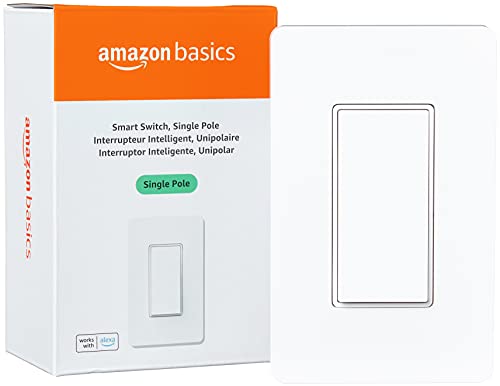
If you need to control large rooms or multi-story staircases from two separate locations, the Kasa Smart 3 Way Switch, HS210 KIT provides the ideal specialized solution. It replaces traditional 3-way setups while preserving randomized away modes across your entire hallway or entryway. Budget-focused Alexa users can also look at the Amazon Basics Smart Light Switch, Single Pole for single-room upgrades, while the GHome Smart Switches for Lights, Single Pole WiFi 4-pack offers great coverage for outfitting multiple bedrooms simultaneously.
Equipping your home with automated lighting controls gives you peace of mind whenever you step out the front door. Take time to inspect your junction boxes, confirm your neutral wiring, and select the switch style that fits your floor plan. For related organizational and storage solutions around the house, check out our guide on how to simplify your closet and storage system.
Frequently Asked Questions
How does away mode work on Best Smart Light Switches with Away Mode in 2026?
Away mode uses a built-in software algorithm that turns connected lights on and off at randomized times within a set window. This irregular pattern mimics human occupancy far more effectively than rigid, predictable daily timers. Potential observers cannot easily detect a routine, which helps deter intruders while you are away.
Do smart switches with away mode require a neutral wire for installation?
Most Wi-Fi enabled smart switches require a dedicated neutral wire inside the electrical gang box. The neutral wire provides a continuous low-voltage circuit to power the switch internal radio and sensors when the main light is off. Always inspect your junction box wiring before purchasing standard smart switches.
Can I control smart switches if my home Wi-Fi loses internet access?
You can still physically press the wall switch to toggle lights during an internet outage. Furthermore, switches with local LAN execution or Matter certification can still communicate with local smart home hubs on your home network. However, remote control from your smartphone outside the house will pause until internet service restores.
What is the difference between a single-pole switch and a 3-way smart switch?
A single-pole switch controls a light fixture from one physical wall location. A 3-way switch setup allows you to control the same light fixture from two separate wall locations, such as opposite ends of a hallway. You must buy dedicated 3-way smart switch models to accommodate the traveler wires used in multi-switch circuits.
Can smart light switches work with existing dimmable LED bulbs?
Standard smart on/off switches will turn dimmable LED bulbs fully on or completely off without issue. However, if you want to adjust brightness levels, you must purchase a dedicated smart dimmer switch model. Always ensure the total wattage of your LED bulbs does not exceed the switch rated LED capacity.
Do I need a dedicated hardware hub to run Wi-Fi smart switches?
Most Wi-Fi smart switches connect directly to your home 2.4 GHz wireless router without requiring a proprietary bridge. You simply download the companion mobile app to pair the switch to your local network. Matter-enabled switches can also link directly with existing Matter controllers like Echo devices or Apple TV hubs.
Why do smart light switches only connect to 2.4 GHz Wi-Fi networks?
Smart switches use 2.4 GHz Wi-Fi frequencies because they provide superior physical range and penetrate through drywall and electrical junction boxes better than 5 GHz signals. The low data throughput required for simple switch commands makes 2.4 GHz the optimal choice for smart home hardware reliability.
How many smart switches can I install on a single home Wi-Fi network?
Standard consumer Wi-Fi routers can typically handle thirty to fifty connected smart devices before experiencing bandwidth congestion. If you plan to install dozens of smart switches throughout your entire house, upgrading to a mesh Wi-Fi system ensures stable device connectivity across every room.
Can I set automated sunrise and sunset schedules instead of manual timers?
Yes, most smart switch companion apps allow you to schedule lighting based on local sunrise and sunset times. The application automatically adjusts activation times throughout the seasons as daylight hours shift. This feature is especially useful for exterior coach lights and front porch fixtures.
Are smart light switches safe to leave running when traveling for weeks?
Smart switches carrying UL or ETL safety certifications are engineered for continuous electrical operation and include flame-retardant enclosures. They incorporate built-in thermal protection to prevent overheating during unexpected voltage spikes. Using certified hardware ensures safe, uninterrupted automated schedules while you are away from home.




Write Your Review
No reviews yet. Be the first to share your experience!