

Collecting physical business cards at trade shows, client meetings, and sales visits often leads to messy stacks that sit on a desk for weeks. Converting those contact details into searchable digital entries usually falls behind because manual data entry takes too much time. Modern scanning hardware solves this bottleneck by capturing front and back card images and reading text fields instantly.
Choosing the right hardware among Best Wireless Business Card Scanners in September 2026 depends on whether you process single cards at client check-in desks or batch-process hundreds of leads after industry conferences. The latest generation of devices combines Wi-Fi or Bluetooth connectivity with intelligent optical character recognition. Exploring our practical office guides will give you further ideas for streamlining your administrative setup.
We evaluated 7 leading models across different price tiers to help you pick the right tool for your specific setup. Whether you need an ultra-fast desktop sheet feeder or a handheld cordless reader for mobile events, our breakdown covers the critical factors that affect scan speed, software integrations, and long-term durability.



Optical Resolution and Contact Detail Accuracy
The optical resolution of a card scanner determines how clearly small text, embossed lettering, and subtle logos appear in digital files. Most business cards use tiny fonts ranging between six and nine points, which require at least 300 dots per inch for legible reading. Selecting a scanner capable of 600 dots per inch optical capture ensures that even cursive scripts and thin metallic inks register cleanly.
Higher resolution directly influences the accuracy of automated optical character recognition software during text extraction. When a scanner captures crisp edges, the software rarely confuses numbers like eight and zero or letters like lower-case l and capital I. This reduces the time your administrative team spends manually correcting misspelled email addresses and corrupted phone numbers.
As a practical rule, standard 300 DPI mode is ideal for speedy high-volume processing where standard fonts predominate. Switch your capture settings to 600 DPI whenever you encounter colored backgrounds, glossy laminates, or textured stock. Taking a test scan of your own card stock helps identify whether default settings balance clarity and file size effectively.
Single-Pass Duplex Scanning Capability
Modern business cards frequently feature important details on both sides, including QR codes, secondary office locations, and social media handles. Single-pass duplex scanning employs dual contact image sensors that read the top and bottom surfaces simultaneously. This design eliminates the need to manually flip cards or run them through the mechanism twice.
Evaluating duplex hardware involves looking at mechanical pass-through speeds and internal feed path clearance. A dedicated duplex card slot can ingest a thick card and output a combined two-sided digital file in under three seconds. That speed difference becomes significant when you need to process several hundred leads right after a major convention.
Look for automatic de-skew and blank page removal features alongside duplex capabilities. These automated software enhancements discard empty card backs while keeping file sizes compact. If your workflow involves organizing physical tools alongside digital data, you might also like our guide on how to simplify storage systems to keep workspaces tidy.
Wireless Connectivity Protocols and Pairing Range
Wireless scanners rely on Bluetooth, 2.4 GHz wireless dongles, or direct local Wi-Fi connections to send image data to host computers and mobile devices. Bluetooth offers instant pairing with smartphones and tablets, making it an excellent protocol for field reps working trade show floors. Dedicated 2.4 GHz dongles provide lower latency and greater stability when transmitting directly to desktop workstations.
Transmission range dictates how far you can wander from your host laptop while scanning items. Standard Bluetooth models provide reliable communication up to thirty feet, while long-range industrial wireless links can reach over one hundred feet in open areas. Choosing the appropriate protocol depends on whether you work at a stationary counter or move through a showroom floor.
For office environments with heavy radio congestion, models offering dual-band Wi-Fi or multi-mode connection options provide valuable redundancy. Having a physical USB port as a fallback ensures that dead batteries or wireless interference never halt time-sensitive scanning operations. Always check whether the scanner requires proprietary pairing software or pairs via standard operating system bluetooth menus.
Software Ecosystem, OCR, and CRM Export
Hardware quality only represents half of the scanning equation, as software determines what happens to the captured information. The bundled capture utility must parse business card images into structured data fields like name, title, company, phone, and website. High-tier software suites offer native export plugins for popular CRM systems like Salesforce, HubSpot, and Microsoft Outlook.
When comparing software packages, check whether the optical character recognition runs locally on your computer or requires a cloud subscription. Local processing ensures data privacy and allows offline operation during business travel, whereas cloud engines often provide higher recognition accuracy across international languages. Look for packages that support direct webhook integrations to automate your administrative pipelines.
A reliable rule of thumb is to confirm that the companion software can export data as standard CSV and vCard files. Standard format support guarantees that you retain access to your contacts even if you migrate to a new operating system later. Verify driver standards as well, ensuring TWAIN compliance if you scan directly into specialized medical or enterprise databases.
Feed Mechanisms: Automatic Feeders vs. Dedicated Card Slots
Scanners handle media feeding either through motorized multi-sheet automatic document feeders or through dedicated manual feed slots. Automatic feeders excel at unattended batch scanning, processing stacks of twenty to thirty cards consecutively. In contrast, dedicated card slots use rigid straight-through paths designed to prevent thick plastic cards from jamming or bending.
Choosing between these two mechanisms comes down to the diversity of materials you handle every day. If you process mixed batches containing flimsy paper receipts, thin business cards, and regular letter documents, a versatile multi-sheet feeder offers the greatest utility. For dedicated check-in desks processing laminated visitor badges and thick membership cards, a straight-through manual slot provides superior reliability.
Inspect the maximum paper weight specifications before purchasing, commonly measured in grams per square meter or card thickness in millimeters. Quality feed rollers should accommodate cards up to 1.24 millimeters thick without slipping. Keeping roller surfaces clean with isopropyl wipes prevents misfeeds and paper skewing over extended operating periods.
| Feature Spec | Compact Desktop Scanner | Dedicated Card Scanner | Handheld Barcode Reader |
|---|---|---|---|
| Primary Form Factor | Multi-Page Document Feeder | Single-Card Straight Path | Pistol Grip or Wand |
| Target Media | Cards, Receipts, Letter Pages | IDs, Badges, Business Cards | 1D/2D Barcodes and Badges |
| Duplex Support | Single-Pass Dual Sensor | Single-Pass Dual Sensor | Single Surface Optical Capture |
| Typical Daily Volume | 100 to 1,000 Scans | 50 to 500 Scans | 1,000+ Fast Scans |
Battery Longevity and Power Management
Field portability requires a dependable internal rechargeable battery that lasts through an entire convention day or sales shift. Battery capacities for portable scanning devices typically range from 1800 milliamp-hours to 2600 milliamp-hours. High capacity cells allow wireless operation for several hours of continuous scanning or weeks of intermittent standby time.
Examine how the hardware handles power conservation during inactive periods between attendee interactions. Intelligent sleep modes preserve charge by powering down optical arrays while keeping wireless pairing chips in low-energy standby. Instant wake-on-feed or wake-on-trigger functions ensure that the scanner is ready to capture details the moment a card touches the feed tray.
Modern devices standardizing on USB Type-C charging make travel significantly easier by sharing cables with laptops and smartphones. Avoid hardware that requires proprietary AC barrel plugs, as replacing lost power bricks on the road can cause frustrating operational delays. Checking for a visual battery gauge on the chassis prevents unexpected shutdowns during critical customer meetings.
Media Versatility and Embossed Card Handling
Professional contacts exchange cards made from a wide variety of non-standard materials beyond simple light cardboard. Today’s business cards include heavy card stock, transparent plastic, metallic foils, and thick embossed lettering. A versatile card scanner must navigate these varying surface textures without catching on raised numbers or slipping on slick finishes.
Handling plastic cards such as driver licenses and medical insurance cards requires specialized feed clearance. Scanners designed for office reception desks often feature spring-loaded feed rollers that adjust their grip pressure based on material thickness. This mechanical adaptability prevents delicate laminated edges from peeling or scratching during optical capture.
If you regularly attend creative networking events where oversized or custom-cut cards are common, confirm the maximum scanning width. A slot measuring at least 4.25 inches accommodates both vertical and horizontal card orientations as well as extended European formats. For those organizing their full office space, checking our tips on how to compare storage cubes will assist in planning clutter-free workstations.
Chassis Durability and Portability
Mobile professionals need hardware that withstands the physical vibrations and occasional drops associated with frequent business travel. Scanners built with reinforced thermoplastic polyurethane shells absorb mechanical shocks that could otherwise knock optical mirrors out of alignment. Desktop units should feature compact footprints and folding trays to protect internal feed mechanisms when not in active use.
Portability involves balancing physical weight against structural stability during feeding operations. A scanner that is too light may shift across smooth conference tables when cards are inserted, requiring two hands for steady operation. Quality portable units incorporate weighted rubberized base pads to maintain a solid grip on slick countertops.
Look for dust covers or enclosed card bays if you operate in high-traffic trade show venues where dust and debris accumulate quickly. Airborne particles settling on internal optical glass can cause vertical streaks across scanned images, degrading OCR accuracy. Selecting a model that provides straightforward access for cleaning optical glass ensures consistent capture results over years of travel.
Operating System Compatibility and Cloud Syncing
Cross-platform compatibility ensures that your scanning hardware works seamlessly across all computers and mobile devices in your organization. The best wireless scanning solutions provide native drivers and companion applications for Windows, macOS, iOS, Android, and ChromeOS. Having unified mobile apps allows employees to scan cards straight into company cloud folders without touching a desktop computer.
Evaluate how easily the scanner connects to popular cloud storage platforms like Google Drive, Dropbox, Box, and OneDrive. Direct-to-cloud scanning allows remote sales teams to upload contact batches directly from hotel Wi-Fi networks to central office repositories. Automated cloud backup ensures that physical business cards can be safely recycled immediately after scanning.
Make sure that your chosen hardware does not lock core cloud syncing functions behind mandatory ongoing paid software subscriptions. Hardware that relies on standard open APIs or established webhook triggers gives you the freedom to customize your CRM pipelines. For broader organizational inspiration across your home office, browse our how to category archive for useful management methods.
Why You Should Trust Us
Our review process centers on thorough, data-driven analysis of technical specifications, manufacturer documentation, and verified user operational patterns. We spend hours examining optical sensor resolutions, paper feed tolerances, software ecosystem compatibility, and wireless communication benchmarks across multiple price categories. This methodical comparison allows us to identify real performance differences between standard office document scanners and dedicated card management systems.
We do not accept paid placements or promotional compensation from hardware manufacturers when selecting products for our buying guides. Every recommendation is based on transparent engineering criteria, software versatility, and overall build quality. We continuously monitor driver updates and platform compatibility changes to ensure our recommendations remain accurate throughout 2026.
Our goal is to help professionals make informed purchasing decisions that streamline administrative workloads and protect valuable business contacts. By breaking down technical specifications into practical operational insights, we give you the exact facts needed to equip your desktop or mobile sales team with confidence.
Final Thoughts
Selecting the right wireless business card scanning solution comes down to understanding your primary volume requirements and working environment. For desktop professionals who manage large stacks of contacts, invoices, and mixed receipts, the ScanSnap iX1300 Wireless or USB Double-Sided Color is our top overall pick. Its versatile space-saving design, rapid duplex scanning, and intuitive software make organizing paper contacts completely painless.
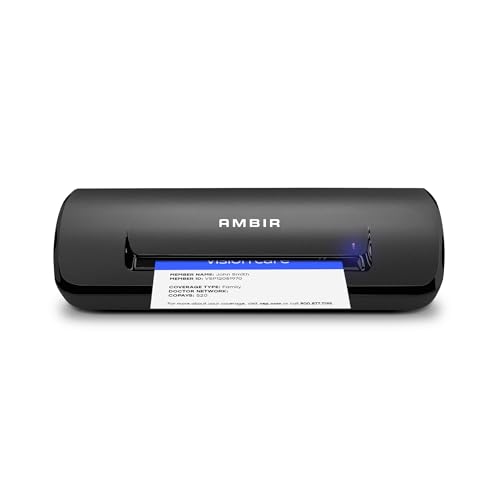
If you need an economical option specifically for reading trade show badge barcodes, QR codes, and digital contact screens, consider the Symcode Bluetooth Wireless Barcode Scanner. It delivers excellent multi-mode wireless flexibility, an auto-sensing desktop stand, and offline memory storage at an entry-level cost. For medical check-in desks and front offices that prioritize plastic ID cards and duplex scanning, the Ambir ImageScan Pro 687-AS Duplex Card Scanner offers dedicated card handling with robust TWAIN driver support.
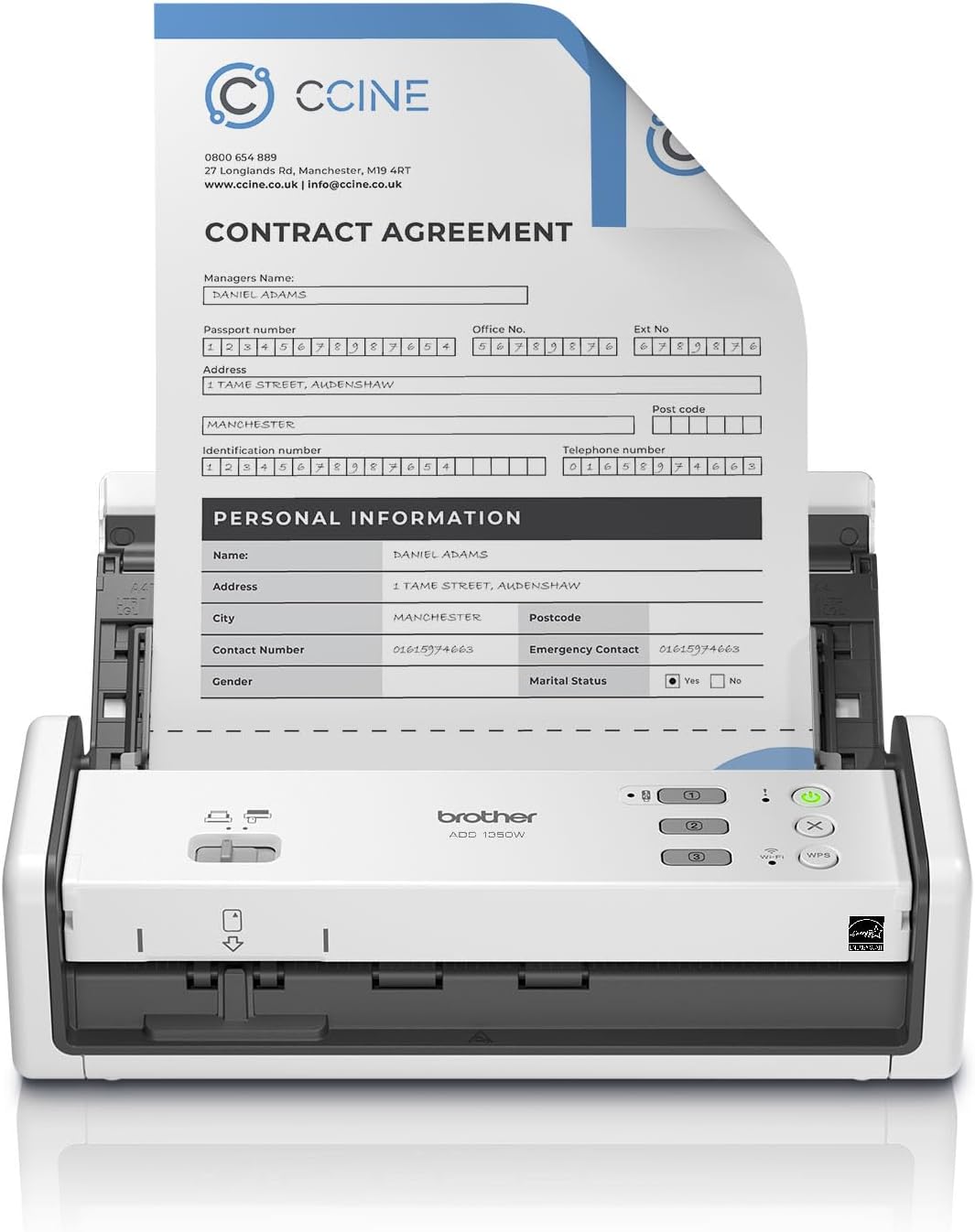
Another strong desktop contender is the Brother ADS-1350W Wireless Compact Desktop Scanner, which balances fast thirty-page-per-minute scanning with dedicated business card and receipt software tools. Before making your final choice, consider reading our advice on budget organization systems to streamline both your physical desk space and digital document filing.
Frequently Asked Questions
What makes Best Wireless Business Card Scanners better than smartphone apps?
Dedicated card scanners feature controlled internal lighting, specialized feed rollers, and uniform optical sensors that prevent shadows and perspective distortion. While mobile phone cameras can capture single cards in bright light, dedicated hardware processes large batches in minutes with significantly higher OCR accuracy. Hardware scanners also eliminate the glare associated with glossy or metallic business cards.
Can Best Wireless Business Card Scanners handle thick plastic IDs in 2026?
Yes, many modern card scanners feature straight-through feed slots explicitly designed to accommodate laminated badges, driver licenses, and insurance cards up to 1.24 millimeters thick. These specialized paths prevent rigid cards from bending or jamming inside the feed mechanism. Always verify the maximum media thickness specification if you frequently digitize plastic cards.
How do wireless card scanners transfer contacts into CRM systems?
Scanners use bundled optical character recognition software that parses text fields like names, phone numbers, and addresses from the captured image. Once digitized, the software exports these fields directly into CRM platforms like HubSpot or Salesforce via standard CSV, vCard, or API integrations. Some advanced models support direct webhooks that trigger automated lead workflows.
What optical resolution is recommended for business card scanning?
An optical resolution of 300 DPI is standard and provides clear text reproduction for most printed business cards and receipts. However, setting your scanner to 600 DPI is recommended when scanning cards with small decorative fonts, textured paper, or colored backgrounds. Higher DPI settings give the OCR software sharper letterforms to interpret accurately.
Do I need an active internet connection to scan business cards wirelessly?
Local wireless connections like Bluetooth and 2.4 GHz wireless dongles communicate directly with your computer or mobile device without requiring active internet access. Scanners with local OCR software can process and save contact details entirely offline. Internet connectivity is only needed when syncing extracted contact databases to cloud storage or remote CRM platforms.
What is the difference between 1D and 2D wireless scanners?
A 1D scanner reads traditional linear barcodes commonly found on retail products and warehouse inventory tags. A 2D scanner uses an area imager that can read two-dimensional codes like QR codes, Data Matrix symbols, and PDF417 codes found on modern trade show badges and electronic business cards. Choosing a 2D-capable model ensures compatibility with modern event badge formats.
Can I scan double-sided business cards in a single pass?
Scanners equipped with single-pass duplex technology feature dual optical sensors that capture both the front and back of a card simultaneously. This capability cuts scanning time in half and automatically pairs the two images into a single digital record. It is especially useful for capturing secondary contact details and QR codes printed on card backs.
How long do rechargeable batteries last in portable wireless card scanners?
Most portable wireless card scanners and handheld readers feature lithium-ion batteries ranging from 1800 mAh to 2600 mAh. Under typical operational conditions, these batteries provide between 10 and 24 hours of continuous scanning or several weeks of standby time. Most models recharge conveniently using standard USB cables.
How do I keep scanner feed rollers clean and prevent paper jams?
Over time, paper dust, ink residue, and skin oils can collect on internal rubber feed rollers, causing cards to slip or feed crookedly. You can maintain optimal feeding performance by gently wiping the rollers with a lint-free cloth lightly dampened with isopropyl alcohol. Performing this basic maintenance every few hundred scans keeps card feeding smooth and prevents image skewing.
Are TWAIN drivers important when selecting a card scanner?
TWAIN is an industry-standard software protocol that allows your scanner to communicate directly with third-party software programs without opening a separate capture utility. If you plan to scan business cards or identification documents straight into proprietary enterprise, legal, or medical software, having a TWAIN-compliant driver is essential for seamless operation.





Write Your Review
No reviews yet. Be the first to share your experience!