

Electronics repair and circuit board assembly demand tools that respond instantly to your workflow. Traditional soldering tools often take several minutes to reach operating temperature, leading to frustrating downtime and inconsistent thermal performance. Choosing one of the Best Soldering Irons with Fast Heat Up eliminates long warm-up delays and ensures reliable heat delivery for delicate components.
Modern heating technology has transformed how quickly bench tools can reach peak temperatures. Advanced ceramic cores and integrated cartridge tips can now melt solder in under ten seconds without overheating sensitive circuit traces. For additional home workshop advice and project ideas, you can explore our comprehensive How To hub to upgrade your technical workspace.
We evaluated 7 top options across leading manufacturers like X-TRONIC, YIHUA, Liouhoum and more to help you identify the right balance of thermal speed, temperature stability, and ergonomic comfort. Whether you need a portable USB-powered field pen or a heavy-duty bench station for continuous manufacturing, this guide provides the detailed criteria you need to make an informed investment.




Selecting the ideal quick-heating tool requires understanding how heating elements, wattage ratings, and thermal control circuits interact during actual soldering tasks. A tool that heats up fast on paper must also maintain that heat when touching large ground planes or thick copper wiring. The following criteria highlight the primary specifications and design factors that differentiate mediocre tools from professional-grade equipment.
1. Heating Element Technology
The internal heating element design determines how quickly thermal energy transfers from the power supply directly into your soldering tip. Traditional wire-wound nichrome heaters transfer thermal energy slowly through multiple mechanical interfaces, often requiring up to two minutes to reach stable working temperatures. In contrast, modern ceramic heating elements and integrated cartridge tips embed the heating wire directly adjacent to the copper core.
Integrated cartridge tips place the heating coil and thermal sensor inside a single sealed unit near the very point of the tip. This direct physical coupling reduces thermal resistance and allows tools to reach working heat in as little as three to seven seconds. When comparing models, prioritize ceramic or active cartridge systems over passive sleeve-and-barrel designs for the quickest startup times.
A helpful rule of thumb is that integrated cartridge systems yield almost zero startup delay during intermittent bench work. If you frequently turn your iron on and off throughout a repair session, an active cartridge iron prevents wasted minutes at the bench. Passive ceramic systems remain a cost-effective alternative while still delivering working heat in fifteen seconds or less.
2. Wattage and Thermal Recovery Speed
Operating wattage indicates the raw electrical power available to convert into thermal energy at the tip. Standard hobby tools rated at thirty or forty watts frequently bog down when soldering large terminal lugs or multi-layer printed circuit boards. High-performance models rated between sixty and one hundred watts deliver the necessary energy reserve to maintain steady heat transfer without temperature sag.
Thermal recovery is just as crucial as initial heat up time for preventing cold solder joints during repetitive work. When a hot tip touches a cold solder joint, the component absorbs thermal energy and drops the tip temperature instantly. A high-wattage power delivery system quickly detects this thermal loss and supplies immediate current to restore the target temperature.
For general consumer electronics and wiring repairs, a sixty-watt to seventy-five-watt unit provides ample overhead for both precision joints and heavier gauge cables. Look for units that publish recovery times alongside initial heating specs, as fast recovery prevents prolonged heat application that can damage sensitive board substrates.
3. PID Temperature Stabilization and Sensors
Proportional-Integral-Derivative temperature stabilization technology monitors the actual tip temperature in real time using microcontrollers. Rather than simply switching the heating element fully on or completely off, PID algorithms calculate the precise power output needed to hold the target setpoint. This constant feedback loop prevents temperature overshoot and thermal undershoot during active soldering.
High-speed sampling circuits can check tip temperatures every twenty milliseconds to adjust power delivery with extreme precision. Without active temperature stabilization, rapid-heating irons risk thermal runaway, which burns delicate flux and oxidizes the iron tip prematurely. Check manufacturer specifications for PID compensation cycle speeds to ensure high thermal stability.
A reliable PID system allows you to work comfortably on sensitive microcontrollers without worrying about sudden temperature spikes. When organizing your workspace, pairing stable tools with proper setup organization from our Guides section will create an efficient and safe repair station.
4. Power Source and Portability Options
Soldering equipment is no longer restricted to bulky mains-powered desktop stations attached to wall outlets. Modern tools utilize direct alternating current mains plugs, USB-C Power Delivery protocols, or rechargeable lithium-ion battery packs. Mains-powered stations provide uninterrupted continuous power for long factory shifts, while USB-C models offer incredible versatility in field environments.
USB-C Power Delivery irons can operate from high-wattage wall bricks, automotive power adapters, or portable power banks capable of delivering nine to twenty volts. Battery-operated cordless units provide total freedom of movement in confined spaces like automotive engine bays or aerial drone repairs. However, battery irons typically trade continuous run time and sustained maximum wattage for physical convenience.
If your repair work is primarily stationed at a dedicated electronics bench, a mains-powered digital station delivers the most consistent long-term reliability. For technicians who frequently travel to job sites, a USB-PD compatible pen tool offers rapid heating speeds with minimal toolbag bulk.
5. Tip System Geometry and Thermal Mass
The physical design and alloy composition of the soldering tip directly dictate how efficiently thermal energy transfers into your target joint. Fine needle tips offer exceptional visibility around microscopic surface-mount components but carry very little thermal mass, causing faster cooling upon contact. Bevel and chisel tips hold significantly more thermal mass to quickly flood larger solder connections with heat.
Rapid heating units typically support standardized tip families such as 900M series or proprietary cartridge designs like C210 styles. Cartridge tips have their heating element permanently integrated into the shaft, which ensures instant response at the cost of higher tip replacement prices. Modular 900M tips slide over a ceramic heating sleeve, offering economical tip replacements with slightly slower thermal transfer.
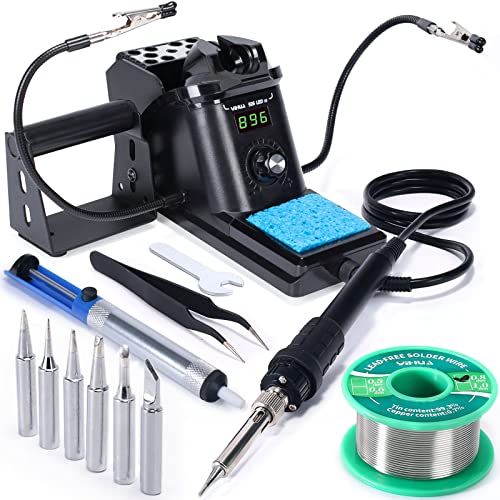
Always select a tool that includes a balanced variety of tip shapes in the initial kit package. Having a fine conical tip, a knife tip, and a medium chisel tip ready on your bench allows you to tackle diverse circuit board challenges without compromising thermal speed.
6. Ergonomics, Weight, and Cable Flexibility
A fast-heating soldering tool must feel balanced and comfortable in your hand during extended assembly sessions. Heavy or poorly balanced handpieces can cause hand fatigue and diminish your fine motor precision when placing small components. Silicone heat-resistant grips protect your fingers while maintaining a secure, tactile hold close to the working tip.
Cable flexibility is another critical ergonomic factor that is often overlooked during initial product comparisons. Stiff polyvinyl chloride cords retain packaging coils and drag against the edge of your desk, pulling your hand off alignment. Premium stations utilize highly flexible silicone-sheathed cords with virtually no memory, allowing the handpiece to move effortlessly across the work surface.
When selecting a portable pen iron, pay close attention to the outer diameter and overall length of the casing. Compact pens with short tip-to-grip distances offer superior control, making them feel just like holding an ordinary technical drawing pen.
7. Safety Systems and Auto-Sleep Functions
High-wattage rapid-heating tools generate extreme thermal energy that can create safety hazards if left unattended on a busy workbench. Intelligent sleep modes detect inactivity through internal gyroscopic motion sensors or stand-contact switches to reduce tip temperature automatically. Lowering the temperature to a standby level preserves heating element lifespan and prevents tip plating from oxidizing into a non-wetting state.
Automatic shut-off features step in after extended periods of inactivity by cutting power completely to eliminate fire hazards in your workspace. In addition, electro-static discharge safety certifications ensure the tool safely grounds stray static voltages away from delicate semiconductors. Grounded power cords and antistatic housing materials prevent costly electrostatic damage to sensitive integrated circuits.
Look for stations that allow customizable sleep timers ranging from five to thirty minutes based on your specific assembly workflow. Fast wake-up capabilities mean that picking up the handle restores operating temperature almost instantaneously, so safety features never slow down your progress.
8. Temperature Range and Interface Controls
Modern lead-free soldering alloys require higher melting temperatures than traditional leaded solder formulations, demanding flexible thermal output. A versatile soldering tool should provide an adjustable temperature span ranging from roughly two hundred degrees Celsius up to four hundred and eighty degrees Celsius. This broad span ensures you can solder heat-sensitive surface-mount chips as easily as heavy gauge ground wires.
Clear digital displays make it simple to monitor real-time tip temperatures and setpoint targets at a single glance. Many advanced stations feature preset temperature channels that let you toggle between common temperatures with the press of a single button. Easy switching between Celsius and Fahrenheit scales ensures clear communication regardless of which schematic standards you follow.
Calibration support is another valuable feature that allows you to calibrate the internal temperature sensor against an external thermocouple. Periodic calibration ensures that the displayed digital readout matches the exact thermal reality at the tip over months of intensive use.
9. Included Accessories and Station Stability
A reliable soldering tool requires a stable workstation foundation to protect your tabletop and keep your tools within easy reach. Dedicated stations typically feature heavy metal-alloy bases that remain firmly planted when resting the hot handpiece between joints. Integrated tool stands with metallic protective cages prevent accidental finger contact with hot barrels.
Comprehensive accessory bundles often include brass wire tip cleaners, cleaning sponges, solder wire dispensers, and flexible helping hands. Brass tip cleaners clean oxide buildup without causing thermal shock, which helps preserve the tip plating significantly better than damp cellulose sponges alone. Flexible helping hands hold printed circuit boards steady, freeing both of your hands for iron and solder manipulation.
Choosing an all-in-one kit reduces startup costs and ensures that your cleaning accessories and tip hardware are perfectly matched to your iron. Streamlining your workspace setup with dedicated holders keeps your creative projects running smoothly, much like organizing other areas of your home outlined in our Home & Living collection.
| Soldering Tool Type | Typical Heat Up Time | Power Output Range | Best Application | Portability Level |
|---|---|---|---|---|
| Integrated Cartridge Pen | 3 to 8 Seconds | 65W to 100W | Field Service, Micro SMD, Drones | High (USB-C / DC) |
| Ceramic Standalone Iron | 10 to 20 Seconds | 60W to 80W | Hobby DIY, Appliance Repair | Medium (Direct AC Plug) |
| Benchtop Digital Station | 15 to 30 Seconds | 60W to 75W | Continuous Production, Lab Work | Stationary Workbench |
| Battery-Powered Cordless | 7 to 15 Seconds | 12W to 16W | Quick Wire Splicing, Auto Repair | Ultra-High (Cordless) |
Why You Should Trust Us
Our technical product evaluations rely on rigorous comparative analysis of real-world specifications, thermal heating physics, and verified hardware architecture. We examine circuit schematics, heating element designs, and power delivery standards across major manufacturers to separate marketing claims from actual performance. Our goal is to provide honest, transparent buying advice that helps electronics enthusiasts and professionals select dependable tools.
We continuously track hardware revisions, safety compliance certifications, and customer feedback across 7 leading soldering irons in this category. By assessing build materials, PID controller responsiveness, and tip availability across diverse price tiers, we ensure our recommendations reflect genuine workshop utility. Our comparative data is updated regularly to maintain accurate guidance as new power delivery standards emerge.
Final Thoughts
Investing in a high-speed soldering iron drastically improves your workbench efficiency and protects delicate electronics from unnecessary thermal exposure. For technicians seeking unmatched portable power and lightning-fast thermal response, we recommend the FNIRSI HS-02A 100W Portable Corded Soldering Iron. Its one-hundred-watt capability and three-second tinning speed make it an extraordinary tool for both benchtop assembly and mobile field repairs.
If you are looking for an affordable, straightforward tool for everyday household fixes and hobby crafting, the Soldering Iron Kit, 80W 110V Fast Heat up in 10s delivers outstanding value. It reaches operating temperature in ten seconds and features temperature memory alongside an intuitive digital display, making it accessible for beginners and hobbyists alike.
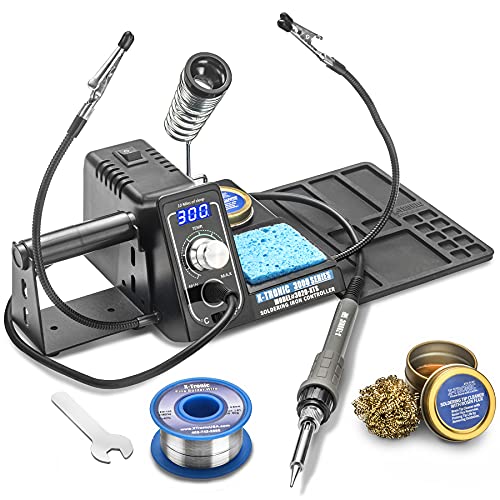
For dedicated bench workstations where long hours of continuous operation and comprehensive workpiece holding are required, the The Original X-Tronic 3020-XTS • 75W Soldering remains a top-tier station pick. Featuring dual helping hands, a solder spool holder, and fast PID compensation, it provides a stable environment for complex circuit board builds. For additional organization concepts to keep your workspace tidy, take a look at our practical guide on organizing storage systems for your home work areas.
FAQs
What makes Best Soldering Irons with Fast Heat Up reach working temperatures so quickly?
Fast-heating soldering irons utilize advanced ceramic heating cores or integrated cartridge tips where the heater and thermal sensor sit right next to the copper tip. This direct thermal coupling minimizes heat loss and allows modern power supplies to transfer energy into the tip in seconds rather than minutes.
How many watts do I need for fast soldering heat up in 2026?
A power rating between sixty watts and one hundred watts is ideal for rapid heat up and stable thermal recovery during demanding tasks. Lower wattage irons take longer to reach temperature and often struggle when soldering large wire gauges or multilayer circuit boards.
Are USB-C powered soldering irons as capable as traditional desktop stations?
Modern USB-C Power Delivery soldering irons operating at sixty-five to one hundred watts match or exceed the heating speed of standard bench stations. Their integrated cartridge tips allow them to melt solder within three to eight seconds while remaining exceptionally compact.
What is the benefit of PID temperature control in a fast-heating iron?
PID temperature control monitors tip temperatures dozens of times per second and adjusts electrical current smoothly to prevent temperature overshooting. This constant stabilization protects circuit components from excess heat and keeps the iron ready for continuous soldering.
Why does my soldering iron tip cool down when touching a joint?
The cold metal of the component and circuit board pulls thermal energy away from the tip via conductive heat transfer. Irons with fast thermal recovery instantly boost power to replenish this lost heat and prevent cold, brittle solder connections.
How does an automatic sleep mode extend the life of my soldering iron?
Leaving a soldering iron at high temperatures while resting in a stand burns away protective flux and oxidizes the iron plating on the tip. Auto-sleep modes reduce the temperature during downtime, drastically reducing oxidation and extending heating element lifespan.
What is the difference between 900M tips and integrated cartridge tips?
Standard 900M tips are hollow metal sleeves that slide over a separate ceramic heater, offering low replacement costs but moderate heat transfer. Integrated cartridge tips combine the heating element, sensor, and tip into one solid piece for maximum thermal speed and responsiveness.
Can fast-heating soldering irons handle lead-free solder effectively?
Yes, fast-heating tools are particularly well suited for lead-free solder because they reach the higher required melting points quickly. Their responsive temperature controllers maintain stable heat without burning flux additives during lead-free soldering.
Is a brass wire tip cleaner better than a damp sponge?
Brass wire sponges remove residual solder and surface oxides without causing thermal shock to the heated metal plating. Damp sponges temporarily cool down the tip each time they are wiped, which can induce micro-cracks in the plating over time.
What temperature range should I look for in Best Soldering Irons with Fast Heat Up?
Look for an adjustable temperature range from 350 degrees Fahrenheit to around 850 degrees Fahrenheit, or roughly 180 to 450 degrees Celsius. This broad span allows you to safely work on delicate surface-mount components as well as heavier ground plane connections.




Write Your Review
No reviews yet. Be the first to share your experience!