
A small closet can feel like a losing battle. Clothes pile up, shoes end up in a heap, and you spend more time digging for things than actually wearing them. The good news is that a well-chosen closet organizer can transform even a tiny reach-in closet into a functional, easy-to-use space. The key isn’t buying the biggest system you can find – it’s picking the right configuration, materials, and accessories for the exact dimensions and habits you actually have. This guide walks through everything to consider before you buy, so you end up with a setup that fits your space instead of fighting it.

Step 1: Measure the Closet Correctly
Before you look at a single product, grab a tape measure. Small-space organizers live or die by precise measurements, and a system that’s even an inch too wide won’t install properly.
- Measure the total width of the closet opening at three points: top, middle, and bottom, since older homes often have walls that aren’t perfectly straight.
- Measure the depth from the back wall to the door, noting anything that juts out, like a light switch, electrical outlet, or HVAC vent.
- Measure the full height from floor to ceiling, and note where any existing shelf or rod currently sits.
- Write down all three numbers and use the smallest width and depth measurement as your working number – it’s always safer to undersize slightly than to force a system that doesn’t fit.
If you’re working with a reach-in closet under 4 feet wide, prioritize systems specifically labeled for compact spaces rather than scaling down a standard walk-in kit, since the hardware and shelf depths are usually designed differently.
Step 2: Decide Between Wire, Wood, and Modular Cube Systems
Material choice affects both how much weight the system holds and how it looks. Each option has trade-offs worth understanding before you commit.
Wire Shelving
Wire systems are the most budget-friendly and easiest to install in a small closet. They’re lightweight, allow air circulation (which helps prevent musty odors), and are simple to reconfigure later. The downside is that wire shelves can snag delicate fabrics and don’t offer the polished look some homeowners want.
Wood or Laminate Shelving
Wood-look systems give a built-in, custom feel and tend to hold more weight per shelf. They’re a better match if the closet is visible from a bedroom or hallway. They cost more and are slightly bulkier, so double-check depth clearance before buying.
Modular Cube and Cubby Systems
Stackable cube organizers are extremely flexible for small spaces because you buy only what you need and can rearrange or expand later. They work especially well as a floor-based addition next to a shorter hanging section. If you like this approach, browse storage cubes to see configurations that stack well in tight closet footprints.
Step 3: Choose the Right Layout for a Small Footprint
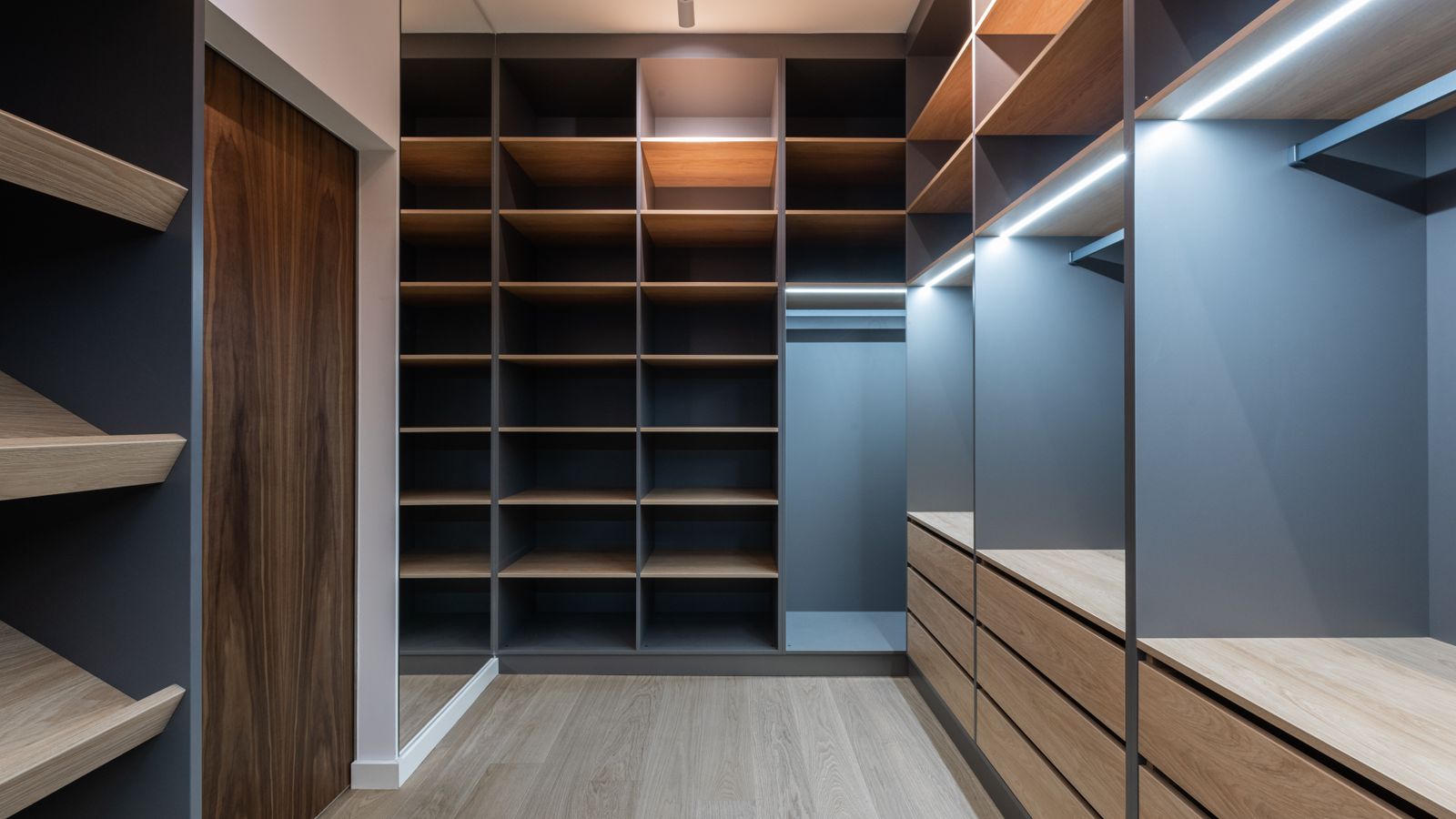
In a compact closet, layout matters more than any single feature. The goal is to use vertical space efficiently rather than spreading storage out horizontally, which a small closet simply doesn’t have room for.
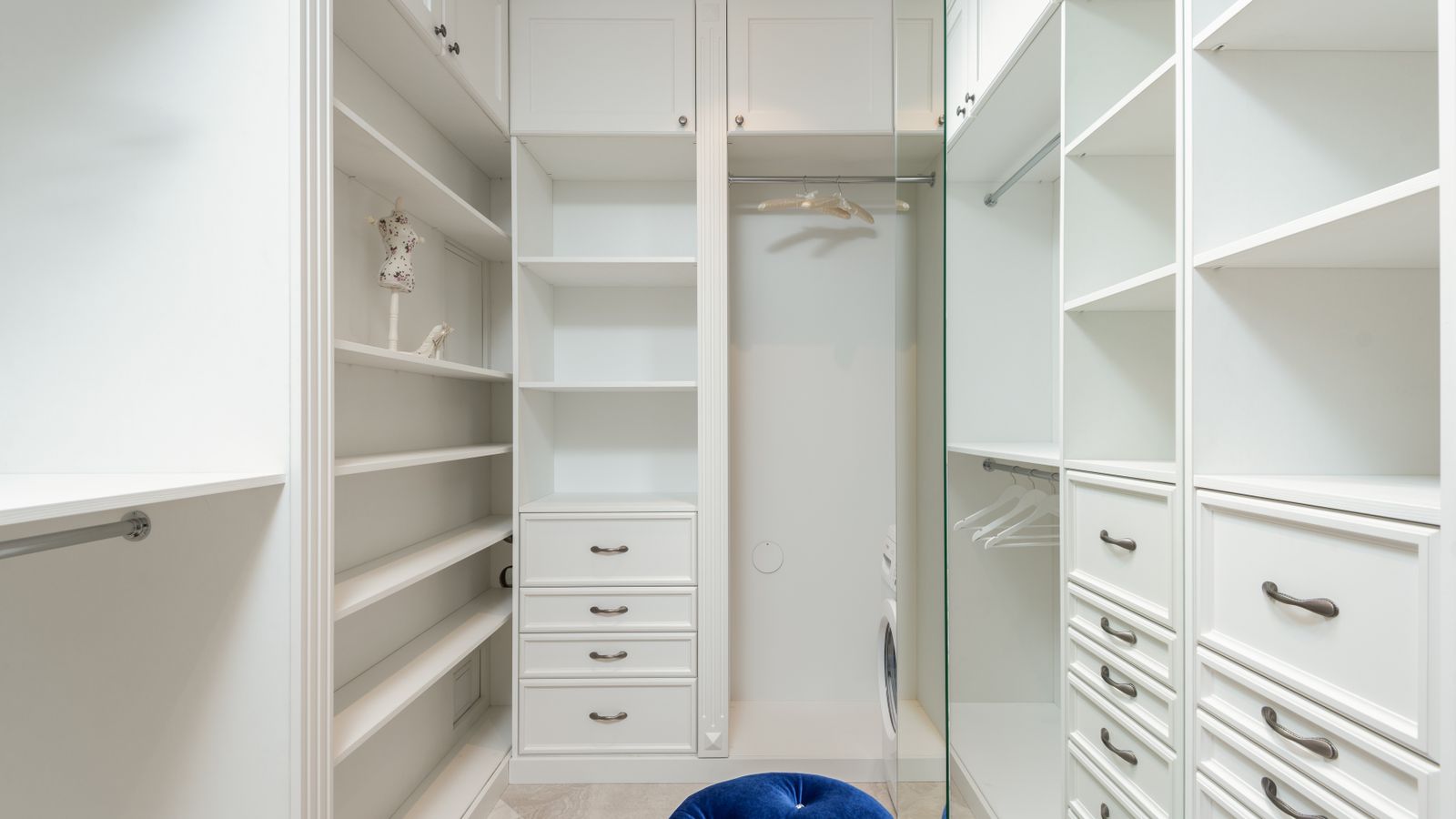
- Double-hang sections stack a short rod above a lower rod, doubling hanging capacity for shirts, folded pants, and skirts in the same width a single rod would take.
- Angled shoe shelves tuck into the floor of the closet and hold far more pairs than a flat shelf of the same size.
- Vertical dividers create narrow slots for folded sweaters or handbags, preventing stacks from toppling over.
- Corner-friendly units are worth seeking out if your closet has an offset or angled wall, since standard rectangular shelving wastes that space entirely.
A common mistake is trying to fit a full hang-fold-shelf combo into a closet that’s only wide enough for two of the three. Prioritize based on what you actually store – if you’re shoe-heavy, give up a shelf section for angled shoe storage instead of squeezing in a third rod.
Step 4: Match the System to Weight and Mounting Needs
Small-space organizers are often mounted directly to drywall, and not every wall can support a fully loaded system without additional bracing.
- Locate wall studs with a stud finder before mounting anything heavier than a basic wire shelf; anchors alone often aren’t rated for a loaded clothing rod.
- Check the manufacturer’s weight rating per shelf and per rod – heavier winter coats and stacked sweaters add up faster than expected.
- If you rent or don’t want to drill into the wall, look for freestanding or tension-mounted systems that brace floor-to-ceiling instead.
- For closets with uneven or plaster walls, choose a system with adjustable leveling feet or slotted track mounting that tolerates small gaps.
Step 5: Plan for Accessories Before You Buy
The base shelving and rods are only half the system. Small closets benefit disproportionately from add-ons that use awkward leftover space.
- Door-mounted racks add storage without using any interior closet space at all – ideal for shoes, accessories, or cleaning supplies.
- Pull-out baskets or bins keep loose items corralled and are easier to access in a tight footprint than deep fixed shelves.
- Hooks on the side walls capture bags, scarves, or belts that would otherwise clutter a shelf.
- If you’re outfitting an adjoining room with similar bin-based storage, the best storage cubes for living rooms can offer useful ideas for matching bins that coordinate with your closet system.
Step 6: Budget Realistically
Closet organizers for small spaces range from simple wire kits to fully custom-built systems. Set a budget based on how long you plan to stay in the space and how much daily use the closet gets.
- Entry-level wire kits are the most affordable and fastest to install, good for renters or short-term setups.
- Mid-range modular systems let you add components over time, spreading cost out while still getting a cohesive look.
- Premium built-in-style systems cost more upfront but hold up longer and often include soft-close drawers and finished panels.
If you’re comparing full organizer kits side by side, it helps to look at a dedicated roundup like Closet Organizers to see how price and features line up across different brands before deciding.
Common Mistakes to Avoid
- Buying a system sized for a walk-in closet and trying to force it into a reach-in space – shelf depth alone can make a whole unit unusable.
- Ignoring the door swing – organizers that stick out too far can block the door from opening fully.
- Skipping the stud check – a heavy, loaded shelf pulling out of drywall is one of the most common closet organizer failures.
- Overbuying accessories before living with the base system for a few weeks – you’ll often discover which add-ons you actually need once you see your daily habits.
Maintenance and Long-Term Care
Once installed, a small-space organizer needs minimal upkeep, but a few habits extend its life. Wipe down wire or laminate shelves every few months to prevent dust buildup, which is more noticeable in a tight, enclosed space. Periodically check that mounting brackets haven’t loosened, especially after seasonal wardrobe swaps that temporarily overload one section. Rotate out-of-season clothing into bins on a top shelf to keep the main hanging area from feeling overstuffed, which is often the real culprit behind a small closet that “never has enough room.”
Frequently Asked Questions
What’s the best closet organizer type for a very narrow closet?
Wire shelving with a double-hang configuration is usually the best fit, since it’s thin enough to avoid eating into limited depth while still adding vertical storage capacity.
Do I need to hire someone to install a closet organizer?
Most wire and modular kits are designed for DIY installation with basic tools. Custom wood systems or anything requiring extensive wall bracing may be worth having a professional install, especially in older homes.
How much weight can a small closet organizer hold?
It varies by material and mounting method, but most wire shelves support 20 to 40 pounds per linear foot when anchored into studs, while wood shelving on solid brackets can hold more. Always check the specific product’s weight rating.
Can I expand a small-space system later if I move to a bigger closet?
Modular cube and track-based systems are the easiest to expand or reconfigure later, since you can add shelves, drawers, or rods without replacing the whole unit.
Final Thoughts
Picking the right closet organizer for a small space comes down to accurate measurements, choosing a material and layout that match how you actually store your things, and resisting the urge to overbuild. Start with the essentials – hanging space, a shelf or two, and shoe storage – then add accessories once you know what’s actually missing. A thoughtfully planned small closet can hold nearly as much as a larger one, just organized more intentionally.