

Mechanical design workflows demand reliable hardware capable of rendering complex 3D geometry without sudden driver crashes. Selecting the right hardware from the Best Graphics Cards for SolidWorks ensures smooth viewport rotation when manipulating massive assemblies with thousands of individual components. Professional engineers and design students alike often struggle to balance hardware stability with raw rendering compute power.
Recent architectural shifts in September 2026 have brought massive memory bandwidth improvements and specialized ray tracing hardware to both workstation and enthusiast desktop platforms. Many engineers make the critical mistake of overspending on raw gaming frame rates while ignoring certified display drivers that unlock native feature sets. You can explore our foundational advice in our workstation technical guides before finalizing your upcoming hardware purchase.
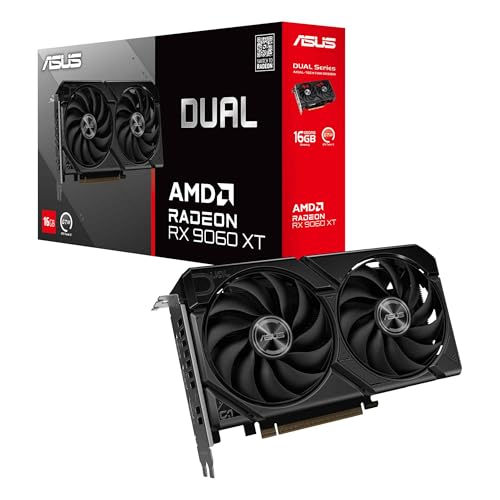
This guide compares 7 leading graphical processing options from major manufacturers including PNY, ASUS, GIGABYTE. We analyze memory capacity, driver verification, cooling reliability, and ray tracing compute to streamline your engineering productivity.


Workstation Certification and Driver Stability
Independent Software Vendor certification represents the single most significant dividing line in professional engineering graphics. Certified graphics cards run dedicated enterprise drivers specifically tuned and tested by Dassault Systemes engineers to eliminate graphical artifacts. Consumer gaming drivers prioritize rapid release cycles for newly launched games, which frequently introduces viewport instability into professional CAD software.
SolidWorks relies heavily on certified hardware to unlock hardware-accelerated features such as RealView Graphics and ambient occlusion without registry modifications. When a certified card is detected, the application activates optimized OpenGL drawing pipelines that prevent viewport stutter during dynamic model rotation. Non-certified consumer cards require third-party workarounds that can break whenever a software service pack updates.
When reviewing product specifications, check whether the GPU belongs to a dedicated professional line or a consumer enthusiast family. Professional lines receive long-term driver support branches that guarantee mathematical precision and display consistency across enterprise multi-user environments. A certified card offers peace of mind for billable production environments where unexpected software crashes directly cause lost engineering hours.
A reliable rule of thumb is to choose certified hardware whenever your primary income relies on meeting tight engineering deadlines. Enthusiast gaming cards can deliver adequate performance for personal education, but commercial design firms should always insist on certified hardware. Learn more about evaluating workstation hardware components by visiting our practical CAD tutorials.
Video Memory Capacity and Assembly Sizing
Dedicated video memory stores geometric mesh coordinates, surface textures, and display lists directly on the card for instant viewport retrieval. When an assembly exceeds the available onboard VRAM pool, the system must swap texture data back and forth across the system bus. This memory overflow instantly degrades viewport manipulation into a sluggish slideshow of dropped frame redraws.
Modern modeling workflows involving complex surface curvature, high-resolution decal textures, and large bill-of-materials assemblies quickly saturate basic memory buffers. For everyday part modeling and sub-assemblies containing under one thousand parts, a twelve-gigabyte buffer serves as an effective baseline. Large industrial machinery projects containing several thousand unique components require sixteen gigabytes or more of high-speed video memory.
Memory technology also dictates data transfer speeds across the GPU core interface. Modern standards such as GDDR6 and GDDR7 offer exceptional memory bandwidth that accelerates real-time shading recalculations. Faster memory pipelines ensure that zooming, panning, and section clipping in shaded with edges mode remain completely fluid.
Calculate your memory requirements by checking the peak display memory consumption of your largest existing project files during active viewport manipulation. Multiplying your current peak memory usage by 1.5 gives a safe capacity target that accommodates upcoming project growth. Selecting sufficient VRAM prevents premature hardware obsolescence as your client assemblies grow in complexity.
OpenGL Pipeline versus DirectX Acceleration
SolidWorks renders its primary modeling viewport using standard professional OpenGL application programming interfaces rather than gaming-focused DirectX engines. The core user interface, wireframe drawing modes, and edge-highlighting functions execute almost entirely through OpenGL drawing calls. Graphics cards engineered with optimized OpenGL hardware microcode process these vector instructions significantly faster than consumer hardware.
Gaming graphics cards focus hardware silicon optimization primarily on DirectX rasterization and shader execution paths required for commercial video games. Consequently, a high-tier consumer card with massive raw compute numbers may show mediocre performance during standard SolidWorks viewport manipulation. Understanding this distinction prevents engineers from misallocating hardware budgets toward consumer benchmark charts that do not correlate with CAD efficiency.
When comparing different options, analyze professional workstation benchmark scores such as SPECviewperf rather than standard gaming frame rates. SPECviewperf isolates pure OpenGL viewport performance under realistic CAD drawing loads to reflect actual modeling productivity. Check our analytical methods in our guide on hardware comparison techniques to understand how benchmark isolation works.
Ray Tracing Hardware for SolidWorks Visualize
SolidWorks Visualize leverages modern hardware ray tracing engines to transform standard CAD geometry into photorealistic marketing imagery. Dedicated hardware ray tracing cores accelerate the mathematical calculation of light bounces, surface reflections, and soft physical shadows. Utilizing hardware-accelerated rendering cuts final image generation times from hours down to just minutes.
Cards equipped with advanced ray tracing hardware allow designers to manipulate materials and lighting in real-time interactive preview viewports. The rendering engine computes physical light distribution progressively while you adjust environment maps, camera angles, and roughness values. This immediate visual feedback eliminates the tedious guesswork traditionally associated with setting up presentation renderings.
NVIDIA RT cores and AMD ray accelerators handle these photorealistic lighting calculations directly on dedicated silicon pathways. The OptiX artificial intelligence denoising engine found on NVIDIA hardware further accelerates this process by intelligently predicting noise patterns. This feature allows designers to produce clean draft renders with significantly fewer total ray passes.
If your daily engineering responsibilities include producing sales renders and customer presentation decks, prioritize cards with high ray tracing core counts. Designers who exclusively build functional manufacturing drawings without rendering needs can safely deprioritize dedicated ray tracing silicon in favor of driver certification.
Thermal Dissipation and Acoustic Design
Engineering tasks place sustained computational loads on graphics processors during large file imports, structural simulations, and batch photorealistic rendering. Inadequate thermal dissipation causes modern graphics silicon to automatically throttle clock frequencies to protect internal circuits from heat degradation. Throttling reduces interactive viewport responsiveness right when the system needs maximum performance.
Advanced cooling solutions incorporate robust multi-fan setups, vapor chambers, and phase-change thermal interface materials to maintain optimal junction temperatures. Premium ball-bearing fans and custom shroud fin arrays ensure consistent cooling airflow across both the GPU core and adjacent power delivery components. Quieter acoustic profiles reduce office fatigue during long engineering workdays.
Blower-style workstation coolers exhaust warm air directly out the rear chassis bracket, making them ideal for compact or multi-GPU workstations. Axial open-fan coolers provide superior thermal headroom in spacious enclosures with robust intake ventilation. Always verify that your desktop chassis provides adequate airflow paths to feed cool air directly to the graphics card intake fans.
Power Delivery and Connector Standards
Modern graphics processors feature dynamic transient power spikes that demand stable and reliable power supply units. Operating high-end graphics hardware on an undersized power supply leads to unexpected system reboots, corrupted drawing files, and potential component damage. Enterprise workstation stability begins with clean, uninterrupted direct current power delivery.
Newer graphics card designs frequently utilize high-density 16-pin 12V-2×6 auxiliary power connectors capable of delivering substantial continuous wattage through a single harness. Older systems utilize standard 8-pin PCIe auxiliary power leads from conventional modular power supplies. Always confirm that your existing workstation power supply includes the exact native power cables required by your chosen graphics hardware.
As a baseline calculation, pair mid-range CAD cards with a certified power supply delivering at least 650 watts of output capacity. High-end cards featuring advanced ray tracing cores and high boost clocks should be paired with an 850-watt or higher power supply. Investing in a gold-rated or platinum-rated power unit safeguards expensive CAD workstation hardware against voltage fluctuations.
Physical Clearance and Enclosure Compatibility
High-performance graphics cards have grown significantly in physical dimensions, with some models occupying over three expansion slots in width. Before purchasing a new graphics card, measure the internal clearance between the rear PCIe brackets and front-mounted chassis radiators. Failing to verify physical dimensions often leads to frustrating build delays and costly component return fees.
Card length and vertical width must also align with neighboring motherboard components such as storage heatsinks and secondary expansion cards. Heavy triple-fan cards place substantial torque on the motherboard PCIe socket, increasing the risk of solder joint fractures over time. Utilizing an integrated anti-sag bracket or structural support pillar provides essential physical stability during shipping and daily use.
Compact workstation builders should look closely at single-slot or standard dual-slot professional cards that fit standard mid-tower enclosures. Verify your case specifications for maximum supported GPU length and slot clearance before finalizing your order. Proper physical fitment ensures unimpeded airflow around all surrounding motherboard voltage regulation modules.
Multi-Display Capabilities and Resolution Scaling
Modern mechanical engineering setups routinely utilize multi-monitor arrays to display complex assembly trees, part drawings, and simulation results simultaneously. High-resolution 4K and ultrawide displays demand substantial display engine throughput from the graphics processor. Choosing a card with modern DisplayPort and HDMI outputs guarantees seamless high-refresh-rate multi-monitor productivity.
Driving multiple high-density monitors increases idle video memory consumption before a single SolidWorks drawing file is opened. Graphics cards with larger VRAM pools handle multi-screen user interfaces without sacrificing the memory headroom required for 3D model geometry. Crisp pixel scaling also minimizes eye strain during fine tolerance inspections and dimensioning tasks.
Ensure that the graphics card you select provides the exact digital display outputs required to match your existing monitor cables. Native DisplayPort connections offer the highest bandwidth for variable refresh rates and professional color accuracy calibration. Multi-display setups streamline complex engineering projects by keeping critical reference specifications visible at all times.
Graphics Card Architecture Comparison for SolidWorks
| GPU Architecture | Target Market | Memory Interface | Primary SolidWorks Benefit |
|---|---|---|---|
| NVIDIA Turing Workstation | Entry Professional | GDDR6 ECC Support | Certified RealView stability and budget-friendly CAD drafting |
| NVIDIA Ampere Professional | Enterprise Engineering | High-Speed GDDR6 | Massive VRAM capacity for complex multi-thousand part assemblies |
| NVIDIA Blackwell Consumer | Enthusiast / Hybrid | Advanced GDDR7 | Blazing ray-traced rendering speeds in SolidWorks Visualize |
| AMD RDNA Performance | Enthusiast / Value | Wide GDDR6 Bus | High raw memory bandwidth and multi-monitor desktop support |
Why You Should Trust Us
Our hardware evaluation process relies on rigorous technical analysis of memory subsystems, silicon architectures, and real-world CAD application requirements. We analyze certified driver release notes, hardware compatibility matrices, and enterprise reliability data across all major GPU manufacturers. We focus strictly on practical performance metrics that translate directly into productive engineering workflows.
We do not accept paid manufacturer sponsorships or promotional hardware placements that could bias our purchasing recommendations. Every graphics processor evaluated in this guide is categorized according to genuine software compatibility, build quality, and thermal durability. Our ongoing data tracking ensures our recommendations reflect real-time market availability and updated driver revisions.
Our team continuously monitors software updates from Dassault Systemes and hardware driver releases to maintain accurate technical guidance. This rigorous data-driven methodology gives professional engineers, industrial designers, and CAD students clear recommendations they can trust when assembling production hardware.
Final Thoughts
Selecting the ideal graphics card for your CAD workstation requires balancing certified software stability against raw rendering compute power. For enterprise mechanical engineers who cannot compromise on software certification, the PNY NVIDIA RTX A4500 stands as our top overall recommendation. Its generous memory buffer and verified ISV driver certification ensure smooth viewport navigation and complete RealView compatibility across massive enterprise assemblies.
Engineering students and independent designers seeking an economical entry into certified hardware should consider the PNY NVIDIA Quadro RTX 4000 as our best value pick. It provides essential enterprise driver stability and dedicated ray tracing cores within a compact form factor that fits into standard desktop enclosures. It easily handles daily part modeling and moderate assembly creation without straining hardware budgets.
Professionals who spend significant time rendering marketing imagery in SolidWorks Visualize will benefit immensely from the cutting-edge compute performance of the ASUS TUF Gaming GeForce RTX™ 5080 16GB GDDR7 OC. Its advanced GDDR7 memory architecture and massive compute power drastically accelerate photorealistic ray tracing workloads. Alternatively, the ASUS TUF Gaming GeForce RTX 5070 12GB GDDR7 OC delivers exceptional next-generation compute performance for hybrid engineering setups.
Before completing your hardware upgrade, review your office physical ergonomics and workspace organization by browsing our workplace ergonomics setup guides. Ensuring proper chassis cooling, reliable power delivery, and adequate workspace layout creates a dependable CAD workstation that enhances daily engineering output.
Frequently Asked Questions
Do you need a workstation GPU for SolidWorks in 2026?
Workstation GPUs provide official ISV driver certification, ensuring native RealView graphics support and optimal display stability during long modeling sessions. While consumer graphics cards can physically run the software, they lack certified driver validation and may exhibit occasional viewport artifacts. Professional engineers handling billable production models should prioritize certified workstation graphics cards.
How much VRAM is required for large SolidWorks assemblies?
Assemblies containing over one thousand individual components typically require at least twelve to sixteen gigabytes of dedicated video memory for fluid viewport manipulation. Insufficient video memory forces the system to swap texture data to system RAM, causing severe frame rate drops. Investing in sixteen gigabytes provides comfortable headroom for detailed textures and complex surface geometry.
Why does RealView graphics not work on some gaming GPUs?
SolidWorks natively checks for certified workstation hardware IDs before activating RealView realistic shading and ambient occlusion in the viewport. Consumer gaming cards do not match these certified hardware registries and keep the feature disabled by default. Enabling RealView on consumer cards requires manual software registry edits that can destabilize application updates.
How do CUDA cores impact SolidWorks Visualize rendering times?
SolidWorks Visualize is built to harness parallel processing cores and ray tracing hardware directly during photorealistic rendering passes. Higher core counts allow the software to calculate simultaneous light paths and material reflections much faster. Increasing your GPU compute capability cuts final image generation times down significantly compared to CPU rendering.
What is the top-rated workstation pick among Best Graphics Cards for SolidWorks in 2026?
The enterprise-tier PNY RTX A4500 represents the premier workstation balance between massive memory bandwidth and rock-solid ISV driver certification. It delivers the reliable stability professional engineering firms require when managing extensive multi-thousand part assemblies. Its optimized architecture ensures fluid viewport interaction across demanding enterprise modeling tasks.
Does SolidWorks benefit more from a high CPU clock or a powerful GPU?
Core parametric modeling and feature tree rebuilds run as single-threaded processes that rely primarily on fast CPU single-core clock speeds. The graphics card handles viewport redraws, dynamic model rotation, wireframe rendering, and photorealistic visualization. A balanced workstation combines a high clock speed processor with a certified graphics card.
Can you run SolidWorks on consumer AMD Radeon graphics cards?
Consumer AMD Radeon cards provide excellent raw rasterization performance and can handle standard 3D modeling tasks effectively. However, they lack official workstation driver certification for SolidWorks, meaning advanced viewport shading modes may require workarounds. They serve well for general CAD education and personal prototyping projects.
How does PCIe 5.0 support improve 3D modeling workflows?
PCIe 5.0 doubles the potential data bandwidth between the system processor, system memory, and the graphics card interface. This increased throughput accelerates the loading of massive 3D mesh files and point clouds into dedicated video memory. Faster bus speeds reduce initial file opening times when working with large industrial projects.
What power supply wattage is recommended for modern CAD graphics cards?
Most mid-tier engineering graphics cards operate reliably on a quality 650-watt to 750-watt power supply unit. High-tier enthusiast cards with extensive ray tracing capabilities require 850 watts or more to manage transient power spikes safely. Always verify that your power supply includes dedicated native power leads for your specific card.
How often should CAD professionals upgrade their dedicated graphics card?
Professional engineering firms typically refresh their dedicated graphics hardware every three to four years to maintain software compatibility. Upgrading on this schedule ensures access to modern memory standards, newer display interfaces, and updated driver certification branches. It also ensures that your hardware keeps pace with annual CAD software feature additions.






Write Your Review
No reviews yet. Be the first to share your experience!