

Maintaining clean indoor air requires balancing particulate capture with unrestricted system airflow. Many homeowners struggle with choosing the right filter density, often causing unnecessary strain on their blower motors. Our guide evaluates 5 top options for September 2026 so you can make an informed decision for your residence.
A proper filter protects sensitive heating and cooling components from dust accumulation while simultaneously trapping airborne irritants. Installing the wrong depth or density can restrict airflow, increase utility bills, and potentially cause heat exchangers to overheat. Learning how to balance filtration efficiency with equipment safety ensures your home stays comfortable throughout the entire season.
Before selecting a replacement pack, check our helpful How To resources to understand proper home maintenance scheduling. Upgrading your filtration system is an easy, cost-effective step toward healthier living spaces. We evaluated the leading options on the market to help you find the perfect match for your furnace cabinet.

MERV Ratings and Airflow Dynamics
The Minimum Efficiency Reporting Value measures how effectively an air filter captures airborne particles between 0.3 and 10 microns. Higher numbers indicate tighter weaves capable of capturing microscopic contaminants like bacteria and smoke. Residential equipment typically functions best between MERV 6 and MERV 13 without causing excessive static pressure.
Selecting an excessively high rating can create airflow resistance that starves older blower motors of essential air. A MERV 13 model traps fine debris but requires frequent inspection to ensure the system breathes freely. In contrast, lower ratings protect mechanical parts efficiently while allowing maximum volumetric air volume through the ducts.
As a practical rule of thumb, homes without severe allergies perform wonderfully with MERV 8 filtration. If your household includes shedding pets or allergy sufferers, step up to MERV 11 or 13. Always verify that your furnace blower motor can handle the static resistance of dense media.
Nominal Versus Actual Dimensions
Air filter packaging prominently features nominal sizing, which represents a rounded measurement for quick retail identification. An 18x18x1 filter rarely measures exactly 18 inches along its length, width, and thickness. Manufacturers downsize the actual physical frame slightly so the unit slides smoothly into standard filter racks.
Actual dimensions for this size typically measure around 17.5 by 17.5 inches or 17.75 by 17.75 inches, with a thickness of 0.75 inches. If a replacement filter is even a quarter of an inch too large, it will bend and warp inside the slot. A filter that is too small allows unfiltered air to bypass the edges completely.
Before placing an order, measure your existing filter cabinet using a firm steel measuring tape. Note the precise dimensions down to the sixteenth of an inch. Matching the actual frame measurements prevents air bypass and ensures a snug, airtight installation.
Filter Media Construction and Materials
Modern furnace filters utilize synthetic non-woven polymers rather than loose, spun fiberglass strands. Synthetic fibers can be electrostatically charged during manufacturing, creating an invisible magnetic pull that attracts tiny airborne specks. This electrostatic property captures microscopic particles without requiring an overly dense, airflow-choking weave.
Spun fiberglass filters only catch large carpet lint and offer almost no defense against pollen or dander. Pleated synthetic filters provide drastically superior particle capture while maintaining structural rigidity inside damp return ducts. They resist moisture absorption, preventing mildew colonization along the filter face over months of continuous cycling.
Inspect product specifications to confirm the media contains 100 percent synthetic electrostatic fibers. Avoid bare fiberglass panels unless your HVAC technician explicitly mandates them for an aging, low-static blower system. The enhanced protection of synthetic pleated media safeguards both indoor air and evaporator coils.
Pleat Count and Surface Area Capacity
The number of pleats per linear foot dictates the total functional surface area available to capture airborne contaminants. When manufacturers fold media into accordion pleats, they pack several square feet of filtering material into a compact square frame. More surface area allows air to spread out, significantly reducing initial resistance to airflow.
A low pleat count means the filter will load with dust quickly, creating rapid pressure drop across the unit. Higher pleat counts hold greater dust loads before reaching full saturation, extending the effective working lifespan of the product. The increased surface area ensures that air moves smoothly even as particles collect on the outer fibers.
When comparing products, look for tightly spaced, uniform pleats supported by a wire or composite backing grid. Irregular pleat spacing can cause media fluttering and premature collapse under high airflow velocity. Higher pleat density consistently delivers longer service intervals and more stable operating pressures.
Filter Efficiency Rating Comparison
Different manufacturers utilize unique proprietary rating scales alongside the standardized MERV system. Understanding how these systems correlate helps you select the correct performance tier regardless of branding. The table below outlines standard performance metrics across typical 18x18x1 residential options.
| MERV Rating | MPR Equivalent | FPR Equivalent | Target Contaminants | Airflow Resistance |
|---|---|---|---|---|
| MERV 6 | MPR 300 | FPR 4-5 | Dust, pollen, carpet lint | Very low |
| MERV 8 | MPR 600 | FPR 5 | Dust mites, mold spores, pet hair | Low |
| MERV 11 | MPR 1000-1200 | FPR 7 | Pet dander, fine dust, auto emissions | Moderate |
| MERV 13 | MPR 1500-1900 | FPR 10 | Bacteria, smoke, droplet nuclei | Moderate to High |
Comparing these cross-brand ratings ensures you do not overspend on marketing gimmicks. If you need general household protection, an MPR 600 or FPR 5 provides dependable baseline filtration. For superior respiratory support, select an MPR 1500 tier while checking return vent suction regularly.
Frame Durability and Moisture Resistance
The outer border of an air filter must withstand mechanical pressure, air velocity, and ambient indoor humidity. Manufacturers typically build frames from recycled paperboard, beverage board, or heavy chipboard. Heavy-duty beverage board offers superior moisture resistance, preventing the frame from softening in humid basement installations.
When a weak frame softens, air suction pulls the corners inward, breaking the perimeter seal. This allows unfiltered air to bypass the media, depositing grime directly onto the air conditioning evaporator coils. Coils encrusted with dirt lose heat transfer efficiency and frequently suffer from premature ice buildup.
Look for filters featuring diagonal support members glued firmly to the pleat tips on both sides. A reinforced frame prevents media vibration, noise, and blowouts during abrupt blower startup cycles. Sturdy construction guarantees that the filter maintains its structural integrity until replacement day.
Replacement Schedules and Operating Costs
Residential 1-inch filters carry an estimated service life ranging from thirty to ninety operating days. However, real-world longevity depends heavily on home occupancy, pet activity, and overall furnace runtime. Continuous fan operation draws air across the filter constantly, accelerating particle accumulation significantly.
During peak summer cooling and winter heating periods, check filters every four weeks to gauge debris loading. A clogged filter forces the blower to work harder, consuming surplus electricity and causing mechanical wear. Changing filters promptly preserves energy efficiency and prevents costly emergency technician service calls.
Buying filters in multi-packs substantially lowers the cost per unit compared to purchasing single replacements. Keep a multi-pack stored in a clean closet next to your spare household items. For more interior organizing ideas, read our guide on how to simplify your closet and storage system.
Household Health and Allergy Demands
Individual indoor air quality needs vary dramatically based on the health conditions of household members. Homes with asthmatics, newborn infants, or elderly residents require media capable of capturing microscopic triggers. Cooking fumes, outdoor wildfire smoke, and chemical aerosols easily linger in modern, tightly sealed construction.
High-efficiency MERV 11 and MERV 13 options actively strip these micro-contaminants from circulating room air. They trap particles that pass straight through basic fiberglass screens, reducing sneezing, morning congestion, and eye irritation. Maintaining pristine indoor air directly promotes restful sleep and general household wellness.
If someone in your home suffers from persistent environmental allergies, pair higher MERV filters with dedicated cleaning routines. Keep dust magnets minimized throughout your bedrooms and living quarters. Review our advice on how often should you replace your nightstands with open shelves to maintain clean surfaces.
Airflow Direction and Proper Installation
Every pleated furnace filter includes directional airflow arrows printed prominently along its cardboard perimeter. These arrows indicate the direction air moves as it travels from the return ducts toward the furnace blower. Installing a filter backwards compromises its internal wire backing and reduces overall filtration efficiency.
When installed facing the wrong direction, air pressure can tear the pleated media away from the outer frame. This structural failure allows unfiltered dust to enter internal components, bypassing the filtration barrier completely. Always point the printed arrows toward the furnace cabinet or air handler motor.
Keep a bold marker handy near your furnace to write the installation date directly on the cardboard edge. This simple habit eliminates guesswork regarding when the filter was last changed. Clear labeling guarantees timely swaps and consistent airflow performance throughout the heating season.
Why You Should Trust Us
Our editorial team evaluates home climate products using strict technical parameters, mechanical engineering standards, and verified consumer data. We review manufacturer laboratory test results, static pressure curves, and real-world particle arrestance metrics. We focus strictly on measurable performance to help you protect expensive residential HVAC equipment.
We compare dozens of product specifications across various brands, analyzing frame rigidity, media composition, and packaging values. None of our selections are influenced by outside sponsorships or brand partnerships. We focus on providing transparent, unbiased recommendations that homeowners can rely upon for long-term comfort.
HVAC technology evolves continuously, with manufacturers constantly refining synthetic fiber charging and frame recycled content. We monitor industry developments to update our ratings and advice as new products hit the residential market. You can explore our extensive Home & Living archive for more seasonal maintenance strategies.
Final Thoughts
Selecting the right filter comes down to finding the ideal balance between particle capture and blower airflow resistance. For the vast majority of households, the Aerostar Air Filter 18x18x1 MERV 11 AC Filter earns our best overall recommendation. It captures pet dander and fine dust efficiently without choking standard residential blower fans.
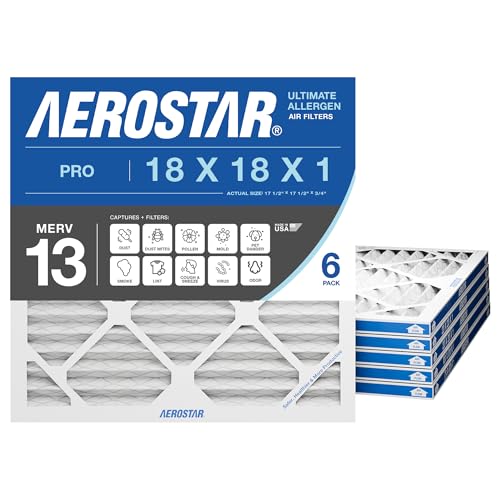
If you want maximum clean-air performance against fine smoke and bacteria, upgrade to the Aerostar Air Filter 18x18x1 MERV 13 AC Filter. This premium selection traps microscopic contaminants that trigger severe allergies, making it our top specialized pick for health-conscious homes. It provides hospital-grade filtration media tailored for residential filter slots.
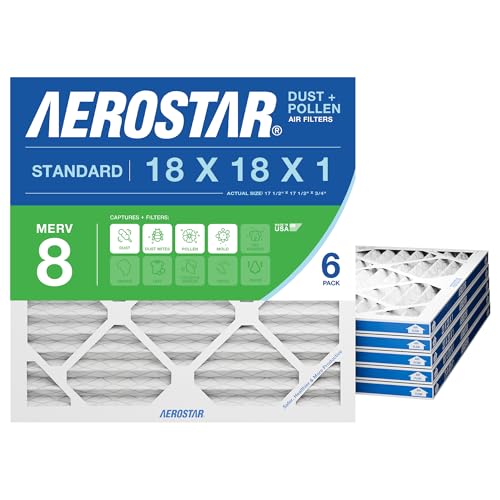
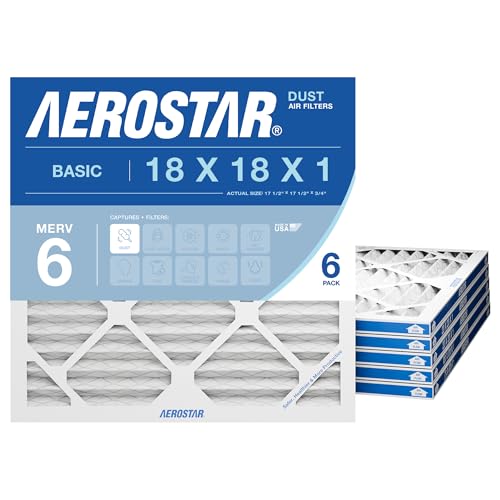
Budget-conscious homeowners seeking dependable equipment protection should select the Aerostar Air Filter 18x18x1 MERV 8 AC Filter. It stops lint, dust, and pollen effortlessly while maintaining ultra-low resistance across the blower motor. If your heating unit requires absolute maximum airflow, consider the Aerostar Air Filter 18x18x1 MERV 6 AC Filter as a practical low-resistance alternative.
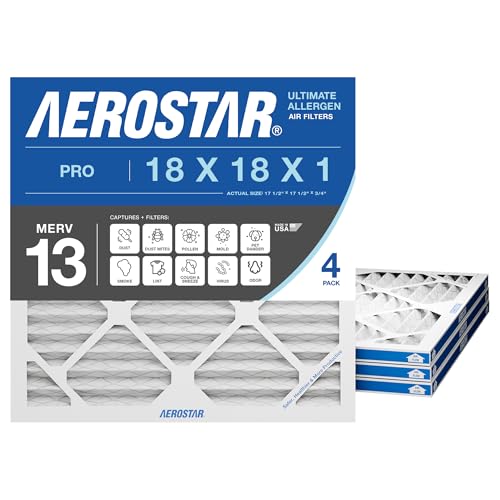
For smaller households that prefer stocking fewer units at once, the Aerostar Air Filter 18x18x1 MERV 13 AC Filter four-pack offers the same elite capture in a convenient bundle. Whichever pack you choose, commit to inspecting the filter face every month during heavy climate extremes. Consistent maintenance preserves furnace health, cuts electric consumption, and guarantees pure indoor breathing air.
FAQs
What is the most balanced option among Best Furnace Filters 18x18x1 in 2026?
A MERV 11 filter generally delivers the most balanced overall performance for modern homes. It provides exceptional capture of pet dander, pollen, and fine dust while keeping static pressure within safe operational limits. Standard residential blower systems handle this density without suffering motor strain.
How often should I change an 18x18x1 furnace filter?
Under typical household conditions, a 1-inch pleated filter should be replaced every sixty to ninety days. However, homes with multiple pets or active wood fireplaces should replace filters every thirty days during winter. Always inspect the media visually once per month to gauge accumulation.
Will a MERV 13 filter damage my furnace blower motor?
A MERV 13 filter will not harm modern HVAC units in good working condition. However, older systems with weak blower motors might experience reduced airflow if the filter becomes clogged. To prevent system overheating, monitor the filter frequently and replace it promptly when dirty.
What is the difference between nominal and actual filter dimensions?
Nominal dimensions represent the rounded marketing size printed on the packaging, such as 18x18x1 inches. Actual dimensions reflect the true physical measurements of the frame, which are usually about a quarter-inch smaller. This intentional undersizing ensures the filter slides easily into standard metal racks.
Can I vacuum and reuse a pleated disposable filter?
Disposable pleated filters are engineered strictly for single-use applications and must never be vacuumed. Vacuum suction disrupts the delicate weave and destroys the electrostatic charge embedded in the synthetic fibers. Attempting to clean disposable filters degrades efficiency and risks tearing the media.
Which direction should the airflow arrow point during installation?
The printed arrow must point in the direction the air travels through the return drop. In standard furnace systems, the arrow points toward the blower cabinet and heat exchanger. Installing it backward compromises the internal wire support frame under system pressure.
Are pleated filters significantly better than flat fiberglass models?
Pleated filters provide dramatically superior indoor air quality compared to cheap fiberglass panels. Fiberglass models only trap large debris like pet fur, letting fine dust settle inside ductwork and lungs. Pleated synthetic filters catch microscopic allergens while protecting internal evaporator coils.
How does electrostatic media help capture fine dust?
Electrostatic media carries a permanent static charge applied during the manufacturing process. This charge acts like a magnet, attracting tiny floating particles out of the air stream. It achieves high filtration efficiency without requiring an overly dense weave that chokes airflow.
What happens if I install the wrong filter size?
Installing an improperly sized filter creates air bypass or causes the frame to buckle under pressure. Air bypass allows dirty, unfiltered air to coat the motor and air conditioning coil with grime. A buckled filter can even get sucked into the blower wheel, causing costly mechanical damage.
How does MPR compare to standard MERV ratings?
MPR is a proprietary rating scale developed by 3M, whereas MERV is the international industry standard. An MPR rating of 1000 to 1200 equates roughly to a standard MERV 11 rating. An MPR of 1500 to 1900 corresponds to a premium MERV 13 filtration level.





Write Your Review
No reviews yet. Be the first to share your experience!