

Editing high-resolution raw files requires absolute clarity and precise color rendering that standard office screens simply cannot provide. Photographers face constant challenges with chromatic fidelity, uneven backlighting, and insufficient pixel density when preparing images for print or web publication. Selecting the right display eliminates costly guesswork during color grading and fine retouching sessions.
Our detailed breakdown compares 7 models available in September 2026 to identify which displays deliver the accurate coverage creative professionals require. From dedicated Ultra HD panels to versatile ultra-wide workstations, we examine the technical standards that truly impact photographic workflows. Exploring our comprehensive guides can provide additional technical clarity before you upgrade your desktop setup.
Investing in a purpose-built screen ensures that shadow details, highlight roll-offs, and skin tones render truthfully across all client deliverables. Whether you produce fine-art gallery prints or manage high-volume commercial catalogs, matching your hardware to your color space requirements is essential. This analysis highlights the top options to elevate your digital darkroom setup today.



Color Gamut Coverage and Accuracy
Color gamut coverage represents the total range of colors a monitor can physically reproduce relative to standardized color spaces. For photographers, working within standard sRGB suffices for general web imagery, but fine-art printing demands broad Adobe RGB coverage. Video creators and modern digital workflows increasingly rely on DCI-P3, making wide spectrum support a critical specification.
When evaluating panel specifications, prioritize displays that state specific percentage coverage for sRGB, Adobe RGB, or DCI-P3 rather than general claims. Look for factory calibration documentation that specifies a Delta E value of less than two out of the box. A lower Delta E score guarantees that perceived screen colors closely match theoretical numeric values without extensive manual adjustment.
A reliable rule of thumb is to aim for at least 99 percent sRGB coverage for general web work and 90 percent DCI-P3 or higher for advanced color work. Choosing a screen with insufficient gamut range leads to posterization and clipping in saturated areas. Your final output might look vibrant on your display but dull or distorted on other calibrated devices.
Panel Technology and Viewing Angles
The underlying panel technology dictates how light and color behave across the screen surface, particularly when viewed from off-center angles. In-Plane Switching (IPS) panels remain the gold standard for photo editing due to their consistent luminance and minimal color shifting. Advanced variants such as Fast IPS and QD-OLED offer distinct advantages in contrast and speed.
Vertical Alignment (VA) panels provide higher static contrast ratios but can suffer from minor gamma and color shifts when viewed from extreme sides. When assessing panel type, check the rated viewing angles, which should ideally measure 178 degrees horizontally and vertically. IPS and OLED panels ensure that shifting your posture during long editing sessions will not alter your perception of exposure or saturation.
If your primary focus is critical color grading, IPS technology provides the most predictable and linear response curve across the entire display. OLED alternatives excel at deep blacks and individual pixel illumination, making them compelling for mixed multimedia tasks. For dedicated print evaluation, high-grade IPS panels with matte coatings consistently minimize distracting ambient reflections.
Resolution and Pixel Density
Pixel density, measured in pixels per inch (PPI), determines how sharp fine details, text, and image grain appear on screen. A 27-inch panel with a 4K UHD resolution of 3840 by 2160 yields approximately 163 PPI. This high density allows photographers to inspect focus, texture, and sharpening artifacts without relying on extreme zoom levels.
Lower resolutions on a 27-inch footprint, such as standard 1440p (QHD), yield roughly 108 PPI, which provides larger native UI elements but less spatial detail. When working with high-megapixel camera sensors, higher pixel density creates a canvas that closely mimics printed proof sheets. You can evaluate grain structure and subtle micro-contrast with greater confidence on a 4K surface.
Ensure your computer hardware and operating system support fractional display scaling without introducing rendering lag or blurry interface text. High-density screens require more graphical processing power, especially when working in complex RAW processing suites. The visual reward is a clean, seamless working space that eliminates visible pixel grids.
Contrast Ratio and Black Level Performance
Contrast ratio defines the luminance difference between the brightest white and the deepest black a screen can generate. Standard IPS panels typically deliver a static contrast ratio between 1000:1 and 1500:1, which handles everyday photographic tasks with ease. Advanced Mini LED backlights with localized dimming zones dramatically elevate dynamic contrast by shutting off light behind dark regions.
OLED and QD-OLED displays achieve near-infinite contrast ratios because each individual pixel emits its own light source independently. When editing high dynamic range imagery or night photography, superior black levels prevent shadow wash-out. However, aggressive local dimming algorithms can sometimes cause blooming or halo artifacts around fine, bright details.
For standard print workflows, an ultra-high contrast ratio is less critical than linear tone gradation across midtones and shadows. Matte IPS screens with stable 1000:1 to 1500:1 contrast ratios often mirror paper dynamic range more accurately. Balancing deep blacks with shadow detail visibility ensures your dark tones do not crush unexpectedly in print.
Monitor Specification Comparison
Selecting the ideal display requires balancing resolution, panel construction, and connectivity standards against your studio requirements. Reviewing baseline technical characteristics side by side clarifies which display format best serves your visual editing environment.
| Display Type | Typical Resolution | Pixel Density | Primary Workflow Strength |
|---|---|---|---|
| 27-Inch 4K IPS | 3840 x 2160 | 163 PPI | Fine detail retouching and print color accuracy |
| 27-Inch 1440p Mini LED | 2560 x 1440 | 108 PPI | High dynamic range content and contrast depth |
| 45-49-Inch Ultrawide | 5120 x 1440 | 108 PPI | Extensive timeline multitasking and dual-source editing |
Brightness, Uniformity, and HDR Capabilities
Peak luminance and screen uniformity ensure that exposure values remain consistent from the center of the display to the outer corners. Photographers working in brightly lit studios benefit from panels offering 300 to 400 nits of sustained brightness. Consistent backlighting prevents misleading vignetting effects that might tempt you to over-correct the edges of your photographs.
High Dynamic Range (HDR) standards, such as VESA DisplayHDR 400, 1000, or 1400, indicate how well a screen renders bright specular highlights. While HDR is vital for modern video mastering and high-contrast visual art, standard SDR calibration remains essential for paper printing. Ensure any HDR monitor allows you to switch effortlessly back to calibrated SDR profiles.
A practical tip is to calibrate your monitor brightness between 100 and 120 nits for dedicated photo editing in a controlled lighting environment. Overly bright screens cause editors to produce underexposed images that appear dark on standard consumer screens or paper prints. Consistent ambient lighting paired with stable panel luminance yields the most reliable results.
Connectivity and USB-C Power Delivery
Modern creative workflows rely heavily on single-cable connectivity to streamline laptop integration and peripheral management. Monitors equipped with USB Type-C or Thunderbolt ports can transmit high-resolution video, high-speed data, and device charging power simultaneously. Power delivery ratings between 65W and 90W ensure your laptop stays charged during resource-intensive RAW batch processing.
Look for integrated USB hubs with Type-A and Type-B ports, DisplayPort 1.4 inputs, and HDMI 2.0 or 2.1 connections. Integrated RJ45 Ethernet jacks and hardware KVM switches further expand functionality, allowing you to control multiple computers with one keyboard and mouse setup. Exploring our How To resources can help you optimize your studio workspace layout.
Using a single cable to dock your workstation reduces desktop clutter and minimizes physical strain on your laptop ports. Verify that your host device supports the required DisplayPort alternate mode over USB-C to achieve full 4K resolution at optimal refresh rates. Robust port selection guarantees long-term compatibility as your editing hardware evolves.
Ergonomics and Desktop Workspace Integration
Comfortable posture and proper viewing angles are essential during extensive catalog culling and multi-hour editing marathons. An ergonomic monitor stand should provide height, tilt, swivel, and pivot adjustments so you can switch into portrait mode for vertical portraiture. Standard VESA 100x100mm mounting holes allow you to attach flexible monitor arms for optimal positioning.
Proper screen height reduces neck strain by keeping the top third of the monitor aligned with your natural eye level. When configuring a multi-display setup, ultra-thin bezels create a continuous viewing area that minimizes visual disruption. Organizing your physical workspace effectively complements proper ergonomics, similar to techniques explored in our guide on smart desktop storage organization.
Position your monitor perpendicular to windows to eliminate harsh glare and direct reflections across your working surface. Using an anti-glare hood or matte panel finish helps maintain consistent contrast perception throughout changing daylight conditions. A well-adjusted physical setup preserves your focus and visual acuity throughout demanding studio sessions.
Refresh Rates and Multitasking Efficiency
While traditional photo editing requires only a stable 60Hz refresh rate, modern displays offering 120Hz or higher provide a noticeably smoother interface experience. Fluid cursor movements, snappy window scrolling, and responsive tool adjustments reduce eye fatigue during rapid sorting workflows. Hybrid creators who combine photography with video editing or gaming benefit significantly from elevated refresh rates.
Multitasking capabilities like Picture-in-Picture (PIP) and Picture-by-Picture (PBP) allow photographers to view reference images alongside live editing sessions. Super ultra-wide displays with 32:9 aspect ratios provide expansive digital real estate, replacing complex dual-monitor configurations with a unified desktop. These expansive panels allow Lightroom catalogs, Photoshop canvases, and file browsers to operate side by side.
When selecting between a standard 27-inch 4K screen and an ultrawide alternative, weigh pixel density against horizontal desktop real estate. High-density 27-inch panels favor fine retouching precision, while ultrawide panels prioritize multitasking efficiency and broad application layouts. Matching your primary workflow style ensures the best return on your hardware investment.
Why You Should Trust Us
Our evaluation process centers on objective, data-driven analysis of hardware specifications, manufacturer panel technologies, and color reproduction standards. We analyze critical metrics including color space coverage percentages, factory calibration standards, peak luminance consistency, and interface versatility. By comparing verified technical datasheets across leading industry brands, we identify displays that meet the rigorous requirements of modern visual creators.
We continuously monitor updates in display manufacturing, calibration tool advancements, and evolving software demands within the photography industry. Our comparisons emphasize practical utility, price-to-performance balance, and hardware longevity to help you make well-informed purchasing decisions. We remain fully transparent in our methodologies, ensuring our recommendations are grounded in verifiable engineering data and real-world workflow relevance.
Final Thoughts
Selecting the ideal display elevates your post-processing precision and ensures your final images match your creative intent. For photographers seeking an exceptional balance of high refresh rates, 4K clarity, and modern ergonomics, the Dell 27 Monitor S2725QS, 4K UHD IPS, 120Hz, 5ms represents our top overall recommendation. Its 99 percent sRGB coverage, high static contrast, and smooth 120Hz refresh rate deliver outstanding desktop performance for daily studio work.
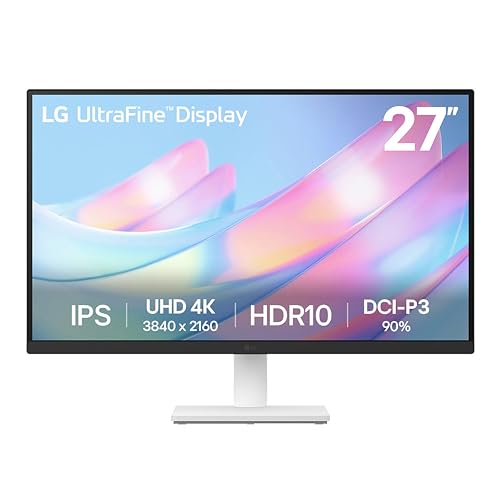
If you are operating on a strict budget without wanting to sacrifice essential color performance, the LG 27US500-W Ultrafine Monitor 27-Inch 4K UHD serves as the best value pick. This display offers crisp 4K UHD resolution, reliable IPS viewing angles, and wide 90 percent DCI-P3 color gamut support at an accessible entry point. It provides an efficient entry into color-accurate photo editing without requiring expensive secondary calibration equipment.
For creative professionals who demand maximum screen real estate alongside cutting-edge panel technology, the INNOCN 49″ QD-OLED 5K2K 5120 x 1440P 144Hz stands out as a premier ultrawide choice. Its self-emissive QD-OLED panel, 90W USB-C power delivery, and expansive 32:9 workspace provide an unmatched environment for extensive timeline editing and asset organization. You can discover more helpful equipment recommendations in our related studio guides.
FAQs
Why is a 4K resolution recommended for a 27-inch photo editing monitor?
A 4K resolution on a 27-inch screen provides a high pixel density of approximately 163 pixels per inch. This density makes individual pixels indistinguishable at normal viewing distances, allowing you to inspect fine sharpness, grain, and skin textures accurately. It also renders UI elements cleanly without pixelation when scaling your operating system.
What makes best 4k monitors 27 for photographers stand out in 2026?
Modern displays in this category combine factory-calibrated color gamuts with versatile USB-C connectivity and higher refresh rates. They ensure minimal color shift across wide viewing angles while integrating eye-comfort technologies that reduce fatigue during extended editing sessions.
Is IPS technology better than VA for photographic post-processing?
IPS panels are widely preferred for photography because they maintain consistent color hue and brightness even when viewed from off-center angles. While VA panels provide deeper native black levels, they often exhibit slight color and gamma shifting when your viewing angle changes. IPS delivers the reliable color consistency essential for accurate grading.
How important is DCI-P3 coverage compared to sRGB for photographers?
Standard sRGB coverage is ideal for images intended strictly for web publication and social media platforms. DCI-P3 offers a wider spectrum of saturated reds and greens, which is valuable for modern mobile screens, digital cinema, and wide-gamut workflows. Choosing a monitor with strong DCI-P3 support ensures your display remains versatile for modern visual media.
Do I need a hardware calibration tool for my photo editing monitor?
While many photo editing displays arrive with solid factory calibration, using an external colorimeter ensures consistent accuracy over time. Display backlights naturally shift in luminance and color temperature as they age. Periodic calibration maintains trustworthy color reproduction throughout the life of your monitor.
What brightness level should I set when editing photos for print?
For print workflows, calibrating your screen brightness between 100 and 120 nits in a dimly lit room is standard practice. Setting your monitor too bright often leads to producing dark, underexposed prints because paper cannot emit light. Matching monitor luminance to your print viewing environment ensures consistent translation.
Can I use a high refresh rate gaming monitor for professional photography?
Yes, provided the gaming monitor features high color gamut coverage, accurate Delta E calibration, and an IPS or OLED panel. Elevated refresh rates make panning around large high-resolution images and navigating complex software interfaces smoother without compromising color fidelity.
What are the advantages of USB-C power delivery on a creative monitor?
USB-C power delivery allows you to transmit video signals, transfer data, and charge your editing laptop through a single cable. This reduces cable clutter on your desk and allows you to connect memory card readers and external hard drives directly to the monitor hub.
How does an ultrawide display compare to a dual-monitor editing setup?
An ultrawide screen eliminates the central bezel interruption found in dual-monitor configurations, offering a seamless panoramic canvas. It provides abundant horizontal space for timeline editing, multi-window reference viewing, and organizing tool palettes side by side.
Does a curved screen distort straight lines during architectural photo editing?
A subtle curve can cause perfectly straight horizontal lines to appear slightly bent near the periphery of the panel. While curved screens offer immersive viewing and reduce edge glare on ultrawide formats, flat displays remain the safest choice for strict architectural and geometric alignment work.




Write Your Review
No reviews yet. Be the first to share your experience!