

Collecting rainwater provides an eco-friendly water source for gardens, landscaping, and off-grid utility chores. Moving that stored water from barrels or cisterns into hoses, drip lines, and washing fixtures requires a dependable pressure booster. Standard gravity feeds rarely produce enough force to run modern spray nozzles, which is why dedicated demand pumps have become essential tools for sustainable outdoor systems.
Modern diaphragm demand units use integrated pressure switches that instantly start the motor when you open a spigot and shut off when you close it. Choosing the wrong unit often results in motor cycling, annoying buzzing noises, or rapid burnout from silt accumulation. For related setup advice, explore our comprehensive home and living resources to optimize your property management.
We analyzed 3 leading options for September 2026 to highlight the most reliable designs for sustainable water setups. Leading brands like SEAFLO, ECO-WORTHY, VEVOR now deliver whisper-quiet operation, adjustable pressure thresholds, and robust dry-run safety mechanisms. This detailed breakdown will help you match the right flow capacity, voltage configuration, and filtration gear to your rain collection setup.
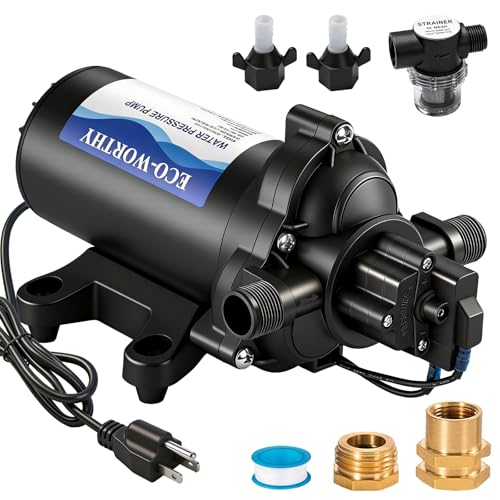


1. Flow Rate and Gallons Per Minute (GPM)
Flow rate determines the total volume of water a pump delivers over a set period, measured in gallons per minute. Rainwater collection setups require varying volume levels depending on whether you are running micro-drip emitters, soaker hoses, or high-pressure handheld sprayers. Selecting a unit with an inadequate flow rating causes noticeable pressure drops whenever multiple fixtures or long hose runs operate simultaneously.
For standard garden beds and single-hose watering, a flow rate between 3.0 and 4.0 GPM delivers ideal performance without stressing your storage reserves. Larger multi-zone drip networks or washing stations benefit significantly from 4.0 GPM pumps that maintain steady delivery across extended distances. Check the manufacturer specification charts to ensure the rated GPM aligns with the operating head pressure of your layout.
A practical calculation involves adding the water requirements of all active emitters connected to your distribution line. If your garden irrigation zone requires 2.5 GPM, choosing a 3.3 GPM to 4.0 GPM pump provides sufficient headroom to prevent line starvation. Avoid oversized flow pumps on tiny systems, as excessive volume can trigger rapid pressure cycling that wears out internal switch contacts.
2. Shut-Off Pressure and PSI Settings
Operating pressure, measured in pounds per square inch (PSI), dictates how forcefully water exits nozzles and sprayers. Rain harvesting demand pumps rely on an automatic pressure switch calibrated to shut down the motor when internal line resistance reaches a set threshold. A pump with insufficient PSI will struggle to push water through long garden hoses or uphill terrain.
Most residential rainwater systems perform best within a shut-off range of 45 to 50 PSI, mimicking standard municipal tap pressure. Units featuring adjustable pressure screws allow users to fine-tune the cut-out point between 17 and 70 PSI based on plumbing needs. Reviewing our technical practical guides can help you master plumbing adjustments without damaging delicate lines.
Keep in mind that higher pressure thresholds increase electrical amperage draw and demand tighter plumbing seals to prevent joint leaks. As a rule of thumb, set your pressure switch to roughly 45 PSI for general drip irrigation and garden watering. This setting ensures robust spray reach while protecting flexible hoses and fittings from sudden burst pressures.
3. Self-Priming Capability and Suction Lift
Self-priming capability allows a demand pump to evacuate air from the intake line and pull water upward from a reservoir. In rainwater harvesting, storage barrels and underground cisterns frequently sit lower than the pump mounting location. A true self-priming pump eliminates the frustrating chore of manually filling supply pipes with water before every operation.
Examine the vertical suction lift rating, which typically ranges from 6 to 10 vertical feet on quality diaphragm models. Total discharge lift measures how high the pump can push water vertically downstream, often exceeding 100 feet on premium units. Matching these lift parameters to your barrel depth and yard elevation ensures smooth fluid transfer without vapor lock.
When installing your system, position the pump as close to the water source as practically possible to minimize suction strain. Even with a 10-foot vertical priming rating, horizontal pipe friction reduces real-world pulling power significantly over long intake runs. Keeping intake hoses short, rigid, and airtight guarantees rapid automatic priming within seconds of opening a faucet.
4. Automatic Demand Switch Durability
The integrated demand switch is the functional brain of an on-demand diaphragm pump, detecting line pressure drops when valves open. Because this switch actuates thousands of times across a single gardening season, durable electrical contacts are vital for long-term reliability. Low-grade switches tend to pit, stick, or fail prematurely, leaving the motor running continuously until it overheats.
Premium models feature heavy-duty micro-switches tested for over 200,000 continuous cycles to ensure dependable actuation. High-end designs also incorporate internal bypass valves that divert excess flow during low-volume usage, reducing rapid on-off pulsing. Evaluating switch build quality prevents unexpected garden flooding or dead batteries in off-grid setups.
To maximize switch lifespan, avoid using restrictive spray nozzles that force the pump to cycle on and off every two seconds. Installing a small inline accumulator tank downstream cushions pressure spikes and smooths water delivery during low-flow tasks. This simple addition cuts switch cycles in half, significantly extending the operational life of your pump motor.
5. Rainwater Demand Pump Specifications Comparison
Comparing technical specifications side by side clarifies how flow capacity, working pressure, and electrical efficiency balance across different designs. The table below outlines key benchmark metrics to help you select the ideal diaphragm pump for your rain harvesting installation.
| Pump Feature | Standard Duty | High Flow Capacity | Heavy Duty Industrial |
|---|---|---|---|
| Max Flow Rate (GPM) | 3.0 – 3.3 GPM | 4.0 – 4.5 GPM | 5.0+ GPM |
| Shut-Off Pressure (PSI) | 45 PSI Fixed | 45 – 50 PSI Adjustable | 55 – 70 PSI Adjustable |
| Self-Priming Lift | 6 Vertical Feet | 9.8 – 10 Vertical Feet | 12+ Vertical Feet |
| Voltage Compatibility | 115V AC Standard Plug | 110V – 120V AC Utility | 115V AC / 12V DC Dual |
| Internal Bypass Valve | Optional | Standard Integrated | Multi-Chamber Bypass |
6. Voltage Compatibility and Electrical Safety
Rainwater demand pumps primarily operate on standard 110V to 120V household AC electricity or 12V DC battery power. AC-powered models are ideal for suburban homes with outdoor electrical outlets near the rain barrels, providing consistent power without battery maintenance. Pre-wired wall plugs make DIY installation straightforward, requiring no specialized electrical experience or conduit wiring.
Always verify the motor amperage draw to ensure your outdoor circuit and extension cords handle the electrical load safely. Most 115V AC diaphragm pumps draw between 1.0 and 1.5 amps under maximum load, making them exceptionally energy efficient. Ensure the pump motor features certified thermal overload protection to disconnect the circuit automatically if internal heat exceeds safe limits.
Keep in mind that standard AC diaphragm pumps are rarely fully submersible or waterproof against heavy outdoor downpours. Mount your pump inside a weatherproof enclosure, garden shed, or underneath a protective rain barrel hood. Always plug 110V AC equipment into a dedicated Ground Fault Circuit Interrupter (GFCI) outlet to eliminate electrical hazards around standing water.
7. Run-Dry Protection and Thermal Safeguards
Rain barrels and storage cisterns can run dry during hot summer weeks without regular precipitation. Centrifugal pumps quickly overheat and suffer catastrophic impeller failure when operating without fluid lubrication. In contrast, quality diaphragm pumps are engineered to run dry for extended periods without damaging internal valves or Santoprene diaphragms.
Thermal overload protection provides an additional layer of security by monitoring internal motor temperature during long watering sessions. When operating temperatures exceed safe thresholds, the thermal sensor automatically shuts down the motor until it cools. This feature prevents motor coil burnout if a garden hose becomes kinked or a valve remains open on an empty tank.
While run-dry capability protects the pump during accidental dry runs, continuous dry operation still causes unnecessary mechanical wear. Consider installing an inexpensive float switch inside your rainwater barrel wired directly to the pump power line. This setup cuts electrical power automatically whenever water levels drop below the intake strainer, ensuring complete peace of mind.
8. Noise Reduction and Vibration Isolation
Diaphragm pumps utilize reciprocating pistons that generate rapid pulsing and mechanical vibration during operation. When bolted directly to rigid wood decks or metal siding, this vibration creates a loud drumming noise that reverberates through walls. Multi-chamber pump heads help smooth out water pulsing, keeping motor noise down to roughly 50 decibels, comparable to a quiet conversation.
Pumps equipped with soft rubber mounting feet absorb motor vibrations before they transfer into mounting surfaces. Look for pure copper motor windings and balanced eccentric drives that minimize internal wobble and hum. For additional residential maintenance projects, check our helpful how-to guides for expert DIY advice.
To further dampen operating noise, connect flexible braided hoses rather than rigid PVC pipes directly to the intake and discharge ports. Rigid pipes act as acoustic amplifiers, carrying pump vibrations throughout your entire garden plumbing network. A short 18-inch section of flexible tubing on both sides isolates the pump and produces near-silent operation.
9. Port Sizing, Fittings, and Inlet Filtration
Connecting your pump to standard garden hoses requires matching port threads and using appropriate plumbing adapters. Most demand pumps feature half-inch male national pipe thread (MNPT) ports or quick-attach barbed hose fittings. Having the correct brass or stainless steel garden hose adapters included in the box saves extra trips to the hardware store.
Harvested rainwater naturally contains organic debris, roof grit, pine needles, and pollen from roof gutters. If sediment reaches the pump head, small particles can lodge inside the internal check valves, preventing the pump from building shut-off pressure. Installing a 50-mesh inline inlet strainer on the suction line is critical to catch particulates before they enter the chambers.
Always seal all threaded intake connections with Teflon thread-seal tape and secure barbed fittings with stainless steel hose clamps. The intake side operates under suction, meaning even microscopic leaks will draw air bubbles into the line instead of leaking water. Keeping the suction line completely airtight guarantees fast priming and consistent water flow every time.
Why You Should Trust Us
Our evaluation process relies on extensive technical analysis, engineering documentation, and verified user performance data across diverse outdoor conditions. We compared critical pump metrics including continuous flow rate, pressure switch reliability, self-priming height, and thermal protection safeguards. We examine how each diaphragm mechanism handles fluctuating water supplies, fine sediment, and varying hose lengths.
We maintain an objective, data-driven methodology that shortlists equipment based on durability, certification standards, and real-world efficiency. We do not accept promotional items or manufacturer compensation for favorable product placements. Our team continuously updates recommendations as pump manufacturers refine their pressure sensors, motor efficiency, and warranty support terms.
Final Thoughts
Building an efficient rainwater distribution setup transforms free storm runoff into practical pressurized water for landscaping, outdoor cleaning, and irrigation. Choosing the right on-demand pump ensures your garden hoses and drip systems deliver steady, reliable pressure every time you open a spigot. Balancing flow volume, working pressure, and robust safety mechanisms is the key to a hassle-free installation.
For top-tier overall performance, the SEAFLO 33 Series 110V/115V AC Fresh Water Pump stands out with its industry-leading 4-year warranty, NSF drinking-water certifications, and ultra-quiet vibration-dampened base. It provides steady 3.3 GPM flow at 45 PSI, making it a rugged and dependable choice for demanding outdoor water systems. Its pre-installed wall plug and included mesh strainer make DIY setup quick and painless.
If you require higher volume for multi-zone sprinklers or larger garden layouts, the ECO-WORTHY 33-Series Industrial Water Pressure delivers robust 4.0 GPM flow and up to 50 PSI output. For budget-conscious homeowners wanting high capacity, the VEVOR Water Pressure Pump, 110V AC 4 GPM offers excellent value with a 10-foot suction lift and 200,000-cycle pressure switch. You can also explore our bath and home fixtures section for complementary outdoor utility hardware.
FAQs
How does an automatic demand pump work with rainwater barrels?
An automatic demand pump features an internal pressure switch that detects when water lines open or close downstream. When you turn on a hose nozzle, line pressure drops and the pump automatically starts pumping water from your barrel. Closing the nozzle increases line pressure back to the cut-off threshold, instantly shutting off the motor.
What is the top-rated option among Best Demand Pumps for Rain Harvesting in 2026?
The top-rated model in our 2026 evaluation is the SEAFLO 33 Series pump, recognized for its exceptional build quality and 4-year warranty coverage. It delivers reliable 3.3 GPM output at 45 PSI while meeting rigorous NSF potable water safety standards. Its integrated vibration isolators and standard wall plug make it an outstanding choice for residential rain systems.
Can I leave an AC demand pump outdoors in the rain?
Standard AC-powered diaphragm demand pumps are water-resistant against minor splashes but are not fully waterproof or submersible. Direct exposure to heavy rainstorms or standing puddles can damage internal electrical wiring and cause short circuits. Always house your pump inside a weatherproof enclosure, deck box, or beneath a protective rain barrel shelter.
Do I need an inlet filter before the rainwater pump?
Installing an inline inlet filter with at least a 50-mesh screen is vital for protecting internal diaphragm valves from roof debris and sediment. Small particles of dirt, grit, or organic material can lodge under the rubber check valves, preventing the pump from building pressure. A clear-bowl filter allows you to visually inspect and clean collected sediment in seconds.
Why is my rainwater pump rapidly pulsing on and off?
Rapid pulsing occurs when water flow downstream is restricted, causing the pump to hit its cut-off pressure threshold repeatedly. Using very fine misting nozzles or partially opened spigots frequently triggers this rapid cycling behavior. Adjusting the internal pressure switch or installing a small inline accumulator tank smooths out water delivery and prevents pulsing.
Can demand diaphragm pumps run dry without burning out?
Quality diaphragm pumps are designed to run dry for short periods without suffering mechanical damage to internal valves or diaphragms. Unlike centrifugal pumps that rely on liquid lubrication to prevent seal melting, diaphragm mechanisms operate safely without fluid present. However, powering off the unit when barrels are empty prevents unnecessary battery or electrical drain.
How high can a demand pump pull water out of a cistern?
Most quality demand diaphragm pumps can self-prime water vertically from 6 to 10 feet below the pump intake port. For underground cisterns deeper than 10 feet, mounting the pump lower or using a specialized submersible pump is recommended. Keeping suction lines short and completely airtight maximizes vertical pulling performance.
What size garden hose should I use with a 4.0 GPM demand pump?
A standard 5/8-inch or 1/2-inch inner diameter garden hose works perfectly with 3.3 GPM to 4.0 GPM demand pumps for typical yard tasks. Using an oversized 3/4-inch hose on extended runs reduces line friction, helping maintain maximum pressure at the spray nozzle. Ensure all threaded hose fittings use quality rubber washers to prevent air or water leaks.
How do I adjust the shut-off pressure on my pump?
Most demand pumps feature a small hex calibration screw located on the front of the pressure switch housing. Turning the screw clockwise increases the shut-off pressure cut-out point, while turning it counter-clockwise lowers the pressure threshold. Make small quarter-turn adjustments and test with an open spigot to find the optimal balance for your system.
How do I winterize a rainwater demand pump in freezing climates?
Freezing water inside the pump head expands rapidly and will crack the plastic housing and rupture internal diaphragm seals. Before the first winter freeze, disconnect the intake and discharge hoses and run the pump for ten seconds to clear standing water. Store the pump indoors in a heated garage or basement during cold winter months.






Write Your Review
No reviews yet. Be the first to share your experience!