If your linen closet is stuffed with mismatched sheet sets, thinning pillowcases, and duvet covers you haven’t touched in years, you’re not alone. Most households accumulate far more bedding than they actually use, and the excess just eats up storage space while making laundry day more confusing than it needs to be. Downsizing your bed linen rotation doesn’t mean sacrificing comfort or leaving yourself short when a sheet set is in the wash. Done right, it means keeping only the pieces that actually earn their spot, so every item in your closet gets used regularly instead of sitting untouched for a season.
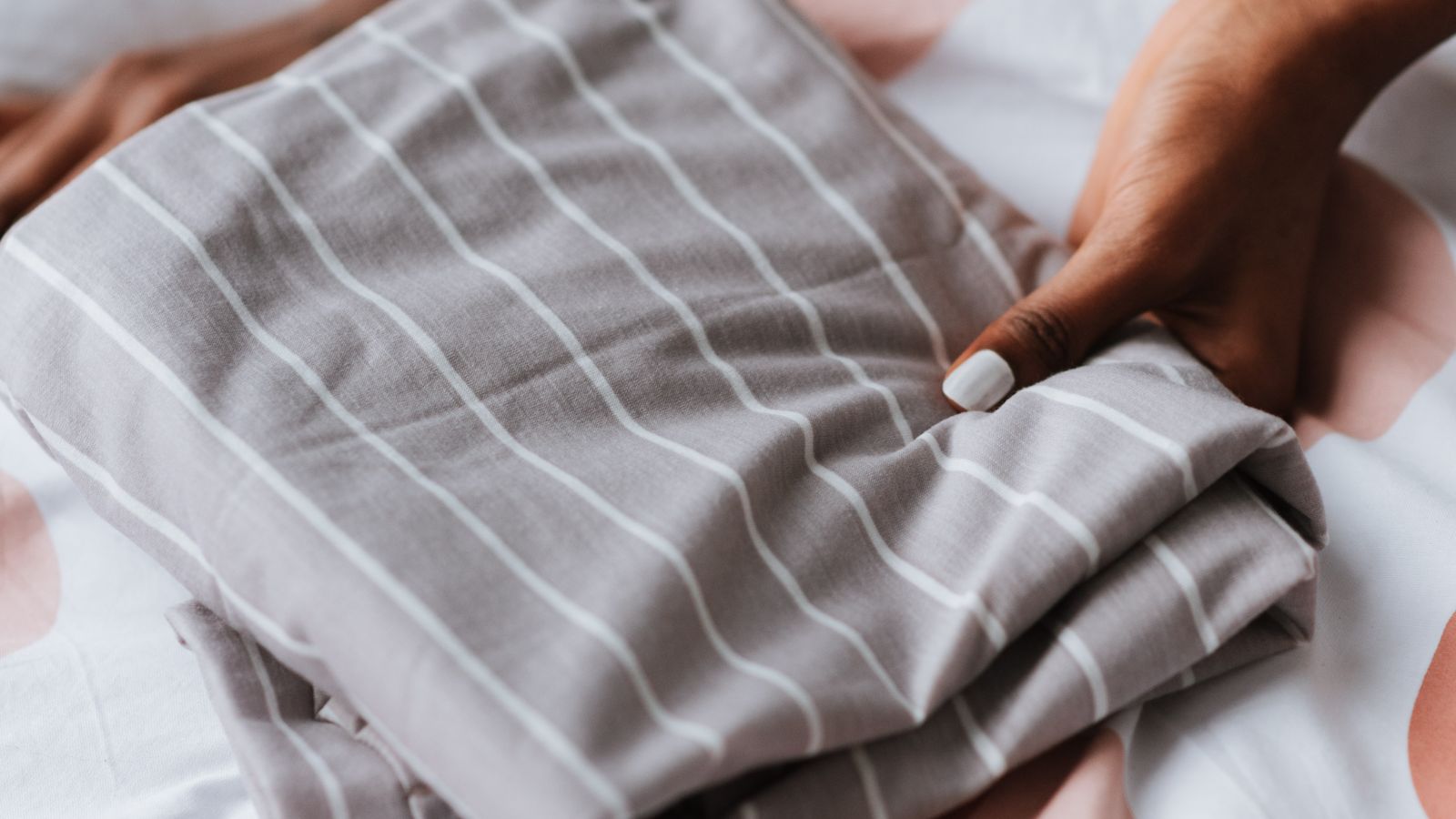
This guide walks through a practical, step-by-step approach to trimming your bed linen collection down to a functional rotation, without ending up scrambling for clean sheets on wash day.
What You’ll Need
- All of your current bed linens (sheets, pillowcases, duvet covers, mattress protectors) pulled out of storage
- A clear floor or bed surface to lay everything out
- Three sorting piles or baskets: Keep, Donate/Recycle, Maybe
- A notepad or phone to jot down bed sizes and fabric notes
- Storage baskets or bins for the final rotation
Having a set of sturdy Blanket Baskets on hand makes this process much easier, since you can sort directly into containers instead of leaving piles on the floor.
Step 1: Pull Everything Out and Take Inventory
Start by removing every sheet, pillowcase, duvet cover, and mattress topper from your linen closet or storage bins. It’s tempting to sort as you go, but resist that urge. You need to see the full scope of what you own before you can make smart decisions about what stays. Lay everything out on a bed or clean floor space so nothing gets missed in the back of a drawer.
As you pull items out, note the bed size each set belongs to (twin, full, queen, king) and the fabric type (cotton percale, sateen, microfiber, linen). This step alone often reveals duplicate sets you forgot you owned, plus orphaned pieces like a single flat sheet with no matching fitted sheet or pillowcases.
Step 2: Sort by Condition, Not Sentiment
Now go through each item and sort into three piles: Keep, Donate/Recycle, and Maybe. Judge each piece on its actual condition, not on how much you paid for it or how attached you feel to it. Ask yourself:
- Is the fabric pilling, thinning, or developing holes?
- Are the elastic corners on fitted sheets still snug, or do they slip off the mattress?
- Does the color look faded or dingy compared to when it was new?
- Is this a complete set, or are pieces missing?
Anything with holes, significant thinning, or an incomplete set goes straight to Donate/Recycle (severely worn textiles can often be recycled as rags rather than tossed in the trash). If you’re unsure, put it in the Maybe pile rather than agonizing over the decision now.
Step 3: Decide How Many Sets You Actually Need
A functional rotation for most households is two to three sheet sets per bed: one on the bed, one in the wash, and one spare for backup. Guest rooms or beds used infrequently can often get by with just two sets. If you have young kids or pets prone to accidents, three sets per bed gives you more breathing room between laundry cycles.
For duvet covers and decorative shams, one to two per bed is typically plenty, since these are washed less frequently than sheets. If you’re building or refreshing your rotation from scratch, browsing a few best bedding sets can help you settle on a consistent style and fabric weight across every bed in the house, which makes future downsizing easier since everything matches and mixes well.

Step 4: Revisit the Maybe Pile
Go back through your Maybe pile with fresh eyes. For each item, ask whether it fits into the target number of sets you settled on in Step 3. If you already have three solid queen sets and a Maybe-pile queen sheet is the weakest of the bunch, let it go. If a Maybe item is genuinely still in good shape and would round out an incomplete set, move it to Keep.
Be honest about seasonal duplicates too. Flannel sheets for winter and lightweight percale for summer both have a place, but you likely don’t need three winter sets and three summer sets for the same bed. One solid set per season, plus your everyday rotation, is usually enough.
Step 5: Address Bulky Bedding Separately
Comforters, duvet inserts, and blankets take up disproportionate storage space compared to sheets, so they deserve their own pass. If you’re rotating between a heavier winter comforter and a lighter summer option, that’s reasonable to keep both. But if you own several nearly identical comforters, consolidate down to one per season.
If your current comforter is lumpy, flat, or no longer keeping you warm, this is a good moment to consider replacing it rather than continuing to store a bedding item that no longer performs well. A well-made option from a list of alternative down comforters can replace two or three underperforming pieces with a single reliable one, which directly supports your downsizing goal instead of working against it.
Step 6: Set Up a Streamlined Storage System
Once you know exactly what’s staying, organize your reduced rotation so it’s easy to grab and easy to put away. A few approaches that work well:
- Nest the set inside itself. Fold the fitted and flat sheet, then tuck them along with matching pillowcases inside one pillowcase for a self-contained bundle.
- Label by bed size. Use small tags or bins labeled twin, full, queen, and king so grabbing fresh linens takes seconds.
- Store by season if applicable. Keep off-season sets (like flannel) in a separate labeled bin at the back of the closet.
Baskets designated for bedding, folded blankets, and spare pillows keep everything visible and prevent the closet from becoming a jumbled pile again within a month.
Common Mistakes to Avoid
- Keeping mismatched pieces “just in case.” A lone flat sheet without its fitted pair rarely gets used and just takes up space.
- Downsizing too aggressively. Cutting down to a single set per bed sounds minimal, but it leaves no backup for wash day or unexpected messes.
- Ignoring fabric weight mismatches. Combining a heavy flannel fitted sheet with a lightweight cotton flat sheet from a different set creates an uncomfortable, mismatched feel even if both pieces are technically “fine.”
- Skipping the inventory step. Sorting a closet shelf by shelf without seeing everything at once often means duplicate sets slip through unnoticed.
Safety and Care Notes
When donating linens, check with local shelters or textile recycling programs first, since some organizations only accept bedding in specific conditions (stain-free, no tears). Items too worn for donation can often go to textile recycling bins rather than the landfill. Also wash any newly downsized rotation sets before storing them long-term if they haven’t been used in a while, since stored fabric can pick up a musty smell in closed bins.
Frequently Asked Questions
How many sheet sets should each bed realistically have?
Two to three sets per regularly used bed strikes the right balance between having a spare for laundry day and not overcrowding your storage space. Guest beds used only occasionally can typically get by with two.
What should I do with sheets that are still in decent shape but no longer needed?
Donate wearable-condition bedding to a local shelter, thrift store, or animal rescue (many accept sheets and towels for bedding). If they’re too worn for donation, look into textile recycling instead of the trash.
Is it better to store bedding in the linen closet or in bins?
Either works, as long as the system is labeled and easy to access. Bins or baskets are especially useful if closet shelf space is limited or if you want to separate seasonal sets from your everyday rotation.
Will downsizing my linens actually save money long-term?
Yes, in most cases. A smaller, well-chosen rotation means you replace worn sets sooner (since you can spot wear more easily) rather than continuing to use tattered sheets buried at the bottom of an overstuffed closet.
Final Thoughts
Downsizing your bed linen rotation isn’t about owning as little as possible, it’s about owning exactly what you’ll actually use. By taking full inventory, sorting honestly by condition, and settling on a realistic number of sets per bed, you end up with a closet that’s easier to manage and linens that get used and cared for properly instead of forgotten in a drawer. The result is less laundry-day guesswork, more closet space, and a rotation you can maintain without it creeping back into clutter.