

High electricity bills create sudden stress for homeowners managing modern appliances, HVAC systems, and electric vehicle charging equipment. Real-time hardware tracking eliminates the mystery by pinpointing exact wattage draws across individual breaker lines and dedicated outlets. Installing dedicated tracking hardware empowers you to uncover vampire draw instantly and adjust household routines before utility billing periods close.
Modern electrical setups now blend discreet dark enclosures with split-core current transformers to preserve clean electrical panel aesthetics. We evaluated 9 options for September 2026 to highlight equipment that balances data precision with straightforward installation. Modern homeowners seeking to optimize whole-home efficiency will find solutions tailored to both complex multi-circuit panels and standalone high-draw appliances.
Whether organizing a modern home or upgrading utility monitoring alongside smart bedroom automation like durable bedroom furniture setups, tracking power waste saves substantial money over time. Understanding your panel capacity and local network requirements ensures you choose the right monitoring hardware. This detailed technical guide examines core specifications to help you optimize domestic electricity management without unexpected installation roadblocks.





Current Transformer Clamp Capacity and Channel Count
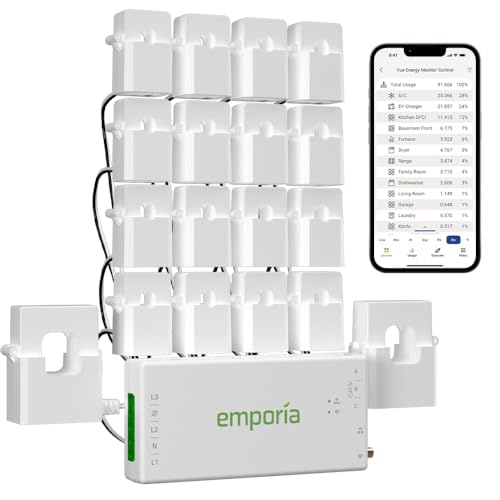
Current transformer clamps measure the magnetic field created by electrical current passing through insulated conductors inside your service panel. Whole-home units typically supply dual 200A main clamps to wrap around incoming service lines alongside smaller branch sensors for individual breakers. Selecting the right channel count dictates whether you observe broad household totals or granular circuit-by-circuit usage across specific rooms.
Main clamps generally handle 100A to 200A service feeds, while branch sensors range from 50A to 80A ratings. Multi-channel platforms provide between 8 and 16 dedicated branch inputs to track hungry loads like water heaters, induction cooktops, and air conditioning units simultaneously. Matching sensor physical diameter to your panel wire gauge prevents mechanical strain on delicate wiring harnesses.
When sizing your monitoring system, calculate the total number of critical high-draw circuits you need to inspect continuously. A simple dual-channel monitor works adequately for general grid feed monitoring, but tracking appliance cycling requires dedicated branch clamps. Panels serving sub-panels or detached workshops benefit from expandable hardware platforms that accept secondary sensor arrays without requiring additional central hubs.
Local API Protocols versus Cloud Ecosystems
Smart energy meters handle sensitive operational telemetry that reveals daily household occupancy patterns and equipment schedules. Cloud-dependent monitors transmit live power metrics to remote vendor servers for processing, historical charting, and mobile app presentation. Local-first architectures process all electrical telemetry directly on the onboard microprocessor to maintain complete privacy within your local area network.
Review the communication specifications to verify support for open protocols such as MQTT, local HTTP REST APIs, and native Home Assistant integration. Cloud-tethered systems often impose retention limits on high-resolution data or introduce latency during home automation triggers. Devices featuring onboard web servers let you extract CSV spreadsheets and stream real-time metrics even during broadband internet outages.
Prioritizing local data access prevents your hardware from becoming non-functional if a manufacturer discontinues cloud infrastructure support. Look for platforms that offer dual-mode operation, combining convenient smartphone application alerts with direct local socket access for custom dashboards. This flexibility ensures your electrical telemetry remains fully accessible for long-term power analysis and home automation scripts.
Solar Net Metering and Bi-Directional Power Tracking
Rooftop solar arrays and battery storage systems require bidirectional power monitoring to distinguish between energy drawn from the grid and excess production exported back. Traditional single-direction power meters fail to detect current phase direction, leading to incorrect calculations that log solar generation as grid consumption. Advanced monitors track instantaneous voltage and current phase angles to identify exact power flow direction dynamically.
Review the software capabilities to verify support for gross production tracking, grid feed-in measurement, and real-time net metering calculations. Quality energy monitors deliver separate dashboards showing production, self-consumption, and grid dependency metrics with responsive sampling rates. Proper bi-directional tracking allows automated charging routines to direct excess midday solar power directly into hot water tanks or vehicle batteries.
Confirm that the hardware firmware permits software-based current clamp inversion without requiring physical access to the electrical cabinet. If a clamp is installed backward, adjusting polarity via mobile settings avoids reopening dangerous high-voltage electrical enclosures. Pairing accurate bidirectional tracking with energy-efficient home furnishings like supportive platform frames establishes a fully optimized living environment.
Safety Certifications and Electrical Panel Enclosure Ratings
Installing monitoring equipment inside residential electrical panels requires strict adherence to national electrical safety standards to prevent fire and shock hazards. Current transformer clamps and monitoring hubs must withstand transient voltage spikes, thermal fluctuations, and continuous magnetic fields inside crowded enclosures. Independent safety testing guarantees that device insulation materials resist degradation and fire propagation under extreme operating conditions.
Look for recognized testing marks such as UL 61010, ETL Listing, or CE compliance specifically designated for electrical measurement equipment. Non-certified monitoring components can compromise home insurance coverage and violate local municipal building codes during electrical inspections. Quality monitors feature flame-retardant polycarbonate enclosures and isolated sensor ports designed to prevent electrical backfeed into low-voltage sensor circuits.
Always verify operating voltage compatibility before purchasing, confirming whether the unit supports standard split-phase 120/240V systems or three-phase configurations. Check that the included power supply harness includes dedicated inline fusing to protect internal circuitry from sudden grid surges. Certified hardware delivers consistent thermal stability, operating safely in ambient temperatures ranging from freezing garage basements to hot attic utility closets.
Smart Home Automation and Third-Party Ecosystem Support
Integrating energy telemetry into broader home automation networks transforms passive usage tracking into proactive cost-cutting automation. When an energy monitor communicates with platforms like Home Assistant, Tuya, or Matter-compatible hubs, automated routines can react instantly to power spikes. For example, laundry completion alerts or high-draw HVAC cutoffs can trigger automatically based on real-time wattage thresholds.
Examine the wireless protocols supported by the monitoring hub, noting whether it relies on 2.4GHz Wi-Fi, Zigbee, Bluetooth, or Matter standards. Wi-Fi modules provide direct cloud and app access, but Zigbee and Matter options reduce Wi-Fi router congestion in dense smart homes. Verify whether the manufacturer provides maintained integration components or relies entirely on generic third-party reverse-engineered plugins.
Review latency ratings between live power draw fluctuations and the resulting network state updates in automation platforms. Sub-second response times allow immediate automations, such as spinning up supplemental cooling when solar generation exceeds a predetermined wattage threshold. Robust API support guarantees your electrical monitoring setup adapts seamlessly as your smart home infrastructure expands.
Time-of-Use Rate Scheduling and Cost Allocation
Modern electrical utilities frequently implement variable time-of-use rate structures where kilowatt-hour costs fluctuate significantly between on-peak and off-peak periods. An effective energy monitoring platform must support complex utility rate templates, including weekend rates, seasonal adjustments, and baseline tier thresholds. Accurate software rate configuration ensures that financial estimates mirror your actual monthly electric utility statement.
Evaluate whether the accompanying application allows multi-tier pricing entries with customizable hourly peak schedules. Advanced systems permit circuit-specific cost allocation, which is especially valuable for rental properties, multi-tenant living spaces, or dedicated EV charging lines. Clear financial tracking translates abstract electrical units into transparent monetary values that motivate household conservation habits.
Review the reporting tools to see if the interface generates downloadable expense summaries structured by billing cycle rather than calendar months. Pairing granular expense tracking with routine home care routines like cleaning bedroom storage furniture fosters a well-maintained, cost-effective household environment. Actionable cost notifications help you reschedule energy-intensive tasks to low-cost utility windows without disrupting daily comfort.
Plug-Level versus Panel-Level Circuit Monitoring
Deciding between panel-mounted multi-channel monitors and standalone smart plug meters depends on your specific diagnostic goals and living arrangement. Panel-mounted monitors track whole-home electricity flow and built-in hardwired loads like central heat pumps, pool pumps, and water heaters. Smart plug meters deliver targeted insights for individual plug-in appliances like portable space heaters, entertainment centers, or window air conditioners.
Smart plugs require zero panel modifications, making them the superior choice for apartment renters and homeowners seeking quick diagnostic checks. Heavy-duty 25A smart sockets feature industrial magnetic latching relays to safely manage inductive appliance loads without excessive internal heat buildup. Conversely, panel monitors provide comprehensive protection by capturing whole-building energy consumption in one consolidated mobile dashboard.
A hybrid approach frequently delivers the most balanced home energy visibility across all power tiers. Installing a dual-channel monitor on incoming main utility feeds tracks baseline consumption, while strategic smart plugs isolate individual appliance spikes. This tiered architecture prevents overspending on multi-channel panel hardware while ensuring total visibility over high-draw household machinery.
Data Comparison: Energy Monitoring Hardware Specifications
Comparing physical specifications, sensing capacities, and software integration options helps identify the ideal hardware tier for your home infrastructure. The table below details critical operational differences across the primary smart energy monitoring categories.
| Hardware Category | Sensing Capacity | Local Network Control | Solar Tracking | Target Application |
|---|---|---|---|---|
| Multi-Channel Panel Monitor | 16 Branch Channels (50A to 60A) | MQTT, Open API, Web UI | Bi-Directional Net Metering | Whole-Home Granular Diagnostics |
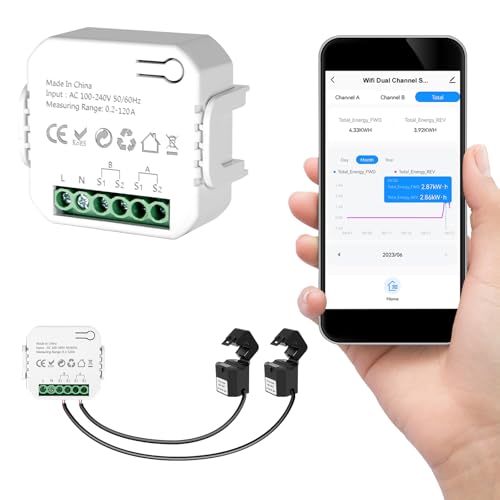
| Dual-Channel Main Monitor | 2 Main Lines (120A to 200A) | Tuya / Smart Life Cloud | Bi-Directional Grid Flow | Main Service & Solar Inverter Feed |
| Heavy-Duty Smart Plug | Single Outlet (25A / 5500W) | MicroSD Logging, Local Button | Single-Direction Load | Heavy Appliances, Heaters, ACs |
| Standard Smart Socket | Single Outlet (15A / 1800W) | Matter, Zigbee, Bluetooth | Single-Direction Load | Entertainment Centers, Office Gear |
Sampling Frequency and Historical Data Retention
The speed at which a monitor records electrical measurements directly impacts its ability to capture fleeting startup surges and transient voltage drops. Standard consumer monitors sample power at minute-level intervals, while premium hardware delivers second-by-second or sub-second telemetry updates. High-speed measurement proves essential when identifying faulty motor capacitors or intermittent electrical short circuits.
Examine how the hardware and cloud platform handle historical data compression over monthly and multi-year spans. Some cloud platforms retain second-level metrics for only a few hours before rolling data into hourly or daily averages. Devices equipped with local microSD storage or direct Home Assistant database streaming retain granular historical records indefinitely for deep seasonal analysis.
Ensure that export options include standard file formats like CSV or JSON so you can analyze long-term consumption trends in external spreadsheet software. Deep historical records help verify whether recent energy efficiency upgrades successfully lowered seasonal cooling or heating expenses. Evaluating data retention policies prior to installation protects against surprise monthly cloud subscription fees down the line.
Physical Form Factor and Circuit Panel Cable Management
Electrical service panels vary widely in available internal clearance, particularly in older residential breaker boxes with crowded neutral buses. Monitoring units must feature compact enclosures and slender current transformer leads that route cleanly between dense wiring bundles. Cluttered installations not only look messy but also restrict airflow and complicate future breaker servicing by certified electricians.
Examine whether the monitor permits trimming sensor wires or uses modular plug-in terminal blocks to eliminate excess slack inside the box. Split-core sensor designs allow clamp installation around energized lines without disconnecting circuit conductors from breaker lugs. Modern matte black enclosures blend unobtrusively into electrical panels and utility closets without drawing unwanted visual attention.
Confirm whether the device includes an external antenna or requires an antenna pass-through hole through the metal panel door. Metal breaker boxes act as Faraday cages, severely attenuating internal Wi-Fi signals unless an external antenna is positioned outside the enclosure. Proper cable dressing and external antenna placement ensure reliable network connectivity and safe, compliant electrical panel layouts.
Why You Should Trust Us
Our evaluation methodology centers on rigorous technical analysis of hardware schematics, electrical certifications, and network protocol standards. We analyze verified product specifications, communication documentation, and real-world circuit compatibility across leading residential energy management systems. Every product is assessed against uniform performance standards, focusing on measurement accuracy, thermal safety, and ease of software deployment.
We cross-reference electrical engineering safety standards, such as UL 61010 and ETL compliance, to verify insulation integrity and fire safety ratings. Our team evaluates open-source integration documentation to confirm true local API functionality rather than relying on marketing claims. This data-first testing framework ensures our recommendations provide reliable utility tracking without compromising household safety or network stability.
We continuously review firmware updates, mobile application enhancements, and utility rate structure developments to keep our comparative analyses current. By monitoring long-term reliability metrics and brand responsiveness, we provide dependable recommendations tailored to both residential owners and rental property managers. Our goal remains delivering transparent, technically sound advice that helps you take control of your domestic energy consumption.
Final Thoughts
Selecting the right hardware transforms abstract monthly electrical bills into clear, actionable power insights across your entire household. For homeowners seeking comprehensive breaker-level visibility and certified electrical safety, we recommend the Emporia Vue 3 Home Energy Monitor. Its sixteen branch sensors, robust UL certification, and screw-terminal cable management deliver unrivaled circuit-level tracking for complex residential electrical panels.
Budget-conscious users who want straightforward main-feed and solar tracking will appreciate the Smart Home Energy Monitor 2×120A as a top value selection. It offers dual-channel bi-directional measurement and seamless Tuya ecosystem pairing without requiring complex panel modifications. If total data privacy and local smart home control are your top priorities, the Refoss Smart Home Energy Monitor with Open API provides native Home Assistant integration without mandatory cloud dependencies.
For targeted appliance monitoring without touching panel wiring, the Shelly Smart Plug UL, WiFi, Bluetooth, Zigbee delivers exceptional plug-level precision and multi-protocol flexibility. Pairing these intelligent monitoring tools with high-quality home furnishings like solid wood bed slats establishes an efficient, well-balanced living space. Implementing precise energy measurement today ensures lower operating costs and a resilient, automated smart home for years to come.
FAQs
What are the key advantages of Best Black Smart Energy Monitors in 2026?
Modern black energy monitors provide real-time power visibility to identify vampire energy draw and abnormal electrical consumption instantly. Their sleek dark profiles blend seamlessly into modern service panels while offering advanced local API and smart home automation capabilities. Installing these monitors helps homeowners cut annual electricity bills by up to twenty percent through proactive usage management.
Can I install a smart energy monitor in my electrical panel without an electrician?
While split-core current transformer clamps snap around insulated conductors without wire cutting, installation requires working inside the main service panel where exposed high voltages exist. Homeowners comfortable with electrical safety procedures can complete setup following manufacturer instructions, but hiring a licensed electrician is strongly recommended. Professional installation ensures strict compliance with local electrical codes and prevents hazardous electrical shocks.
How do bi-directional smart monitors track solar power generation?
Bi-directional monitors track the phase relationship between AC voltage and current waveforms to determine whether electricity is flowing into the home or exporting out. When solar panels generate excess electricity, the monitor detects the reversed current vector and logs the wattage as grid export. This directional precision provides accurate net metering data for solar-equipped residences.
What is the difference between split-core current transformers and solid-core transformers?
Split-core current transformers feature a hinged magnetic core that opens and snaps securely around an existing insulated wire without disconnecting it from the breaker. Solid-core transformers require the wire to be unfastened from the breaker lug and threaded through a fixed ring. Split-core designs are preferred for residential retrofits because they offer quick, safe, and non-invasive installation.
Will a smart energy monitor work if my internet connection goes down?
Monitors equipped with local web servers, MQTT protocols, or internal flash storage continue measuring and logging power usage even during broadband outages. Cloud-dependent models will continue measuring internally but may delay app dashboard updates until internet connectivity is restored. Choosing a monitor with local API support ensures continuous automation triggers inside your local network without internet reliance.
How does Home Assistant integration improve home power management?
Integrating energy monitors into Home Assistant allows you to build custom automated triggers based on live electrical loads across your home. For example, high-draw appliances can automatically pause when peak utility rates begin or when solar production drops below baseline levels. Home Assistant also provides local long-term database storage without cloud subscription fees or data privacy compromises.
Can I track individual circuit costs with tiered utility billing rates?
Yes, advanced energy monitoring applications allow users to configure custom multi-tier and time-of-use pricing schedules matching their local utility tariffs. Once programmed, the software calculates running monetary costs for each monitored branch circuit based on current rate tiers. This capability helps rental owners and shared households allocate electrical expenses accurately and fairly.
Is a smart plug meter better than a whole-panel energy monitor?
Smart plug meters excel at pinpointing consumption for individual plug-in appliances like space heaters, computers, and window AC units without electrical panel work. Whole-panel monitors are superior for measuring whole-house consumption and heavy 240V appliances like heat pumps and electric ranges. Combining a whole-panel monitor with occasional smart plugs provides the most comprehensive electrical visibility.
Why is UL or ETL safety certification critical for energy monitoring devices?
UL and ETL certifications verify that the monitoring hardware has undergone rigorous testing against thermal breakdown, electrical arcing, and fire propagation. Non-certified equipment placed inside a main electrical panel introduces significant safety risks and could void homeowner insurance policies during an electrical incident. Certified products ensure compliance with national building safety codes and long-term operating reliability.
How accurate are modern residential smart electricity monitors?
High-quality residential monitors with calibrated split-core current transformers achieve measurement accuracy within plus or minus one to two percent across normal load ranges. They measure true active power by continuously sampling voltage and calculating power factor rather than estimating wattage from amperage alone. This level of precision provides dependable electrical telemetry comparable to commercial utility billing meters.








Write Your Review
No reviews yet. Be the first to share your experience!