

Making artisan marshmallows at home requires turning humble sugar, corn syrup, and water into an airy confection that holds its shape. Reaching that texture depends entirely on bringing your boiling sugar syrup to an exact stage before whipping it into bloomed gelatin. Even a small variance in heat can result in sticky puddles or dry, rubbery blocks that refuse to dissolve in hot chocolate.
In September 2026, confectionery gear has shifted toward rapid digital sensors and secure pot clamps that handle bubbling syrup safely. We examined 5 distinct models from brands like BOMATA to help you identify reliable tools that protect both your hands and your desserts. For more culinary tips across diverse projects, browse our kitchen craft guides to sharpen your confectionery skills.
Many amateur bakers make the mistake of using standard meat thermometers or unsteady glass tubes that slide into the pot. A dedicated marshmallow instrument must maintain balance on the rim while reading boiling sugar depth that rarely exceeds two inches. This guide covers response times, clamp security, and dial readability so your next confectionery batch turns out light and springy.

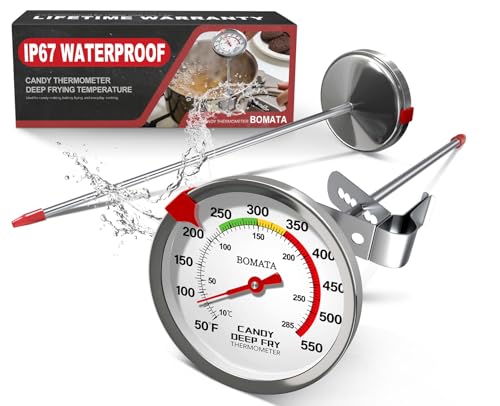


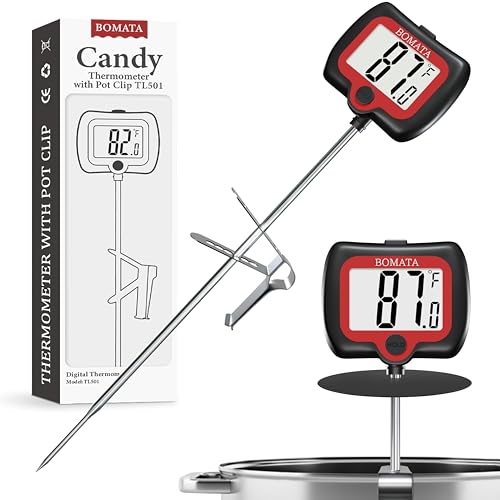
Thermal Response Time and Refresh Rate
Sugar syrup behaves erratically once water evaporates from the pan, causing the temperature to spike swiftly past the firm ball stage. A thermometer that lags by five seconds can cause you to overshoot your target temperature by ten degrees or more. When liquid sugar gets too hot, the final marshmallow loses moisture and sets into a rigid, leathery mass.
Digital sensors typically update internal registers within two to three seconds, giving you real-time data on the boil. Analog bimetallic coils take noticeably longer to register shifts because the metal stem must absorb ambient heat from the liquid. For sugar cookery, look for digital instruments with sub-three-second response times or analog units with large, heat-absorbent sensor bulbs.
As a practical rule, remove your saucepan from active heat two degrees before your recipe goal to accommodate carryover heat. Fast-refreshing tools show this subtle deceleration clearly, helping you pour boiling syrup into egg whites or gelatin without crystal formation.
Pot Clip Stability and Vertical Adjustment
Molten sugar syrup is hazardous, so your measuring probe must stay attached to the pot rim without tipping. A poor clip allows the probe to slip down into the burner flame or flip sideways, splashing scalding syrup across the stove. The clamp must grip curved edges firmly while keeping the stem rigidly upright.
High-grade clamps feature spring-tension stainless steel or adjustable thumb screws that slide up and down the main stem. This adjustability ensures the probe tip rests midway through the boiling liquid rather than pressing against the bottom of your pan. Bottom contact measures the scorching heat of the metal pan rather than the actual sugar temperature.
Always verify that the clamp provides at least two inches of vertical travel to fit deep stockpots and shallow saucepans alike. Testing the clamp on an empty saucepan with tap water before cooking will ensure the device holds its angle under bubbling conditions.
Minimum Immersion Depth
Standard homemade marshmallow batches generate shallow pools of syrup, often measuring less than two inches deep in medium saucepans. Many commercial thermometers place internal sensors higher up the shaft, requiring three or four inches of liquid to read accurately. If your syrup pool does not fully cover the internal sensor, the reading reflects room air and steam.
Mechanical dial designs often require at least two inches of liquid submersion to activate their internal coils properly. Conversely, high-precision digital probes place their micro-thermocouples within the bottom half-inch of the stem tip. Checking the manufacturer specification for minimum immersion helps prevent false readings in small single-batch sugar preparations.
If your stem requires deeper submersion than your current batch provides, tilt your saucepan slightly or switch to a narrower saucepan. Doing so gathers the syrup into a deeper reservoir, ensuring the internal sensor stays submerged without touching the hot bottom.
Display Readability and Fog Resistance
Boiling sugar generates heavy plumes of moist steam that instantly condense on cold glass and plastic dials. If an instrument lens fogs over, you will find yourself leaning dangerously close over boiling sugar to see tiny markings. Clear visual design is an essential safety feature for any confectionery project.
Analog dials should feature oversized faces of at least two inches, highlighted by high-contrast numbering and marked candy zones. Digital variants benefit enormously from rotatable screens that turn toward your eye level regardless of pot placement. Sealed bezels prevent hot steam from entering the housing and clouding the viewing window during thirty-minute boils.
Look for instruments that incorporate external indicator needles or backlit displays to check heat levels across a crowded kitchen counter. Being able to read temperatures at arm length keeps your face safely away from hot steam bursts.
Heat Resistance and Silicone Insulation
Boiling sugar concentrates extreme heat directly around the rim of your cookware, where thermometer housings sit for prolonged periods. Inferior plastic casings quickly soften, melt, or short out internal circuit boards when exposed to rising steam. A robust design isolates vulnerable electronics or dial gaskets from radiant burner heat.
Advanced digital designs employ silicone insulation pads or extended metal standoffs that shield the digital module from heat plumes. Mechanical analog tools naturally resist high heat because their dials contain no sensitive silicon microchips or delicate solder joints. In either case, ensure the exterior materials carry food-safe ratings and flame retardant properties.
Position the thermometer body away from the direct updraft of gas stove burners when cooking over open flames. Doing so prolongs the lifespan of internal components and prevents screen discoloration during long reduction boils.
Waterproof Ratings and Cleanability
Marshmallow syrup leaves behind sticky, hardened sugar residue that clings stubbornly to probes, clips, and display seams. Cleaning these tools requires soaking the hardware in warm water or running it under a forceful tap to dissolve sucrose crusts. If a unit lacks proper liquid ingress protection, moisture will leak inside the housing and ruin the instrument.
An IP67 waterproof certification guarantees the thermometer can withstand total submersion in cleaning basins without internal damage. Analog stainless steel models handle hot dishwater easily because their mechanical stems are hermetically sealed against moisture penetration. Digital models with unsealed battery compartments, however, require careful wiping with damp towels to prevent component corrosion.
Avoid scouring stainless steel stems with abrasive steel wool pads that scratch the metal and create crevices for future sugar buildup. Soaking the lower shaft in hot tap water for five minutes dissolves boiled sugar effortlessly without mechanical scrubbing.
| Sensor Type | Typical Response Speed | Immersion Depth Needed | Power Source | Primary Advantage |
|---|---|---|---|---|
| Digital Stem Sensor | 2 to 3 Seconds | 0.5 to 1.4 Inches | LR44 Battery | Rapid readings with high precision |
| Analog Mechanical Dial | 6 to 10 Seconds | 1.5 to 2.5 Inches | Battery-Free | Zero power dependency and high heat tolerance |
| Traditional Glass Tube | 8 to 12 Seconds | 2.0 to 3.0 Inches | Battery-Free | Classic stages printed directly on glass |
Measurement Range and Confectionery Accuracy
Making standard marshmallows requires hitting the firm ball stage, which sits right between two hundred forty-two and two hundred forty-eight degrees Fahrenheit. Even a variance of three degrees changes the density and chew of your finished marshmallow cubes. Your chosen gauge must deliver tight measurement accuracy within this specific mid-temperature band.
Digital cooking probes typically boast factory accuracy ratings around one degree Fahrenheit across broad measurement ranges. Mechanical dials generally carry a wider tolerance margin, sometimes fluctuating up to five or ten degrees depending on calibration. For more home preparation strategies, explore our how-to techniques archive to build consistent kitchen habits.
Verify your device calibration periodically by placing the probe tip in rolling boiling water at sea level. If your thermometer reads above or below two hundred twelve degrees, note that exact variance and adjust your marshmallow recipe temperatures accordingly.
Probe Length and Food Safety Standards
Boiling sugar can foam upward vigorously as bubbles burst, demanding a probe long enough to keep the display above the foam line. An eight-inch probe shaft provides sufficient length to keep electronic components and your knuckles away from rising heat. Short four-inch skewers force you to reach too close to hot cooking surfaces during critical temperature checks.
Look for probes manufactured from grade 304 food-contact stainless steel to prevent metallic leaching or surface corrosion from acidic sugar blends. Certifications from organizations like the National Sanitation Foundation ensure the instrument meets strict sanitary standards. Food-safe metals also resist the thermal shock of moving between cold counter surfaces and boiling liquids.
Select a stem diameter that provides rigid structural support without bending when bumped against the rim of your cookware. A sturdy eight-inch stainless steel probe anchors cleanly inside the pan and delivers years of reliable service.
Power Independence and Battery Longevity
Midway through boiling sugar is the worst possible moment for a thermometer battery to die unexpectedly. When digital batteries give out, you are left guessing sugar concentration without any backup reading on hand. Choosing between mechanical independence and digital accuracy is an important consideration for frequent candy makers.
Analog models operate without batteries, relying purely on physical thermal expansion of internal bimetallic coils. They remain permanently ready inside your utensil drawer regardless of how many months pass between confectionery projects. Digital units offer faster readings but require functional button cells, often relying on small LR44 batteries that need periodic replacement.
If you prefer digital models for their rapid speed, keep a spare coin cell battery stored in your pantry drawer. Storing digital instruments with their power turned off ensures long battery life between holiday candy batches.
Why You Should Trust Us
Our culinary assessment process focuses on data-backed specifications, structural materials, and verified performance tolerances under realistic cooking conditions. We analyze manufacturer build quality, probe depth requirements, waterproof certifications, and mounting stability across diverse cookware profiles. We do not accept sponsored product placements or rely on unverified marketing claims when compiling our recommendations.
Every tool featured in this guide was shortlisted after cross-referencing published laboratory accuracy standards and consumer safety reports. We track product updates across brands to ensure our technical recommendations reflect current models on the market. For more household evaluations, check our home and living tutorials for well-researched home product insights.
Our methodology treats sugar cookery as an exact science where temperature precision directly dictates recipe success. By focusing on thermal stability, clamp safety, and response rates, we help you select equipment that prevents ruined ingredients and burns.
Final Thoughts
Selecting the right thermometer transforms marshmallow making from an anxious guessing game into a predictable, rewarding craft. Achieving that signature fluffy texture requires pulling your boiling sugar mixture off the stove at the exact firm ball stage. Having a stable pot clip and a rapid sensor allows you to coordinate gelatin whipping without juggling unstable kitchen tools.
For home candy makers seeking digital speed and precision, the BOMATA Digital Candy Thermometer with Pot Clip is our best overall pick. Its rotatable viewing head, rapid response time, and silicone insulation pad protect the unit from rising steam damage during long sugar boils. The eight-inch stainless steel probe reaches easily into medium saucepans without tipping off balance.
Cooks looking for an affordable, battery-free option will appreciate the BOMATA Candy Thermometer with Pot Clip as our best value choice. Its mechanical dial eliminates dead battery worries, while the IP67 waterproof design makes cleanup effortless under warm running water. If you manage multiple pots at once, the BOMATA 2-Pack Candy Thermometer with Pot Clip,IP67 offers excellent utility for large holiday confectionery runs.
Before beginning your next batch of homemade treats, take time to organize your workspace and review our organization comparison tips to keep kitchen cabinets clutter-free. With accurate temperature readings and a secure pot clamp, your homemade marshmallows will turn out soft, pillowy, and delicious every time.
Frequently Asked Questions
What makes the Best Candy Thermometers for Marshmallows in 2026 different from meat probes?
Candy thermometers include heavy-duty pot clips that hold the stem away from pan bottoms while syrup boils. Meat thermometers have short stems designed for piercing roasts and lack the heat-resistant housings required for continuous steam exposure. Using a dedicated sugar probe protects your hands and delivers accurate readings in shallow liquid depths.
What exact temperature is required when boiling sugar syrup for marshmallows?
Most traditional marshmallow recipes require boiling sugar and corn syrup to between two hundred forty and two hundred forty-eight degrees Fahrenheit. This range corresponds to the firm ball stage, ensuring enough moisture evaporates so the confection holds shape without becoming chewy. Removing syrup within this precise window prevents grainy crystal formation during whipping.
Why should the probe tip never touch the bottom of the saucepan?
The metal base of a saucepan conducts direct heat from your stovetop burner and gets much hotter than the liquid syrup. Resting the probe on the bottom produces an artificially high reading that causes you to pull syrup off the heat too early. Proper pot clips keep the sensor suspended midway through the liquid for an accurate measurement.
Are digital models better than analog dials for boiling sugar?
Digital models deliver readings within two to three seconds and provide decimal-point accuracy, which helps prevent overshooting rapid temperature spikes. Analog dials require no batteries and withstand high heat well, but they take longer to react to sudden temperature changes. For delicate sugar cookery, digital responsiveness offers a significant advantage.
How do I clean hardened marshmallow syrup off my candy thermometer?
Sugar dissolves naturally in water, so soaking the probe tip in warm water for five minutes is the simplest cleaning method. Never scrape the metal shaft with harsh knives or abrasive scouring pads that can scratch the stainless steel finish. Ensure the digital housing stays above water unless it carries a verified IP67 waterproof certification.
How does kitchen altitude impact marshmallow temperature targets?
Water boils at lower temperatures at higher elevations because of reduced atmospheric pressure, which alters sugar concentration points. For every five hundred feet above sea level, subtract one degree Fahrenheit from your recipe temperature target. Checking your local boiling point with tap water helps establish the exact offset needed for your kitchen.
Can I use an infrared laser thermometer for marshmallow syrup?
Infrared guns only measure surface temperatures and are easily tricked by steam layers rising above boiling sugar pans. The surface of bubbling syrup is often cooler than the liquid underneath, leading to undercooked sugar batches. An immersion stem thermometer is essential for reading core syrup temperatures accurately.
Why does my digital thermometer screen keep fogging up during cooking?
Boiling sugar releases dense water vapor that condenses against cool glass displays positioned directly over the pan rim. Choosing a thermometer with a rotatable display head allows you to angle the screen outward away from rising steam. Models equipped with silicone insulation barriers also prevent vapor from seeping behind the outer lens.
How do I test my thermometer for accuracy before starting a recipe?
Immerse the probe tip in a pot of vigorously boiling plain water, taking care not to touch the bottom or sides of the pot. At sea level, a properly calibrated instrument will read exactly two hundred twelve degrees Fahrenheit within a few seconds. If the unit reads differently, factor that variance into your marshmallow recipe stages.
What should I do if my sugar syrup begins crystallizing around the thermometer?
Splash droplets can create sugar crystals along the pan rim and probe stem, which risks seeding the entire batch with graininess. Use a wet pastry brush dipped in warm water to gently wash away stray sugar crystals from the saucepan walls. Keeping the pot covered with a lid for two minutes can also circulate steam to dissolve early crystals.





Write Your Review
No reviews yet. Be the first to share your experience!