

Capturing high-resolution photos or uninterrupted 4K video requires more than just a capable camera. Without reliable storage media, your camera buffer quickly fills up, leading to dropped frames and frustrating shooting delays during critical moments.
Choosing among the Best SD Cards to Use can feel confusing because speed ratings and format labels look very similar on the packaging. In this guide for September 2026, we break down 5 trusted memory solutions from Sandisk to help you match the right card to your shooting demands.
Whether you are upgrading an existing mirrorless setup or looking for dependable everyday storage, understanding real-world write speeds will save you money and headaches. For additional setup strategies, explore our practical how-to guides to optimize your digital gear.


How to Choose the Best SD Cards to Use
Sustained Write Speed vs Read Speed
Card manufacturers often print the maximum read speed in large font across the front of the packaging. While read speed dictates how quickly you can transfer files to a computer, write speed determines how fast your camera records data.
When capturing high-bitrate video or shooting continuous RAW bursts, write speed is the sole metric preventing your camera from stuttering. A card advertising 200MB/s read speeds might only sustain 90MB/s write speeds under real-world shooting conditions.
Always verify the minimum sustained write speed rather than relying on peak burst numbers. A practical rule of thumb is to calculate your camera video bitrate in megabytes per second and ensure your card write rating exceeds that figure by at least thirty percent.
Video Speed Class Ratings (V30, V60, V90)
Video Speed Class designations indicate guaranteed minimum sustained write speeds for modern video capture workflows. A V30 card guarantees a minimum continuous write performance of 30MB/s, which is suitable for standard 4K recording.
Higher bitrates, such as uncompressed 4K, all-intra recording, or slow-motion 120fps video, often mandate V60 or V90 ratings to avoid buffer dropouts. Using a card with a lower rating than your camera codec demands will cause recording to stop abruptly after several seconds.
To determine what you need, check your camera instruction manual for its required video class rating before purchasing. If you shoot casual 4K or 1080p footage, a V30 card provides dependable performance without paying a steep premium for high-tier video cards.
Storage Capacity and Workflow Safety
Capacity selection balances convenience against total risk exposure. A single 256GB card allows you to shoot all day without swapping media, which is ideal for events and long travel days.
However, relying on a single massive card means that a single point of failure could jeopardize all your footage. Many professional creators prefer using two 64GB or 128GB cards instead of one massive drive to spread the risk across separate physical media.
If you regularly shoot 4K video, 128GB or 256GB provides the breathing room needed for lengthy clips. For casual still photography, multiple 32GB or 64GB cards offer a great balance of cost, safety, and operational simplicity.
UHS Bus Interface: UHS-I vs UHS-II
SD cards utilize different physical bus interfaces that dictate maximum theoretical data transfer rates. UHS-I cards feature a single row of pins on the back and cap out at theoretical speeds of 104MB/s, though proprietary extensions can boost this.
UHS-II cards include a second row of connector pins, allowing theoretical speeds up to 312MB/s. To take advantage of UHS-II speeds, both your camera and your computer memory card reader must have compatible UHS-II slots.
If your camera only has a standard UHS-I slot, buying a UHS-II card will not improve in-camera shooting performance. You will, however, notice significantly faster file offload times when transferring large media folders to your computer with a compatible reader.
| Speed Class | Minimum Write Speed | Best Application | Bus Standard |
|---|---|---|---|
| Class 10 / U1 | 10 MB/s | Full HD 1080p video, basic JPEG photography | UHS-I |
| U3 / V30 | 30 MB/s | Standard 4K UHD video, RAW burst photography | UHS-I / UHS-II |
| V60 | 60 MB/s | High-bitrate 4K, 6K video, professional RAW bursts | UHS-II |
| V90 | 90 MB/s | 8K video, uncompressed 4K, high-speed cinema formats | UHS-II |
Proprietary Offload Technology and Card Readers
Certain manufacturers engineer specialized technologies to push UHS-I cards beyond their standard 104MB/s ceiling during offload. SanDisk QuickFlow technology, for instance, allows compatible cards to reach offload speeds up to 200MB/s.
To achieve these boosted transfer rates, you must use a proprietary card reader designed to handle the extended frequency. When plugged into a standard generic USB card reader, the card simply operates at standard UHS-I speeds.
If you regularly offload hundreds of gigabytes after a shoot, investing in a matching proprietary reader saves meaningful editing time. For general users, standard card readers remain completely compatible and operate at baseline transfer rates.
Physical Durability and Environmental Protection
Memory cards frequently encounter harsh environmental conditions during outdoor photography and travel. High-grade cards are built to withstand temperature extremes, water immersion, airport X-ray machines, and accidental drops.
Cheap, unbranded cards often use brittle plastic casings that can crack around the write-protect switch or connector pins. A cracked casing can get stuck inside a camera card slot, risking expensive damage to the camera pins.
Check whether the card packaging explicitly lists temperature proofing and shock resistance ratings before purchasing. Premium cards from established brands provide the robust physical housing needed for dependable field use in challenging weather.
RAW Burst Buffer Clearing Times
Action and wildlife photographers rely heavily on continuous burst shooting to capture fast-moving subjects. When you hold down the shutter, the camera fills its internal memory buffer before writing files onto the SD card.
A card with slow write performance creates a bottleneck, locking your camera controls while the buffer clears. Using one of the Best SD Cards to Use with high write speeds clears the buffer rapidly, letting you resume shooting immediately.
If burst photography is your primary focus, prioritize cards offering write speeds of 90MB/s or higher. This ensures your camera buffer flushes seamlessly between bursts so you never miss a critical action sequence.
SDHC vs SDXC File System Standards
The capacity of an SD card determines its underlying file architecture and system compatibility. SDHC cards range from 4GB to 32GB and traditionally use the FAT32 file system, which caps individual file sizes at 4GB.
SDXC cards range from 64GB up to 2TB and utilize the exFAT file format, supporting continuous video files of virtually unlimited size. If you record long video clips, SDHC cards will split your recording into multiple 4GB segments that require stitching later.
For seamless video creation without segment management, select an SDXC card with at least 64GB of capacity. Just verify that older legacy hardware supports SDXC cards before deploying them in vintage cameras.
Counterfeit Detection and Brand Reliability
The flash storage market is flooded with counterfeit cards that display false capacity labels and drastically degraded write speeds. A fake card might read as 256GB on your computer but will start overwriting data once you surpass 16GB of actual storage.
To avoid counterfeit media, stick with authorized retailers and established manufacturers like SanDisk. When you receive a new card, you can run diagnostic utility software to verify its true readable capacity and write speeds before trusting it on a shoot.
Understanding hardware differences is just as important in everyday life as it is in consumer electronics. If you enjoy smart comparison methodologies, see our guide on how to compare storage solutions for helpful organizing principles.
Why You Should Trust Us
Our editorial approach centers on comprehensive technical evaluation and verifiable manufacturer specifications. We analyze bus interfaces, speed class standards, real-world continuous write rates, and controller reliability across leading memory brands.
Rather than relying on marketing slogans printed on packaging, we examine how flash memory architectures behave under sustained operational workloads. We look at video bitrates, sustained minimum write speeds, and thermal endurance to understand real shooting performance.
Our guides are continuously updated using real-time data to reflect changing hardware availability and storage standards. We focus entirely on data-driven clarity, ensuring our recommendations provide consistent reliability for your digital devices.
Final Thoughts
For content creators demanding maximum sustained performance for 4K video and rapid burst shooting, the SANDISK 256GB Extreme PRO SD Memory Card is our top overall recommendation. Its write speeds up to 140MB/s and generous capacity handle heavy workloads with complete confidence.
If you want exceptional performance at a balanced price point, the SANDISK 256GB Extreme SD Memory Card offers impressive 130MB/s write speeds and V30 video certification. It delivers the speed required for modern mirrorless cameras while maintaining an attractive balance of value and capacity.
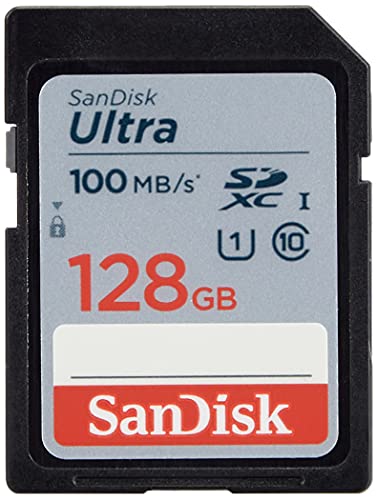
For casual photography or point-and-shoot cameras where Full HD video is the priority, the SanDisk 128GB Ultra SDXC UHS-I Memory Card serves as a dependable, budget-friendly solution. Pair your gear with our helpful tips in our how-to hub to keep all your home and digital equipment working smoothly.
Frequently Asked Questions
What are the Best SD Cards to Use for 4K video recording in 2026?
For standard 4K video, look for cards rated at least U3 and V30, which provide a guaranteed minimum sustained write speed of 30MB/s. Cards like the Extreme and Extreme PRO series ensure your camera avoids dropped frames during extended video recording sessions.
What is the difference between SanDisk Ultra and SanDisk Extreme cards?
SanDisk Ultra cards are rated Class 10/U1, making them suitable for everyday JPEG photos and Full HD 1080p video recording. SanDisk Extreme cards feature U3 and V30 ratings with much faster write speeds, designed specifically for 4K recording and rapid RAW photography.
Does a faster read speed make my camera take photos faster?
No, read speed only influences how quickly you can transfer files from the card to your computer. In-camera shooting speed and buffer clearing are strictly determined by the card write speed and your camera internal processor.
Why does my 4K video stop recording after a few seconds?
This issue occurs when the card sustained write speed is lower than the bitrate required by the camera recording mode. If the card cannot write data fast enough, the internal buffer overflows and the camera automatically halts recording to prevent data corruption.
What happens if I format an SD card in my camera versus a computer?
Formatting in your camera ensures the card file system and folder structure are perfectly optimized for that specific device. It is always best practice to format cards inside the camera you plan to shoot with rather than formatting on a desktop computer.
Can I use an SDXC card in an older camera that takes SDHC?
Older hardware designed strictly for SDHC standards cannot read exFAT-formatted SDXC cards. You should check your device manual to confirm whether it supports SDXC cards before purchasing capacities of 64GB or higher.
What is the small physical switch on the side of an SD card?
The side switch is a physical write-protect lock that prevents accidental file deletion or card formatting. If your camera gives you a card locked error message, eject the card and slide the small switch back toward the connector pins.
How long do memory cards usually last before failing?
High-quality flash memory cards typically last between five and ten years under standard consumer usage. Regular formatting, gentle physical handling, and avoiding sudden removals during data write operations help maximize their operational lifespan.
Do I need a proprietary card reader to use modern SanDisk cards?
No, standard card readers will read and write to the card without any compatibility problems. However, you need a QuickFlow-compatible reader if you want to reach the advertised offload speeds of up to 200MB/s on compatible models.
Is it better to have one large SD card or several smaller ones?
Using multiple smaller cards reduces the risk of catastrophic data loss if a single card is misplaced or corrupted during a shoot. However, single large cards offer convenience for uninterrupted recording during long events where changing media is inconvenient.


Write Your Review
No reviews yet. Be the first to share your experience!