

Quick Answer
The best kitchen canisters match each ingredient’s package size, create consistent gasket contact, and are easy to scoop from, clean, and dry. The ProKeeper+ Airtight Food Storage Container Set is a balanced overall starting point for baking staples because its listing pairs clear flour and sugar containers with magnetic accessories in a nine-piece set.
For buyers who prefer glass, the ComSaf Glass Pantry Storage Containers include six square jars in three listed capacities with bamboo lids and silicone seals. For an opaque option, the Oggi Stainless Steel Kitchen Canister Set uses clamp lids and clear top windows. Always confirm food-contact guidance, cleaning instructions, and usable capacity for the ingredient you plan to store.


Top Picks at a Glance
- Best Overall for Baking Staples: ProKeeper+ Airtight Food Storage Container Set. A clear flour-and-sugar system with magnetic accessories and ingredient-focused shapes.
- Best Glass Variety Set: ComSaf Glass Pantry Storage Containers. Six square jars in 0.7-, 1.2-, and 1.6-quart listed sizes with bamboo lids and silicone seals.
- Best Stainless-Steel Set: Oggi Stainless Steel Kitchen Canisters. Four listed sizes with clamp lids and see-through tops.
- Best Decorative Ceramic Set: Tabletops Gallery Ceramic Canister Collection. A three-piece stoneware set with acacia-wood styling and a green-leaf pattern.
- Best Ceramic with Wood Lids: vancasso Sabine Kitchen Canister Set. Three ceramic containers with airtight wood-lid language.
- Best Stackable Glass Set: LEAVES AND TREES Y Stackable Kitchen Canisters. Five clear glass jars with bamboo lids for pantry staples.
- Best Large Clear Pantry Option: Rubbermaid Brilliance Pantry Container Set. Three clear 16-cup containers with lids and scoops.
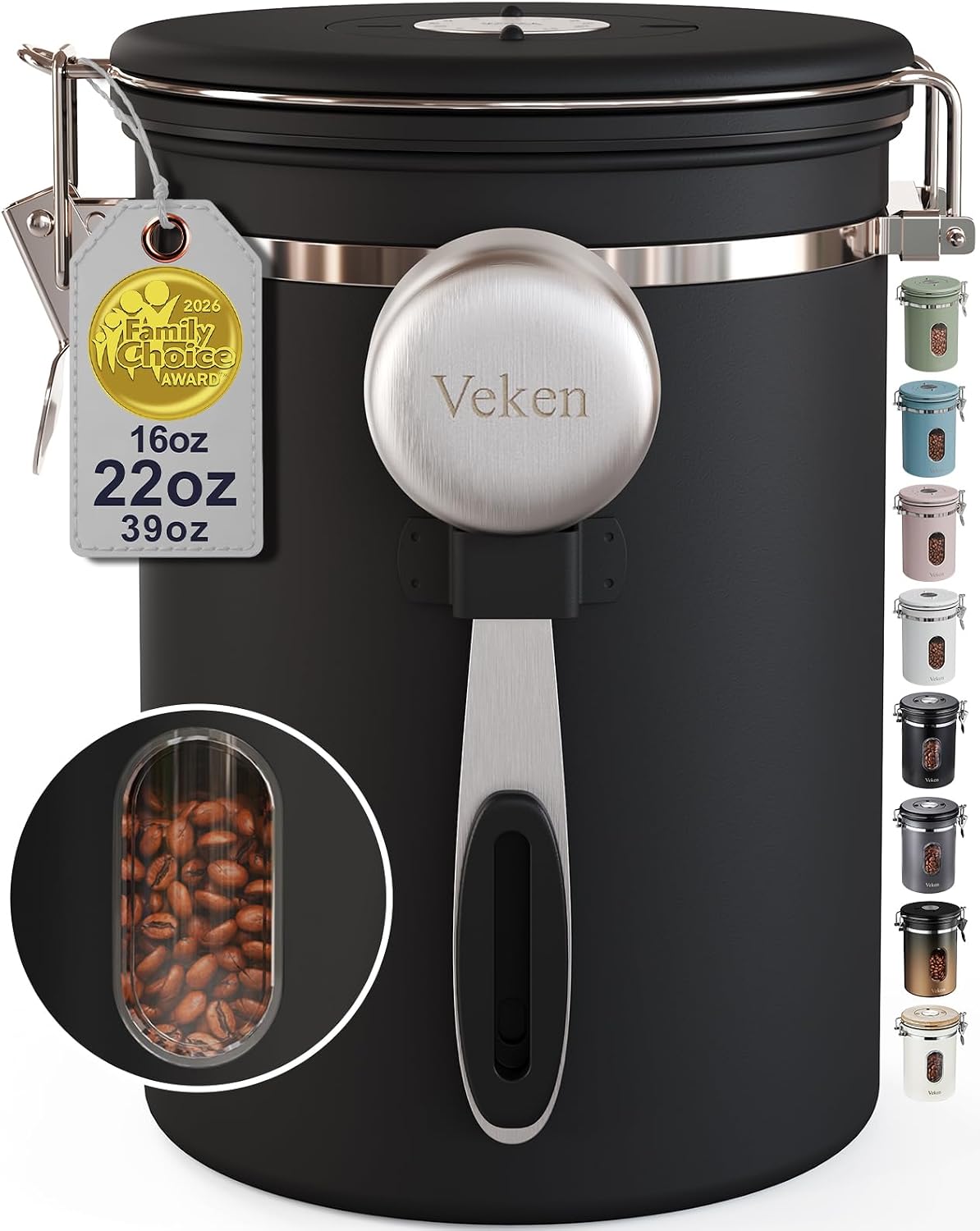
- Best for Coffee Visibility: Veken Coffee Canister with Window. A 22-ounce stainless-steel container with a viewing window and scoop.
What Makes the Best Kitchen Canisters Useful?
The best kitchen canisters protect dry ingredients while making inventory and measuring easier. A decorative matching set can look organized but still fail if the flour container cannot hold a normal bag, the opening is too narrow for a scoop, or the lid traps moisture after washing.
Start with the ingredient, not the container set. Flour, granulated sugar, brown sugar, rice, pasta, cereal, coffee, tea, and snacks have different bulk density, package shape, light sensitivity, and daily access patterns. One set of graduated jars may suit coffee and tea but leave no useful container for a large flour bag.
A canister also changes how product information is stored. The original package may contain lot codes, use-by dates, allergen statements, cooking directions, and nutrition details. Keep the package or transfer necessary information to a durable label rather than discarding it immediately.
Choose Capacity by Ingredient, Not Just Quarts
For the best kitchen canisters, capacity must be interpreted carefully because containers are usually listed by volume while dry ingredients are often sold by weight. A five-pound bag of one ingredient will not occupy the same volume as five pounds of another. Powder can settle, cereal contains more air, and pasta shapes leave large spaces between pieces.
Measure the largest package you normally buy and leave practical headroom. The lid should close without pressing food into the gasket, and there should be space to insert a scoop without spilling. If you refill before the old ingredient is gone, the container needs room for both amounts or the household needs a rotation plan.
The ComSaf set uses three capacities across six jars, while the Oggi set lists 26, 36, 47, and 62 ounces. Rubbermaid Brilliance lists three 16-cup containers. Those numbers are useful comparison points, but verify whether ounces refer to fluid volume and compare internal dimensions with the product package.
Before buying several containers, test the intended volumes using a measuring jug or an existing storage box. Buyers who portion recipes by weight can pair canisters with a guide to food scales, reducing dependence on a scoop’s inconsistent packing.
Understand What an Airtight Claim Means
Many best kitchen canisters use airtight language, but the term does not explain the test method or how long a seal remains effective. Inspect the mechanism. A silicone gasket should contact the entire rim; a clamp should apply even pressure; a locking lid should engage fully without requiring unsafe force.
Look for a removable and replaceable gasket when possible. Seals can collect flour dust, oil, coffee residue, or crumbs that prevent full contact. A gasket that stretches, cracks, hardens, or develops odor may need replacement rather than more aggressive cleaning.
Perform a dry visual and tactile check after filling. Wipe the rim, seat the lid, and confirm that every latch or clamp closes consistently. Do not assume a container is leakproof for liquids, safe for shaking, or suitable for transport unless the manufacturer specifically states that use.
An easy-opening lid matters too. A very strong clamp or vacuum-like seal may be difficult for a person with limited hand strength. Test the grip area, lid weight, and the amount of counter clearance needed to open the canister without tipping it.
Glass Canisters: Visibility With Added Weight
Glass makes inventory visible and generally resists staining and odor. The ComSaf and LEAVES AND TREES sets combine clear glass bodies with bamboo lids. Clear sides help reveal low supply, moisture clumps, or signs of pests without opening every container.
The trade-off is weight and breakage. A large glass jar filled with flour or rice can be difficult to lift from a high shelf. Square glass uses shelf space efficiently but its corners and bottom edges need careful handling. Place heavy jars where users can reach them with both hands.
Check whether the glass body is dishwasher safe and whether temperature changes are restricted. Ordinary pantry glass should not be assumed safe for hot filling, freezing, microwaving, canning, or oven use. Thermal shock can crack a jar even when it appears thick.
Stack only when the product is designed for it and the lid can support the filled weight. The LEAVES AND TREES listing uses stackable language, but buyers should still follow the stated maximum arrangement and keep stacks stable on a level shelf.
Plastic Canisters: Light and Space Efficient
Clear plastic canisters are lighter than glass and are often shaped for stacking. The ProKeeper+ set focuses on flour and sugar, while Rubbermaid Brilliance uses large clear pantry containers with scoops. Plastic is practical for high shelves and frequent lifting.
Inspect plastic for scratches, clouding, stains, warped rims, or retained odor. A damaged rim can prevent gasket contact even when the lid still appears to close. Replace containers that crack or develop rough areas that cannot be cleaned effectively.
Dishwasher instructions often differ between body and lid. Heat can deform some lids, gaskets, or locking parts. The current manufacturer instructions should determine rack position, temperature, and whether hand washing is required.
Food-contact statements such as BPA-free address a specific chemical rather than every aspect of durability or intended use. Do not place hot food, oily ingredients, acidic liquids, or freezer contents in a dry-goods canister unless those uses are explicitly permitted.
Stainless Steel and Opaque Storage
Stainless-steel best kitchen canisters block much of the light that reaches the ingredient and resist ordinary knocks better than glass or ceramic. The Oggi set uses clear top windows to balance opacity with visibility. The Veken coffee canister uses a side window and a 22-ounce listing.
Opaque walls hide the remaining quantity, so a window or label helps prevent duplicate purchases. Check the seam around any window and follow cleaning instructions carefully. Water trapped between materials or beneath a rim can lead to spotting or odor.
Metal surfaces show fingerprints and can dent. A dent near the rim may affect lid alignment, while an external dent elsewhere may be cosmetic. Do not use abrasive pads or chlorine-based cleaners unless permitted because they can scratch or discolor the finish.
Coffee storage deserves attention to heat, air, moisture, and light. Keep the canister away from a sunny window, oven, or humid sink area. Readers building a beverage station can compare single serve coffee makers, but the coffee package’s storage guidance remains the primary reference.
Ceramic Canisters and Countertop Style
Ceramic canisters provide an opaque, decorative surface. The Tabletops Gallery set uses stoneware and acacia-wood language with a green-leaf design, while the vancasso Sabine set combines ceramic bodies with wood lids. These products suit countertops where appearance matters alongside storage.
Ceramic is heavy and breakable. Inspect each body for cracks, chips, rough glaze, or damage around the rim. A chip where the lid or gasket contacts can compromise the seal and create a sharp edge.
Opaque containers need clear labels because flour, sugar, coffee, and similar ingredients can look alike at a glance. Label the contents and date, and consider allergen warnings in a shared kitchen. Decorative script alone may be difficult for every household member to read.
Check whether the ceramic body is dishwasher safe and whether the lid must be hand washed. Wood and bamboo parts should not be soaked unless the instructions allow it. Complete drying is essential before the canister is refilled.
Bamboo and Wood Lids Need Separate Care
Bamboo lids add warmth to glass and ceramic best kitchen canisters, but their care commonly differs from the container body. Prolonged soaking can encourage swelling, splitting, warping, or finish changes. Remove the gasket only when the instructions describe how to do so without stretching it.
Wash with the permitted method, rinse away soap from grooves, and dry every surface completely. Moisture trapped beneath a gasket can transfer odor or create an unsuitable environment for dry food. Do not refill immediately simply because the top surface feels dry.
Inspect the lid for cracks and check that it sits level. A warped lid may press the gasket on one side while leaving a gap on the other. Replacement availability can be more important than matching appearance when a set will be used for years.
Wide Mouths, Scoops, and Ingredient Access
The opening should accept the intended scoop and allow a hand or cleaning tool to reach the bottom safely. Narrow necks suit pouring but can make flour difficult to measure without spills. Square corners improve shelf efficiency yet may trap powder where a round scoop cannot reach.
Magnetic accessories on the ProKeeper+ set can keep tools close without burying them in the ingredient. Included scoops on the Rubbermaid and Veken listings reduce the need to search for a utensil. Confirm that accessories are food-contact appropriate and can be cleaned completely.
A leveling bar or straight edge can help measure flour, but volume remains sensitive to how the ingredient is filled and compacted. Baking recipes that specify weight are more repeatable when weighed. Do not strike a scoop against a glass or ceramic rim.
Keep scoop handles dry and avoid returning a wet utensil to the canister. Even a small amount of moisture can cause clumping and shorten the useful storage time of dry ingredients.
Stacking and Pantry Fit
The best kitchen canisters should fit the shelf depth and height with enough room to remove the lid. Measure under fixed shelves and cabinets, including hinges, shelf lips, and the user’s reach. A tall container that technically fits may be impossible to refill or scoop from in place.
Stacked containers save horizontal room but place the upper weight on a lid. Confirm the design supports stacking when filled and avoid building unstable towers. Frequently used ingredients belong in the easiest positions rather than at the bottom of a tall stack.
Countertop sets should remain clear of heat, steam, sink splash, and direct sun. Leave space to lift lids fully. For packaged overflow or unrelated pantry goods, broader storage bins may complement canisters without forcing every item into a decanted container.
Cleaning, Drying, and Ingredient Rotation
The best kitchen canisters should be emptied and inspected before refilling when possible. Remove old crumbs or powder, inspect for pests or moisture, wash as directed, and dry completely. Pouring a new package over old food hides the oldest ingredient and can transfer contamination or off odors.
Keep a label with the ingredient name, opening or refill date, and relevant lot or use-by information. In households with allergies, use dedicated containers and scoops where required, and avoid switching ingredients without thorough cleaning and relabeling.
Do not rely on a seal to rescue ingredients already damp or infested. Discard food according to appropriate guidance, clean the surrounding shelf, and identify the source. Canisters support good storage practices; they do not sterilize food.
How We Tested & Evaluated
This guide does not claim hands-on seal-pressure, drop, dishwasher-cycle, odor-retention, or shelf-life testing. We reviewed current Amazon search results retrieved through Crawlbase and preserved the listed product names. We compared material, capacity, lid and gasket language, visibility, stacking, included scoops or accessories, and countertop versus pantry positioning.
Our evaluation of the best kitchen canisters prioritizes buyer-verifiable details: usable dimensions, ingredient fit, lid contact, wide-mouth access, cleaning instructions, complete drying, replacement seals, shelf placement, labeling, and intended-use limits. An airtight claim is treated as listing information rather than a guarantee of laboratory performance.
The use-case labels reflect clear format differences. ProKeeper+ represents baking-specific plastic; ComSaf represents mixed-size glass; Oggi represents stainless steel; Tabletops Gallery and vancasso represent ceramic; LEAVES AND TREES represents stackable glass; Rubbermaid represents large clear pantry storage; and Veken represents a coffee-focused metal canister.
Common Mistakes to Avoid
Choosing the best kitchen canisters is easier when these storage errors are addressed:
- Buying by set count instead of capacity: Match each container’s usable volume to a real ingredient package.
- Assuming airtight means leakproof: Dry-food sealing does not automatically permit liquid storage or transport.
- Ignoring lid care: Bamboo, wood, gaskets, clamps, and locking lids may require hand washing.
- Refilling before complete drying: Hidden moisture beneath a gasket can affect dry ingredients.
- Mixing new food with old: Empty, inspect, clean, dry, and rotate ingredients.
- Discarding package information: Preserve dates, lots, instructions, and allergen details.
- Stacking containers not designed for it: Filled weight can damage lids or create an unstable arrangement.
- Using canisters for unapproved heat or cold: Pantry containers are not automatically microwave, freezer, oven, canning, or hot-fill safe.
Buying Checklist
Before selecting among the best kitchen canisters, verify the following:
- List each ingredient, normal package weight, estimated volume, and refill schedule.
- Check usable internal dimensions, opening width, scoop clearance, and headroom.
- Inspect gasket contact, clamp or lock operation, replacement-seal access, and grip effort.
- Choose glass, plastic, stainless steel, or ceramic based on weight, visibility, light, odor, and breakage trade-offs.
- Confirm care instructions separately for the body, lid, gasket, window, and accessories.
- Measure shelf depth, height, reach, countertop clearance, and safe stacking arrangement.
- Plan labels for contents, dates, lots, cooking directions, and allergens.
- Keep containers away from heat, steam, splash, direct sun, and pest access.
- Verify dishwasher, refrigerator, freezer, microwave, and hot-fill restrictions.
- Confirm warranty and replacement availability for lids, seals, clamps, and scoops.
FAQ
Are glass canisters better than plastic?
Glass resists odor and shows contents clearly, while plastic is lighter and often easier to stack. Glass can break and becomes heavy when full; plastic can scratch, stain, or warp. The better option depends on shelf height, ingredient, cleaning, and handling.
How can I tell whether a canister seal is working?
Clean the rim and gasket, close every lock or clamp, and inspect for even contact around the full opening. Replace a cracked, stretched, hardened, or warped seal. Do not use a dry-food canister for liquids unless it is specifically rated leakproof.
What size canister do I need for flour?
Measure the volume of the package size you normally buy and leave room for scooping and complete lid closure. Flour weight does not translate directly to the same volume as sugar, rice, cereal, or coffee, so generic ounce labels need careful interpretation.
Can bamboo lids go in the dishwasher?
Follow the exact product instructions. Many bamboo and wood lids require hand washing and immediate, complete drying. The glass or ceramic body may have different dishwasher guidance from its lid and gasket.
Should I wash a canister before every refill?
Empty and inspect it before adding a new package. Clean when residue, odor, spills, pests, ingredient changes, or the manufacturer’s schedule requires it. Every washed part must be completely dry before dry food is returned.
What are the best kitchen canisters for coffee?
The best kitchen canisters for coffee close consistently and limit exposure to heat, moisture, air, and excess light. An opaque metal body can reduce light exposure, while a small window helps monitor quantity. Store it away from the oven, sink, and sunny windows.
Final Takeaway
The best kitchen canisters fit the ingredient and daily routine before they match the decor. Verify usable capacity, lid and gasket contact, opening width, material trade-offs, cleaning rules, and shelf dimensions. Label and rotate dry goods, preserve package information, and refill only when every component is clean and completely dry.


