

Managing remote servers and headless workstations demands reliable hardware-level access that operating system software cannot guarantee. When a target machine crashes, loses network settings, or requires a clean operating system installation, standard remote desktop tools immediately fail. Choosing the right hardware from the Best IP-Based KVM Switches ensures that system administrators and home lab enthusiasts retain absolute BIOS-level control from any location.
In September 2026, remote management hardware has evolved from bulky enterprise data center appliances into versatile single-node and multi-port solutions. Modern units now feature zero-configuration VPN tunneling, Wi-Fi connectivity, and ultra-crisp 4K video passthrough. Whether you manage a massive rackmount cluster or maintain a compact home lab, our guide to 6 leading hardware units will help you avoid costly connectivity mistakes. If you are also reorganizing your home office environment, consider looking into our guide on compact room furniture planning to optimize physical workstation space.
We analyzed 6 top devices across prominent hardware brands including TRIPP LITE, PiKVM, GL.iNet and more to find the most dependable remote management options. In the sections below, you will discover detailed technical criteria, comparison metrics, and verified use cases for every deployment scale.


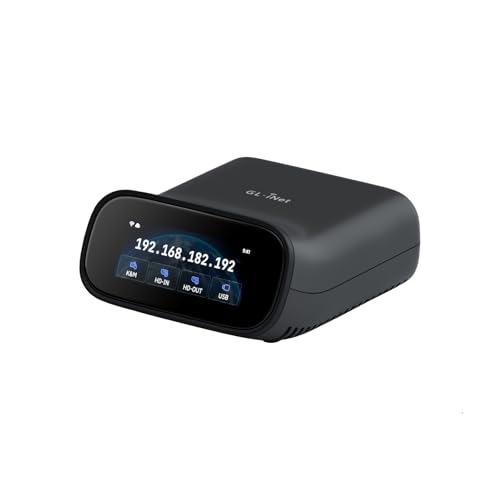


Out-of-Band BIOS and UEFI Hardware Control
Out-of-band management represents the primary foundation of any dedicated remote KVM device. Unlike remote desktop protocols like RDP or VNC that run inside the host operating system, an IP KVM captures video straight from the graphics card and emulates standard USB keyboard and mouse signals. This direct hardware link allows administrators to manipulate low-level motherboard firmware before the operating system even boots.
When comparing different hardware options, evaluate how the switch handles system resets and low-level kernel panics. High-grade units maintain responsive mouse synchronization and video capture during the entire POST sequence. This makes it effortless to change boot drives, adjust memory timings, or configure hardware RAID arrays remotely.
As a practical rule of thumb, look for hardware encoding chips that process frame capture on the device itself rather than putting overhead on the target computer. Dedicated hardware controllers ensure that your remote session stays smooth and responsive even when the host system is under heavy computational load.
Port Density and Multi-Server Expandability
Port density determines how many distinct computers you can connect to a single management interface. Single-port units serve standalone edge devices, workstations, or primary hypervisor nodes with zero footprint. Conversely, multi-port enterprise units provide 8-port or 16-port interfaces capable of scaling across full server racks.
If your infrastructure continues to expand, examine the switch daisy-chain or cascade capabilities. Enterprise switches allow secondary units to link together through standard Cat5 cables, letting you control dozens or even hundreds of machines from a unified master console. For tight rack environments, optimizing cable paths using ideas from our safe furniture height and clearance guide can keep power lines and data connections neatly separated.
Always calculate your projected port requirements two years into the future before making a final hardware selection. Buying a switch that matches your current machine count exactly often leads to immediate bottlenecks when you deploy extra test nodes or staging servers.
Video Resolution and Refresh Rate Passthrough
Video processing capabilities directly influence the visual clarity and overall responsiveness of your remote session. Legacy enterprise switches frequently limit output to standard 1080p or lower VGA resolutions, which works fine for text terminals but struggles with dense graphical interfaces. Modern desktop units now deliver crystal-clear 4K passthrough at 30Hz or full high-definition video at 60Hz.
Inspect the video compression codec utilized by the switch firmware, focusing heavily on H.264 or MJPEG hardware encoding. Hardware-accelerated H.264 streams drastically reduce required network bandwidth while maintaining sharp text rendering and low latency. This balance prevents eye strain during extended remote administration sessions.
For graphical workstation workflows or multi-monitor environments, prioritize units offering HDMI or DisplayPort passthrough over legacy VGA connections. Ensure the KVM switch includes EDID emulation so that your host operating system does not disrupt display arrangements when the remote window is closed.
Network Connectivity and Encrypted Remote Tunneling
Network integration determines how securely and conveniently you can access your target devices across public networks. Traditional setups require complex firewall port forwarding, dedicated public IP addresses, or custom OpenVPN concentrators. Cutting-edge KVM appliances now incorporate built-in WireGuard or Tailscale meshes for encrypted, peer-to-peer remote access without opening dangerous public router ports.
Evaluate whether the physical device provides dual network options, such as Gigabit Ethernet alongside dual-band Wi-Fi 6 or optional cellular connectivity. Wireless capabilities provide unmatched flexibility in dynamic lab layouts where running structured Ethernet drops is impractical or temporary.
When assessing security protocols, ensure the management interface enforces modern TLS encryption and avoids deprecated browser plugins like NPAPI or Java applets. Modern HTML5 web interfaces allow you to securely manage your machines from any modern browser without installing proprietary software.
Virtual Media and Remote OS Installation
Virtual media redirection enables an administrator to mount remote ISO images, flash drives, and storage volumes as if they were physically inserted into the target machine. This feature is vital for executing operating system installations, running live recovery disks, and applying low-level firmware patches remotely.
Check the maximum data transfer throughput supported across the switch virtual drive emulation. USB 2.0 or USB 3.0 virtual media buses significantly cut down the time required to upload multi-gigabyte server installation images. Slower virtual drives can turn a routine OS reinstallation into a multi-hour ordeal.
A reliable rule of thumb is to choose devices that support internal flash storage or local network shares for storing gold-master ISO images. Having recovery media stored directly inside the KVM appliance allows for instant disaster recovery even over unstable remote connections.
Hardware Feature Comparison
| Feature | Enterprise Multi-Port KVM | Single-Node Desktop KVM | Open-Source DIY KVM |
|---|---|---|---|
| Target Port Count | 8 to 16 Ports (Expandable) | 1 Dedicated Port | 1 Dedicated Port |
| Maximum Resolution | 1920×1440 or 1080p | Up to 4K @ 30Hz | 1920×1200 @ 60Hz |
| Network Interface | Dual Gigabit LAN / Cat5 | Gigabit LAN + Wi-Fi 6 | Gigabit LAN / Optional Wi-Fi |
| Management Protocol | Web OSD, Java, or RADIUS | HTML5 Web UI, Cloud Mesh | Open-Source Web UI, VNC |
| Primary Form Factor | 1U Rackmount Enclosure | Compact Desktop Module | Compact Metal Enclosure |
Power Management and Hardware Reset Integration
True out-of-band management requires more than keyboard and video access; it demands physical power cycle authority. When a remote server experiences a hard kernel freeze, software reboot commands are useless. Hardware KVM switches that interface with motherboard ATX headers or external relay modules give you complete power control.
Review the specific power accessories supported by the device ecosystem, such as ATX breakout boards, smart power distribution units, or robotic actuator switches. Having integrated power pins lets you trigger clean shutdowns with a short press or execute hard power cuts with a prolonged signal.
Before standardizing on a hardware model, verify whether its power switching routines can be automated via REST APIs or shell scripts. Programmable power cycling allows you to incorporate automated hardware recovery into your continuous integration and deployment pipelines.
User Authentication and Multi-Tenant Security
Managing server infrastructure across a team requires granular access permissions and auditable logging. Enterprise KVM units allow administrators to configure multi-tiered user accounts with customized view-only or full-control privileges for individual machines.
Determine whether the device supports external directory authentication standards such as LDAP, Active Directory, or RADIUS. Centralized authentication ensures that credential revocation happens immediately across your entire server fleet when an operator leaves your organization.
For independent lab setups and smaller teams, prioritize hardware supporting multi-factor authentication and token-based API access. Keeping remote administrative portals behind strong cryptographic layers is crucial for safeguarding server infrastructure against unauthorized access.
Rack Space Efficiency and Form Factor Design
Physical space constraints inside server cabinets and desk setups should heavily influence your hardware selection. Standard 1U rackmount switches fit perfectly into 19-inch enterprise enclosures, utilizing consolidated cabling systems to keep server racks neat and maintain optimal airflow.
Desktop and mini-KVM units, by comparison, are engineered for decentralized setups, testing benches, and edge enclosures where rack space is non-existent. Compact units with integrated OLED or LCD status screens allow local operators to verify IP addresses and connection status instantly without plugging in extra monitors. If you are building a clean home office layout with limited physical space, incorporating modular storage configurations can keep auxiliary gear neatly out of view.
Always review the thermal dissipation properties and mounting hardware included in the package. High-quality metal enclosures with passive cooling fins or quiet internal fans prevent thermal throttling and ensure stable year-round continuous operation.
Why You Should Trust Us
Our evaluation process focuses on rigorous technical analysis, manufacturer specifications, verified firmware capabilities, and real-world deployment data. We specialize in networking and systems administration equipment, dissecting performance metrics across latency, video passthrough fidelity, and cryptographic security protocols.
We systematically compare products across defined market categories to help both enterprise system architects and independent home lab creators find the most reliable solutions. By tracking firmware stability, user community feedback, and long-term hardware durability, our reviews provide objective and practical insights.
Our guides are continuously updated using our dynamic platform tools to ensure all specifications, feature sets, and hardware availability remain entirely accurate in September 2026.
Final Thoughts
Selecting the optimal device from the Best IP-Based KVM Switches comes down to your port density requirements, video resolution targets, and network architecture. For extensive enterprise server rooms and dense data center racks, the Tripp Lite NetDirector 16-Port IP KVM delivers exceptional power. Its robust 16-port capacity, multi-tier user accounts, and daisy-chaining scalability make it the top choice for large infrastructure environments.
If you require modern high-resolution remote access for single workstations or home lab servers, the GL.iNet GL-RM10 Comet Pro Remote KVM Over Wi-Fi 6 stands out as our top overall pick. Featuring crisp 4K passthrough, dual-band Wi-Fi 6, an integrated touchscreen, and built-in Tailscale networking, it represents the modern benchmark for desktop KVM units.
For budget-conscious administrators seeking essential out-of-band control without extra bells and whistles, the GL.iNet Comet GL-RM1 Remote KVM, 4K 30Hz delivers outstanding value. It provides complete BIOS control, hardware H.264 encoding, and instant file transfer at an accessible entry-level price point. Meanwhile, enthusiasts who demand open-source flexibility and deep customization will appreciate the proven industrial engineering of the PiKVM V4 Plus.
Take the time to assess your server hardware interfaces, whether you require legacy VGA connections or modern HDMI endpoints, before finalizing your setup. Equipping your infrastructure with dedicated out-of-band control will save you countless hours of troubleshooting and eliminate emergency trips to the server room.
Frequently Asked Questions
What is an IP-based KVM switch and how does it work?
An IP-based KVM switch is a specialized hardware appliance that captures video output from a computer and sends back emulated keyboard and mouse inputs over a network connection. It operates independently of the target machine operating system, allowing administrators to control servers over local networks or the internet as if they were sitting directly in front of the console.
How do Best IP-Based KVM Switches differ from software remote desktop tools?
Software remote tools like AnyDesk, TeamViewer, and Windows Remote Desktop require an active, functioning operating system and running network services. An IP KVM works at the physical hardware layer, providing full access during boot sequences, motherboard BIOS menus, operating system crashes, and offline recovery scenarios.
Can I access computer BIOS settings remotely using an IP KVM?
Yes, accessing and altering motherboard BIOS or UEFI configurations is one of the primary capabilities of an IP KVM switch. Because the device captures direct HDMI or VGA output and emulates standard USB input devices, you can interact with startup menus and adjust low-level hardware parameters effortlessly.
What internet speed is required to operate an IP KVM smoothly in 2026?
Smooth remote operation typically requires between 2 Mbps and 10 Mbps of stable upload bandwidth per active session, depending on your resolution and frame rate. Hardware utilizing modern H.264 video compression maintains low latency and fluid mouse tracking even over constrained remote connections.
What is virtual media support on a remote KVM switch?
Virtual media support allows you to mount ISO disc images, software installation files, or virtual USB drives from your local computer directly to the remote target machine. This functionality makes it possible to format hard drives and complete full operating system installations from thousands of miles away.
Are Best IP-Based KVM Switches secure against unauthorized network access?
Modern units provide robust security measures including TLS encrypted streams, multi-tier user permissions, and integration with directory protocols like LDAP and RADIUS. Leading devices also incorporate encrypted mesh tunnels such as WireGuard or Tailscale, avoiding the security risks associated with open firewall ports.
Can I control multiple servers using a single IP KVM switch?
Multi-port switches allow you to manage between 8 and 16 servers directly from a single network interface and IP address. Many enterprise models also support daisy-chain expansion, allowing administrators to control over 100 machines by linking secondary KVM switches together.
What is the difference between VGA and HDMI IP KVM switches?
VGA models are primarily built for legacy data center servers and enterprise rack equipment with analog outputs, supporting resolutions up to 1080p. HDMI models cater to modern workstations, desktop computers, and edge servers, delivering sharper digital video signals up to 4K resolution.
Do I need to install client software on target servers to use an IP KVM?
No, the host computers being controlled do not require any proprietary background software or drivers. The target system recognizes the KVM connections as a standard physical monitor, keyboard, and mouse, ensuring complete hardware neutrality and cross-platform compatibility.
Can an IP KVM switch remotely power on a frozen computer?
An IP KVM can power on or reboot a frozen system when paired with an ATX power control board, external relay switch, or smart PDU. These accessories allow administrators to trigger physical motherboard power and reset signals directly through the KVM management interface.








Write Your Review
No reviews yet. Be the first to share your experience!