

Setting an inviting table requires flatware that feels substantial in the hand and withstands repeated trips through the dishwasher. Finding the Best Stainless Steel Silverware Sets in September 2026 means balancing durable metallurgy, ergonomic weight, and timeless design across every place setting. Whether you host holiday feasts or enjoy casual family meals, the right flatware elevates every dining experience.
Many shoppers struggle to distinguish between budget stamped utensils and heirloom grade collections made from genuine 18/10 stainless steel. Choosing the wrong alloy often leads to premature rusting, bent fork tines, and dull surfaces after only a few months of regular cleaning. Our team curated 10 standout sets across top manufacturers to help you avoid flimsy metals and select enduring pieces for your home and living spaces.
This comprehensive guide details everything you need to evaluate before purchasing your next flatware set, from nickel content and forging techniques to handle profiles and included serving pieces. By understanding these key construction details, you can invest in a set that provides decades of reliable luster and balanced comfort at mealtime.
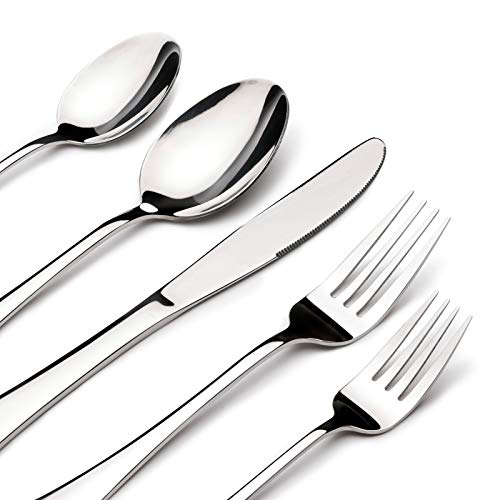


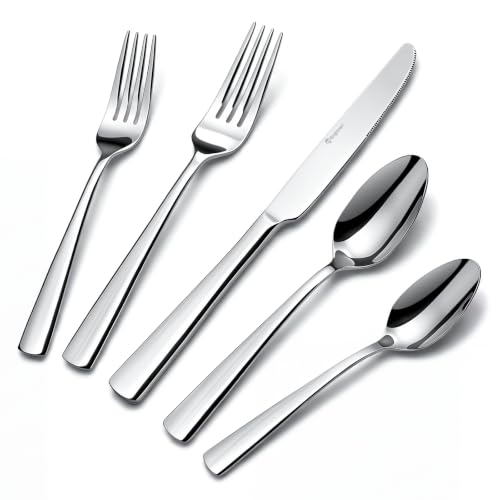
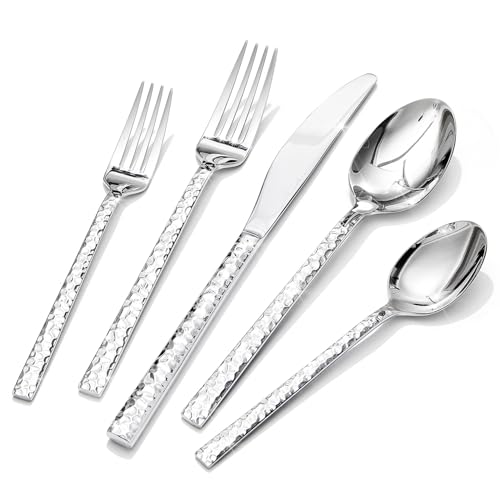
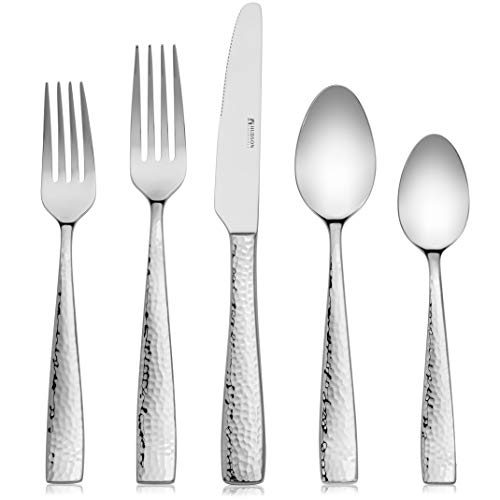
How to Choose the Best Stainless Steel Silverware Sets
1. Stainless Steel Grade and Alloy Composition
The alloy composition determines how well your flatware resists corrosion, maintains its shine, and survives daily dishwasher cycles. Stainless steel flatware is categorized by two numbers representing the percentages of chromium and nickel in the metal blend. Chromium provides hardness and rust resistance, while nickel introduces a warm, silver-like luster and superior defense against acidic foods.
When reviewing product specifications, you will primarily encounter 18/10, 18/8, and 18/0 formulations. An 18/10 designation means the alloy contains 18 percent chromium and 10 percent nickel, making it the gold standard for luxury flatware. In contrast, 18/0 contains no nickel, making it more affordable and magnetic but significantly more prone to pitting and surface rust over time.
A reliable rule of thumb is to choose 18/10 stainless steel for your primary household set if you regularly wash utensils in a dishwasher. The added nickel content creates a non-porous protective barrier that prevents chemical detergents from dulling the surface. For utility or outdoor sets, 18/0 steel offers sufficient strength provided you dry the utensils promptly after washing.
2. Utensil Weight, Gauge, and Balance
The physical weight and balance of flatware fundamentally shape how comfortable a fork or spoon feels during a meal. Flatware is manufactured across three primary weight classes: medium gauge, heavy gauge, and extra heavy gauge. Lightweight utensils often feel cheap and bend under slight pressure, whereas heavy gauge pieces rest naturally in your fingers.
Examine the thickness of the metal near the neck, which is the transition point between the handle and the functional head. Premium pieces feature tapered necks that distribute weight evenly toward the palm rather than tipping forward or backward. Look for dinner knives that weigh between 2.5 and 3.0 ounces and dinner forks around 1.6 to 2.0 ounces for optimal stability.
To test balance at home, place the neck of a dinner fork across your index finger to observe where the fulcrum sits. A properly engineered fork should balance near the top third of the handle without flipping over easily. You can find more helpful advice on coordinating household goods in our guides section.
3. Surface Finish and Polishing Quality
Surface finishing affects both the visual aesthetic of your table and the maintenance required to keep pieces looking pristine. The three most common finishes on contemporary flatware are high mirror polish, satin matte, and textured hammered patterns. Mirror polish delivers a brilliant, reflective gleam, while satin finishes offer a soft, contemporary brush look.
Polishing quality also dictates how smoothly the edges of fork tines and spoon bowls feel against your lips. Budget sets often cut manufacturing costs by skipping secondary hand-polishing stages, leaving microscopic burrs along the perimeter. High-grade sets undergo multiple automated and hand-buffing passes to ensure smooth contours across every individual piece.
If you prefer a low-maintenance option that hides minor scratches and water spots, hammered handle designs are an exceptional choice. The faceted indentations scatter light reflections and mask fingerprint smudges that might otherwise show on pure mirror surfaces. Pure mirror finishes require wiping with a soft microfiber cloth to stay completely spotless.
4. Knife Construction: Stamped vs. Forged
Dinner knives undergo different manufacturing processes than forks and spoons because they require higher carbon levels for cutting efficiency. Stamped knives are cut from a flat sheet of uniform steel, resulting in thin handles that lack heft and cutting leverage. Forged knives are heated and shaped from solid metal bars, yielding substantial bolsters and ergonomic handles.
Look closely at the junction where the knife blade meets the handle to determine construction type. Forged knives feature a seamless, rounded transition with added mass that provides effortless downward slicing force through meats and dense vegetables. Stamped knives feel flat and require significantly more hand pressure to cut through hearty dishes.
Always inspect the serration pattern along the blade edge before making your final selection. Micro-serrated cutting edges retain their sharpness for years without requiring sharpening, making them ideal for everyday dinner service. Knives with smooth, non-serrated blades require regular honing to maintain their slicing capability.
5. Service Capacity and Place Setting Configurations
Selecting the correct service capacity prevents running out of clean utensils between dishwasher loads. Flatware sets are typically packaged as service for 4, 8, or 12 people, with standard place settings consisting of five pieces per person. A 5-piece setting includes a dinner fork, salad fork, dinner knife, dinner spoon, and teaspoon.
Consider your household size along with your entertaining habits when calculating necessary piece counts. A household of four people running the dishwasher once daily will quickly exhaust a service for 4 collection before the wash cycle completes. Purchasing service for 8 or 12 ensures you always have spare place settings available for dinner guests.
A practical calculation is to multiply your core household member count by two and add four extra place settings for buffer. This formula ensures seamless dining even when some utensils are waiting in the sink or dishwasher. Explore smart kitchen and living arrangements through our How To resources for additional home organization ideas.
6. Flatware Material Comparison Table
Evaluating the functional differences between alloy grades makes it easier to match a silverware set to your culinary routine. The comparison table below highlights the performance metrics, typical longevity, and ideal use cases for each material grade.
| Alloy Grade | Chromium / Nickel Ratio | Corrosion Resistance | Weight & Heft | Best Application |
|---|---|---|---|---|
| 18/10 Stainless | 18% Cr / 10% Ni | Outstanding (Rust-Proof) | Heavy to Extra Heavy | Everyday & Fine Dining |
| 18/8 Stainless | 18% Cr / 8% Ni | High (Tarnish Resistant) | Medium to Heavy | Everyday Household Meals |
| 18/0 Stainless | 18% Cr / 0% Ni | Moderate (Dry Promptly) | Light to Medium | Budget, Outdoor & Starter Sets |
| Forged Carbon Stainless | Varies (High Carbon Edge) | High (Hardened Blade) | Substantial Balance | Specialty Steak & Dinner Knives |
7. Handle Ergonomics and Profile Shapes
Handle architecture defines how naturally a utensil rests between your fingers during extended dining sessions. Classic teardrop handles feature wide, rounded bases that distribute pressure comfortably across the palm. Modern square and trapezoidal handles offer contemporary geometric styling with crisp edges that suit minimalist table settings.
Evaluate whether the handle profile is flat or contoured along its longitudinal spine. Flat profiles are economical and stack neatly inside shallow drawer organizers, but they can dig into fingers during heavy cutting tasks. Contoured, dimensional handles provide a tactile grip that prevents twisting when scooping hard ice cream or carving roasted meats.
Make sure to check handle dimensions if you have young children or family members with joint stiffness. Thicker, softly curved handles are far easier to grip securely than ultra-thin modernist flatware designs. Organizing your dining accessories alongside proper drawer layouts keeps these fine pieces accessible and protected.
8. Hostess Sets and Specialty Serving Utensils
Large flatware collections frequently include matching hostess sets that maintain visual harmony across the entire dining table. A comprehensive 5-piece hostess collection includes a large serving spoon, pierced vegetable spoon, meat fork, sugar shell, and butter knife. Having matching serving tools creates a unified, professional presentation during holiday gatherings.
Examine the product listing carefully to see if the advertised piece count includes serving utensils or only place settings. For example, a 65-piece set typically provides service for 12 with 60 standard eating utensils plus a 5-piece hostess set. Sets advertised as 45 pieces often provide service for 8 along with 5 shared serving accessories.
If you frequently serve shared side dishes, casseroles, and salads, buying a bundle with included serving ware is much more economical than sourcing matching tools separately. Mismatched serving spoons detract from an otherwise coordinated tablescape and can be difficult to pair later.
9. Fork Tine Quality and Spoon Bowl Proportions
The precision engineering of fork tines and spoon bowls directly dictates your eating comfort and functionality. High quality fork tines feature tapered, rounded tips that spear food cleanly without shredding delicate salad greens or scratching plate glazes. The inner slots between tines should be polished smooth to prevent food particles from clinging stubbornly.
Spoon bowls must strike the proper depth and curvature for their designated purpose. Dinner spoons require a generous, oval basin capable of holding broths without spilling, whereas dessert teaspoons should feature a shallow taper. Poorly designed soup spoons have overly sharp perimeters that feel rough against the tongue.
Inspect the underside of spoon bowls for reinforcement thickness near the handle transition. This structural ridge prevents the neck of the spoon from bending upward when scooping frozen desserts or thick doughs. Quality flatware maintains structural rigidity under substantial mechanical stress.
10. Care Requirements and Dishwasher Compatibility
Understanding maintenance protocols ensures your silverware retains its bright luster for decades without clouding or surface pitting. While most 18/10 stainless steel is fully dishwasher safe, exposure to harsh acidic detergents or high mineral water can cause cosmetic spotting. Avoid using detergents that contain high concentrations of lemon citrus additives or chlorinated bleaching agents.
When loading flatware into dishwasher baskets, alternate forks and spoons with handles facing both up and down to prevent utensils from nesting together. Nesting prevents water spray from circulating around every surface, leading to trapped food soils and localized staining. Place knives in separate slots with blades down to protect hands during unloading.
Never clean stainless steel flatware with abrasive steel wool pads, scouring powders, or harsh wire brushes. These abrasive tools create micro-grooves on mirror finishes that permanently dull the reflection and attract stubborn fingerprints. If you need storage advice for keeping dining and bedroom accessories organized, review our guide on comparing storage bins and cubes.
Why You Should Trust Us
Our editorial team brings years of analytical experience evaluating home products, kitchenware, and table essentials. We examine technical specifications, metallurgy certifications, manufacturing processes, and user ergonomics across every brand in our reviews. Our goal is to provide honest, data-driven buying advice that cuts through marketing claims and highlights true long-term value.
We evaluate each silverware collection across standardized criteria including alloy composition, handle balance, edge polishing smoothness, and corrosion resistance. By monitoring design updates and comparing price tiers, we ensure our recommendations remain accurate and trustworthy for your household. You can always count on our unbiased evaluations to help you make informed home purchasing decisions.
Final Thoughts
Selecting the ideal silverware collection transforms your daily dining routine and brings timeless elegance to family gatherings. If you want a complete heirloom collection with exceptional balance and included hostess pieces, we recommend the Oneida Moda 65-Piece 18/10 Silverware Set for 12. Its premium 18/10 steel construction, symmetry, and comprehensive 65-piece configuration make it the standout choice for large households and frequent entertainers.
For shoppers seeking outstanding everyday durability on a modest budget, the Silverware Set for 8, 45 Piece Stainless Steel delivers remarkable utility. It includes generous service for 8 along with five essential serving pieces, providing solid bending resistance and effortless dishwasher maintenance for busy family kitchens.
If you prefer a distinct textured look that hides water spots and adds tactile luxury to your table, choose the Hudson Essentials 40-Piece Hammered Stainless. Its hammered finish, heavy heft, and mirror shine bring an upscale restaurant feel to casual meals. For additional decorative inspiration across your home, browse our furniture collection guides to complete your space.
Frequently Asked Questions
What is the top-rated option among Best Stainless Steel Silverware Sets in 2026?
The top-rated flatware collections in 2026 feature heavy-gauge 18/10 stainless steel construction with hand-polished mirror finishes and balanced handles. Sets from trusted makers like Oneida and Hudson Essentials consistently lead the category due to their rust resistance and substantial heft during daily dining.
What is the difference between 18/10 and 18/0 stainless steel flatware?
The primary difference lies in the nickel content, which provides luster and superior corrosion protection against acidic foods. Grade 18/10 contains 10 percent nickel for long-lasting shine, whereas 18/0 contains no nickel and requires prompt hand drying to prevent surface rust.
Can I wash stainless steel silverware in the dishwasher every day?
High-quality 18/10 stainless steel flatware is fully dishwasher safe and designed for daily machine washing without tarnishing. To prevent mineral spotting, avoid citrus-based detergents and remove the flatware promptly once the dry cycle concludes.
Why are dinner knives more susceptible to rust spots than forks?
Dinner knife blades contain higher carbon levels and lower nickel percentages to create a hardened, sharp serrated cutting edge. This chemical difference makes knife blades slightly more vulnerable to surface spotting if left sitting in standing water or acidic residue.
How many place settings should a standard household purchase?
Most households benefit from purchasing service for 8 or service for 12 to ensure ample clean utensils between dishwasher cycles. Having extra settings also allows you to host dinner guests and family holiday gatherings without needing disposable utensils.
What does a standard 5-piece place setting include?
A standard 5-piece setting includes one dinner fork, one salad or dessert fork, one dinner knife, one dinner spoon, and one teaspoon. Some larger collections also provide specialty soup spoons or matching hostess serving utensils in the box.
How do I remove water spots and cloudiness from stainless flatware?
You can easily remove stubborn water spots by wiping the utensils with a soft microfiber cloth dampened with white vinegar or warm soapy water. Rinse thoroughly with clean warm water and dry immediately with a clean cotton towel to restore the original shine.
Why are hammered finish silverware sets becoming so popular?
Hammered finishes provide a textured, artisanal look that naturally masks fingerprint smudges, scratches, and minor hard water spots. They offer an ergonomic, tactile grip while adding warmth and visual interest to modern dining tables.
What is the difference between stamped and forged dinner knives?
Stamped knives are cut from flat metal sheets, resulting in lighter, flatter handles that can feel thin in the palm. Forged knives are shaped from heated metal bars to produce heavier bolsters, superior balance, and effortless slicing power.
How should I store fine stainless steel silverware to prevent scratches?
Store your flatware in a compartmentalized drawer organizer lined with felt or smooth bamboo dividers to prevent pieces from rubbing together. For broader household organizing ideas, explore our guide on simplifying storage systems throughout your home.



Write Your Review
No reviews yet. Be the first to share your experience!