

Leaving home and wondering whether you remembered to close the garage door is a universal frustration. Upgrading your setup with Best Wi-Fi Smart Garage Door Openers eliminates that daily uncertainty by giving you real-time status alerts and remote operation from anywhere. In September 2026, modern garage automation has become more reliable and accessible than ever before.
We evaluated 5 leading options across top brands like Genie, eKyro, meross and more to help you identify the ideal solution for your household. Whether you want a complete hardware replacement or a simple add-on controller that retrofits your current motor, finding the right match depends on your specific ecosystem. Exploring our home and living guides can also help you plan broader home automation upgrades.
Many homeowners make the mistake of purchasing a smart opener without verifying compatibility with their existing motor or Wi-Fi frequency. This comprehensive guide walks you through every technical factor, from sensor mechanisms and platform support to safety protocols. By understanding these key details, you can invest in a connected system that delivers seamless daily convenience.


Replacement Openers vs Retrofit Add-On Controllers
The first major decision is choosing between a standalone add-on controller and a complete motor replacement. Add-on controllers wire directly into your existing opener or mimic a wall console to add wireless connectivity. Full replacement systems provide a brand-new motor, rail assembly, and integrated Wi-Fi circuitry in a single package.
Retrofit controllers are ideal if your current mechanical opener works smoothly and you only desire remote monitoring and app control. These devices connect to the push-button terminals on the motor and communicate with a door sensor. Complete replacement openers make sense if your existing unit is noisy, aging, or lacks modern safety features.
A practical rule of thumb is to inspect your motor age before deciding. If your mechanical opener was manufactured prior to 1993, it lacks modern entrapment protection and should be replaced entirely. If your opener is newer and operates quietly, choosing a retrofit smart controller will save you substantial installation time and money.
Cost and labor also differ significantly between these two paths. Retrofit devices install in less than thirty minutes with basic household tools. Full replacement openers require mechanical assembly, mounting heavy brackets, and tensioning belts or chains, which often demands several hours or professional installation.
Smart Home Platform and Voice Assistant Compatibility
Voice integration and smart platform compatibility determine how well your garage door interacts with the rest of your connected home. Different controllers support distinct combinations of Apple HomeKit, Amazon Alexa, Google Assistant, and Samsung SmartThings. Choosing a controller that matches your dominant smart home ecosystem ensures frictionless automation routines.
Apple HomeKit compatibility is often the most restrictive standard among garage controllers due to strict encryption requirements. If you rely on Siri or Apple CarPlay to trigger automations when arriving home, you must verify native HomeKit support. Alexa and Google Assistant integrations are more widely available, though some brands require custom voice skills or secondary PIN verification for security.
Pay close attention to potential ongoing subscription fees for advanced smart integrations. While basic app control is almost universally free, certain platforms historically charged fees to link with third-party automation services. Always confirm that voice commands and automated triggers are included out of the box without recurring service charges.
For advanced users, routines can link your garage status to smart lighting, security cameras, and climate control. For example, opening the garage door after sunset can automatically illuminate your interior hallway. If you enjoy organizing household routines, check out our guide on how to simplify your closet and storage system for more home organization tips.
Sensor Reliability and Door Position Detection
A smart garage system is only as reliable as its door position sensor. The sensor tells the mobile app whether the door is completely closed, partially open, or wide open. Inaccurate sensor readings can lead to false alarm notifications or an unrecognized open door overnight.
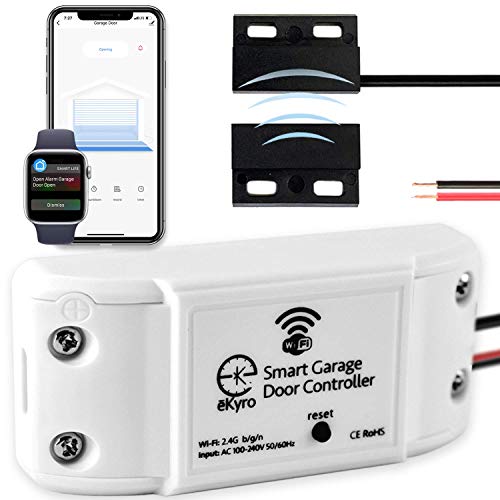
There are two primary sensor types used in smart garage kits: wireless tilt sensors and wired magnetic contact sensors. Wireless tilt sensors adhere to the top panel of your garage door and detect angular changes when the door pivots upward. Wired magnetic sensors mount to the frame and track physical contact when the door reaches the floor.
Wired magnetic contact sensors provide zero-latency updates and never suffer from coin-cell battery depletion. Wireless tilt sensors offer far simpler installation without running long wires along your garage ceiling. When choosing wireless sensors, prioritize models with low-battery app alerts to avoid unexpected connection dropouts.
Consider environmental extremes when evaluating sensor build quality. Uninsulated garages experience severe temperature swings between summer and winter that can degrade weak adhesive tape or drain batteries quickly. Look for hardware that includes mechanical mounting screws alongside adhesive pads for permanent stability.
Motor Drive Types and Horsepower Ratings
If you choose a complete smart opener unit, the drive mechanism dictates operating noise and maintenance requirements. The three standard motor drive designs are belt drive, chain drive, and direct drive. Each mechanism balances lifting power, long-term durability, and acoustic performance differently.
Belt drive openers utilize steel-reinforced rubber belts to move the door carriage along the rail. They operate with virtually silent performance, making them the superior choice for garages situated directly below bedrooms or living spaces. Chain drive systems use metal bicycle-style chains, providing exceptional strength for heavy carriage doors at a lower cost, though with noticeable mechanical vibration.
Horsepower ratings are designated in horsepower (HP) or horsepower comparable (HPC) for DC motors. A rating of 0.5 HP or HPC is sufficient for standard single-car or lightweight aluminum doors. For heavy solid wood or insulated double-car doors, select a motor rated at 0.75 HPC or higher to prevent motor strain.
| Opener Type | Drive Mechanism | Primary Smart Ecosystem | Best Suited For |
|---|---|---|---|
| Full Opener System | Steel-Reinforced Belt | Alexa, Google Assistant | Attached garages near bedrooms |
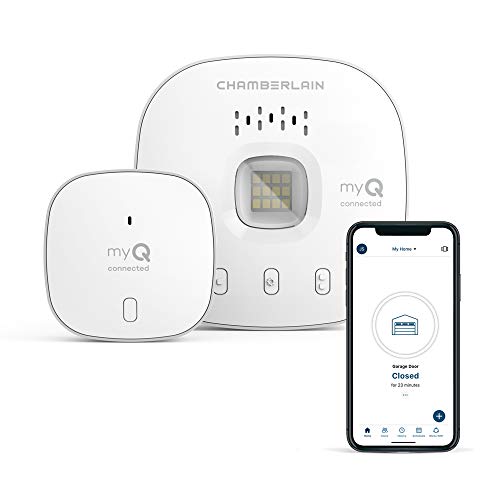
| Retrofit Smart Hub | Universal Motor Relay | myQ, Amazon Key | Chamberlain and LiftMaster motors |
| Universal Wi-Fi Controller | Dry Contact Relay | HomeKit, Alexa, Google | Multi-brand smart homes and Apple users |
| Universal Smart Kit | Wireless / Wired Relay | Alexa, Google Assistant | Budget-friendly retrofit installations |
Wi-Fi Connectivity and Network Range Requirements
Garage structures present unique wireless connectivity challenges due to dense concrete walls, metal overhead doors, and exterior wall insulation. Smart controllers require a dependable wireless link to communicate commands and push notifications promptly. Without adequate signal strength, your controller may experience intermittent offline errors.
Nearly all smart garage controllers operate exclusively on the 2.4 GHz Wi-Fi frequency band. While 5 GHz networks offer faster data transfer for video streaming, 2.4 GHz provides substantially longer range and superior wall penetration. Ensure your home router supports dual-band broadcasting with an accessible 2.4 GHz channel during initial device pairing.
Before purchasing or mounting any hardware, stand in your garage near the motor location with your smartphone. Check whether your mobile device maintains at least two solid bars of Wi-Fi connection. If the signal is faint, consider adding a basic Wi-Fi range extender or a mesh node to ensure responsive operation.
Bluetooth connectivity is also integrated into many contemporary controllers to simplify the initial setup process. Bluetooth enables your smartphone to discover and configure the device locally before handing network duties over to your home Wi-Fi. This eliminates complicated manual network switching during installation.
Scheduling, Geofencing, and Automation Capabilities
Automated scheduling and geofencing features elevate a smart opener from a simple remote switch to an intelligent security hub. Scheduling allows you to designate fixed times when the door must close automatically. This guarantees that your garage is never left open overnight even if you forget to check your phone.
Geofencing leverages your smartphone GPS location to create a virtual perimeter around your residence. When your vehicle enters this geographic boundary, the system can prompt you to open the door or execute the action automatically. Conversely, leaving the perimeter can trigger a warning notification if the door remains ajar.
Look for companion apps that provide customizable notification rules rather than all-or-nothing alerts. You should be able to set alerts for specific triggers, such as when the door stays open for longer than fifteen minutes. These targeted alerts prevent notification fatigue while maintaining strict home security.
Reviewing our How To resources can help you integrate similar automated systems throughout your living space. Creating structured rules across your home devices simplifies daily maintenance and protects valuable storage areas.
Safety Regulations and Unattended Operation Warnings
Operating a garage door remotely requires rigorous safety precautions to prevent property damage or personal injury. Because the operator may be miles away from the physical door, regulatory standards mandate visual and audible alerts prior to movement. These alerts warn anyone in the vicinity that the door is about to close.
In North America, UL 325 safety standards require smart controllers to sound a loud continuous beeper and flash an integrated strobe light for several seconds before closing unattended. Never attempt to bypass or disable these warning buzzers during installation. They serve as an essential warning for pets and family members near the entryway.
Ensure that your physical garage door opener maintains functioning photoelectric safety sensors at the base of the tracks. If an object, vehicle, or pet interrupts the invisible optical beam, the motor must immediately reverse direction. A smart controller works alongside these physical safety sensors rather than replacing them.
Always test the mechanical auto-reverse function after installing any new smart hardware. Place a small piece of wood or a cardboard box flat on the floor directly beneath the path of the closing door. When the door contacts the object, it should immediately stop and reverse to the fully open position.
Guest Access and Multi-Door Expansion
Managing access permissions for family members, guests, and service personnel is an important convenience feature. Leading smart garage applications allow the primary administrator to invite secondary users via email or phone number. This eliminates the security risk of sharing physical keypads or hidden spare keys.
Advanced companion apps support temporary or scheduled guest access. You can grant a neighbor access exclusively on specific weekdays, or configure single-use digital credentials for delivery couriers. Integration with programs like Amazon Key allows verified drivers to place deliveries securely inside your garage.
If your property features a two-car or three-car garage with separate overhead doors, evaluate multi-door expansion capabilities. Some smart hubs can monitor and trigger up to three individual doors by pairing additional door sensors or relay modules. Buying an expandable system is significantly more economical than purchasing separate hub kits for each bay.
Why You Should Trust Us
Our editorial approach centers on objective, data-driven analysis and rigorous specification comparison. We examined technical manuals, wiring schematics, and manufacturer compatibility lists for 5 models across the smart garage category. By comparing hardware capabilities against real-world installation scenarios, we deliver practical recommendations that cut through marketing claims.
We evaluate smart controllers across critical parameters including smart platform integration, sensor architecture, safety compliance, and software stability. Our team tracks firmware updates and ecosystem policy changes across major brands to ensure our advice reflects the current smart home landscape. We do not accept sponsored placements or allow brands to influence our editorial rankings.
Our goal is to help you select home automation hardware that functions reliably year after year without unexpected fees. We update our comparisons regularly to capture newly released adapters, revised compatibility lists, and evolving wireless standards across the home improvement industry.
Final Thoughts
For homeowners who want an all-in-one upgrade with whisper-quiet mechanical performance, the Genie QuietLift Connect is our top full-replacement choice. Its powerful three-quarter horsepower DC motor and steel-reinforced belt drive operate smoothly, while integrated wireless controls connect directly to your home network without external hub boxes.
If you prefer a universal retrofit controller that connects with almost every major smart platform, we recommend the meross Smart Garage Door Opener Remote Work. It provides native Apple HomeKit, Alexa, and Google Assistant compatibility with wired sensor accuracy and zero mandatory subscription fees.
For shoppers seeking an economical retrofit that pairs seamlessly with Amazon Key in-garage deliveries, the CHAMBERLAIN Smart Garage Control offers proven performance and straightforward wireless installation. Meanwhile, budget-conscious users seeking voice assistant control can look to the eKyro Smart Garage Door Opener or the Genie Aladdin Connect Smart Garage Door for dependable single-door monitoring.
Before making your final selection, double-check your motor learn button color and verify your Wi-Fi signal at the opener location. Pairing the right smart controller with your existing garage structure will provide effortless security and peace of mind every time you leave home.
FAQs
What are the primary benefits of Best Wi-Fi Smart Garage Door Openers in 2026?
Connected garage openers allow you to check door status, receive left-open notifications, and operate the door remotely from anywhere using a smartphone. They also integrate with voice assistants, automate closing schedules, and enable secure in-garage package deliveries.
Can I add a smart controller to an older existing garage door opener?
Yes, most universal smart controllers can retrofit existing openers manufactured after 1993 that feature standard safety reversing sensors. Some newer openers with encrypted wall buttons may require an inexpensive adapter accessory from the controller manufacturer to complete wiring.
Do smart garage door controllers require a monthly subscription fee?
The vast majority of smart garage controllers provide app control, push alerts, voice commands, and automated schedules completely free of ongoing subscription fees. Always confirm platform policies before purchasing, as certain optional services like premium cellular backups may incur extra charges.
How do smart garage door openers handle power or internet outages?
During an internet outage, the opener continues to function normally using traditional physical wall buttons and handheld radio remotes. If a power outage occurs, full opener units equipped with integrated battery backups will still open and close the door until grid power returns.
Will a 5 GHz Wi-Fi home network work with these smart controllers?
Most smart garage hardware requires a 2.4 GHz Wi-Fi frequency band due to its superior range and ability to pass through thick walls. If you have a dual-band mesh router, ensure the 2.4 GHz band is active during initial hardware setup so the hub pairs properly.
How secure are Wi-Fi connected garage door openers against unauthorized access?
Smart garage devices utilize encrypted wireless communication protocols and secure cloud authentication similar to banking applications. Furthermore, enabling two-factor authentication on your companion app account prevents unauthorized users from accessing your door controls remotely.
Can I integrate a smart garage controller with Amazon Key delivery?
Specific platforms like myQ natively support Amazon Key in-garage delivery for eligible Prime members in participating delivery areas. This service allows authorized couriers to place packages safely inside your garage to protect orders from inclement weather and porch theft.
What is the difference between a tilt sensor and a wired magnetic sensor?
A wireless tilt sensor mounts to the top door panel and detects when the door shifts from vertical to horizontal. A wired magnetic sensor mounts along the track or floor to detect physical contact, providing immediate feedback without relying on sensor coin-cell batteries.
How many garage doors can a single smart hub control at one time?
Most smart hubs support up to two or three separate garage doors, provided you purchase additional door position sensors for each bay. You can configure individual names and distinct schedules for each door within the companion smartphone app.
Do smart garage openers provide alerts if the door stays open too long?
Yes, customizable duration alerts are a standard feature in modern smart garage apps. You can set a rule to receive a push alert whenever the door remains open for longer than a designated number of minutes.







Write Your Review
No reviews yet. Be the first to share your experience!