

Achieving clean metal joints without burn-through or excessive spatter depends heavily on how smoothly your machine delivers filler metal into the puddle. Welders of all skill levels often struggle with erratic wire feeding, which ruins beads and wastes precious project time. Modern equipment solves this by pairing refined drive motors with intelligent electronics that match feed rates to your selected arc voltage.
Whether you work on automotive sheet metal in a home garage or handle heavy structural repairs around a farm, having the right machine transforms your fabrication speed. Modern inverter technology has made high-performance units lighter, more energy-efficient, and far more adaptable than older transformer boxes. You can explore our practical guides to understand how modern workshop tools continue to evolve for home fabricators.
In this comprehensive guide, we examine 10 top options among Best MIG Welders with Wire Feed Control for September 2026. We break down motor quality, synergic tuning, dual-voltage flexibility, and arc stability across leading brands like Lincoln Electric, YESWELDER, ARCCAPTAIN and more. This breakdown helps you avoid frustrating wire tangles and pick a machine suited perfectly to your workspace.
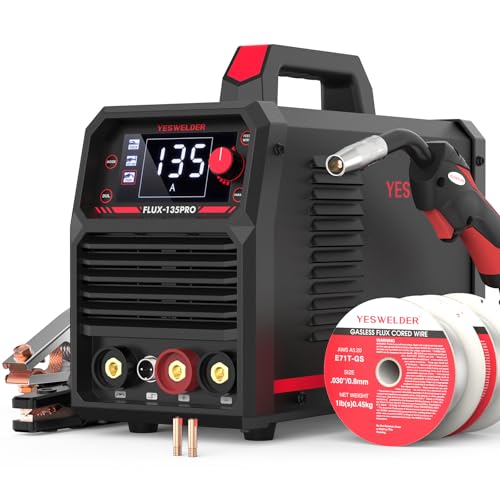


Wire Feed Mechanism and Drive Roll Construction
The wire feed drive mechanism serves as the mechanical heart of any wire welding unit. A poorly built drive assembly leads to bird-nesting, erratic feeding speeds, and inconsistent weld beads. High-quality machines utilize cast aluminum or solid metal drive assemblies that maintain steady alignment under continuous tension.
When inspecting drive rolls, look closely at the groove geometry designed for your specific wire type. Solid steel wire requires smooth V-groove rollers to prevent slippage without shaving copper coating off the wire. Flux-cored wire demands knurled or serrated rolls that grip tubular wire gently without crushing the internal flux core.
A helpful rule of thumb for setting drive roll tension is to feed wire against a wooden block at an angle. Increase the tension knob just until the drive roll pushes smoothly without slipping or binding up inside the drive housing. Avoid over-tightening the tension knob, as excessive pressure deforms soft aluminum and flux-cored wires before they ever reach the gun liner.
Synergic Settings vs. Manual Wire Speed Control
Modern welding units feature either manual dual-knob controls, fully synergic parameter matching, or a combination of both operating modes. Manual control gives experienced operators complete freedom to fine-tune voltage and wire inches per minute independently. This flexibility is essential when adjusting for out-of-position joints or uncommon base metal alloys.
Synergic control systems automatically calculate and adjust wire feed speed whenever you select material thickness and plate type. This automated coordination drastically reduces initial setup time and prevents novice operators from setting an incorrect voltage-to-wire ratio. Many advanced machines allow a micro-adjustment trim, letting you fine-tune the synergic curve by several volts to suit personal travel speed.
Beginners benefit greatly from synergic presets because improper feed speeds cause either stubbing into the puddle or burning back into the copper contact tip. Seasoned fabricators should verify that any synergic machine also provides a true manual override mode. Having both capabilities ensures you can train beginners quickly while retaining precision control for complex custom fabrication.
If you enjoy setting up organized workspaces for specialized crafting and metalwork, you can also view our step-by-step how to articles for planning functional workshop layouts. Organizing your gear properly makes managing power cords and shielding gas tanks much safer.
Input Voltage and Power Output Flexibility
Evaluating your power supply options determines where and how thick you can weld successfully. Standard 110V or 120V household outlets are convenient for hobbyists, sheet metal repair, and light garage fabrication. However, single-voltage 120V units generally top out around 140 amps, restricting single-pass capacity to steel thinner than three-sixteenths of an inch.
Dual-voltage machines that operate on both 120V and 240V circuits offer the ultimate versatility for growing shops. Connecting to a 240V circuit unlocks outputs up to 200 amps or more, enabling single-pass welds on quarter-inch steel plates and structural tubing. Most quality dual-voltage welders include a heavy-duty adapter pigtail to facilitate rapid switching between field generators and workshop wall receptacles.
Calculate your typical material thickness before committing to a specific power rating. If you primarily work on exhaust pipes, body panels, and light furniture frames, a dedicated 120V machine provides ample power. If you anticipate building heavy utility trailers or farm implements, investing in dual-voltage capability prevents the immediate need for a secondary machine.
Duty Cycle and Thermal Overload Protection
Duty cycle specifies the percentage of a ten-minute period a welder can run continuously at a given amperage without overheating. For example, a rating of 60 percent at 135 amps means you can weld for six minutes followed by four minutes of fan cooling. Exceeding this thermal limit triggers safety shutdowns that interrupt work and slow down major projects.
Duty cycle ratings decrease as output amperage increases toward the maximum output threshold of the power source. Compact budget units may offer a 20 or 30 percent duty cycle at maximum output, which is acceptable for short tack welds and hobby projects. Commercial-grade and heavy DIY machines often deliver a 60 percent duty cycle at mid-range outputs, supporting sustained passes on structural fabrications.
Always verify that your chosen machine includes built-in thermal overload protection and dual-fan cooling ducts. Intelligent thermal protection systems automatically shut off welding output while keeping internal fans running to dissipate heat quickly. This proactive safeguarding prevents internal transformer coils and sensitive inverter IGBT modules from suffering heat degradation.
Multi-Process Capabilities and Spool Gun Support
While standard gas MIG and gasless flux-core welding handle most everyday steel jobs, multi-process versatility adds tremendous workshop value. Many modern wire-feed welders include DC Stick welding and Lift TIG functionality in a single compact chassis. Multi-process capability lets you switch from sheet metal fabrication to heavy outdoor structural repair using stick electrodes on rusty steel.
Welding aluminum requires special consideration due to the soft nature of aluminum filler wire. Feeding aluminum wire through a standard ten-foot gun liner almost always causes severe bird-nesting and friction jams. Machines equipped with a dedicated spool gun plug or Euro-style connector allow you to mount one-pound aluminum spools directly on the torch handle.
Advanced machines now offer pulse MIG and dual-pulse MIG programs specifically calibrated for aluminum alloys and thin stainless sheet metal. Pulsing technology alternates between high peak current and lower background current, minimizing heat input and preventing melt-through. This advanced feature gives fabricators the aesthetic look of TIG welding with the high deposition speed of wire feed.
When planning your complete metalworking space, keep all auxiliary torches and ground leads safely stored on dedicated racks. You can read our tips on simplifying storage systems to get practical ideas for organizing delicate cables and safety accessories in small spaces.
Arc Stability and Inductance Control
Arc stability directly influences puddle wet-out, spatter generation, and final bead appearance. Premium inverter power sources convert incoming alternating current into high-frequency direct current with minimal electrical ripple. This smooth direct current output maintains a consistent arc length even when your hand movement wavers slightly over irregular joints.
Electronic inductance control is an invaluable setting found on premium digital wire feed welders. Adjusting inductance alters the rate of current rise during the short-circuit transfer cycle of MIG welding. Lower inductance produces a crisper arc with faster puddle freezing, ideal for out-of-position vertical and overhead joints.
Higher inductance creates a softer, hotter puddle with flatter bead profiles and substantially reduced weld spatter on flat steel. If you hate spending hours grinding spatter balls off your completed frames, prioritize a machine with adjustable electronic inductance. Fine-tuning inductance saves significant cleanup labor across multi-joint projects.
Digital Displays and Parameter Memory Channels
Older analog dials with simple letter markings make it difficult to replicate successful welding parameters on future workpieces. Modern welders now feature high-contrast digital LED or color LCD screens that show exact voltage and wire feed speeds in real time. Clear digital readouts allow operators to check machine status without constantly lifting their welding helmets.
High-end digital interfaces often incorporate custom memory channels for rapid parameter recall. If you frequently alternate between welding 16-gauge auto body sheet and quarter-inch shop fixtures, memory channels let you store calibrated voltage, wire speed, and inductance settings under custom presets. A single click restores your dialed-in settings without trial-and-error scrap tests.
Look for digital screens that feature protective clear shields to guard against flying sparks, grinding dust, and impact. Interfaces with single-knob navigation and intuitive menu hierarchies make adjusting settings easy, even while wearing heavy leather welding gloves. Intuitive digital interfaces reduce user error and keep your focus on bead manipulation.
Portability, Inverter Weight, and Case Build
The transition from traditional iron-core transformers to advanced IGBT inverter technology has transformed welder mobility. Modern inverter welders often weigh between 9 and 25 pounds, compared to older machines that routinely exceeded 60 pounds. Lightweight construction allows mobile mechanics and fence builders to carry equipment up ladders or across outdoor job sites easily.
Portability must not come at the expense of rugged chassis construction. Examine the exterior case materials, corner bumpers, and handle mountings before choosing a compact field machine. A rigid steel or high-impact molded polymer case protects internal circuit boards from vibration during transport in truck beds.
Check the ingress protection rating of the casing to ensure adequate defense against dust and moisture. An IP21S rating indicates solid protection against falling water drops and shop debris drawn in by cooling fans. Sturdy shoulder straps and comfortable top handles further improve overall usability when working away from a rolling welding cart.
Wire Spool Size Compatibility and Tension Systems
Wire feed welders accommodate different spool sizes, typically ranging from small 2-pound spools up to standard 10-pound or 11-pound commercial rolls. Compact portable welders are frequently optimized for 2-pound spools, which keeps the total carrying weight low for remote repairs. Larger shop machines feature extended spool spindles designed to support 10-pound spools without motor strain.
Using 10-pound wire spools provides significant economic savings on consumable wire costs over time compared to buying tiny rolls. If you do substantial volume in a home workshop, ensure the internal cabinet provides sufficient clearance and an adapter spindle for larger spools. A well-designed spool hub features an adjustable friction brake to prevent the spool from freewheeling and unwinding when the drive motor stops.
Inspect the wire feed path from the spool hub through the inlet guide tube. Smooth, lined inlet guides prevent wire shavings from accumulating inside the drive housing. Reliable spool tension combined with a polished guide path guarantees uniform wire entry into the drive rolls for uncompromised feeding consistency.
| Welder Class | Input Voltage | Current Range | Ideal Application | Typical Spool Capacity |
|---|---|---|---|---|
| Compact Flux-Core / MIG | 110V / 120V | 30A – 140A | Auto body, home DIY, sheet metal | 2 lb (0.9 kg) |
| Dual-Voltage Synergic | 110V / 220V | 30A – 200A | General fabrication, farm repair, light structural | 2 lb – 11 lb |
| Multiprocess + Pulse MIG | 120V / 240V | 20A – 205A | Precision aluminum, stainless, production welding | 2 lb – 11 lb + Spool Gun |
Why You Should Trust Us
Our evaluation process focuses strictly on verified technical specifications, electrical architectures, and practical workshop functionality. We dissect manufacturer schematics, duty cycle ratings, drive motor engineering, and inverter component reliability across every reviewed brand. We do not accept sponsored placements, ensuring our recommendations remain transparent, objective, and driven purely by fabrication performance.
We analyze real user experiences across diverse environments, from professional custom metal shops to weekend garage hobbyists. This analysis allows us to track long-term wire feed reliability, thermal stability under extended loads, and common failure points like plastic drive gears or fragile liners. Our team continuously updates our buying guides to reflect firmware revisions, model updates, and engineering advancements.
Final Thoughts
Selecting the right machine among Best MIG Welders with Wire Feed Control depends on matching your power supply, project thickness, and process preferences. For fabricators seeking an all-around workhorse with exceptional versatility and digital precision, the YESWELDER 205A MIG Welder stands out as our top overall pick. Its dual-voltage flexibility, 200-amp power output, and synergic parameter matching make it capable of handling everything from thin sheet steel to heavy fabrication.
If you need maximum portability on a budget without sacrificing clean arc characteristics, we recommend the FEMEROL 140A 3 in 1 MIG Welder,Flux Core as the best value pick. It delivers dependable 140-amp performance, synergic wire matching, and an ultra-lightweight chassis that suits quick outdoor repairs and basic hobby projects effortlessly.
For specialized metalworkers who frequently tackle thin aluminum, stainless steel, or multi-process jobs requiring pulse technology, the YESWELDER Firstess DP200 Welder is an exceptional choice. Its dual-pulse MIG control and expansive LCD screen provide incredible thermal regulation that prevents burn-through on demanding non-ferrous projects.
For users who value proven reliability and legacy brand engineering for small shop repairs, the Lincoln Electric 90i MIG and Flux Core Wire Feed delivers remarkably smooth arc characteristics in a compact 15-pound package. Before buying, compare your available workshop electrical circuits to ensure your new machine operates at peak efficiency.
FAQs
What makes wire feed control so important on MIG welders?
Wire feed control dictates the speed at which filler metal enters the electric arc and weld pool. If the feed rate is too fast, the wire stubs against the base plate and causes aggressive spatter. If it feeds too slowly, the arc burns back into the copper contact tip, creating immediate tip jams.
What is the top-rated option among Best MIG Welders with Wire Feed Control in 2026?
The top-rated models in 2026 combine intelligent synergic parameter matching with dual-voltage 110V/220V inverter power supplies. Units like the 200-amp synergic multi-process machines lead the market by providing smooth wire feeding, digital parameter storage, and reliable duty cycles for both thin auto sheet and thick steel.
How does synergic wire feed control differ from manual control?
Synergic control links your wire feed speed directly to your output voltage based on pre-programmed material settings. When you turn one dial to set plate thickness, the machine automatically selects the ideal wire speed. Manual control requires you to adjust voltage and wire speed separately using two independent knobs.
Can I weld aluminum with a standard wire feed MIG torch?
Welding aluminum through a standard ten-foot gun liner usually results in severe feeding jams because aluminum wire is extremely soft. To weld aluminum reliably, you should connect a direct spool gun or install a specialized Teflon liner with U-groove drive rollers.
What is the difference between solid MIG wire and flux-cored wire?
Solid MIG wire requires an external shielding gas cylinder, such as a 75/25 Argon and CO2 blend, to protect the molten puddle from atmospheric contamination. Flux-cored wire contains shielding compounds inside its hollow core, allowing you to weld outdoors in windy conditions without carrying heavy gas tanks.
Why does my MIG welding wire keep slipping inside the drive rollers?
Wire slippage is typically caused by insufficient drive roll tension, an incorrectly sized roller groove, or excessive friction inside a worn gun liner. Ensure your drive roller matches your wire diameter and that the tension knob applies firm pressure without flattening the wire.
What size wire should I use for general automotive and sheet metal repair?
For thin automotive body panels and sheet metal up to 18-gauge, a 0.023-inch or 0.030-inch solid wire is recommended. Thinner wire requires less heat to melt, significantly lowering the risk of burning through delicate body panels during repair work.
Can I run a 220V wire feed welder on a standard 110V household circuit?
You can only run a 220V machine on a 110V outlet if the welder is explicitly engineered with dual-voltage circuitry. Dual-voltage welders include internal switching transformers and plug adapters that automatically regulate input power to match standard household wall outlets.
What does the 2T and 4T trigger switch setting do?
The 2T mode operates as a standard trigger where you press to start welding and release to stop, making it ideal for short tacks. The 4T mode allows you to press and release the trigger once to initiate continuous welding, releasing hand fatigue during long, unbroken seams.
How do I prevent bird-nesting wire jams in my feed mechanism?
Bird-nesting happens when wire encounters resistance in the torch liner while the drive motor continues pushing. To prevent this, keep your welding gun cable as straight as possible, use matching contact tips, and replace kinked or clogged liners regularly.


Write Your Review
No reviews yet. Be the first to share your experience!