

Storage bins are supposed to make your life easier – corral clutter, protect belongings, and stack neatly out of sight. But when a lid won’t snap shut, bins won’t stack straight, or you open a container to find mildew instead of clean linens, that convenience disappears fast. The good news is that most storage bin problems have simple, predictable fixes once you know what’s causing them. This guide walks through the most common issues renters and homeowners run into with plastic and fabric storage bins, and how to solve each one without buying a whole new set.
Start With a Quick Diagnosis
Before you troubleshoot, figure out which category the problem falls into. Most storage bin complaints break down into four groups: structural (cracks, warping, broken hinges), functional (lids that won’t seal, bins that won’t stack), environmental (moisture, odor, pests), and organizational (overstuffing, mislabeling, wasted space). Identifying the category first saves you from trying random fixes that don’t address the root cause. Walk around your storage area and take stock – are the bins themselves damaged, or is it more about how they’re being used and stored?
Problem 1: Lids That Won’t Snap Shut or Pop Off
This is the most common complaint with plastic storage bins, and it usually comes down to one of three causes: overfilling, warped plastic from heat exposure, or worn-out latch tabs. If a lid bulges in the middle, you’re overpacking the bin – remove items until the lid sits flush before trying to close it. If the plastic itself looks slightly bowed or the corners don’t line up anymore, the bin has likely been stored in a hot attic, garage, or car trunk where temperature swings soften and reshape plastic over time. Once warped, a lid rarely returns to its original shape, so relocating the bin to a more temperature-stable space (like a closet or basement) is the best long-term fix, along with replacing bins that are visibly deformed.
If the latch tabs themselves have snapped off, you can sometimes still use the bin by securing the lid with a bungee cord or packing strap, but a cracked latch is usually a sign the bin has reached the end of its useful life. For readers building or refreshing a storage system from scratch, browsing a curated set of storage bins built with reinforced latches is worth the investment if you’re troubleshooting the same lid failure across multiple containers.
Problem 2: Bins Won’t Stack Evenly or Feel Unstable
Wobbly stacks are usually a sizing or weight-distribution issue rather than a defect. Mixing brands or bin sizes is the number one cause – even bins that look similar often have slightly different footprints, and stacking mismatched shapes creates instability. Stick to one brand or one product line when you can, since manufacturers design their bins to nest and stack within that same series.
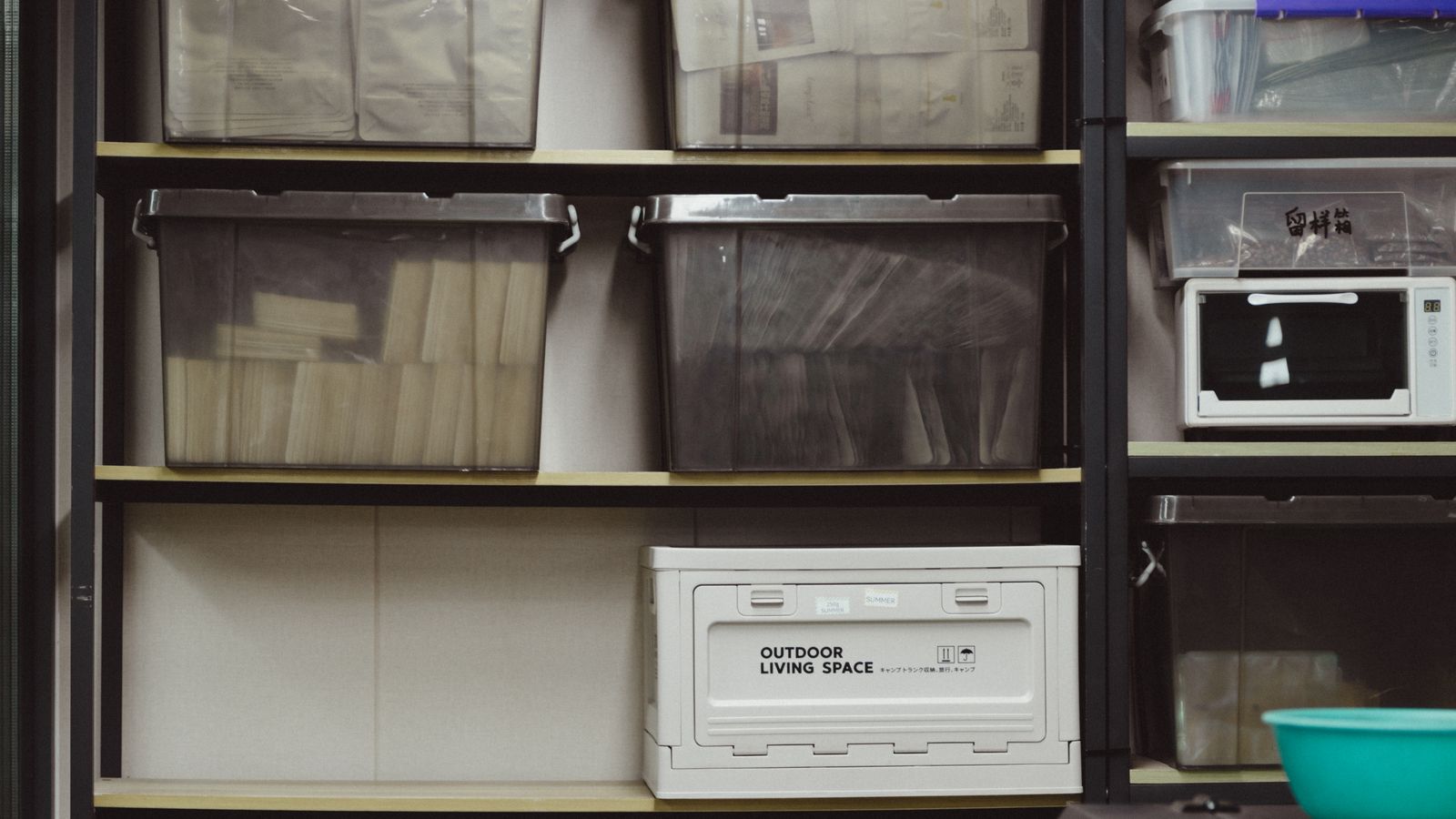
Weight distribution matters just as much. Heavy bins (books, tools, canned goods) belong on the bottom; lighter bins (linens, seasonal decor, out-of-season clothing) go on top. If you’ve already got a mismatched stack, place the largest-footprint bins on the bottom regardless of weight to create a stable base, and never stack more than four or five bins high without shelving support. A wire or laminate shelving unit largely eliminates stacking problems altogether by giving each bin its own level.
Problem 3: Musty Smells or Visible Mold Inside a Bin
Musty odors almost always trace back to trapped moisture. Plastic bins are airtight by design, which is great for pest control but bad news if anything even slightly damp goes inside – a swimsuit, a towel that wasn’t fully dry, or condensation from a temperature-swinging garage. Once mold starts, it spreads on the porous items inside (fabric, cardboard, paper) even though the plastic itself won’t grow mold.
To fix it: remove everything, wash the bin with a mix of water and white vinegar or a mild bleach solution, and let it air-dry completely in sunlight before repacking – sunlight and airflow are both natural mold inhibitors. For the contents, anything with visible mold should be laundered on a hot cycle or, if it’s beyond saving, discarded. Going forward, drop a few silica gel packets or a small moisture absorber inside bins destined for basements or garages, and never seal away anything that isn’t bone dry.
Problem 4: Cracks, Splits, or Broken Corners
Cracks typically start at stress points – corners, hinge areas, and the rim where the lid meets the base. Cold temperatures make plastic more brittle, so cracking is especially common with bins stored in unheated garages or sheds during winter, or ones dropped while frozen. A hairline crack that isn’t load-bearing can often be reinforced with strong packing tape on the inside and outside, which buys time but isn’t a permanent fix. A crack running through a corner or across the base means the bin can no longer support weight safely and should be retired – repurpose it for lightweight, non-fragile items like empty hangers or seasonal wrapping paper rather than tossing it immediately.
To prevent future cracking, avoid stacking bins outdoors where they’re exposed to freeze-thaw cycles, and don’t drop or kick bins when moving them – plastic that’s cold is far more likely to shatter than crack cleanly.
Problem 5: Labels Peeling Off or Impossible to Read
Adhesive labels degrade in humidity and direct sunlight, curling at the edges or losing their stick entirely within a season or two. Swap paper labels for a chalkboard label sticker or a dry-erase panel, both of which can be wiped clean and relabeled as contents change – far more durable for long-term storage than printed paper and tape. For bins that get moved often, a luggage-tag-style label attached with a zip tie survives handling much better than anything adhesive.
Problem 6: Bins Attract Pests or Show Chew Marks
Solid plastic bins are naturally more pest-resistant than cardboard boxes or fabric totes, but pests can still be an issue if a lid doesn’t seal tightly or if the storage area itself has an active infestation. Chew marks on plastic usually point to rodents searching for nesting material or food residue – check whether anything edible (pet food, birdseed, snacks) was stored nearby. Seal any gaps in the storage room itself, switch to bins with a tight gasket-style lid seal, and avoid storing bins directly on the floor in garages or basements where pests are more active; a few inches of clearance on a shelf or pallet makes a real difference.
Problem 7: Running Out of Space Even Though Bins Are Half-Empty
This is more of an organizational failure than a bin failure, but it’s one of the most common complaints. It usually means bins are being used inefficiently – mixed categories in one container, oversized bins for small items, or no vertical stacking system. Group by category rather than by “whatever fits,” use smaller bins or storage cubes for items you access often, and reserve large bins for bulky, infrequently used items like holiday decorations. Adding labeled dividers inside larger bins can also reclaim wasted space without buying anything new.
When to Repair vs. Replace
A quick rule of thumb: repair when the damage is cosmetic or affects only the lid’s seal (tape, bungee cords, replacement lids sold separately by some brands); replace when the structural integrity of the base or a corner is compromised, since a failing bin can collapse under stacked weight and damage whatever’s inside. If you’re troubleshooting the same failure across several bins at once, it’s often more cost-effective to replace the whole set with a matched, stackable line than to keep patching individual containers – this also solves any mismatched-stacking issues in one move.
Preventing Future Storage Bin Problems
- Store bins indoors or in climate-controlled spaces whenever possible; avoid attics, uninsulated garages, and direct sun exposure.
- Never pack a bin so full the lid has to be forced shut – overfilling is the leading cause of cracked latches.
- Keep bins off the floor with a shelf, pallet, or rack to reduce moisture and pest exposure.
- Stick to one brand or product line per stack for consistent sizing and stability.
- Only pack fully dry items, and add moisture absorbers in damp storage areas.
- Inspect bins once or twice a year for early cracks, warping, or peeling labels before they become bigger problems.
Related Storage Solutions Worth Checking
If bin problems keep recurring because your storage system itself needs an upgrade, it may be worth pairing your bins with complementary organizers. For clothing and linens that don’t fit well in rigid bins, a set of garment racks can take pressure off overstuffed containers and reduce the wrinkling and crushing that leads to musty odors in the first place.
FAQ
Can a cracked storage bin be safely repaired?
Small hairline cracks away from load-bearing corners can be reinforced with strong tape or a plastic repair epoxy as a short-term fix. Cracks through corners or the base should not be trusted with weight and the bin should be replaced.
Why do my storage bins smell even when nothing inside is wet?
Plastic itself can retain odors from previous contents (cleaning chemicals, mothballs, or off-gassing from new plastic). Washing with a vinegar-water solution and airing out in sunlight for a full day usually resolves lingering smells that aren’t caused by active moisture.
How do I stop lids from popping open during a move?
Secure the lid with a packing strap or duct tape along all four sides before transport, and avoid overfilling – a properly closed lid under light pressure is far less likely to pop than one forced shut over excess contents.
Are fabric storage bins harder to troubleshoot than plastic ones?
Fabric bins don’t crack or warp, but they’re more prone to sagging, mold in humid conditions, and pest access since they aren’t airtight. Reinforced-bottom fabric bins on a shelf (rather than the floor) hold their shape much longer.
Final Thoughts
Most storage bin problems are fixable with a little diagnosis and a few minutes of maintenance – the key is catching warping, cracking, or moisture issues early before they damage what’s inside. When a bin truly is beyond repair, treat it as a chance to upgrade to a matched, stackable set that solves several problems at once, rather than replacing containers one at a time as they fail.


