Quick Answer
The best arched mirrors match the viewing task, fit the available wall or floor area, and have an installation method appropriate for their weight and the wall construction. The DUMOS 64-by-21-Inch Arched Full-Length Mirror is a balanced overall starting point because its listing combines tempered-glass language, an aluminum-alloy frame, and freestanding or leaning placement in a practical full-length size.
For a wider reflection, the 76-by-34-Inch Arch Full-Length Mirror offers a stand plus hanging or leaning options. For a compact vanity, the 24-by-36-Inch Arched Bathroom Mirror uses a wall-mounted black frame. Confirm product weight, included hardware, wall substrate, bathroom suitability, and anti-tip requirements before installation.



Pros
- Arched shape makes small bathrooms look taller and more open right away.
- Brushed aluminum frame holds steady against daily bathroom steam and touches.
- Tempered glass stays safe if bumped, unlike regular mirrors that crack easily.
- Hooks on back let anyone hang it in minutes with basic screws and drill.
- Clear reflection without distortion works reliably for makeup or outfits daily.
- Fits bathrooms or entryways equally well, no need for room-specific swaps.
Cons
- Rear hooks require precise wall drilling for level hanging.
- Brushed metal frame shows fingerprints in high-touch areas.
- Arched shape limits use over standard rectangular vanities.
- Aluminum frame conducts subtle coldness in unheated rooms.


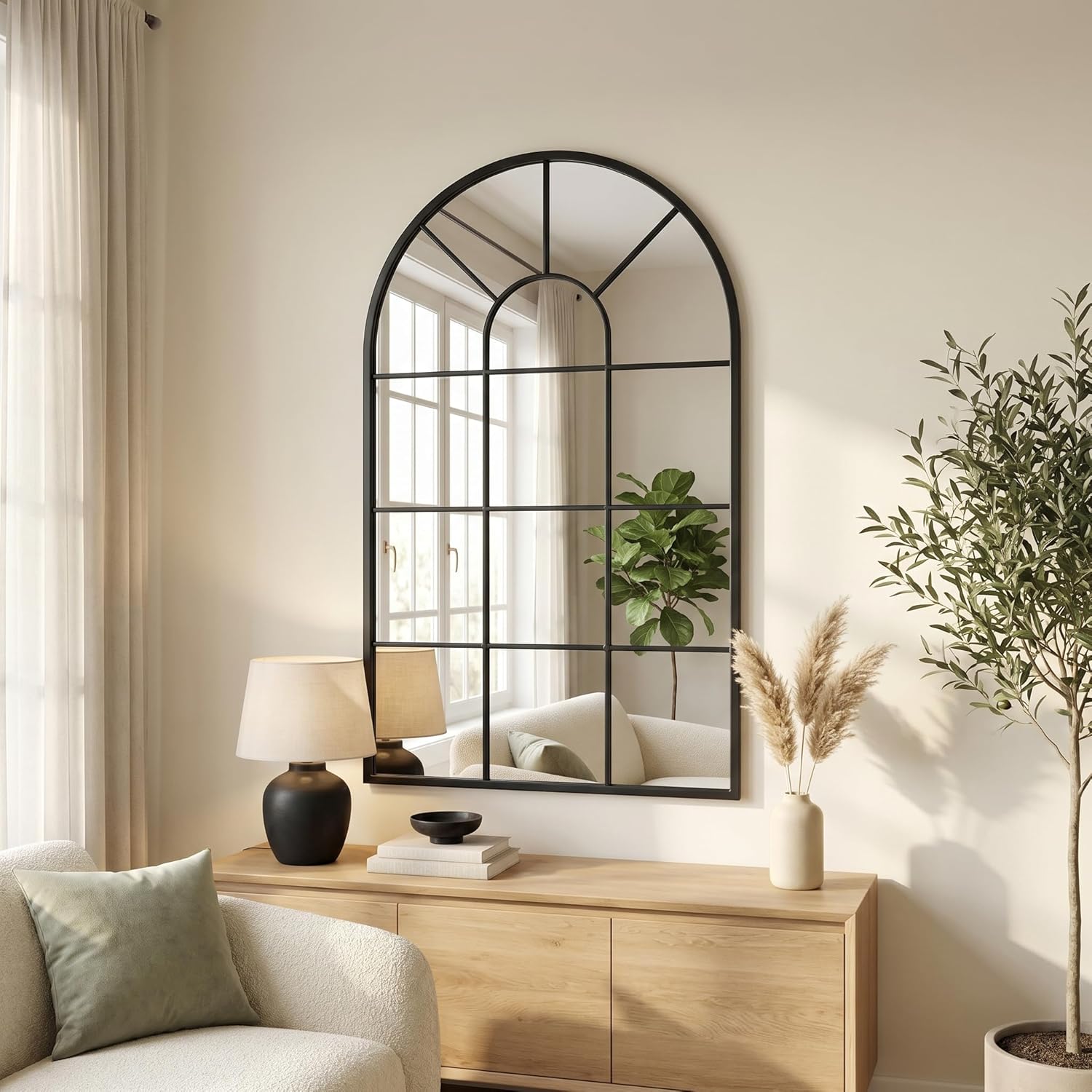
Top Picks at a Glance
- Best Overall Full-Length Option: DUMOS 64-by-21-Inch Arched Full-Length Mirror. A gold aluminum-alloy frame with listed freestanding and leaning use.
- Best Wide Full-Length Mirror: 76-by-34-Inch Arch Full-Length Mirror. A black aluminum-frame design with stand, hanging, and leaning language.
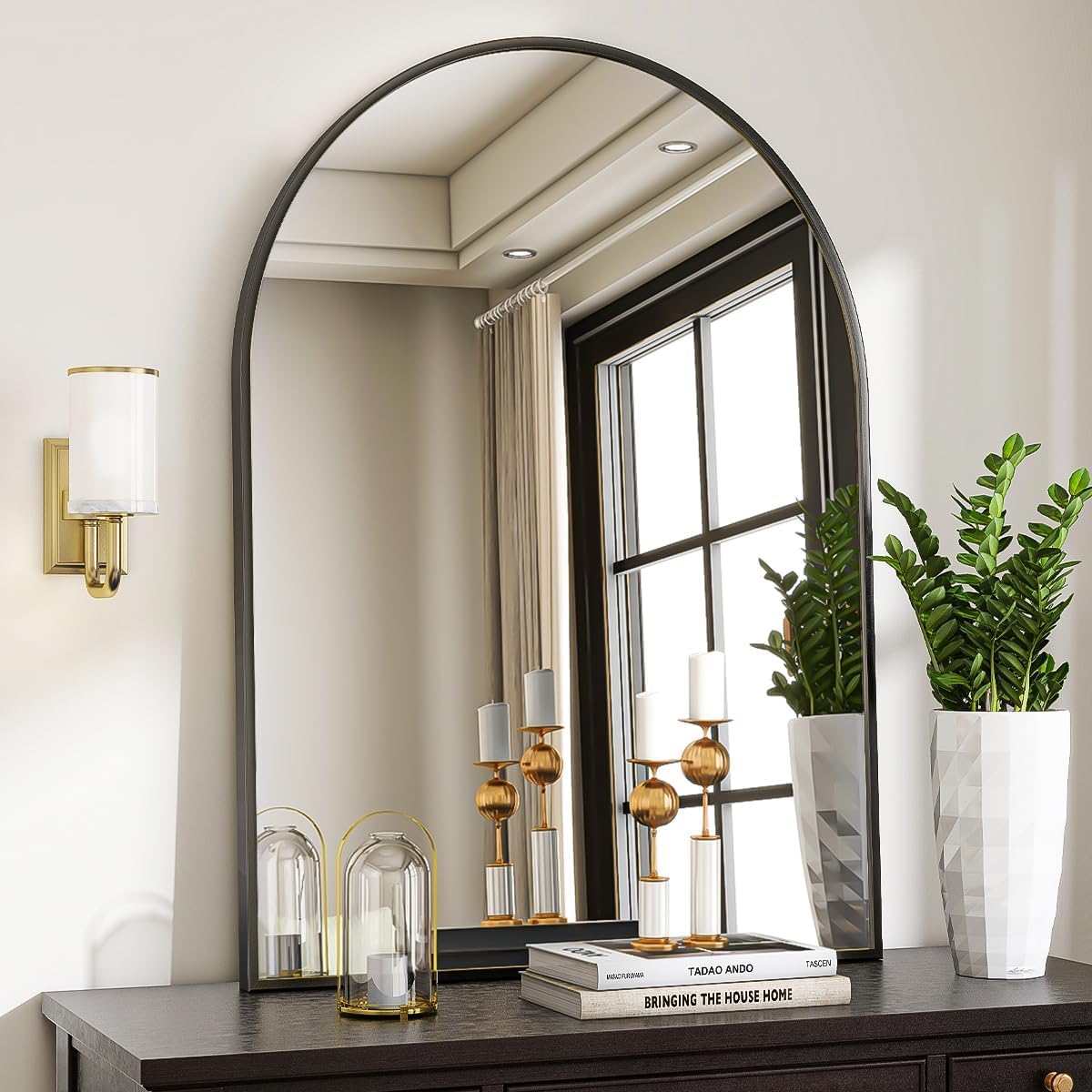
- Best Compact Vanity Mirror: 24-by-36-Inch Arched Bathroom Mirror. A wall-mounted black panel for a bathroom, bedroom, living room, or entryway.
- Best Larger Vanity Panel: 30-by-38-Inch Arched Wall Mirror. A black metal-frame design listed for hanging or leaning.
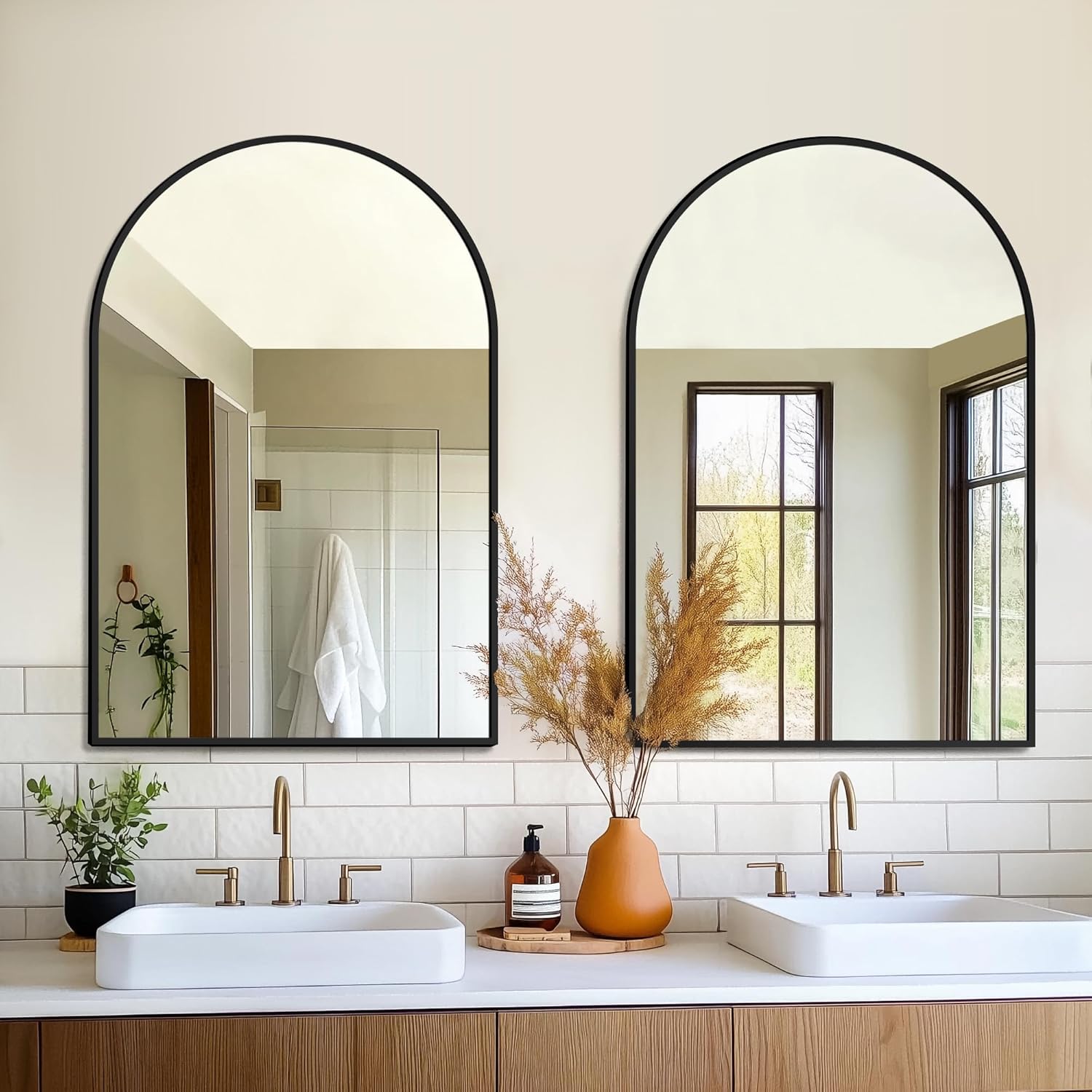
- Best Two-Mirror Set: FICTOR Two-Pack 24-by-36-Inch Arched Vanity Mirrors. A coordinated pair with anti-rust metal-frame and tempered-glass language.
- Best Oversized Statement Mirror: ITSRG 41-by-81-Inch Oversized Mirror. A large black mirror listed for freestanding or wall-mounted use.
- Best Solid-Wood Frame: ZHUNFA 71-by-32-Inch Arched Mirror. A brown farmhouse design with a solid-wood frame, stand, and vertical-hanging language.
- Best Decorative Window-Pane Design: 48-by-28-Inch Arched Window-Pane Mirror. A black decorative panel with divided farmhouse styling.
What Makes the Best Arched Mirrors Fit the Room?
The best arched mirrors use their curved top to soften a room without sacrificing the reflection needed for dressing, grooming, or light. A product can have attractive proportions yet still be wrong if its reflective area is too narrow, its stand projects into a walkway, or its hanging points do not match the wall.
Start with the use case. A full-length mirror needs enough height and width for the intended viewing distance. A bathroom mirror should fit the vanity, faucet, lighting, backsplash, and outlets. An entryway mirror should remain clear of a swinging door and should not reflect a private area unintentionally.
Measure the outer frame and the visible glass separately when specifications provide both. A wide frame or divided window-pane design reduces continuous reflective area. Decorative dimensions should not be mistaken for usable mirror dimensions.
Mock up the outline with removable tape or paper. Step back to the normal viewing location and check whether furniture, doorways, and lighting allow the full reflection. A mirror installed at the wrong height cannot be corrected by simply standing farther away in a narrow room.
Full-Length, Vanity, or Decorative?
Full-length best arched mirrors are commonly tall and narrow. The DUMOS listing measures 64 by 21 inches, while the 76-by-34-inch option offers more width. The ITSRG model reaches 81 by 41 inches, creating an oversized statement and a much larger delivery and mounting task.
A narrow full-length mirror can work in a bedroom corner or dressing area, but viewing angle matters. If the mirror is leaned backward or the user stands very close, body proportions may appear different. Install or position it as directed before judging reflection quality.
Vanity mirrors prioritize face and upper-body viewing. The 24-by-36-inch and 30-by-38-inch selected panels are sized for wall placement. Their fit depends on vanity width, faucet height, backsplash, sconces, medicine cabinets, and ceiling clearance.
Decorative window-pane mirrors intentionally divide the surface. The selected 48-by-28-inch panel can add architectural rhythm in an entryway or living room, but its divisions interrupt a full-body or grooming reflection. Choose it for decor rather than expecting the same function as uninterrupted glass.
Measure Sight Lines, Not Just Wall Space
The best arched mirrors should reflect the intended view from the position where they will be used. For a vanity, stand or sit at the sink and mark eye level. For dressing, identify the normal standing distance and check whether the frame captures head, feet, and the desired surrounding context.
Mirror height is not the only factor. A full-length mirror installed too high may cut off shoes, while one placed too low can waste reflective area near the floor. A vanity mirror can show only the ceiling if its center is positioned above the users’ practical sight line.
Consider users of different heights. A shared bathroom may need a taller panel or a placement that serves seated and standing use. Avoid installing a heavy mirror based on one person’s eye level without testing the household’s range.
Check what appears behind the viewer. Mirrors can reflect clutter, direct sun, a bright bulb, a neighboring window, or a private doorway. Placement should improve light and space without creating glare or an uncomfortable view.
Freestanding Mirrors Need Floor Depth
A freestanding mirror uses a rear kickstand or support frame. The listed floor mirrors commonly offer this configuration. It allows repositioning without wall holes, but the stand increases depth and creates a footprint that product photos may not show clearly.
Measure the mirror when the stand is open at its approved angle. Include the rear leg and front edge in the walkway plan. A stand placed on a soft rug or uneven transition can behave differently from one on a level hard floor.
Confirm that the locking or limiting hardware is fully engaged. Do not open a stand farther than the stated position to change the reflection angle. The hinge and strap are not handles for moving a large mirror.
Freestanding best arched mirrors should remain outside active play areas and narrow traffic paths. Homes with children, pets, or frequent movement may need an approved restraint or wall-mounted configuration even when a stand is included.
Leaning Mirrors Must Be Restrained Correctly
Leaning creates a casual look and avoids visible wall brackets, but it introduces sliding and tipping concerns. A mirror listed for leaning should still be positioned and restrained according to its instructions. Do not assume the weight alone will keep it stable.
Hard floors can allow the bottom edge to move, while thick carpet can change the angle. Baseboards hold the mirror away from the wall and create a larger gap. Use only the supplied or approved anti-tip hardware, floor protection, and contact points.
Do not wedge books, blocks, or folded fabric under the frame. Improvised supports can compress or shift and may concentrate stress on the glass. If the intended wall cannot accept the required restraint, choose a different location or mounting configuration.
Readers focusing specifically on tall floor formats can compare the guide to floor mirrors. The final decision should still follow the exact model’s stand, lean, and wall-mount instructions.
Wall Mounting Depends on Wall Construction
Wall-mounted best arched mirrors need anchors selected for the product weight, mounting points, wall substrate, and expected contact. A fastener suitable for a wood stud is different from one intended for drywall, masonry, plaster, or tile.
Inspect the back for D-rings, keyholes, a French cleat, brackets, or a wire. Use only mounting methods permitted by the manufacturer. A picture wire should not be added to hardware that was not designed for it, and one hook should not support a mirror requiring two points.
Bathroom installation adds tile and hidden plumbing concerns. Identify the safe drilling area and avoid guessing behind a finished wall. If product weight, tile, masonry, or hidden utilities make installation uncertain, use a qualified installer.
Choose the fall zone carefully. Avoid mounting a heavy mirror where failure would land on a bed, crib, seating area, or frequently occupied path unless the installation design specifically and safely addresses that location. Recheck hardware after impact, remodeling, or visible wall movement.
Tempered Glass and Shatterproof Language
Several selected listings use tempered, shatterproof, or safety language. Tempered glass is designed to behave differently from ordinary annealed glass when it breaks, but it is not unbreakable. Safety film may help retain fragments, yet performance depends on construction and condition.
Do not strike the edges, drill the glass, remove safety backing, or lean heavy objects against the reflective surface. Edge damage can be significant even when the front appears intact. Follow the manufacturer guidance for moving and mounting.
Inspect the package on arrival before removing all protective material. Look for cracks, chips, a distorted frame, detached backing, loose hardware, or rattling. Do not mount or stand a damaged mirror. Keep people away and follow the seller’s safe return or disposal instructions.
A shatterproof phrase should not replace careful placement. The best arched mirrors still need stable support, correct anchors, protected edges, and routine inspection.
Aluminum, Metal, and Solid-Wood Frames
Slim aluminum-alloy frames are common among the selected full-length mirrors. They create a narrow visual border and can be easier to wipe than carved materials. Check corner seams, finish adhesion, stand attachment, and whether the frame is approved for humid rooms.
Bathroom listings may use anti-rust language. This does not mean any metal finish can tolerate constant water contact or harsh cleaners. Ventilate the room, wipe splash, and avoid allowing moisture to remain at lower edges or hardware joints.
The ZHUNFA listing uses a solid-wood frame. Wood adds warmth and a farmhouse direction, but it can respond to humidity and should not be assumed suitable directly above a wet vanity unless the manufacturer permits that placement. Follow the finish-care instructions.
Black, gold, and brown frames affect how large the mirror appears. A high-contrast black outline emphasizes the arch, while a gold or natural-wood frame may blend more gently with warm decor. Color should follow placement and lighting after safety and size are settled.
Reflection Quality and Distortion
Reflection depends on glass flatness, backing, frame support, installation angle, and viewing distance. A mirror can appear distorted if the backing is under stress or the frame is twisted by uneven mounting. Confirm the wall and mounting points are level before assuming the glass is defective.
Oversized mirrors are more sensitive to handling because a large panel can flex. Lift and support the frame as instructed, using enough people. Do not carry it flat by gripping only one side or allow the center to bounce during stairs or doorway turns.
Evaluate the reflection from several distances after installation. Look at straight door frames or wall edges in the reflection. Minor perspective change from a leaning angle is different from waves that remain when the mirror is vertical and correctly supported.
Bathroom Placement and Lighting
The best arched mirrors above a vanity should fit between the backsplash and ceiling or light fixture while remaining centered on the sink or intended composition. With a double vanity, a matching two-pack such as the FICTOR listing can create separate reflection zones.
Check sconce width and door swing from medicine cabinets. A broad arch can overlap lighting or leave too little clearance at the curved shoulders. Mark the entire outer frame, not just the rectangular lower portion.
Lighting should illuminate the face without reflecting a bare bulb directly into the user’s eyes. Test temporary lamp positions and daytime light before drilling. Mirror placement can amplify glare from a window or reveal light sources not visible from other parts of the room.
Use bathroom-safe electrical fixtures and keep mirror installation independent from wiring unless the product is designed as an illuminated mirror. The selected products do not become electrical devices simply because they are placed near sconces.
Coordinate With Dressers and Storage
A wall mirror above a dresser should be proportionate to the furniture and securely anchored rather than resting loosely on the top. Leave space for drawers, decor, and safe cleaning. A tall leaning mirror beside a dresser needs enough floor separation to avoid handle and drawer contact.
Integrated furniture can simplify matching but creates a different installation. Compare dressers with mirrors when a coordinated set is preferred. For reflective furniture surfaces beyond the wall mirror, the guide to mirrored dressers covers additional cleaning and placement trade-offs.
Cleaning and Routine Inspection
Dust the frame first so debris does not move onto wet glass. Apply an approved cleaner to a soft cloth rather than spraying heavily near frame seams, wood, backing, wall anchors, or stand hinges. Wipe edges carefully and dry any moisture that reaches hardware.
Avoid abrasive pads and cleaners that can damage protective coatings or frame finishes. Window-pane divisions require extra attention around trim. Wood and metal may have separate care instructions from the glass.
Inspect hanging points, stand hinges, anti-tip restraints, backing, frame joints, and glass edges periodically. Recheck after moving the mirror or changing its configuration. Stop using it if hardware loosens, the frame separates, or the glass develops a crack.
How We Tested & Evaluated
This guide does not claim hands-on distortion measurement, impact, corrosion, anchor-load, stand-tip, or long-term humidity testing. We reviewed current Amazon search results retrieved through Crawlbase and preserved the listed names and dimensions. We compared full-length versus vanity use, frame material, tempered or shatterproof language, stand, lean, hang, wall-mount, two-pack, oversized, and decorative-pane formats.
Our evaluation of the best arched mirrors prioritizes details buyers can verify: outer dimensions, reflective area, viewing distance, stand footprint, product weight, mounting points, wall construction, anti-tip needs, bathroom clearance, delivery access, and damage inspection. Safety wording is treated as listing information rather than proof that glass cannot break.
The use-case labels reflect format differences. DUMOS represents a practical full-length size; the 76-by-34 model offers more width; the 24-by-36 and 30-by-38 panels cover vanity use; FICTOR offers a pair; ITSRG represents oversized scale; ZHUNFA represents solid wood; and the window-pane model represents decorative divided glass.
Common Mistakes to Avoid
Comparing the best arched mirrors becomes easier when these placement errors are addressed:
- Measuring only the wall: Include reflective area, frame depth, stand footprint, viewing distance, and doors.
- Treating leaning as unsecured placement: Use every required anti-tip restraint and approved floor contact.
- Using generic anchors: Match product weight and hardware to studs, drywall, masonry, plaster, or tile.
- Assuming shatterproof means unbreakable: Protect glass edges and plan a safe fall zone.
- Ignoring bathroom humidity: Confirm frame suitability, ventilation, and cleaning guidance.
- Choosing by outer size alone: Thick frames and decorative panes reduce uninterrupted reflective area.
- Mounting before checking reflection: Test sight lines, glare, privacy, and user heights first.
- Installing damaged glass: Cracks, chips, rattling, warped frames, or loose backing require safe return or disposal.
Buying Checklist
Before selecting among the best arched mirrors, verify the following:
- Choose full-length, vanity, entryway, dresser, mantel, or decorative use.
- Measure outer height, width, depth, reflective area, and stand footprint.
- Test sight lines from the actual standing or seated viewing position.
- Confirm freestanding, leaning, hanging, wall-mounted, vertical, or horizontal modes allowed by the manual.
- Check product weight, mounting points, wall substrate, anchors, studs, tile, and anti-tip hardware.
- Review tempered-glass, safety-film, shatterproof, backing, and edge-protection details.
- Compare aluminum, metal, anti-rust finish, solid wood, humidity, and cleaning requirements.
- Plan glare, privacy, windows, sconces, outlets, doors, furniture, and fall zones.
- Confirm carton dimensions, delivery path, lifting help, and arrival-inspection process.
- Inspect hardware, stand, frame, backing, and glass periodically after installation.
FAQ
What size arched mirror is best for full-body viewing?
The right size depends on user height, viewing distance, mirror angle, and how much surrounding context is needed. A 64-by-21-inch model is a common narrow full-length reference, while wider and taller panels offer more flexible sight lines.
Can an arched floor mirror simply lean against the wall?
Only when the product permits leaning and every required restraint and placement instruction is followed. Floor type, baseboards, angle, children, pets, and traffic affect stability. Weight alone is not an anti-tip system.
Are tempered arched mirrors unbreakable?
No. Tempered glass is designed to break differently from ordinary glass, and safety film may help retain pieces, but impact and edge damage can still cause failure. Handle and mount the mirror carefully.
Can I hang an arched mirror on drywall?
Possibly, with anchors or stud attachment rated for the mirror, mounting points, and wall construction. Follow the product instructions. Heavy or oversized panels, tile, masonry, and uncertain walls may require a qualified installer.
How do I prevent a bathroom mirror from rusting?
Choose a model approved for bathroom conditions, ventilate the room, wipe splash and condensation, and use compatible cleaners. Anti-rust language does not eliminate the need to protect frame seams and hardware from persistent moisture.
What are the best arched mirrors for a small entryway?
The best arched mirrors for small entryways use a shallow wall-mounted profile or a narrow full-length shape without blocking doors and walking paths. Test the reflected view and mounting height so the mirror adds light without exposing an unwanted sight line.
Final Takeaway
The best arched mirrors combine the right reflective area with stable placement. Decide whether the room needs full-length, vanity, or decorative function, then verify outer dimensions, sight lines, stand depth, wall anchors, glass construction, frame care, and the fall zone. The arch creates style, but secure mounting and a useful reflection determine whether the mirror works.