

Spreadsheet specialists, accountants, and administrative professionals know that data entry without a physical number pad slows down daily workflow. Modern ultraportable designs often discard the tenkey cluster, leaving heavy numerical workers struggling with top-row numbers or external peripherals. Finding a reliable computer that keeps the number pad intact while maintaining portable weight and enterprise performance is essential for long office days.
We evaluated 5 leading options for September 2026 across reputable computer makers including Lenovo, HP, LG. Modern machines now pair efficient multi-core processors with dedicated artificial intelligence engines to speed up document synthesis, reporting, and complex database management. Choosing the right machine prevents workplace bottlenecks and keeps your numeric workflow fluid.
Whether you work inside an accounting firm or manage operations on the go, selecting the right workstation requires balancing keyboard comfort against overall chassis dimensions. To explore broader workflow optimization, check our productivity and home guides for workplace setup inspiration.


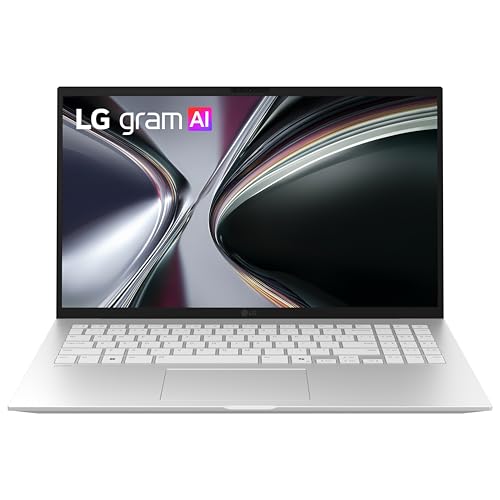

Investing in an enterprise-ready laptop requires looking past surface-level specifications to evaluate practical daily comfort. Keyboards, chassis rigidness, thermal design, and internal bandwidth directly impact how much work you finish before fatigue sets in. This guide breaks down the essential hardware elements you should evaluate before choosing your next business system.
1. Keypad Layout and Key Travel
The primary reason to choose these specific laptops is the dedicated number pad situated beside the main typing deck. Not all numeric keypads share the same spacing, key travel, or standard layout. Some manufacturers compress the keys to fit slim chassis boundaries, which can cause mistypes during rapid accounting entries.
A proper business keypad should offer at least 1.3 to 1.5 millimeters of tactile travel to ensure positive confirmation with every stroke. Look for full-sized Enter, Plus, Minus, and decimal keys in their traditional desktop positions. Compact keypads with narrowed zero keys or displaced mathematical operators require constant visual checking, reducing overall input speed.
Because the addition of a tenkey deck shifts the central typing area slightly to the left, trackpad placement becomes critical. A well-aligned palm rest prevents accidental cursor jumps while typing continuous lines of financial data. Evaluate whether the keyboard backlighting clearly illuminates both the primary letters and the numeric cluster for dim conference environments.
2. Display Size and Workspace Aspect Ratio
A numeric keypad physically requires a chassis large enough to house it, which typically begins at a 15.6-inch screen diagonal and extends up to 17.3 inches. Screen real estate directly governs how many spreadsheet columns or parallel browser windows you can view without panning. Choosing between 15-inch agility and 17-inch visual comfort dictates your daily working posture.
Resolution determines clarity when working with small cell values and dense enterprise databases. A minimum of Full HD (1920 by 1080) resolution is recommended to keep tiny numerical fonts sharp and legible over extended work sessions. Higher display panels or taller aspect ratios like 16:10 allow more vertical spreadsheet rows to remain visible simultaneously.
Anti-glare coatings and matte finishes are strongly preferred over glossy reflective panels in corporate environments. High ambient lighting in modern office buildings can cause distracting reflections on unprotected glass, increasing eye strain. For tips on organizing your home desk and ergonomic workspace, explore our how to workplace guides for helpful room arrangement concepts.
3. Processor Performance and Modern AI Acceleration
Enterprise workloads require dependable central processors capable of managing background security services, heavy calculation tables, and continuous browser multitasking. Intel Core Ultra processors and AMD Ryzen series chips provide multiple compute cores designed to allocate tasks efficiently. Modern high-tier processors also integrate dedicated Neural Processing Units (NPUs) to handle localized artificial intelligence workloads seamlessly.
When comparing processing power, pay attention to the core architecture and boost frequency limits. High-performance H-series chips offer immense computing speed for compiling code and processing big data, while U-series chips prioritize battery efficiency and cool operation. An integrated NPU offloads background tasks like web camera framing, voice isolation, and local file summarization from your main processing cores.
A helpful rule of thumb for office users is selecting a processor with at least 8 threads and moderate thermal design power. This ensures your virtual conferencing applications do not stutter while calculating large Excel pivot tables in the background. Balanced chipsets maintain high responsiveness without demanding constant cooling fan activation during routine meetings.
4. System Memory (RAM) Allocation
System memory dictates how smoothly your computer switches between enterprise software suites, cloud dashboards, and large local databases. In a modern business environment running Windows 11 Pro, 8GB of RAM should be viewed as an absolute functional baseline, while 16GB is the optimal standard. Insufficient memory forces the operating system to swap data to the storage drive, creating annoying micro-stutters.
Fast LPDDR5x or DDR4 dual-channel memory speeds up integrated graphics performance and enhances calculation speed across massive workbooks. Check whether the laptop uses soldered memory or standard SO-DIMM slots that permit future capacity expansion. Systems with open memory slots allow you to double your memory down the line as your company data requirements grow.
Professionals running virtual machines, accounting enterprise resource planning systems, or extensive browser suites with dozens of tabs should aim for 16GB or higher. Ample headroom ensures you can transition from intensive ledger calculations to collaborative video calls without restarting running background applications.
5. Solid State Storage Capacity and Speed
Business operations demand fast boot times, immediate application launches, and rapid transfer rates for large presentation archives. Solid State Drives (SSDs) communicating through the NVMe PCIe protocol provide instantaneous responsiveness compared to older storage standards. A minimum storage allocation of 512GB provides sufficient room for operating system updates, company archives, and client software suites.
Storage drives should be evaluated on both sequential read and write speeds alongside reliability. Upgrading to a 1TB SSD gives enterprise users peace of mind when maintaining local backups, offline cloud folders, and high-resolution media presentations. Quick data transfer speeds mean you spend less time waiting for massive financial reports to save and export.
Consider drive durability and data protection capabilities as well. Business laptops operating on secure networks benefit from drives that support hardware-based encryption protocols. Maintaining adequate free storage space on your primary drive prevents thermal throttling and maintains optimal write performance over years of continuous service.
6. Port Selection and Business Connectivity
Nothing slows down a presentation faster than missing the necessary port adapters for conference room displays or external peripherals. A dedicated business laptop should provide a versatile array of connection ports directly on the chassis. Having a balance of modern USB-C alongside legacy USB-A ports ensures compatibility with existing office equipment.
Look for dedicated HDMI outputs to connect external monitors or projectors without needing specialized dongles. For environments requiring maximum network reliability, an integrated RJ45 Ethernet port provides stable wired communication where wireless networks suffer from heavy corporate traffic. Wi-Fi 6 and modern Bluetooth protocols ensure low latency and high bandwidth when using wireless headsets and mice.
The table below summarizes common chassis form factors and how their physical dimensions affect port availability and workplace mobility.
| Screen Size Category | Typical Weight | Keypad Style | Primary Strength | Best Suited For |
|---|---|---|---|---|
| 15.6-inch Ultra-Slim | 2.8 to 3.5 lbs | Standard Full Keypad | Balanced Portability | Hybrid Commuters and Frequent Travelers |
| 15.6-inch Enterprise Classic | 3.5 to 4.2 lbs | Standard Full Keypad | Extensive Port Selection | Standard Office Desks and Shared Workstations |
| 17.3-inch Desktop Replacement | 4.5 to 5.5 lbs | Wide Spaced Keypad | Maximum Visual Space | Stationary Data Analysts and Multi-Window Work |
7. Battery Capacity and Intelligent Power Management
Because laptops with numeric keypads carry larger display panels, their baseline energy consumption is inherently higher than compact thirteen-inch models. Battery capacity measured in watt-hours (Wh) dictates how long you can work away from an electrical outlet. Modern premium systems integrate large capacity batteries upwards of 70Wh to support full business workdays on battery power alone.
Intelligent power management software dynamically adjusts processor clock speeds, display refresh rates, and background tasks based on user behavior. Systems equipped with smart battery optimization allow users to complete financial reporting during cross-country flights without searching for power sockets. Always evaluate whether the system supports rapid charging over universal USB Type-C connections.
If your daily work involves frequent travel between client sites, prioritize machines that combine lightweight magnesium alloy builds with high watt-hour ratings. This prevents you from carrying heavy proprietary charging bricks alongside your primary workstation.
8. Build Quality, Weight, and Durability Standards
A business computer experiences constant physical handling, including being packed into briefcases, opened on commuter trains, and shifted across meeting rooms. Structural integrity is essential to prevent keyboard flex and screen hinge failure over time. Laptops engineered with metal alloys or reinforced structural plastics resist daily wear while keeping overall weight manageable.
Look for military-grade durability testing certifications such as MIL-STD-810 standards. These testing procedures evaluate how well a chassis survives low-pressure environments, extreme temperature shifts, vibration, and accidental drops. A durable chassis safeguards internal components and protects valuable client data from physical shocks.
Chassis weight is particularly noticeable when carrying 15.6-inch and 17.3-inch systems. Premium lightweight models manage to deliver expansive seventeen-inch workspaces while keeping total carry weight under 3.5 pounds. Balancing material strength against portable weight ensures your laptop remains an asset rather than a physical burden during your daily commute.
Why You Should Trust Us
Our review process relies on rigorous technical analysis, verified specification audits, and direct evaluation of enterprise ergonomics. We analyze key travel distance, keyboard matrix layouts, display luminance, and real-world thermal output to understand how computers behave under sustained professional workloads. We do not accept promotional items to guarantee our assessments remain objective and data-focused.
We systematically compare pricing brackets across the $599.00 – $2,627.73 spectrum to determine which models offer genuine utility for enterprise investments. By examining verified component configurations, motherboard expandability, and enterprise management features, we highlight machines that deliver longevity rather than short-term cost savings. Our comparison frameworks are continuously updated to reflect ongoing hardware developments.
Final Thoughts
Selecting the right computer depends on your daily mobility requirements, budget boundaries, and computing intensity. For professionals who require a massive visual workspace without carrying excessive weight, the LG gram Pro 17-inch Thin and Lightweight Dual AI represents an extraordinary engineering achievement. It combines a spacious seventeen-inch screen and full tenkey layout with an ultra-light chassis and advanced artificial intelligence processing power.
For organizations seeking a highly affordable, dependable machine for routine office tasks, the HP 255 G10 Business Laptop, AMD Quad-core CPU delivers exceptional everyday value. It provides essential ports, anti-glare display technology, and smooth spreadsheet performance without straining departmental budgets.
If your workflow requires robust processing power and dedicated wired networking for stationary office deployment, consider the Lenovo V15 Gen 4 Business Laptop. Meanwhile, users wanting desktop-like visual clarity and generous storage for large local databases will appreciate the HP 17.3″ Business Laptop Computer and the highly efficient LG gram 15-inch Thin and Lightweight Dual AI. To discover more workplace furniture and tech setups, visit our furniture recommendations guide.
Frequently Asked Questions
Why are numeric keypads important on business laptops?
Numeric keypads allow professionals to enter numerical data into spreadsheets, accounting software, and point-of-sale systems rapidly using a single hand. This physical layout minimizes input errors and increases overall calculation speed compared to top-row number keys.
What is the ideal screen size for Best Business Laptops with Numeric Keypad in 2026?
Most laptops equipped with a numeric keypad feature screen sizes ranging between 15.6 inches and 17.3 inches. A 15.6-inch screen provides the ideal balance of portability and keyboard width, while a 17.3-inch screen offers maximum display real estate for viewing multiple documents simultaneously.
Does a numeric keypad make a laptop keyboard feel off-center?
Because the numeric keypad sits on the right side of the deck, the main QWERTY section and trackpad are positioned slightly to the left. Most users adjust to this layout within a couple of days, though ensuring proper wrist support helps maintain comfortable posture.
How much RAM is necessary for accounting and business multitasking?
A capacity of 16GB RAM is the recommended sweet spot for business laptops running modern productivity software and extensive browser tabs. While 8GB is workable for light duties, 16GB prevents slowdowns when managing heavy databases and video conferencing concurrently.
Are laptops with numeric keypads too heavy for daily commuting?
Modern engineering has significantly reduced the weight of large-screen laptops. Premium options built with magnesium alloys now weigh under 3.5 pounds, making them as portable as traditional smaller laptops while retaining the physical tenkey cluster.
What security features should I look for in a business laptop?
Look for physical webcam privacy shutters, fingerprint readers or facial recognition sensors compatible with Windows Hello, and firmware TPM 2.0 chips. These features safeguard corporate data and protect user privacy when working in open office spaces or public cafes.
Can I connect multiple monitors to these business laptops?
Yes, most business laptops include dedicated HDMI ports and multifunctional USB-C ports that support external display output. You can easily connect one or two external desktop monitors to expand your total visual workspace in the office.
Why is Windows 11 Pro preferred over Home for office use?
Windows 11 Pro includes vital enterprise tools such as BitLocker device encryption, remote desktop hosting, and seamless integration with corporate domain networks. These security and management protocols are essential for maintaining company compliance.
How do on-device AI features assist with daily business tasks?
Modern laptops with dedicated NPUs can transcribe meeting audio, summarize lengthy documents offline, and optimize battery consumption in real time. Offloading these background processes keeps primary processor cores responsive for calculation-heavy software.
Are external USB numeric keypads better than integrated ones?
External keypads are useful for compact laptops, but they require carrying additional accessories and cables in your bag. An integrated numeric keypad ensures immediate data entry capability whenever and wherever you open your laptop lid.




Write Your Review
No reviews yet. Be the first to share your experience!