
A sofa cover is one of the easiest ways to refresh a living room without buying new furniture, but almost everyone who has used one has run into the same frustrations: covers that slide off the cushions, bunch up at the corners, or shrink after the first wash. The good news is that most of these problems have simple, practical fixes. This guide walks through the most common sofa cover issues and gives you step-by-step solutions so your cover stays smooth, secure, and looking its best.
Gather What You’ll Need Before You Start
Before diagnosing your sofa cover problem, it helps to have a few basic supplies on hand. You likely won’t need all of them, but having them ready saves time once you identify the issue.
- Fabric-safe safety pins or upholstery pins
- Elastic straps or suspender-style cover clips
- A tape measure
- Non-slip shelf liner or foam grip strips
- A fabric shaver or lint roller
- Mild detergent and a soft brush for spot cleaning
- The original packaging or care label from your cover, if available
With these on hand, you can work through each common problem methodically rather than guessing at a fix.
Step 1: Diagnose Why the Cover Keeps Slipping
- Sit on the sofa normally for a few minutes and note exactly where the fabric shifts first, usually the seat cushions or the arm panels.
- Check whether the cover has built-in elastic hems, drawstrings, or tuck-in straps, and confirm they’re actually engaged rather than loose.
- Measure your sofa’s seat depth, width, and arm circumference, then compare against the size range listed for your cover. A cover that’s even a size too large will never sit securely no matter how it’s adjusted.
- If the fit is correct but slipping persists, add non-slip grip strips or a thin layer of shelf liner between the sofa cushion and the cover.
Step 2: Fix Bunching and Wrinkling at the Corners
- Remove the cover completely and lay it flat to check for uneven stretching or a twisted seam.
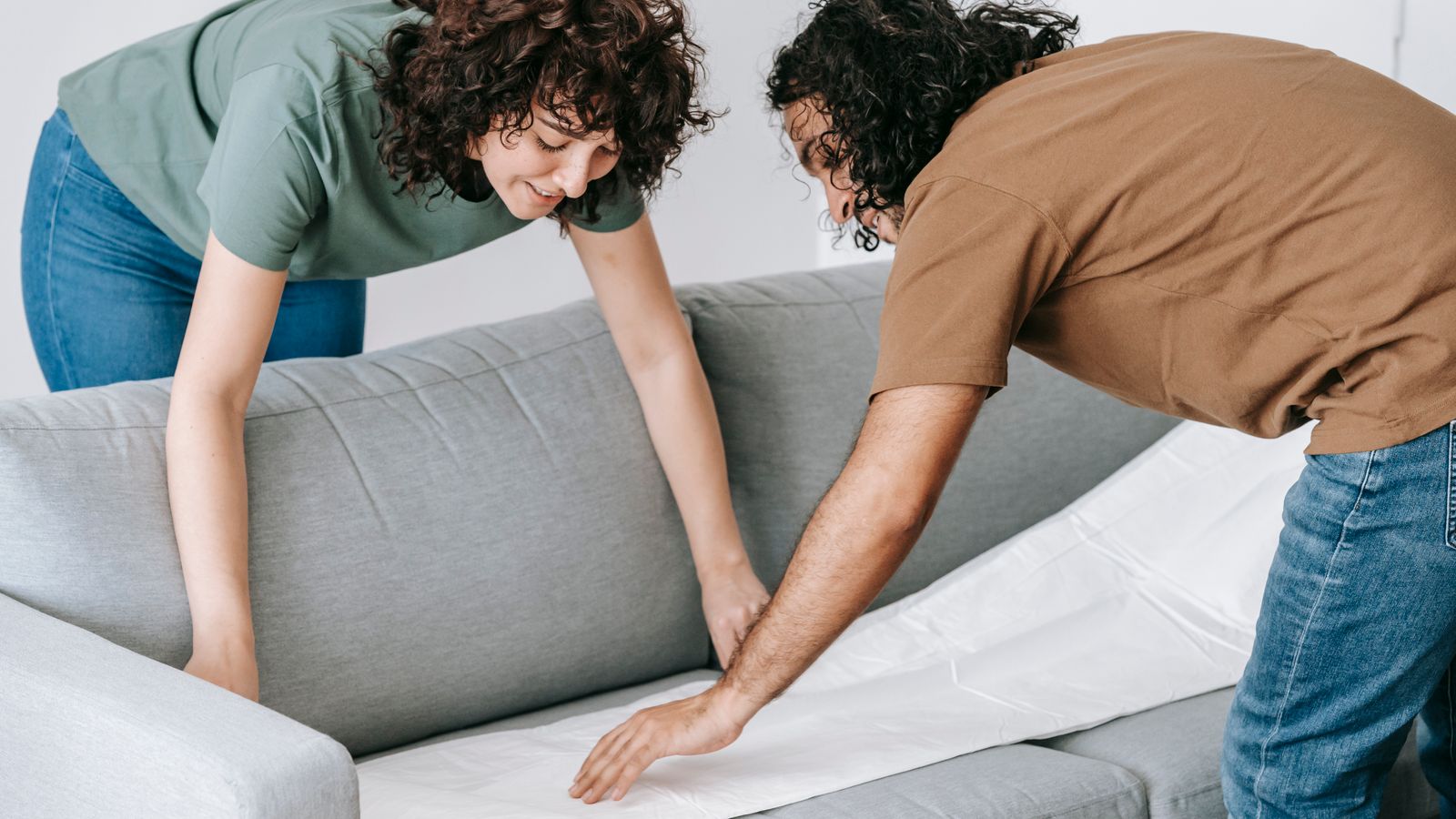
- Reapply the cover starting from the back of the sofa, working the fabric evenly toward the front on both sides at the same time rather than pulling one side fully into place first.
- Tuck excess fabric into the crevices between the seat and backrest cushions using a blunt tool, such as the handle of a wooden spoon wrapped in cloth, to push material deep into the gap.
- Use safety pins on the underside of the cover, out of sight, to cinch loose fabric at the corners if bunching continues.
- For chronic wrinkling, a light steaming session (following the fabric’s care instructions) can relax stubborn creases without ironing directly on the material.
Step 3: Address Shrinkage After Washing
- Check the care label before your next wash; most shrinkage happens from hot water or high heat drying rather than the fabric itself.
- Wash in cold water on a gentle cycle and air-dry or use only the lowest dryer heat setting.
- If a cover has already shrunk slightly, try re-stretching it while damp by pulling it over the cushions and letting it dry in place on the sofa.
- For covers that have shrunk significantly, it’s usually more practical to replace them, since repeated stretching can weaken the seams.

Step 4: Handle Loose Elastic and Weak Straps
- Locate the elastic channel along the hem, usually stitched into a fold of fabric at the bottom edge.
- If the elastic has stretched out or lost tension, it can often be replaced by opening a small section of the hem seam, feeding in new elastic cord, and re-stitching the opening closed.
- For covers with under-seat straps instead of elastic, check that the strap buckles are fastened snugly underneath the cushions and not just looped loosely.
- Consider adding aftermarket suspender-style clips, which attach to the cover’s underside and hook beneath the sofa frame for extra hold.
Step 5: Deal with Pilling, Snags, and Fading
- Run a fabric shaver over pilled areas in gentle, even strokes to remove fuzz without damaging the weave.
- For small snags, use a needle to gently pull the loose thread back through to the underside rather than cutting it, which can cause a run.
- Rotate cushions periodically and keep the sofa out of direct sunlight to slow down fading, especially with darker colored covers.
- Vacuum with a soft brush attachment weekly to prevent dirt from working into the fibers, which accelerates wear.
Common Mistakes to Avoid
- Buying by sofa “size” alone. Always measure seat width, depth, and cushion count rather than relying on labels like “3-seater,” since dimensions vary widely between brands.
- Washing on hot cycles. This is the number one cause of shrinkage and color fading in stretch-fabric covers.
- Skipping the tuck-in step. Many covers rely on fabric being pushed into the seams between cushions; skipping this step is why covers appear loose even when the size is correct.
- Ignoring the care label. Different fabrics (spandex blends, cotton-poly, velvet) each need different washing and drying approaches.
- Forcing a cover onto mismatched furniture shapes. Reclining sofas, chaise sections, and sofas with wide rolled arms often need specialty-cut covers rather than a standard rectangular fit.
When to Replace Instead of Repair
Not every sofa cover problem is worth fixing. If the elastic has failed in multiple spots, the fabric has thinned to the point of visible wear, or repeated stretching and washing have distorted the shape beyond re-fitting, it’s more efficient to replace the cover than keep patching it. Choosing a higher-quality, better-fitted replacement from the start can prevent most of these issues from recurring. Our guide to Sofa Covers breaks down the styles and materials that tend to hold their fit and color longest, which is worth reviewing before you buy again.
Choosing a Better-Fitting Cover Next Time
If you find yourself troubleshooting the same problems repeatedly, it may be a sign the cover itself isn’t well matched to your sofa. Look for covers with reinforced elastic hems, dual-strap or clip systems for extra security, and fabric blends rated for machine washing on cold. Measuring your sofa precisely, including arm width and cushion depth, before ordering will save you from most fit-related headaches. While you’re refreshing the room, it’s also a good time to consider complementary pieces like coffee tables with storage or browsing full best living room sets if the sofa itself is due for an upgrade rather than another cover.

Safety and Fabric Care Notes
- Always unplug or move any nearby heaters before steaming a cover to relax wrinkles, and keep the steamer at a safe distance from the fabric to avoid scorching.
- Test any spot-cleaning solution on a hidden section of the cover first to check for colorfastness.
- When re-stitching elastic or hems, use a thimble and go slowly through thick seams to avoid needle injuries.
- Store a spare cover folded rather than tightly rolled to reduce permanent creasing.
Frequently Asked Questions
Why does my sofa cover keep sliding off the cushions?
This is almost always caused by an incorrect size, worn-out elastic, or cushions that are more slippery than the cover fabric can grip. Adding non-slip liner strips between the cushion and cover usually solves it.
Can I put a sofa cover in the dryer?
Check the care label first. Many stretch-fabric covers should be air-dried or dried only on the lowest heat setting, since high heat is the most common cause of shrinkage.
How do I stop my sofa cover from wrinkling?
Make sure the cover is properly tucked into the seams between cushions, and consider light steaming to relax creases that form after washing or storage.
My sofa has recliner or chaise sections. Will a standard cover work?
Standard rectangular covers often don’t accommodate reclining mechanisms or chaise extensions well. Look specifically for covers labeled for reclining or sectional sofas to get a secure fit.
How often should I wash my sofa cover?
Every four to six weeks for regular use is typical, though homes with pets or children may need more frequent washing. Always follow the fabric-specific care instructions to avoid shrinkage or fading.
Final Thoughts
Most sofa cover problems, from slipping and bunching to shrinkage and pilling, come down to fit, fabric care, or a missing grip solution, and each has a straightforward fix. Work through the steps above in order, starting with measurement and fit before moving on to washing habits and small repairs. If your current cover is beyond saving, investing in a better-fitted replacement now will save you from repeating the same troubleshooting routine down the road.