Furnishing a living room from scratch can feel overwhelming, especially when you’re trying to balance comfort, function, and budget in one room. The good news is that you don’t need a dozen pieces to make a space feel finished – a well-chosen sectional sofa with a chaise, an affordable TV stand, and a storage ottoman cover almost every practical need a living room has: seating, media display, and hidden storage for blankets, remotes, and toys. This guide walks you through the entire setup process, from measuring your space to arranging the final layout, so you can build a room that looks pulled-together and works for daily life.
Step 1: Measure Your Room Before You Buy Anything
Before you fall in love with a specific sectional or TV stand, grab a tape measure. Record the full length and width of the room, the location of doorways, outlets, windows, and any fixed features like a fireplace. Note the ceiling height too, since it affects how tall your TV stand or media console can be without looking cramped.
A general rule of thumb is to leave at least 30-36 inches of walking space around major furniture pieces, and 14-18 inches between a sofa and a coffee table. If your room is on the smaller side, an L-shaped sectional with a shorter chaise arm will usually fit better than a boxy, symmetrical sofa, since it can tuck into a corner and free up the center of the room for traffic flow.
Step 2: Choose the Right Sectional Sofa with a Chaise
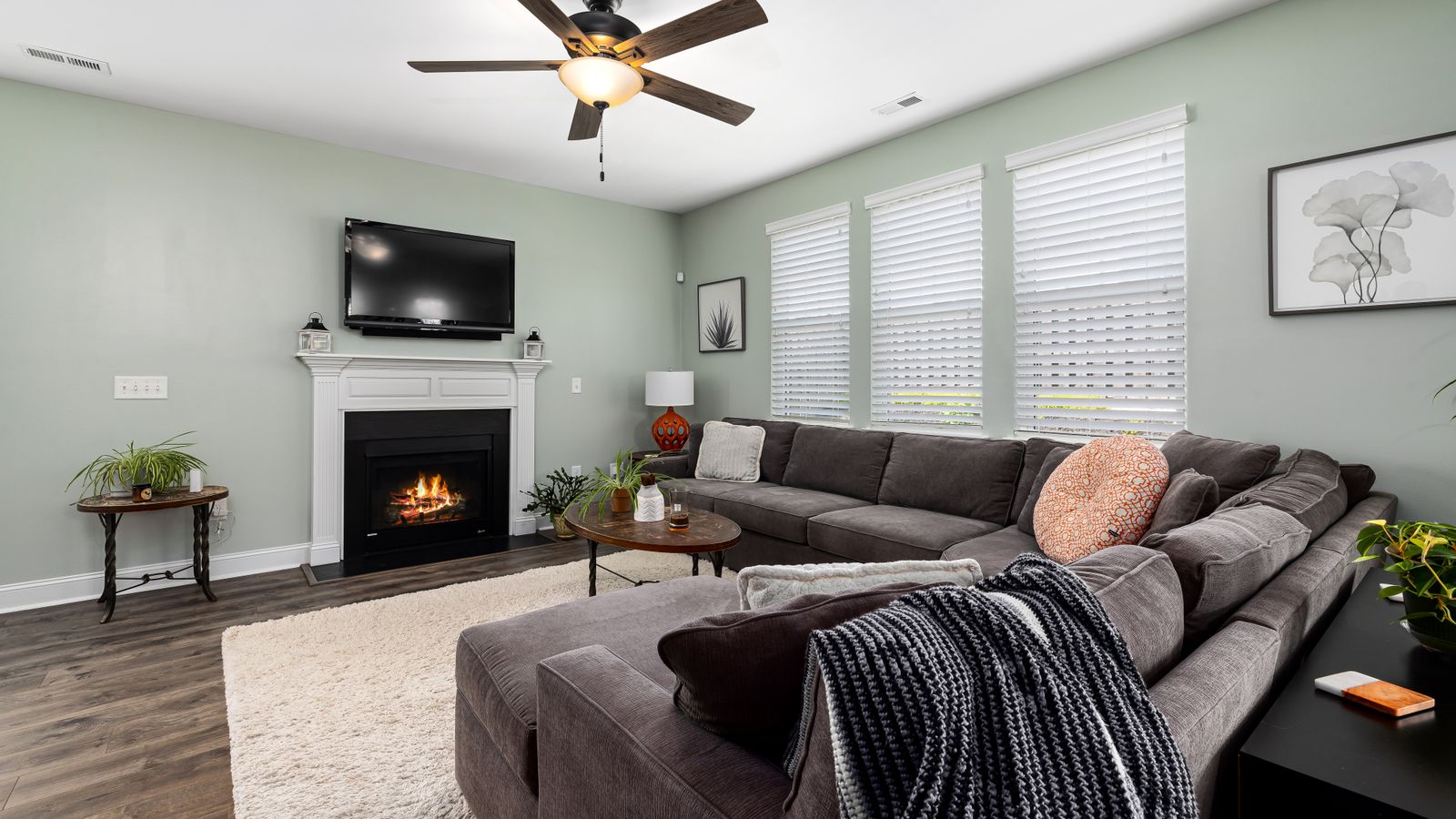
The sectional is the anchor of the room, so it’s worth spending the most time getting this choice right. Chaise sectionals come in a few configurations – left-facing, right-facing, and reversible – and the one you pick should be based on your room’s layout, not just what looks nice in a showroom photo.
- Orientation: Stand in your room and imagine where you’d naturally want to stretch your legs while watching TV. That tells you whether you need a left-facing or right-facing chaise.
- Depth: Deep-seat sectionals (around 40+ inches) are great for lounging and napping, but they eat up more floor space. Standard depth (36-38 inches) is more versatile for smaller rooms.
- Fabric: Performance fabrics or leather are easier to clean if you have kids or pets. Linen and boucle look elevated but show wear faster.
- Modularity: Some sectionals let you rearrange or detach the chaise later, which is handy if you move or want to reconfigure the room down the line.
If you want to compare specific models before deciding, this roundup of Sectional Sofas with Chaise breaks down comfort, materials, and price points so you can shortlist a few before measuring cushions against your actual floor plan.
Step 3: Position the Sectional First
Once you’ve chosen your sectional, it becomes the fixed point that everything else in the room is arranged around. Place it against the longest wall or angled into a corner if the chaise needs extra room. Avoid pushing every piece of furniture flush against the walls – floating the sectional a few inches out, or angling it slightly toward a focal point like a window or fireplace, makes the room feel more intentional and less like a waiting room.
If your living room is open-concept and flows into a dining or kitchen area, use the sectional’s back to help define the boundary of the “living” zone. A slim console table behind the sofa back can reinforce that separation without adding a wall.
Step 4: Add a TV Stand That Fits the Scale of the Room
The TV stand doesn’t need to be expensive to look good – you just need one that’s proportioned correctly. As a rule, the stand should be roughly the same width as your TV, or slightly wider, so the screen doesn’t look like it’s floating on top of a piece that’s too small.
When shopping on a budget, look for a stand with at least one enclosed cabinet or a couple of drawers, since open shelving alone tends to look cluttered once you add a cable box, gaming console, or speaker. Cable management cutouts in the back panel are a small feature that makes a big difference once everything is plugged in.
For a curated list of budget-friendly options that don’t sacrifice storage or build quality, check out this collection of tv stands under $200. Many of these hit a sweet spot between price and finish quality, which matters if the stand will sit directly across from your new sectional.
Step 5: Set the TV Stand at the Right Distance
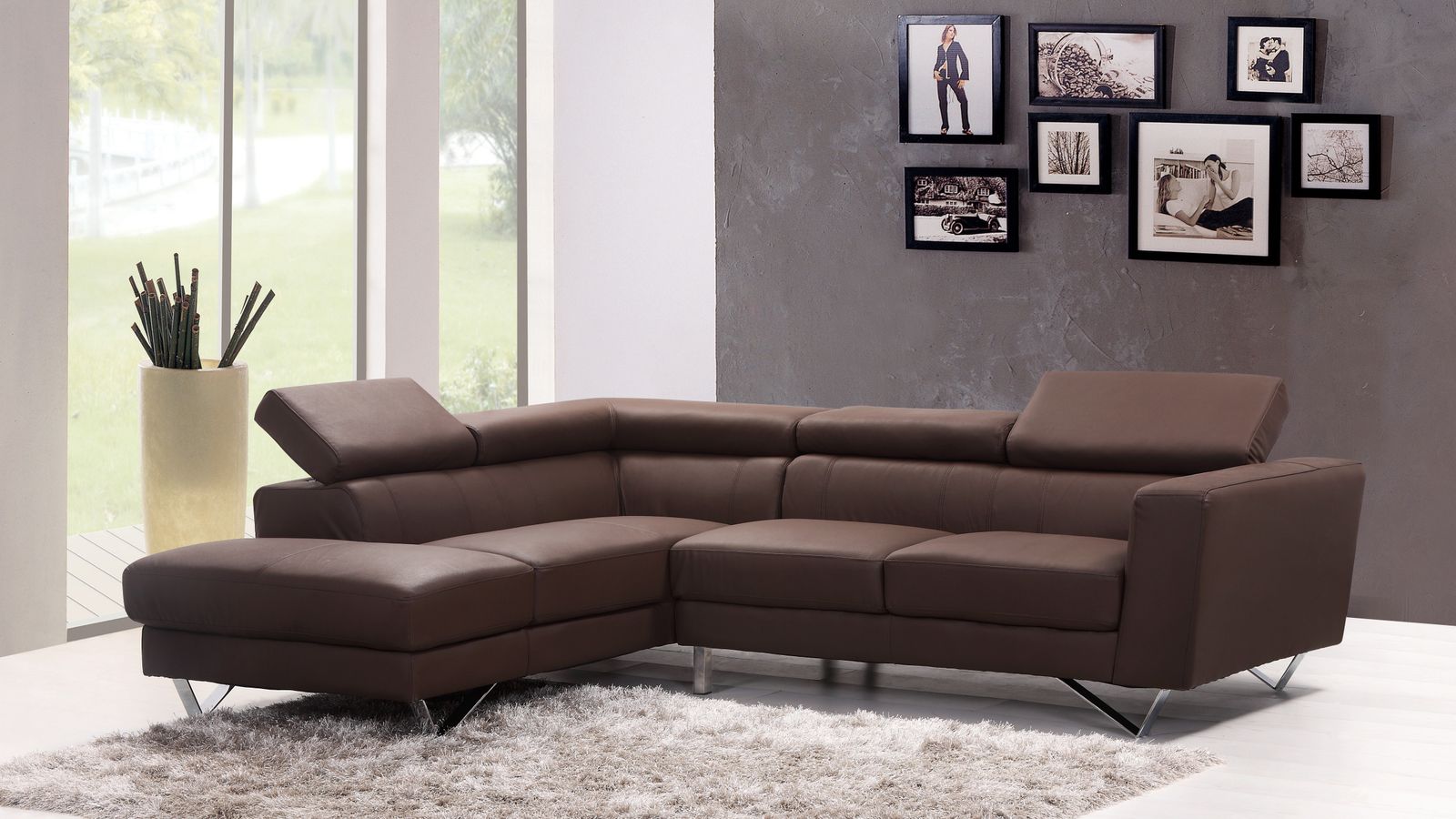
Once the sectional is in place, measure the distance from the seating area to where the TV will sit. A common guideline is that the TV screen size (measured diagonally) should be roughly a third of the viewing distance in inches – so a 55-inch TV works well at about 7-9 feet away. Mount the stand (and TV) directly across from the sectional’s main seating run, not the chaise end, since that’s usually where the primary sightline is.
Also consider the height. If you’re using a low-profile stand, the center of the TV screen should land close to eye level when you’re seated – roughly 42 inches from the floor for most people on a standard sofa cushion height.
Step 6: Bring in a Storage Ottoman for Function and Flexibility
A storage ottoman is one of the most underrated pieces in a living room setup. It works as a coffee table, an extra seat when guests come over, a footrest for the chaise, and hidden storage for throw blankets, remotes, board games, or kids’ toys – all in one compact footprint. Look for one with a removable lid or top cushion, sturdy legs (wood or metal hold up better over time than plastic), and a size that leaves enough clearance to walk around it comfortably.
Placement matters here too: center the ottoman in front of the sectional’s main seating area, close enough to rest your feet on but not so close it blocks the flow of the room. If your space is tight, a smaller square or round ottoman near the chaise can double as a side table.
Browse a range of styles and sizes in this guide to the best storage ottomans to find one that matches your sectional’s fabric and your room’s storage needs.
Step 7: Layer in Lighting and Rugs
Once the three main pieces are in place, a room can still feel unfinished without proper lighting and a rug to anchor the layout. A rug large enough for at least the front legs of the sectional and the ottoman to sit on will visually tie the seating area together. For lighting, combine an overhead fixture with a floor lamp near the chaise for reading, plus a table lamp on a side table for softer ambient light in the evening.
Common Mistakes to Avoid
- Buying the sectional before measuring doorways: Chaise sectionals are bulky and don’t always fit through standard doors in one piece – check delivery specs and stair clearance first.
- Placing the TV stand too high or too low: This causes neck strain over long viewing sessions. Stick to the eye-level guideline above.
- Skipping the storage ottoman’s weight capacity: If you plan to use it as extra seating, confirm it’s rated to hold an adult’s weight, not just decorative items.
- Pushing everything against the walls: Floating furniture slightly toward the center of the room usually creates a cozier, more balanced layout.
- Ignoring cable management: Run cords through the TV stand’s cutouts or a cable sleeve before you push it against the wall – it’s much harder to fix afterward.
Safety Notes
If you have kids or pets, anchor any TV stand to the wall with an anti-tip strap, especially if it’s holding a mounted or freestanding television. Choose an ottoman with rounded corners if the room doubles as a play area, and make sure the sectional’s legs are rated for your flooring type – hardwood and some engineered floors can scratch under unprotected metal or hard plastic feet, so felt pads are a cheap insurance policy.
FAQ
How much space do I need for a sectional with a chaise?
Most chaise sectionals need at least a 10×10 foot area to sit comfortably with walking space around them, though compact models can work in slightly smaller rooms if you choose a shorter chaise return.
Can a budget TV stand still look high-end?
Yes – focus on clean lines, a finish that matches your other wood tones (like the ottoman legs), and closed storage. Price doesn’t always correlate with visual quality in this category.
Do I need a coffee table if I have a storage ottoman?
Not necessarily. A storage ottoman with a flat, sturdy top can fully replace a traditional coffee table while adding hidden storage a coffee table doesn’t offer.
What order should I buy furniture in?
Start with the sectional since it’s the largest and hardest to reposition later, then choose the TV stand based on the sectional’s sightline, and finish with the ottoman sized to fit the remaining space in front of the sofa.
Final Thoughts
Setting up a living room doesn’t require an overwhelming shopping list – a comfortable chaise sectional, a well-proportioned TV stand, and a versatile storage ottoman cover seating, entertainment, and everyday storage in one cohesive layout. Measure carefully, position the sectional first, and let the other pieces follow its lead, and you’ll end up with a room that feels intentional rather than assembled piece by piece.