A cramped side yard, a narrow condo walkway, or a tiny front path can be tricky to light well. Oversized fixtures overwhelm the space, dim lights leave dark patches, and poor spacing creates an uneven, choppy look after dark. The good news is that picking the right pathway light for a small space comes down to a handful of practical decisions: size, brightness, beam pattern, power source, and spacing. This guide walks you through each one so you can light a compact walkway that feels warm, safe, and intentional rather than cluttered.

Why Small Spaces Need a Different Approach
Pathway lighting for a sprawling backyard and pathway lighting for a narrow side path are not the same project. In a large space, you can space tall fixtures generously and let them cast wide pools of light. In a small space, every fixture competes for visual real estate. Too many lights, or lights that are too large, make a compact area feel busy and reduce it further. The goal in a tight footprint is restraint: fewer, smaller, well-placed fixtures that guide the eye and the feet without dominating the scene.
Small spaces also tend to sit closer to windows, patios, and seating areas, so glare becomes a bigger issue. A fixture that would be unnoticeable at the back of a large lawn can shine directly into a nearby window or dining area when it’s only a few feet away. Keeping this in mind while shopping will save you from a return trip to the store.
Step 1: Measure the Path Before You Shop
- Walk the path and measure its total length in feet.
- Note the width of the walkway itself, plus any planting beds or borders running alongside it.
- Identify any tight turns, steps, or narrow pinch points that need extra visibility.
- Check for nearby walls, fences, or windows that could reflect glare from a light that’s too bright.
Write these numbers down. They determine both how many fixtures you’ll need and how tall or wide each one can safely be without crowding the space.
Step 2: Choose the Right Fixture Size
In a small space, oversized fixtures are the most common mistake. A pathway light designed for a wide suburban lawn can look like a lamppost when placed a foot from a narrow walkway. Look for compact, low-profile designs – generally under 12 to 15 inches tall – that sit close to the ground and blend into planting beds rather than towering over them.
Slim stake lights, small mushroom-cap fixtures, and low bollard lights all work well in tight areas. If your path runs along a narrow bed with little planting depth, choose a fixture with a narrow footprint so the stake doesn’t crowd out roots or nearby plants. For a broader comparison of styles and finishes, the roundup of Pathway Lights is a useful starting point once you know your size constraints.
Step 3: Match Brightness to the Space, Not the Package
Manufacturers often list lumens as a selling point, assuming bigger numbers are better. In a small space, that logic backfires. A fixture rated for 100+ lumens can feel harsh and glaring at close range, washing out the soft, layered look most small gardens are going for.
For compact walkways, aim for fixtures in the 20 to 60 lumen range per light. This is enough to mark the edge of the path and prevent missteps without flooding the area or creating hot spots. If you want a brighter accent at a specific point – like a step or a mailbox – you can mix in one slightly stronger fixture there while keeping the rest of the run soft.
Step 4: Think About Beam Pattern and Light Direction
Beam pattern matters as much as brightness in a small space. Look for fixtures with a downward-directed or shielded beam that casts light onto the ground rather than outward at eye level. This does two things: it reduces glare for anyone standing or sitting nearby, and it keeps the light focused where it’s actually useful – on the walking surface.
Avoid unshielded bulb-style fixtures in tight areas, since the exposed light source is more likely to create harsh glare against a nearby wall or window. Frosted lenses, capped tops, and downlight designs all help soften the effect.
Step 5: Decide Between Solar and Wired Power
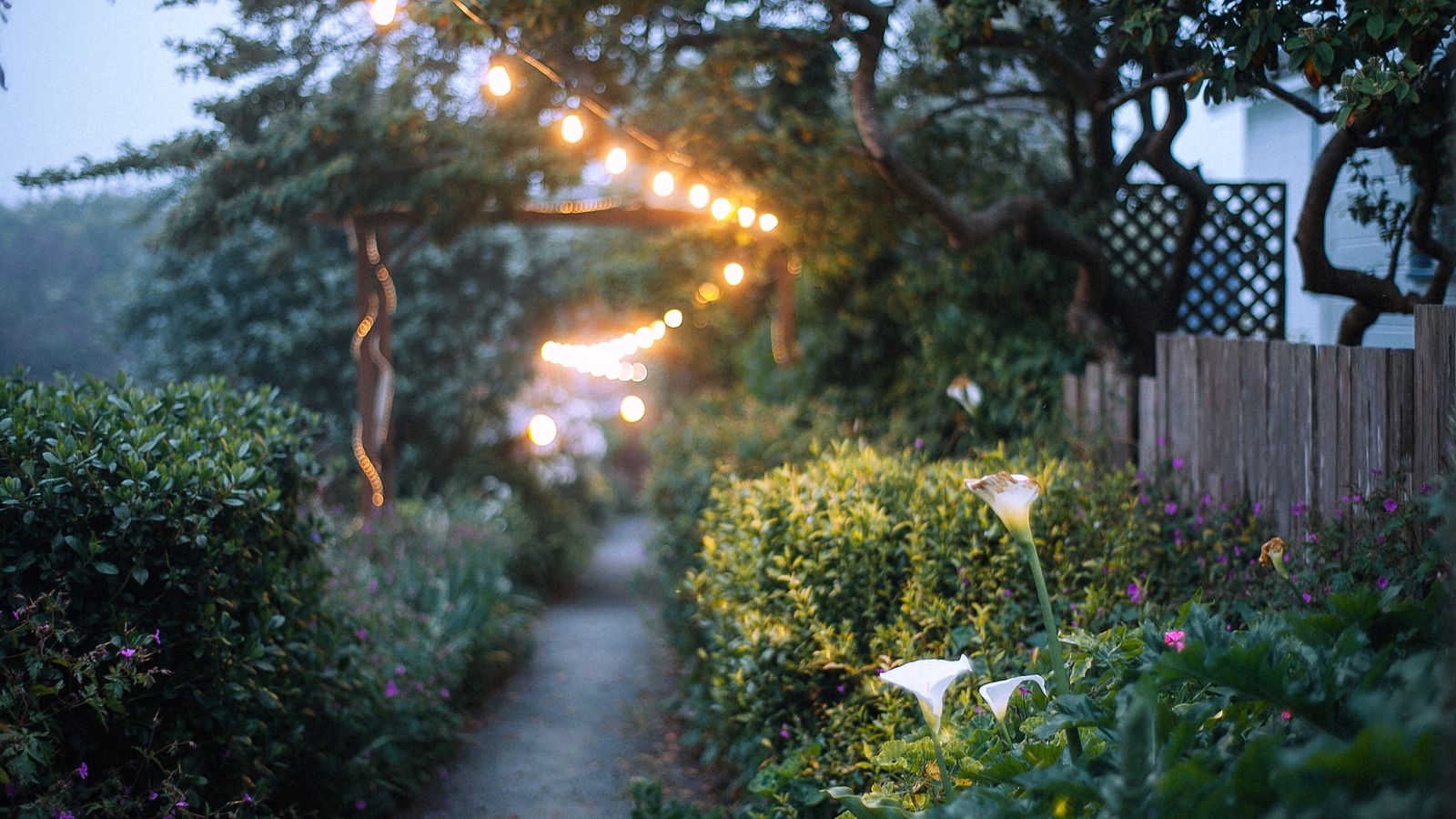
Small spaces are usually the easiest place to use solar pathway lights, since shorter runs mean less concern about a solar panel being shaded by nearby structures throughout the day. Solar stakes are simple to install, require no wiring, and can be repositioned easily if you change your mind about placement.
Low-voltage wired systems offer more consistent brightness regardless of weather and typically last longer per fixture, but they require running cable and connecting to a transformer, which can be more involved in a tight space with existing landscaping. If your small path gets good sun exposure during the day, solar is often the simpler and more flexible choice. If the area is shaded by a fence, tree canopy, or building, wired lighting will give more reliable results.
Step 6: Get the Spacing Right
Spacing is where many small-space projects go wrong. The instinct is often to place lights close together for maximum coverage, but this can make a short path look cluttered and busy. As a general rule, space compact pathway lights 6 to 8 feet apart for a soft, even glow, adjusting closer together only at turns, steps, or other spots that need extra visibility.
For a very short path – say, under 20 feet – you may only need three or four fixtures total. Resist the urge to add more just because there’s room; a few well-placed lights almost always look better than a line of them packed tightly along the edge.
Step 7: Coordinate the Look With the Rest of Your Outdoor and Indoor Lighting
Small outdoor spaces are often visible from indoor rooms through windows or sliding doors, so it helps to think about how your pathway lights read alongside your interior lighting choices. A warm color temperature (around 2700K to 3000K) outdoors will feel cohesive with the warm glow of floor lamps for living rooms or the ambient light from best bedside lamps visible through a nearby window, creating a more unified feel from dusk into evening.
Avoid mixing cool white pathway lights with warm indoor lighting in a small, visually connected space – the contrast can make the outdoor area feel sterile or mismatched, even if each light looks fine on its own.
Common Mistakes to Avoid
- Choosing tall fixtures for a narrow bed. Oversized lights make a small space feel even smaller.
- Overspacing or underspacing. Too far apart leaves dark gaps; too close together looks like a runway.
- Ignoring beam direction. An unshielded light close to a patio or window creates glare that undermines the ambience you’re going for.
- Mixing color temperatures. Combining warm and cool white lights in the same small view feels disjointed.
- Skipping a test run. Place fixtures loosely and observe them after dark for a night or two before committing to final positions.
Safety Notes
Even in a small space, pathway lighting has a functional job: preventing trips and missteps. Make sure fixtures near steps, uneven pavers, or curb transitions are bright enough and positioned to clearly mark the edge, not just decorate the space. Keep low-profile stakes clear of foot traffic lines so they don’t become a tripping hazard themselves, and check that any wired connections are rated for outdoor, damp-location use.
Quick Checklist Before You Buy
- Measured the path length and width
- Chosen a low-profile fixture under about 12-15 inches tall
- Selected a brightness in the 20-60 lumen range
- Confirmed a downward, shielded beam pattern
- Decided between solar or wired power based on sun exposure
- Planned spacing at roughly 6-8 feet, tighter at turns and steps
- Matched color temperature to nearby indoor lighting
FAQ
How many pathway lights do I need for a small yard?
For a path under 20 feet, three to five compact fixtures spaced 6 to 8 feet apart is usually enough. Longer or curving paths may need a few more, especially at turns.
Are solar pathway lights bright enough for a small path?
Yes, in most cases. Modern solar stakes in the 20-60 lumen range provide plenty of visibility for a short, close-quarters walkway, especially with good daily sun exposure to fully charge the battery.
What height should pathway lights be for a narrow walkway?
Low-profile fixtures under 12 to 15 inches tall generally work best, keeping the light close to the ground and out of the sightline from nearby windows or seating.
Should pathway lights match my indoor lighting color?
It’s a good idea when the outdoor space is visible from indoors. A warm 2700K-3000K color temperature outside will blend more naturally with warm indoor fixtures like lamps and sconces.
Final Thoughts
Lighting a small path well isn’t about buying the biggest or brightest fixtures available – it’s about restraint and fit. Measure first, choose compact low-profile fixtures with a soft downward beam, keep brightness modest, and space lights thoughtfully rather than densely. Get those fundamentals right and even the tiniest walkway can feel warm, safe, and welcoming after dark.