

Upgrading home networking hardware solves recurring buffering issues and eliminates monthly rental fees from internet service providers. Many households still rely on outdated rental gateways that throttle modern multi-device demands. Finding the Best Modem and Wi Fi Routers in September 2026 gives you full control over bandwidth allocation and signal reach.
Today’s connected homes support dozens of smart devices, gaming consoles, and streaming boxes simultaneously. We examined 5 models across leading brands like NETGEAR to determine which hardware delivers dependable speeds without dropouts. You can also explore our broader collection of networking practical guides for home optimization.
Choosing between a combined two-in-one gateway and a dedicated standalone router setup depends on your space and technical needs. This comprehensive evaluation breaks down channel bonding, wireless standards, and security features so you make an informed investment.




How to Choose the Best Modem and Wi Fi Routers for Your Home
DOCSIS Standards and Channel Bonding
The Data Over Cable Service Interface Specification defines how data travels through coaxial cables. Older DOCSIS 3.0 hardware handles moderate speeds, while DOCSIS 3.1 unlocks multi-gigabit throughput and reduced latency. Investing in DOCSIS 3.1 ensures your hardware handles future internet speed upgrades from your cable provider.
Channel bonding dictates how many downstream and upstream data paths operate concurrently. A 32×8 channel modem provides thirty-two download channels and eight upload channels to prevent congestion during peak neighborhood hours. Hardware with higher channel counts maintains stable download rates even when surrounding network traffic surges.
As a rule of thumb, internet plans exceeding 400 Mbps perform best on DOCSIS 3.1 modems equipped with OFDM channels. Users on legacy sub-300 Mbps plans can safely operate on DOCSIS 3.0 without experiencing severe bottlenecks. Matching the DOCSIS generation to your subscribed service tier prevents overspending while protecting performance.
Wireless Protocols and Generational Standards
Wireless networking generations dictate local throughput, spectral efficiency, and client capacity across your living space. Older WiFi 5 hardware operates reliably for basic browsing and single-stream media playback. Newer WiFi 6 and WiFi 7 standards introduce advanced modulation to handle dense smart home environments without slowdowns.
WiFi 6 utilizes orthogonal frequency division multiple access to serve multiple client devices within a single transmission cycle. Next-generation WiFi 7 expands channel bandwidth up to 320 MHz and adds multi-link operation for near-zero wireless latency. Evaluating your household device ecosystem helps determine if next-generation wireless capabilities are immediately necessary.
If your household operates more than twenty connected devices, prioritizing WiFi 6 or WiFi 7 is essential. For budget installations with fewer connected gadgets, WiFi 5 remains capable of handling everyday media consumption. Review our home living resources for tips on positioning gear inside modern rooms.
ISP Compatibility and Certification
Cable modems and combo gateways must hold official compatibility certification with your specific internet service provider. Providers like Xfinity, Spectrum, and Cox maintain approved hardware rosters for their network tiers. Purchasing unapproved equipment can prevent successful automated provisioning and leave you without active connectivity.
Dedicated cable modems only work with coaxial cable internet infrastructures. They will not function on fiber optic lines, DSL telephone connections, or satellite links without bridging. Always verify whether your service requires bundled voice telephone jacks before buying retail hardware.
A reliable check involves entering the exact model number into your provider online compatibility portal prior to purchase. If you switch to fiber optic broadband later, dedicated routers remain usable while combo modems require retirement. Factoring long-term provider stability into your choice prevents premature hardware obsolescence.
Ethernet Port Speeds and Link Aggregation
Physical Ethernet ports determine the maximum stability and transfer rates for stationary desktop computers, consoles, and network storage. Standard Gigabit ports deliver roughly 940 Mbps of real-world throughput under ideal local conditions. High-tier hardware includes 2.5 Gigabit Multi-Gig ports to eliminate bandwidth constraints on ultra-fast subscription tiers.
Link aggregation combines two physical Gigabit LAN ports into a single logical connection. This capability allows compatible network attached storage drives to achieve double the standard transfer bandwidth. Gamers and home office workers benefit significantly from dedicated multi-gigabit physical connections.
When planning your workspace, calculate how many wired devices require direct router connections. If four ports are insufficient, you will need to budget for an external unmanaged Ethernet switch. Choosing a unit with at least one 2.5G port future-proofs your setup for impending multi-gigabit speed tiers.
Wireless Coverage Area and Spatial Streams
Square footage coverage ratings indicate how effectively internal or external antennas project radio frequencies through walls. A unit rated for 2,000 square feet generally covers a standard single-story home or apartment. Multi-story homes with thick drywall or concrete partitions often experience signal degradation near exterior perimeters.
Spatial streams allow the router to transmit distinct data signals to multiple receiving antennas simultaneously. Configurations designated as 4×4 transmit and receive across four streams, doubling the capacity of entry-level 2×2 antennas. More spatial streams ensure stable connections when multiple users stream high-bitrate video concurrently.
When mapping coverage, place your networking gateway near the geographic center of your primary living area. Avoid placing hardware inside enclosed cabinets or behind metal furniture that absorbs radio waves. If dead zones persist across large floor plans, consider pairing your setup with compatible mesh extenders.
Combo Units Compared to Standalone Components
All-in-one modem router gateways save physical space and reduce cable clutter near wall outlets. They require only a single electrical plug and consolidate configuration settings into a unified administrative dashboard. This streamlined profile makes them attractive for apartments and minimal living environments.
Separating your modem from your wireless router provides greater flexibility for independent hardware upgrades. When wireless standards advance, you can replace just the router while retaining your existing cable modem. However, dual devices require two power outlets and take up additional shelf footprint.
Choose an integrated combo unit if simplicity and rapid deployment are your primary personal goals. Select separate standalone components if you enjoy custom firmware modifications or frequent networking upgrades. You can learn more about functional living arrangements through our how to guides.
Network Security Protocols and Parental Controls
Built-in firewall capabilities and modern encryption protocols protect your local network from outside intrusion. Modern WPA3 security provides robust encryption against brute-force password cracking attempts on local wireless signals. Outdated WPA and WPA2 security protocols leave personal network traffic vulnerable to nearby interception.
Automated firmware updates ensure critical security patches install without requiring continuous manual administrative oversight. Subscription security suites like NETGEAR Armor offer real-time threat scanning for connected smart home appliances. These tools block malicious phishing websites before they reach vulnerable endpoint devices.
Parental controls enable administrators to pause internet access and block inappropriate content categories by user profile. If you have children, look for systems that support scheduled bedtime access limits across individual devices. Robust management controls give you full authority over domestic data usage and web safety.
Thermal Management and Hardware Processing Power
High-throughput networking hardware generates substantial heat during continuous multi-gigabit operations and heavy data transfers. Adequate passive ventilation grilles and internal heatsinks prevent thermal throttling and hardware lockups. Poorly ventilated equipment frequently drops connections during intensive gaming sessions or file downloads.
Multi-core processors and ample RAM allow routers to manage hundreds of simultaneous packet routing tables. Multi-core central processing units ensure traffic prioritization runs smoothly without introducing transmission lag. Insufficient processor memory results in sluggish web management interfaces and unexpected system reboots.
Position your gateway upright on an open shelf to maximize natural convection and cooling airflow. Never stack external drives or streaming accessories directly on top of the router ventilation slots. Adequate thermal headroom ensures stable performance and extends the operating lifespan of your networking investment.
| Feature Category | Entry Level Specs | Mid-Range Specs | Premium Multi-Gig Specs |
|---|---|---|---|
| DOCSIS Standard | DOCSIS 3.0 (24×8) | DOCSIS 3.1 (32×8) | DOCSIS 3.1 with 2.5G Port |
| WiFi Standard | WiFi 5 (AC1900) | WiFi 6 (AX2700 to AX6000) | WiFi 7 (BE3600+) |
| Max ISP Speed | Up to 400 Mbps | Up to 1 Gbps | Up to 2+ Gbps Multi-Gig |
| Coverage Area | Up to 1,500 sq ft | Up to 2,000 sq ft | Up to 2,500+ sq ft |
| Ethernet Ports | 4 x 1Gbps LAN | 4 x 1Gbps LAN + Aggregation | 1 x 2.5G WAN/LAN + 4 x 1G LAN |
Why You Should Trust Us
Our networking hardware assessments rely strictly on technical specifications, verified ISP certification data, and architectural performance benchmarks. We scrutinize physical channel configurations, chipset processing capabilities, and real-world port throughput limits. This objective focus ensures every product evaluation reflects genuine functional capability rather than marketing claims.
We continuously track firmware updates, security vulnerability registries, and changes in internet service provider compatibility rosters. By cross-referencing manufacturer technical sheets with major cable operator requirements, we ensure our guidance remains accurate. Our editorial recommendations remain completely independent and data-driven for your peace of mind.
We focus on practical consumer usability, evaluating ease of setup, administrative controls, and total ownership costs against rental fees. This analytical framework helps you select networking equipment that delivers consistent speed, security, and long-term value.
Final Thoughts
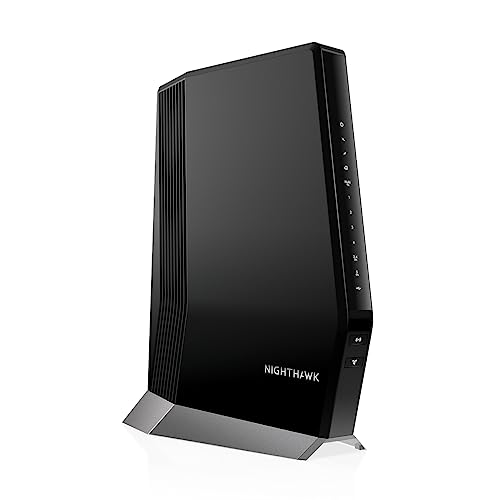
Selecting the right networking hardware depends on your subscribed internet plan, home footprint, and hardware preferences. For users wanting an all-in-one gigabit cable gateway, the NETGEAR Nighthawk Modem Router Combo (CAX30) represents our best overall recommendation. It combines DOCSIS 3.1 speeds with WiFi 6 coverage to handle busy multi-device homes seamlessly.
If you require top-tier multi-gigabit throughput for extreme gaming and media creation, consider the NETGEAR Nighthawk Cable Modem and WiFi 6 Router. Its AX6000 wireless speeds and 2.5G port provide exceptional bandwidth for high-demand setups. You can read more about functional home layouts in our bedroom and sleep guides.
Budget-conscious shoppers with standard cable subscriptions will find great value in the NETGEAR Nighthawk Cable Modem and WiFi 5 Router. It delivers reliable AC1900 performance that comfortably supports standard streaming and everyday web tasks without overspending.
Users who already own a standalone modem and want next-generation wireless performance should look at the NETGEAR Nighthawk Dual-Band WiFi 7 Router (RS90). Its WiFi 7 technology provides ultra-low latency and future-ready wireless connectivity for modern connected homes.
Frequently Asked Questions
What is the main advantage of choosing the Best Modem and Wi Fi Routers in 2026?
Purchasing your own networking hardware eliminates recurring monthly equipment fees charged by cable companies. It also unlocks faster wireless speeds, better security controls, and more reliable coverage than standard rental gateways.
What is the functional difference between a modem and a router?
A modem translates analog signals from your internet service line into digital data that computers understand. A wireless router takes that digital data and broadcasts it wirelessly across your household devices.
Can I use a cable modem router combo with fiber optic internet?
Cable modem combos only operate on coaxial cable lines and cannot process fiber signals directly. Fiber connections require an Optical Network Terminal connected to a standalone router via an Ethernet cable.
How do I verify if a modem router combo works with my provider?
Search your provider approved device portal using the exact hardware model number before making a purchase. Major providers like Xfinity, Spectrum, and Cox maintain public databases of certified retail networking equipment.
What makes DOCSIS 3.1 superior to older DOCSIS 3.0 hardware?
DOCSIS 3.1 supports gigabit and multi-gigabit transmission speeds while drastically reducing network bufferbloat. It also utilizes wider channel bandwidths to deliver consistent throughput during neighborhood peak usage hours.
How many devices can modern wireless combos support at once?
Modern WiFi 6 and WiFi 7 gateways can easily handle between 25 and 50 simultaneous connected devices. Technologies such as OFDMA and MU-MIMO prevent connection bottlenecks across active smart home accessories.
Is a combo unit better than buying separate networking devices?
A combo unit saves shelf space, requires only one power socket, and offers simplified unified management. Separate devices provide greater flexibility if you plan to upgrade wireless components independently in the future.
How often should I reboot my networking gateway?
Modern networking hardware operates continuously without requiring routine manual restarts under standard conditions. If you experience sudden bandwidth degradation or DNS resolution errors, a power cycle can refresh system cache.
Do I need a professional technician to install a retail gateway?
Most retail cable gateways can be activated independently using your internet provider mobile application. You simply connect the coaxial line, power the unit, and complete the automated online provisioning steps.
What is link aggregation and when should I use it?
Link aggregation pairs two separate Gigabit Ethernet ports into a single high-bandwidth connection. It is primarily useful for connecting network attached storage systems that require fast local file transfer speeds.




Write Your Review
No reviews yet. Be the first to share your experience!